Toy Safes vs Lockboxes for Tiny Pieces at Home
Compare toy safes and lockboxes for storing small toy parts in homes with babies and older siblings. Learn the trade-offs around access, visibility, cleanup, supervision and storage space.
Compare prices and availability
Check current prices and availability for this guide on eBay.
As an eBay Partner, we may be compensated if you make a purchase.
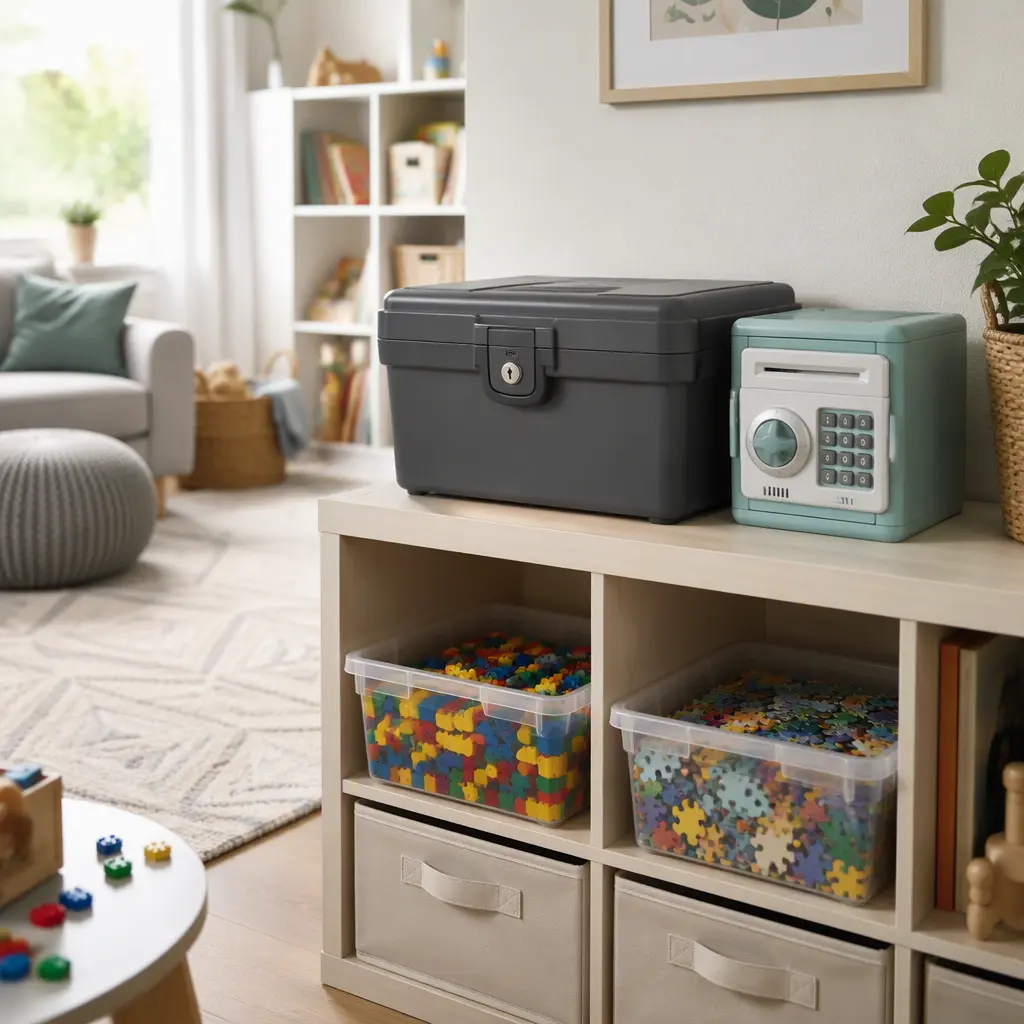
Homes with babies, toddlers and older siblings often end up balancing two competing needs: keeping tiny toy pieces safely out of reach while still making them easy to use and clean up. Building sets, miniature figures, magnetic tiles with accessories and craft kits can quickly spread across shared spaces. Toy safes and lockboxes are two common storage approaches, but they solve different problems. A toy safe usually prioritises child ownership and easy access for older kids, while a lockbox focuses more on limiting access and containing small parts securely. The better choice depends on your child’s age range, how often toys are used, and whether storage needs to move between rooms.
What to look for
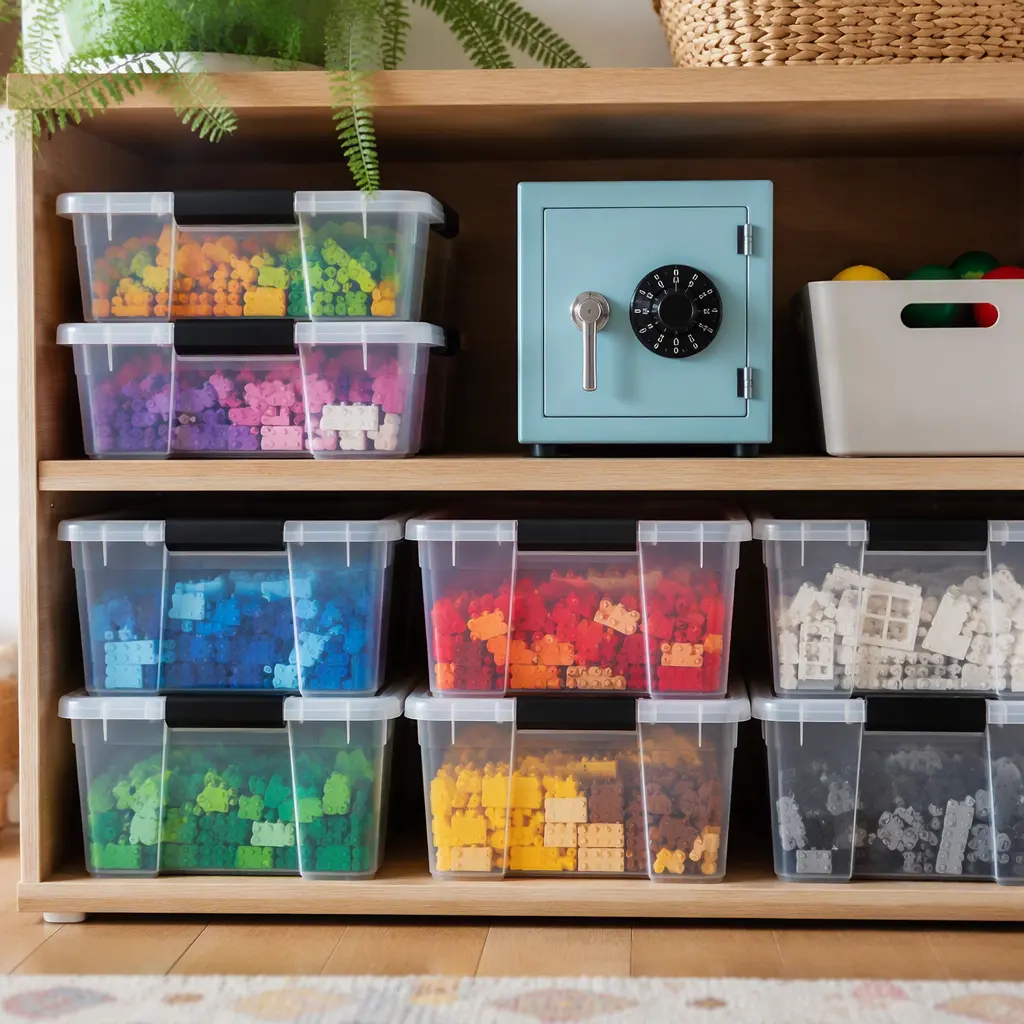
The safest and most practical storage option is usually the one that fits your daily routine. Parents often focus first on locks, but visibility, cleanup speed and portability matter just as much. In homes with crawling babies, the main goal is reducing unsupervised access to choking hazards. In homes with preschoolers and older children, frustration can become a factor if storage is difficult to open or too inconvenient to use consistently.
- Choose storage that older children can open responsibly without leaving contents scattered around shared areas.
- Clear containers help with cleanup and reduce duplicate purchases because pieces stay visible.
- Opaque toy safes can feel more special or personal for older children who want privacy for collections.
- Look for rounded edges and sturdy hinges that are less likely to pinch fingers during frequent use.
- Portable lockboxes work well if toys regularly move between living rooms, bedrooms and grandparents’ homes.
- Large single-compartment storage can speed up cleanup but makes sorting tiny pieces harder.
- Removable trays or dividers can help separate small accessories from larger building parts.
- Consider shelf height carefully so babies and toddlers cannot pull containers down onto themselves.
Age suitability
For children aged 1–2 years, most toys with tiny detachable parts require full supervision regardless of how they are stored. At this stage, storage is mainly about protecting younger children from accidental access while allowing older siblings to continue using more advanced toys safely. Lockboxes are often more practical for mixed-age households because they reduce accidental opening and usually stack neatly in closets or higher shelving. Toy safes may appeal more to children aged 4 and up who can understand rules around putting pieces away and keeping doors closed. Very young toddlers are often attracted to locks, handles and doors, so storage that looks like a toy itself may invite extra attention rather than discourage it.
Options compared
Toy safes are usually designed to feel fun and personal. Some resemble miniature vaults or treasure boxes, which can encourage older children to take ownership of collections like mini figures, beads or specialty building pieces. This can work well for school-age children who enjoy organising and protecting favourite items. The trade-off is that toy safes are often less efficient for quick cleanup because contents may be piled together without visibility. Younger siblings may also become curious about the container itself, especially if it looks playful or interactive.
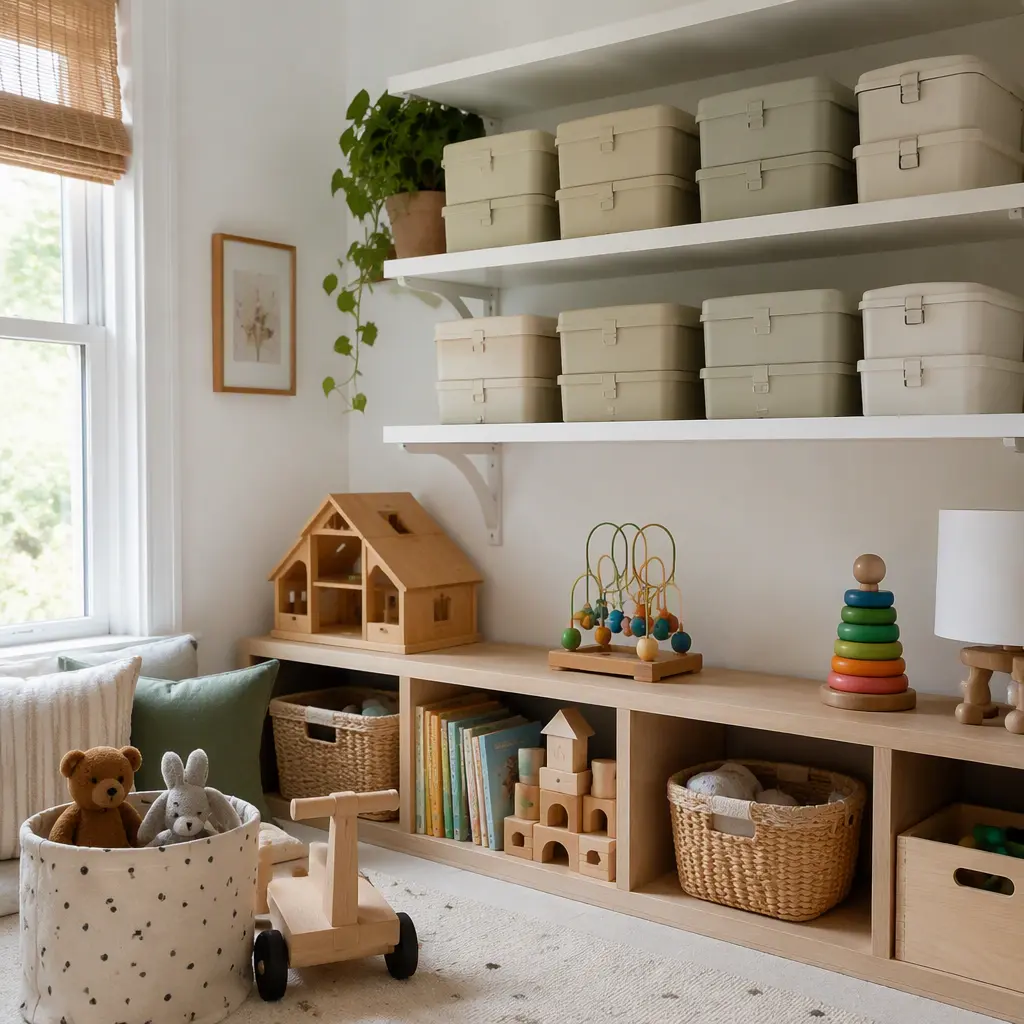
Lockboxes tend to work better as practical household storage. Clear or semi-clear boxes make it easier to spot missing pieces and support faster cleanup after play sessions. Many stack efficiently in closets or under beds, which helps in smaller homes. They are usually less exciting to children, which can actually be an advantage in homes with babies or toddlers. However, lockboxes can feel less personal for older children who want dedicated spaces for prized collections. They may also require adults to manage keys, latches or higher storage placement more frequently.
- Toy safes suit older children who value ownership, collecting and independent access.
- Lockboxes suit mixed-age homes focused on safety, containment and easier organisation.
- Soft fabric storage bins are convenient for larger blocks but are not ideal for tiny loose parts.
- Clear drawer systems help with sorting but may need higher placement around toddlers.
- Portable handled cases work well for travel or rotating toys between rooms.
- Under-bed storage can reduce clutter but may be too accessible for determined toddlers.
Frequently asked questions
Are toy safes safer than regular toy boxes?
Not necessarily. A toy safe may limit access if kept closed, but many are designed more for imaginative play and collecting than childproof storage. In homes with babies or toddlers, placement and supervision are usually more important than the style of container.
Do clear lockboxes create more clutter visually?
They can make a room feel busier because contents remain visible. Some parents prefer opaque boxes for calmer-looking spaces. Others find that visibility improves cleanup habits because children can quickly identify where pieces belong.
What storage works best for building sets with many tiny pieces?
Containers with dividers, removable trays or smaller internal tubs usually make sorting easier. Large open bins can save time initially but often lead to mixed pieces and harder cleanup later.
Should tiny-piece toys stay completely out of shared play areas?
In homes with crawling babies or toddlers who still mouth objects, keeping tiny parts in supervised zones is often the simplest option. Some families use temporary play mats or table-only play for older siblings to reduce dropped pieces on the floor.
Is it better to use one large container or several smaller ones?
Several smaller containers are usually easier to manage for sorting and cleanup. They also reduce the risk of dumping an entire collection onto the floor at once. A single large box may work better for larger parts that do not present choking concerns.
The best storage setup for tiny toy pieces is usually the one that balances safety with realistic daily use. Lockboxes generally suit households with babies and toddlers because they prioritise containment and organisation. Toy safes can work well for older children who want more independence and ownership over collections. In many homes, a combination approach works best: secure storage for hazardous small parts and easier-access bins for age-appropriate toys used every day.