Washable Building Toys for Toddlers Who Mouth Everything
A parent-focused guide to washable building toys for ages 1–2, covering easy-clean materials, drying concerns, supervision, storage and which construction styles work best for heavy mouthing.
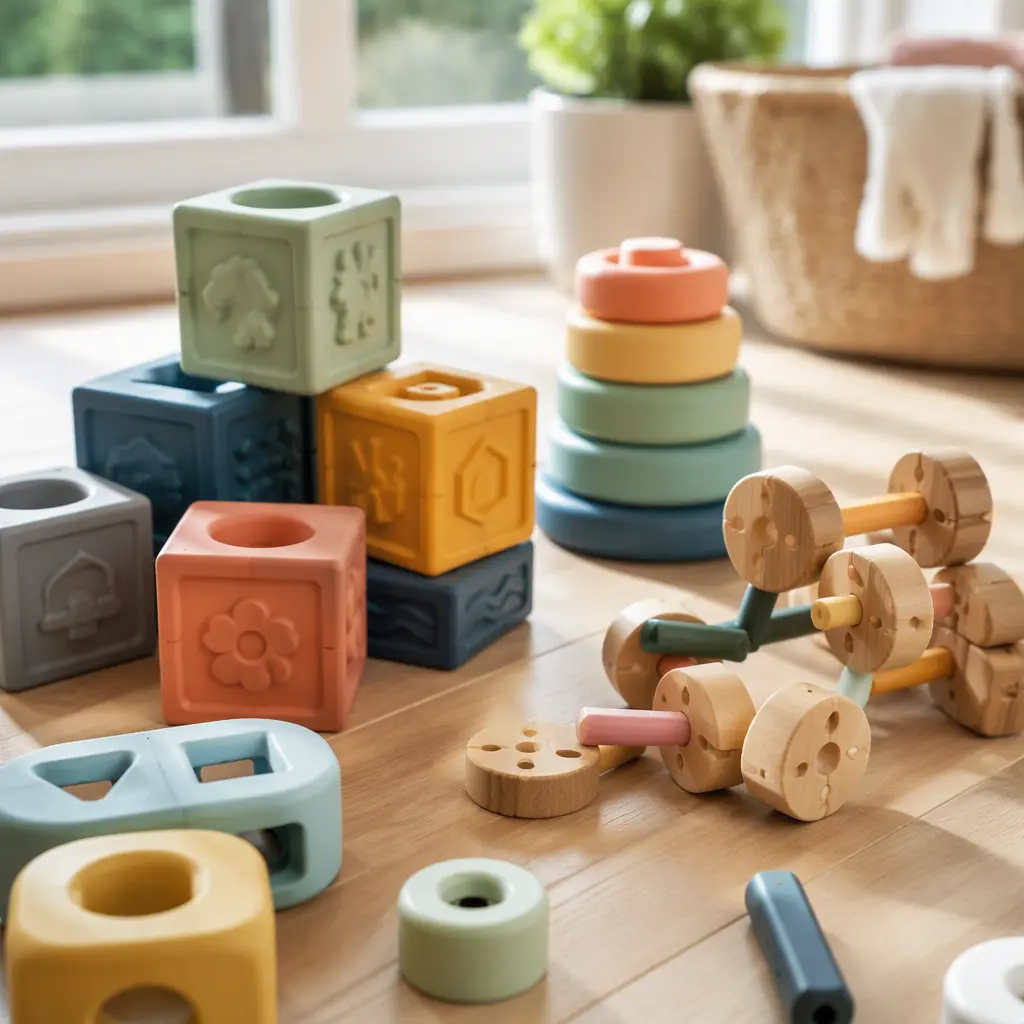
Compare prices and availability
Check current prices and availability for this guide on eBay.
As an eBay Partner, we may be compensated if you make a purchase.
For toddlers who still explore the world by chewing, licking and carrying toys around the house, easy cleaning becomes just as important as entertainment value. Building toys for ages 1–2 need to balance simple construction play with safe sizing, durable materials and practical hygiene. Some sets look washable at first glance but hide moisture inside hollow parts, fabric connectors or hard-to-reach seams that can become frustrating to clean thoroughly. Others are easy to wipe down but too heavy, too noisy or too advanced for early toddler play. Choosing the right type often comes down to how often the toys will end up in mouths, bath water, food spills or outdoor dirt, and how much daily cleaning parents realistically want to manage.
What to look for
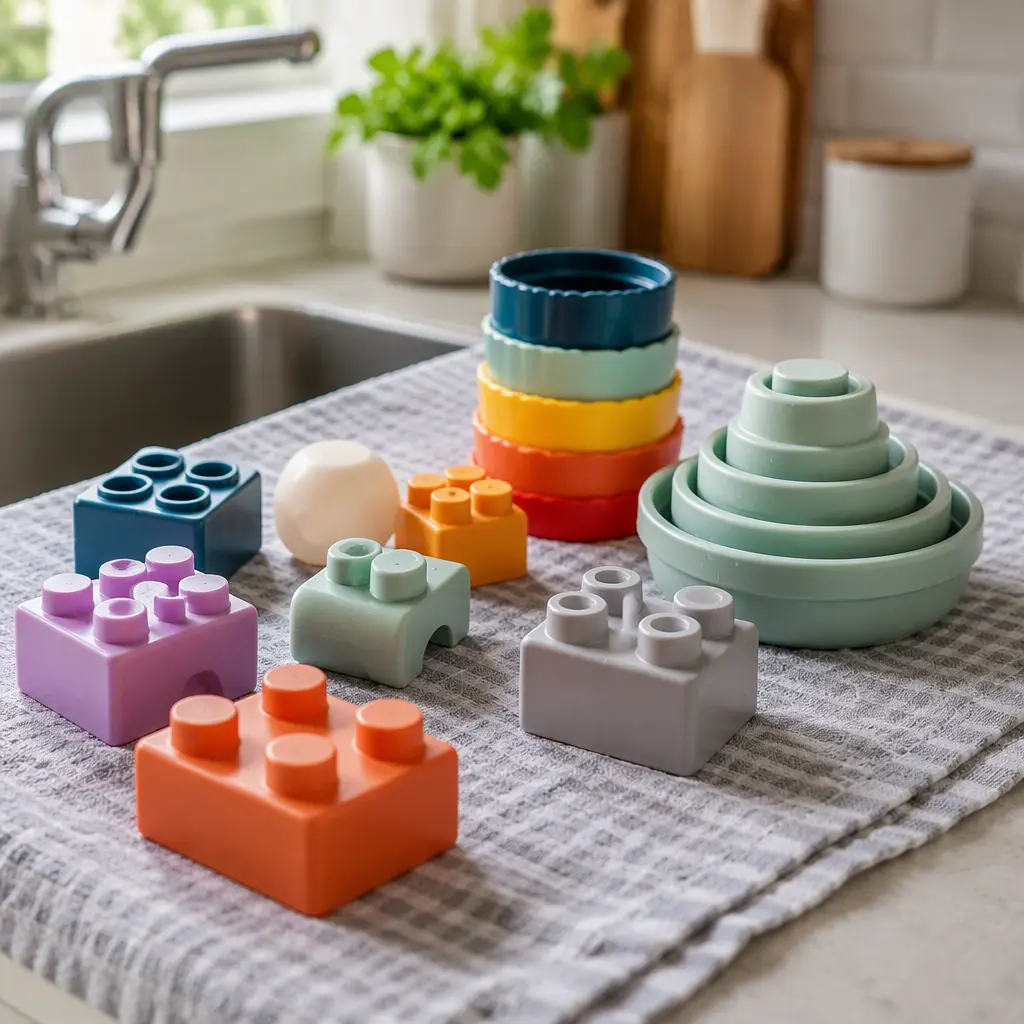
Washable building toys for this age group should prioritise simplicity over complex moving parts. Large pieces with smooth surfaces are usually easier to rinse and dry completely. Solid materials tend to trap less moisture than hollow pieces, and sets without fabric straps, felt decorations or absorbent inserts are usually easier to sanitise after frequent mouthing. Durability also matters because toddlers at this age often throw, bang and chew on pieces rather than build structured models.
- Look for large pieces that cannot fit fully into a toddler’s mouth.
- Choose smooth surfaces without deep grooves that trap food or saliva.
- Solid silicone, sealed wood and sturdy plastic are generally easier to clean than mixed-material toys.
- Avoid sets with fabric parts, foam inserts or enclosed spaces that can hold water.
- Check whether pieces air-dry quickly after washing.
- Consider noise levels if blocks are likely to be dropped on hard floors.
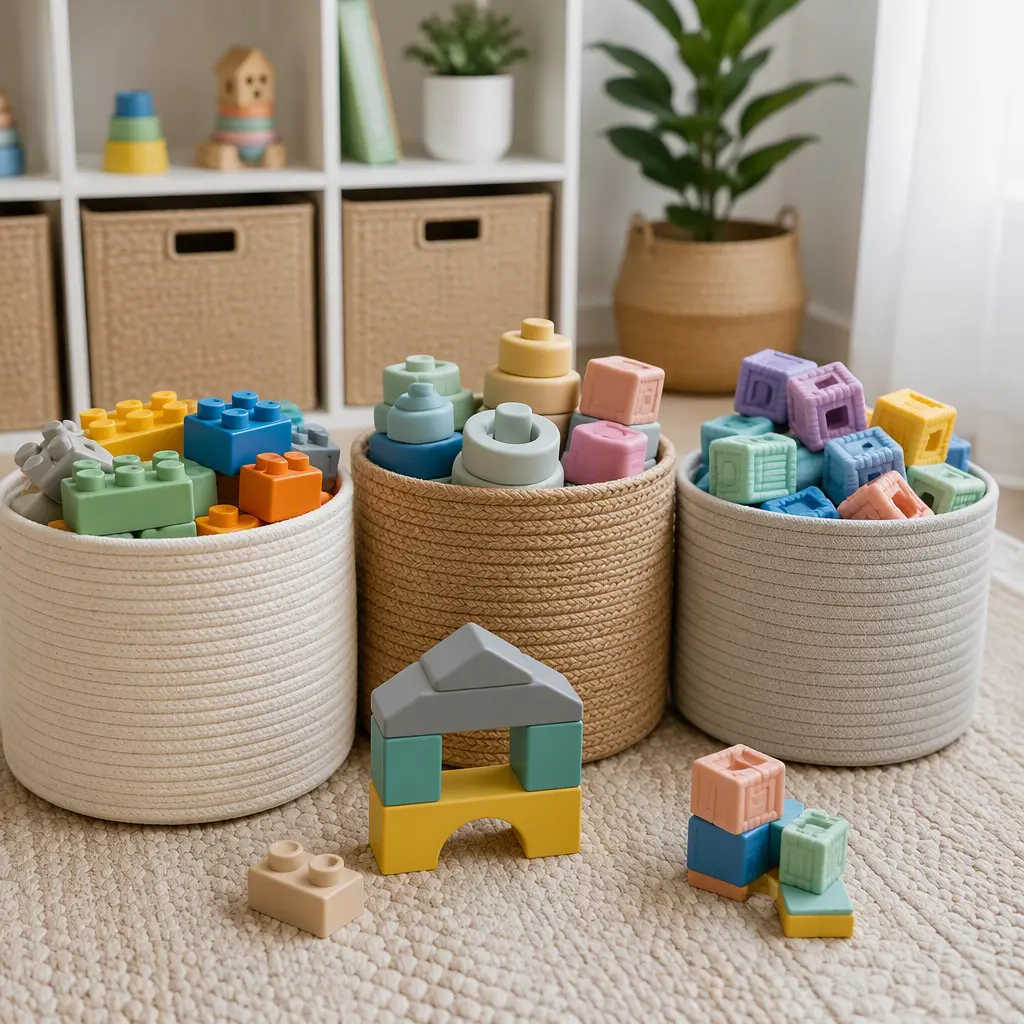
- Think about storage size since large toddler-safe blocks can take up significant space.
- Simple connection systems usually suit younger toddlers better than tight interlocking bricks.
Age suitability
Most building toys labelled for ages 1–2 focus on stacking, nesting, connecting and knocking down rather than detailed construction. Large blocks, soft connectors and chunky stacking systems are usually easier for developing hand coordination and safer for frequent mouthing. Smaller interlocking bricks designed for older preschoolers can frustrate younger toddlers because they require more finger strength and more precise alignment. At this stage, many children enjoy sensory exploration as much as building itself, so lightweight pieces that are easy to carry, chew and clean often work better than highly structured sets. Some toddlers also become overwhelmed by very large sets, especially when storage bins overflow or cleanup becomes difficult.
Options compared
Silicone building toys are often among the easiest options for frequent cleaning because they can usually handle soap-and-water washing well and dry relatively quickly. They also tend to be quieter when dropped and softer for toddlers who chew heavily. The trade-off is that some silicone pieces attract lint or dust, and softer materials may not stack as firmly as rigid plastic systems. These sets often suit families wanting quieter indoor play and simpler cleaning routines.
Chunky hard-plastic blocks remain a common choice because they are durable, lightweight and usually easy for toddlers to connect. The best options for this age avoid narrow internal cavities where water can collect after washing. Fully hollow blocks may dry slowly if submerged often, especially after bath play. Plastic sets can also become noisy on tile or hardwood floors, which matters in flats or shared living spaces.
Wooden construction toys can work well when pieces are smooth, sealed and uncomplicated. They are often sturdy and visually calm compared with brightly coloured plastic sets. However, wood generally should not stay wet for long periods, and pieces with drilled holes, elastic cords or layered construction can be harder to sanitise after repeated mouthing. Wooden stacking and connecting toys may suit parents prioritising screen-free open-ended play with less visual clutter, but they often need gentler cleaning routines.
- Soft silicone connectors: quieter, flexible and easy to rinse; may collect dust and can feel less stable for tall builds.
- Chunky plastic blocks: durable and beginner-friendly; watch for trapped water inside hollow parts.
- Sealed wooden blocks: sturdy and simple; better for wipe-clean use than soaking.
- Magnetic toddler construction sets: usually easy to wipe down externally but often heavier and better suited closer to age 2 than newly mobile toddlers.
- Bath-compatible construction toys: convenient for dual use, but choose designs that fully drain and dry.
Frequently asked questions
Are dishwasher-safe building toys better?
Dishwasher-safe materials can simplify cleaning, but dishwasher compatibility alone does not guarantee better hygiene. Toys with enclosed spaces may still trap moisture afterward. Fast drying and easy visual inspection matter just as much as heat resistance.
Should toddlers under 2 use magnetic building toys?
Some magnetic construction toys are designed for toddlers with large sealed pieces, but many magnetic systems are intended for older children. For ages 1–2, piece size, weight and durability are especially important. Avoid sets with small detachable magnets or tiny components.
What materials are easiest to sanitise?
Smooth non-porous materials with minimal seams are usually easiest to clean thoroughly. Silicone and sturdy sealed plastics are common choices because they rinse easily and tolerate frequent wiping. Toys with absorbent fabrics or hidden compartments are generally harder to maintain.
How many pieces does a toddler really need?
For most 1–2 year olds, a smaller set with large easy-to-handle pieces is often enough. Too many pieces can make cleanup harder and reduce focus during play. Toddlers at this age usually repeat simple stacking and connecting actions rather than build large structures.
Are bath building toys practical?
They can be useful for families short on storage space because one set serves multiple play areas. The main concern is drying. Toys that separate fully and have open designs are generally easier to keep clean than sealed squirting toys or blocks with hidden water chambers.
The best washable building toys for toddlers are usually the simplest ones: large pieces, smooth surfaces, durable materials and designs that dry quickly after cleaning. Parents dealing with frequent mouthing often benefit more from easy maintenance and safe sizing than from complicated construction features. Choosing a set that fits both the child’s developmental stage and the household’s cleaning tolerance can make screen-free building play easier to sustain day after day.