Wooden Train Sets vs Magnetic Trains for Easy Cleanup
Compare wooden and magnetic train systems for ages 3–5, with practical guidance on cleanup, storage, durability, supervision, and which style fits everyday family play.
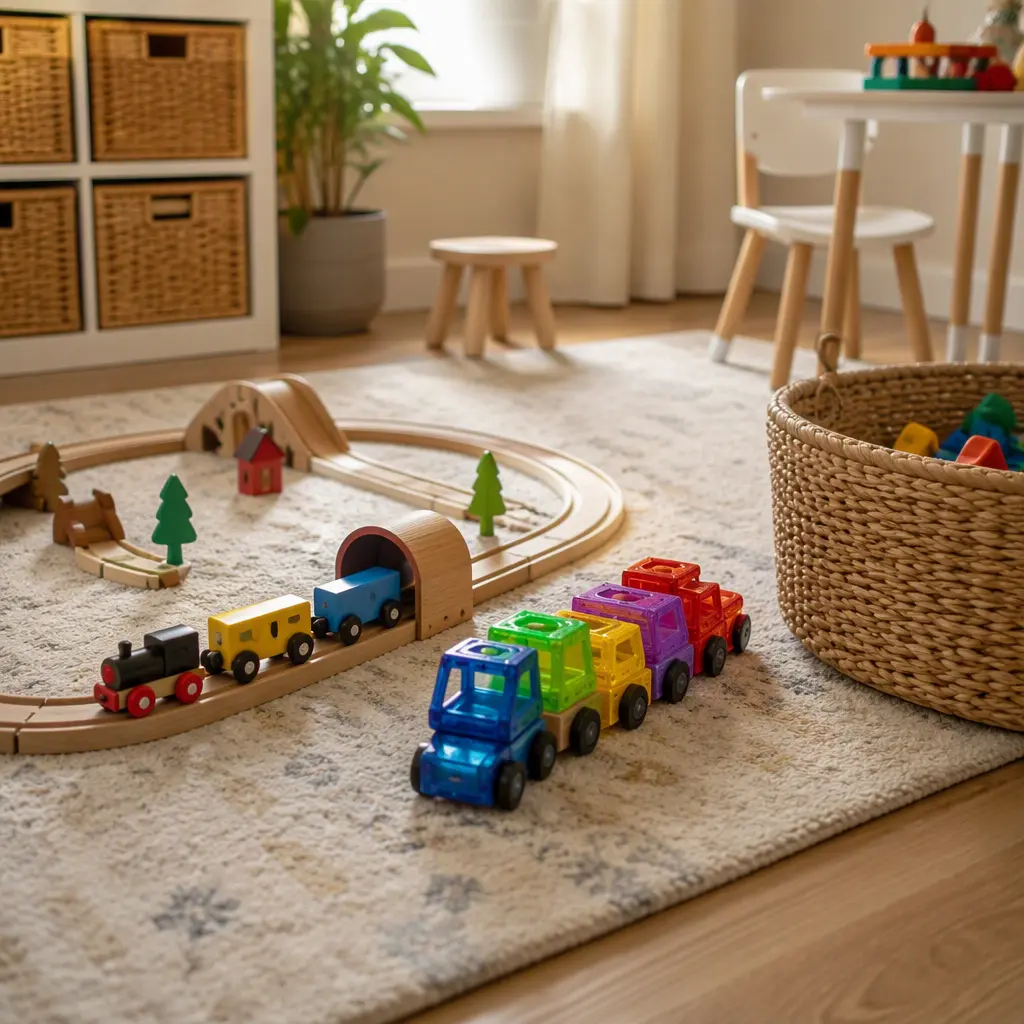
Compare prices and availability
Check current prices and availability for this guide on eBay.
As an eBay Partner, we may be compensated if you make a purchase.
Train sets are a popular screen-free choice for preschoolers because they encourage open-ended play, problem solving, and storytelling without needing batteries or apps. For parents, though, the bigger question is often practical: which type creates less frustration during daily use? Wooden train systems and magnetic train systems each handle cleanup, storage, rough play, and independent use differently. Some families want a toy that can stay set up for days, while others need something compact that clears away quickly after dinner. Understanding the trade-offs before buying can help avoid a toy that ends up scattered across the floor or abandoned after a few weeks.
What to look for
The easiest train sets to live with are usually the ones that match a child’s coordination level and a family’s available storage space. Preschoolers often rebuild tracks repeatedly, carry trains around the house, and mix pieces together, so durability and simple connections matter more than elaborate features. Parents should also consider floor space, noise level, and how likely a child is to play independently without constant rebuilding help.
- Large, easy-to-connect pieces are usually less frustrating for ages 3–5 than tiny clip systems or complicated electronic tracks.
- Wooden tracks tend to stay stable during floor play, while lightweight magnetic systems are often faster to pack away.
- Magnetic couplings are easier for younger preschoolers to connect independently than hook-style train links.
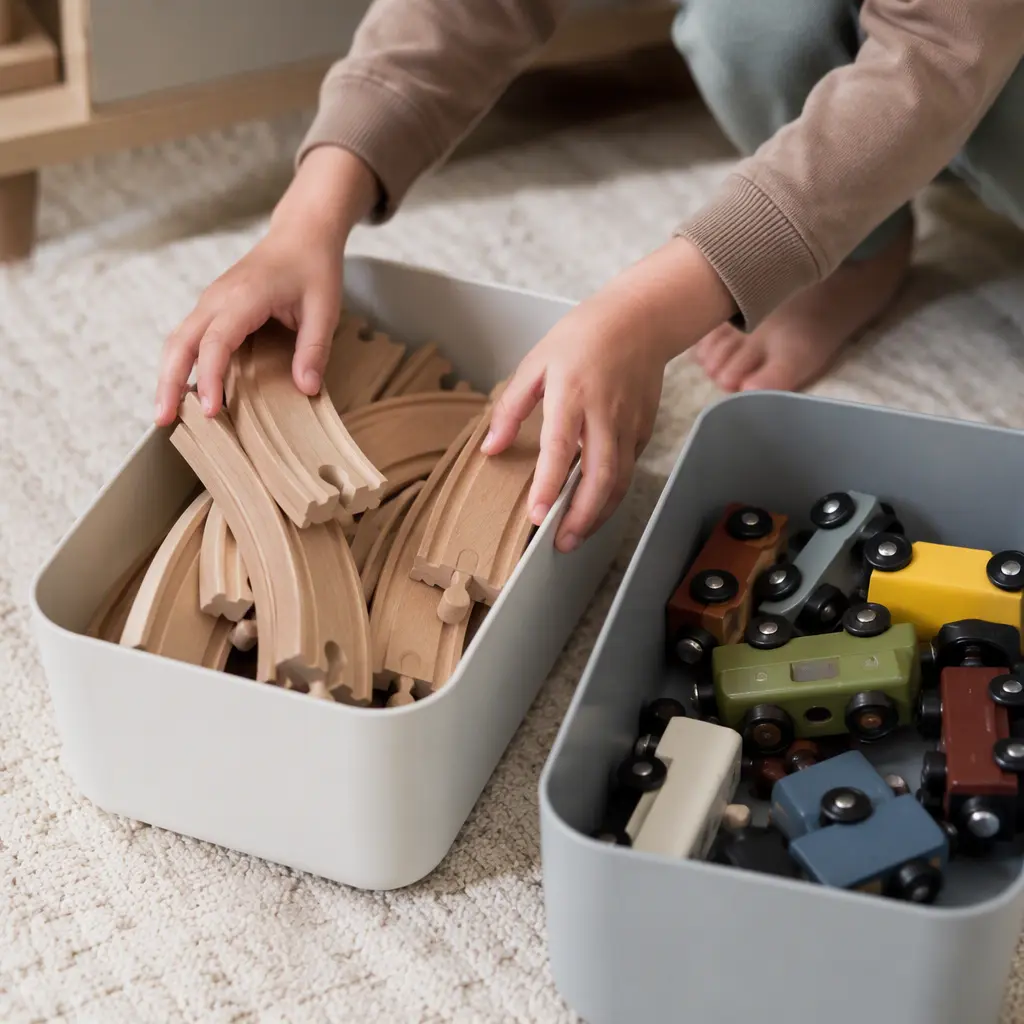
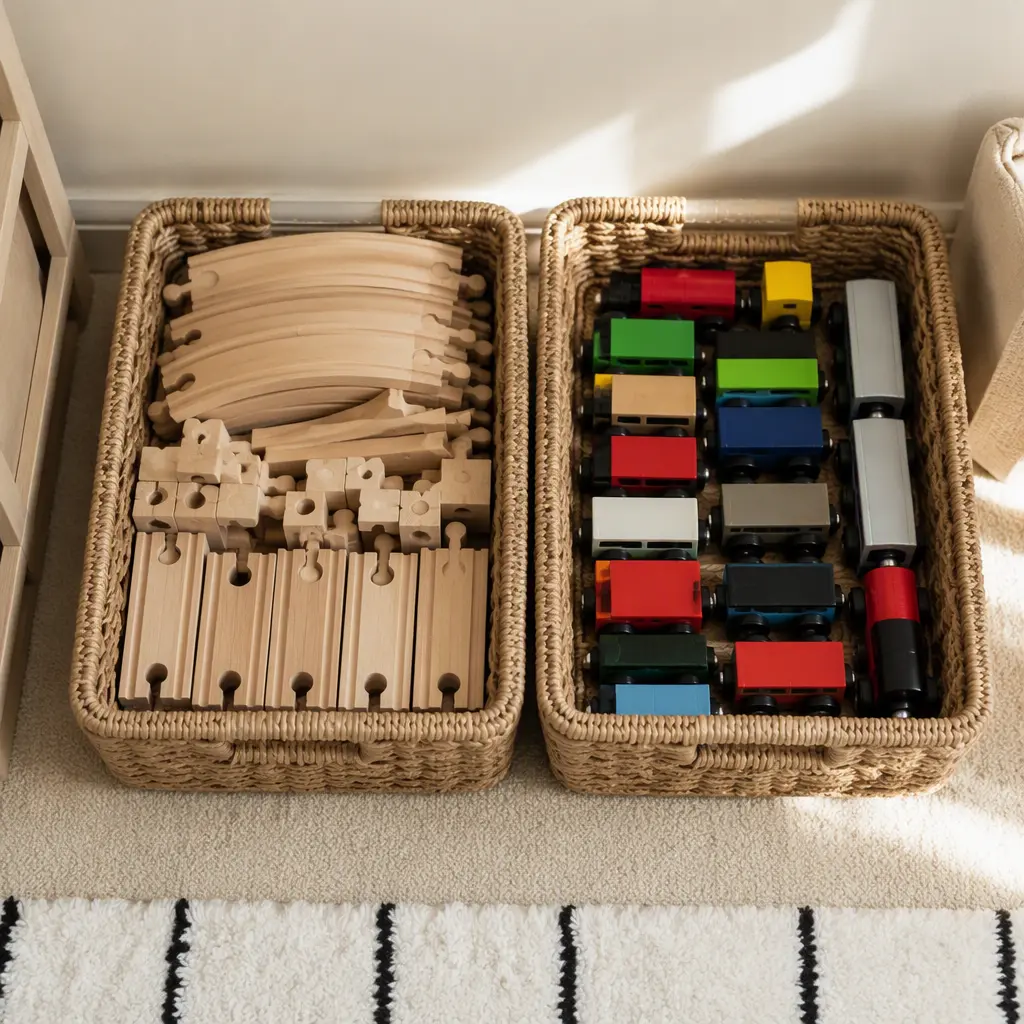
- Open storage bins work better than deep boxes because children can see and sort pieces quickly.
- Sets with many accessories can increase imaginative play but also create more cleanup and missing-piece problems.
- If toys are shared between siblings, sturdier wooden pieces generally tolerate rough handling better over time.
- Families in apartments or smaller homes may prefer compact magnetic systems that fit into a single container more easily.
Age suitability
For ages 3–5, both wooden and magnetic train systems can work well, but they suit slightly different stages of play. Younger three-year-olds often benefit from simple wooden tracks with large trains that are easy to grasp and difficult to damage. Magnetic train cars are also appealing at this age because connecting them takes less precision than small hooks or clips. By ages four and five, many children enjoy building more complex layouts, adding bridges or tunnels, and creating pretend travel stories. Some children become deeply interested in construction and layout design, while others mainly enjoy pushing trains around quickly. A child who prefers active movement may lose patience with delicate setups that fall apart easily. Parents should also consider cleanup habits honestly. Children who already resist tidying may do better with a smaller starter system rather than a large collection of specialty pieces.
Options compared
Wooden train systems are often the better choice for families prioritizing durability and long-term play. The tracks are heavier, which helps layouts stay in place during active play sessions. Many wooden systems also remain compatible across different product lines, making expansion easier over time without replacing everything. The downside is storage volume. Wooden tracks, bridges, and stations can quickly spread across shelves or toy bins, and cleanup may take longer because there are simply more large pieces to organize.
Magnetic train systems are usually easier for quick daily use. The magnetic couplings help preschoolers connect trains independently, reducing frustration during play. Some magnetic systems also use fewer pieces overall, which can make cleanup faster and simplify travel or storage in smaller homes. However, lightweight pieces can slide apart more easily during rough handling, and certain magnetic tracks or connectors may not tolerate repeated stepping or tossing as well as thick wooden components. Families with highly active children sometimes find that sturdier wooden tracks survive longer under heavy everyday use.
- Wooden train sets suit children who enjoy building layouts, repeated pretend play, and tactile construction activities.
- Magnetic train systems suit families wanting fast setup, simpler cleanup, and portable play.
- Large shared playrooms can accommodate expansive wooden layouts more comfortably than small apartments.
- Children who become frustrated by tricky connections often prefer magnetic couplings.
- Parents sensitive to clutter may prefer smaller magnetic collections instead of large wooden accessory sets.
- Wooden systems are often quieter than battery-powered train toys, making them more suitable for calm indoor play.
- Families wanting a long-lasting toy that can grow gradually over several years may lean toward wooden track systems.
Frequently asked questions
Are wooden train sets too complicated for three-year-olds?
Simple wooden starter sets are usually manageable for many three-year-olds, especially if the track layout is basic. Large curved pieces and magnetic train cars are easier than advanced bridge systems or tiny accessories. Adult help may still be needed during the first few play sessions.
Which type is easier to clean up quickly?
Compact magnetic train systems are often faster to tidy because they use fewer bulky pieces and fit more easily into one storage container. Wooden systems can take longer simply because tracks and accessories occupy more physical space.
Do magnetic trains hold up to rough play?
That depends on the thickness of the materials and the child’s play style. Preschoolers who throw toys, step on tracks, or build aggressively may wear down lightweight magnetic pieces faster than solid wooden tracks. Sturdier materials generally last longer in busy households.
Can different train systems be mixed together?
Many wooden train tracks are designed around similar sizing, so some systems can connect across brands. Magnetic compatibility varies more widely. Checking connector style and track dimensions before expanding a collection can help avoid frustration.
What storage setup works best for train toys?
Wide bins, low shelves, or divided baskets usually work better than deep toy boxes. Preschoolers are more likely to help clean up when they can see where tracks, trains, and accessories belong. Keeping only part of a large collection available at one time can also reduce clutter.
Choosing between wooden train sets and magnetic trains comes down to daily family routines as much as play style. Wooden systems generally offer greater durability and larger building possibilities, while magnetic systems often simplify setup and cleanup. For many preschoolers, either option can support imaginative offline play for years when the collection stays manageable and age-appropriate. The most practical choice is usually the one that fits the available space, the child’s patience level, and how much toy cleanup a household realistically wants to handle each day.