Floor Rockers vs Wobble Boards for Indoor Sensory Play
Comparing floor rockers and wobble boards for ages 3–5, including noise, storage, durability, supervision, and which option children are likely to outgrow sooner.
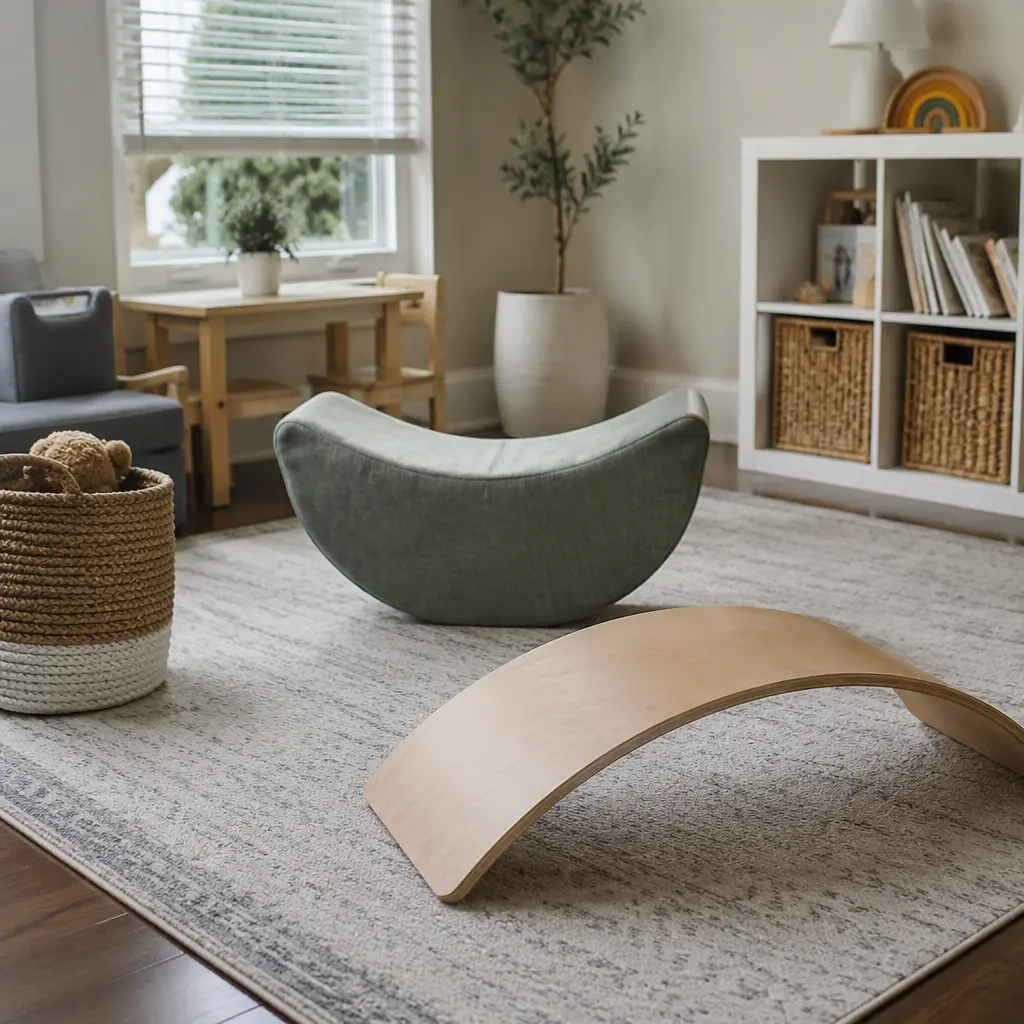
Compare prices and availability
Check current prices and availability for this guide on eBay.
As an eBay Partner, we may be compensated if you make a purchase.
Floor rockers and wobble boards are both popular choices for indoor sensory play because they encourage movement without relying on screens or large climbing equipment. For children aged 3–5, both can support balance, coordination and imaginative play, but they suit different homes and different play styles. Parents often notice the biggest differences in noise, storage space, stability and how long the toy stays interesting as children grow. A floor rocker usually feels more structured and comforting for younger preschoolers, while a wobble board tends to have a longer usable lifespan and more open-ended play value. Choosing between them often comes down to how active your child is indoors, how much floor space you can spare and whether you want a toy mainly for calming sensory input or broader movement play.
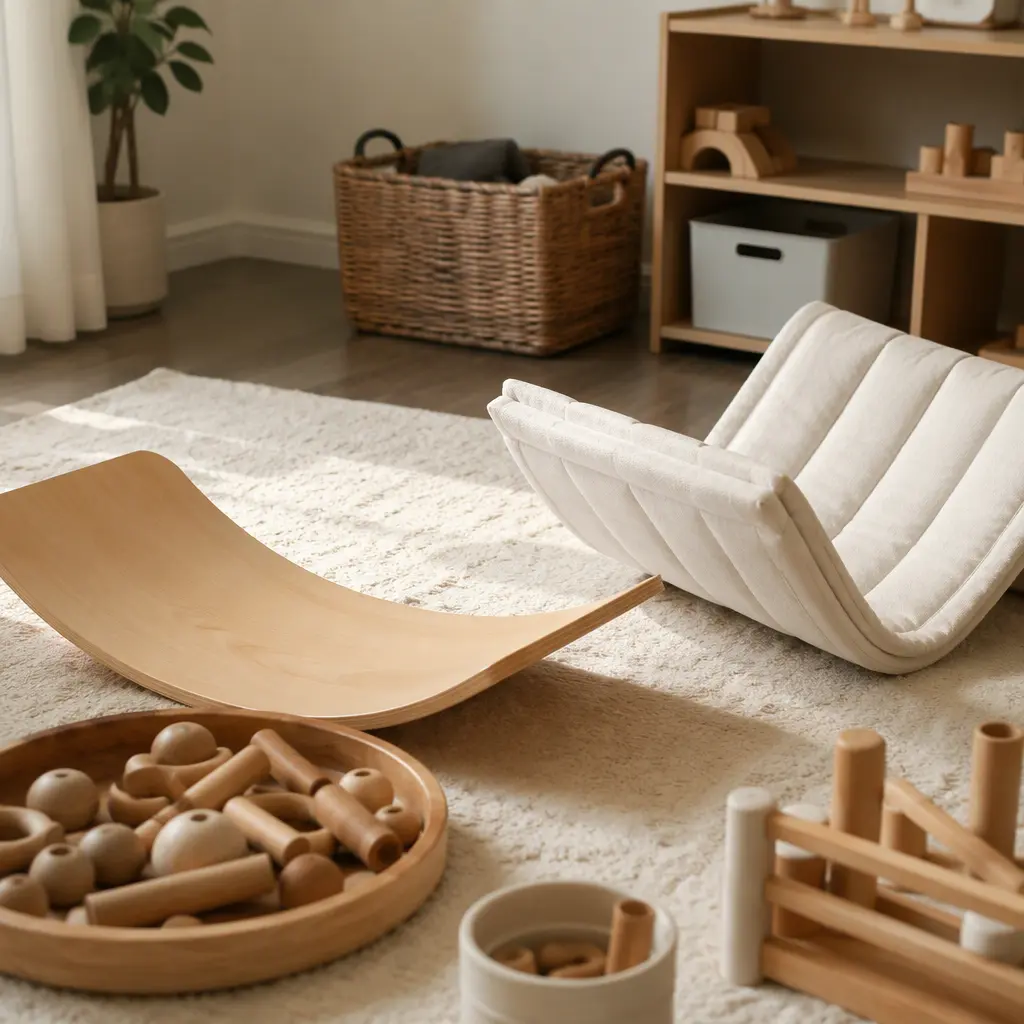
What to look for
The right choice depends partly on your child's movement preferences and partly on your home setup. Some children want fast rocking and active balance play, while others use movement toys more quietly for calming and sensory regulation. Material also matters. Wooden designs are usually more durable and easier to wipe clean, while foam or padded versions can be quieter and gentler on floors. Since these toys stay in shared living areas rather than being packed away after every use, practical details such as storage and noise can matter as much as the play experience itself.
- Noise level: wobble boards can create knocking sounds on hard floors, while padded floor rockers are usually quieter
- Storage: thin wobble boards slide under sofas or beds more easily than bulky rockers
- Weight limits: larger children may outgrow smaller rockers faster than sturdy wooden boards
- Floor protection: both may need a rug or foam mat underneath to reduce slipping and noise
- Play style: rockers suit repetitive motion and calming play, while wobble boards support balancing, climbing and imaginative use
- Durability: solid wood generally lasts longer, but heavier designs can be harder for younger children to move independently
- Cleaning: smooth sealed surfaces are simpler to wipe after messy play or snack time
Age suitability
For ages 3–5, both toy types can work well with supervision, but developmental stage matters. Younger three-year-olds often prefer the predictability of a floor rocker because the movement feels contained and stable. Some designs also provide sides or a deeper seat shape that helps cautious children feel secure. Wobble boards usually become more appealing closer to ages four and five, especially for children who enjoy climbing, balancing and inventing games. Many children use wobble boards in multiple ways, turning them into bridges, ramps, tunnels or pretend boats, which can extend interest longer than a rocker with a single movement pattern. Very energetic children may outgrow lightweight foam rockers quickly, while sturdy wooden wobble boards are often usable beyond the preschool years.
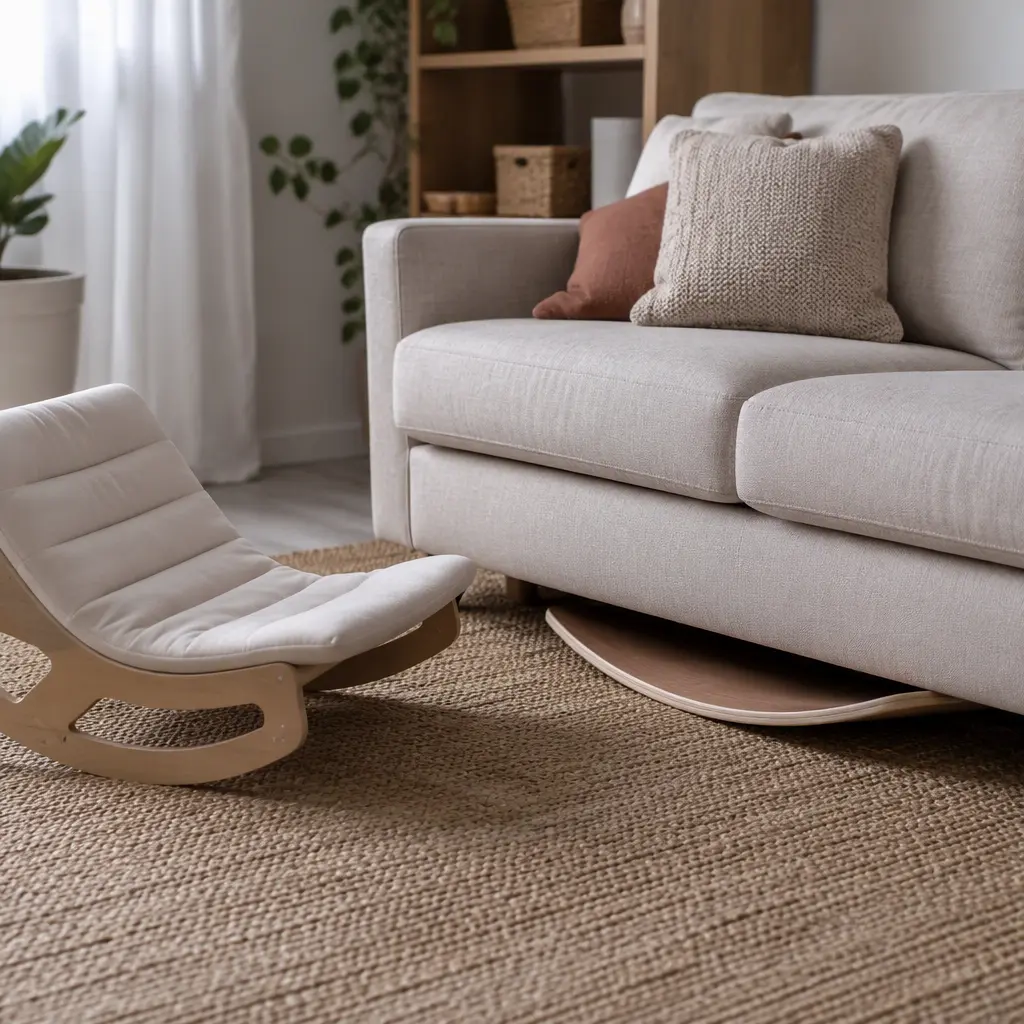
Options compared
Floor rockers are often the easier starting point for children who seek calming movement or who become overwhelmed by more open-ended balance play. They usually encourage sitting, rocking and gentle vestibular input rather than climbing. This can make them a better fit for apartments or quieter households where loud jumping and crashing are less practical. Some parents also prefer them for shared family rooms because they feel more contained and less likely to turn into obstacle-course equipment. The trade-off is that many children outgrow them sooner, particularly if the rocker is small or lightweight.
Wobble boards are generally more versatile. A single board can support balancing games, imaginative play and gross motor movement without needing batteries or accessories. They also store more easily because most are thin enough to stand vertically or slide under furniture. However, they tend to be noisier on hardwood floors and may encourage more physically active play than some indoor spaces can comfortably handle. Children who enjoy climbing furniture may treat the board as a challenge toy, which increases supervision needs. For families wanting a longer-lasting sensory toy with flexible play value, a wobble board often makes more sense. For children mainly seeking soothing rocking motion or predictable movement, a floor rocker may feel more immediately satisfying.
- Choose a floor rocker if your child prefers calming motion, quieter play or more supported seating
- Choose a wobble board if your child enjoys balancing, imaginative games and active movement
- Small homes may benefit from wobble boards because they store flat more easily
- Noise-sensitive households may prefer padded rockers over wooden balance equipment
- Children who get bored quickly often stay engaged with wobble boards for longer because the play style changes over time
Frequently asked questions
Which option is quieter on hard floors?
Padded floor rockers are usually quieter than wooden wobble boards, especially on laminate or hardwood flooring. Adding a rug or foam play mat underneath either toy can reduce sound and slipping.
Do wobble boards take up less space?
Most wobble boards are easier to store because they are thin and lightweight enough to slide under furniture or stand against a wall. Floor rockers often need dedicated floor space even when not in use.
Which toy gets outgrown faster?
Many children outgrow small floor rockers sooner because the movement options stay fairly limited. Wobble boards often last longer into early school years because children continue inventing new ways to use them.
Are these toys suitable for daily use?
Both can work well for daily screen-free movement breaks if there is enough safe floor space. Rotating them with other open-ended toys can help maintain interest without overstimulating the room.
What materials are easiest to maintain?
Sealed wood and wipe-clean fabric surfaces are usually the simplest to maintain. Plush fabrics may collect dust or crumbs more easily, while unfinished wood can show marks over time.
For most families deciding between these two sensory play options, the main question is whether they want a calming movement toy or a more flexible active-play tool. Floor rockers suit children who enjoy repetitive soothing motion and quieter indoor play, especially in smaller or noise-sensitive homes. Wobble boards generally offer longer-term versatility and easier storage, making them appealing for families wanting one screen-free movement toy that can adapt as a child grows. Looking closely at floor space, flooring type, supervision needs and your child's preferred style of movement will usually point toward the better fit.