Rechargeable vs Wind-Up Flashlights for Kids
Compare rechargeable and wind-up flashlights for kids aged 6–8, including durability, charging needs, brightness trade-offs, and which style works best for campouts and backyard play.
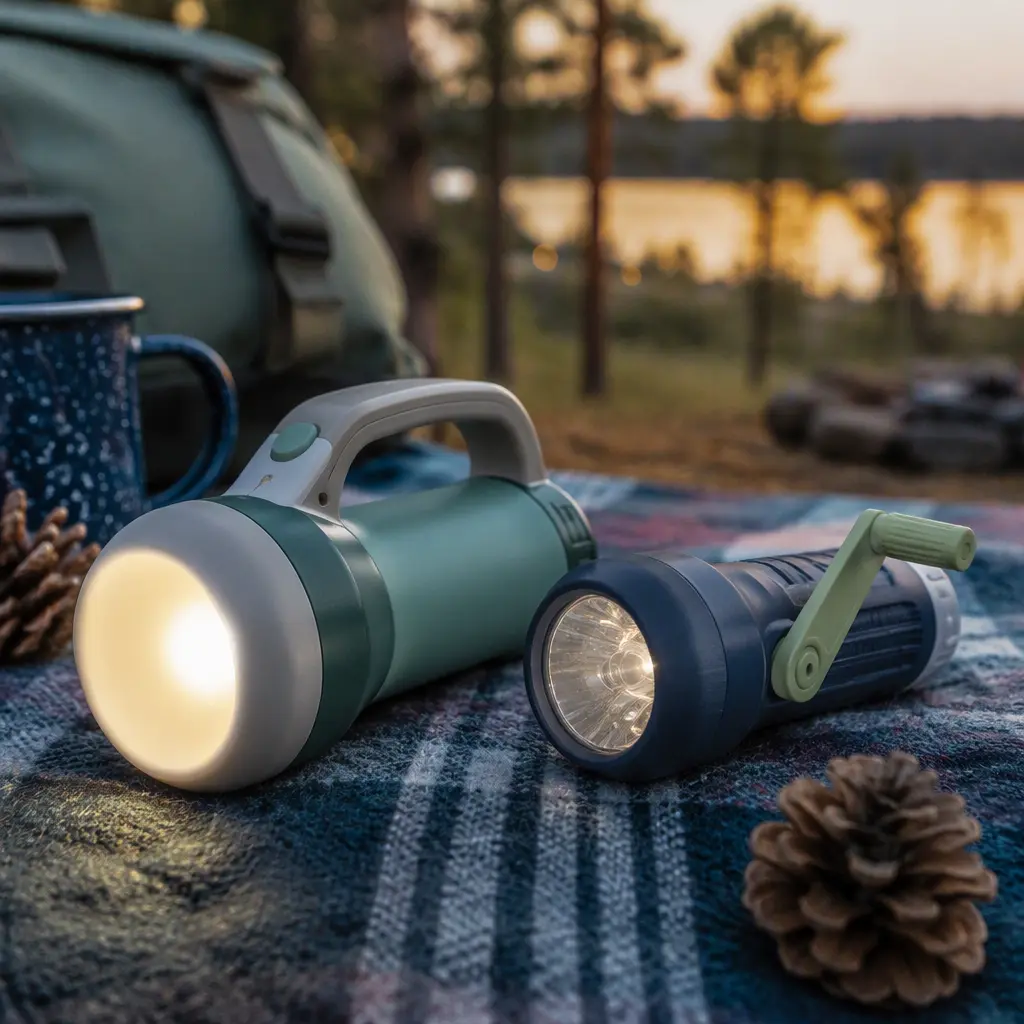
Compare prices and availability
Check current prices and availability for this guide on eBay.
As an eBay Partner, we may be compensated if you make a purchase.
A flashlight can make backyard campouts, evening walks and family camping trips more fun for children aged 6–8, while also giving them a practical sense of independence after dark. For many parents, the main choice comes down to rechargeable flashlights or wind-up models that work without disposable batteries. Both can support screen-free outdoor play, but they suit different routines, attention spans and travel situations. Rechargeable flashlights are usually easier for children to operate and often provide steadier light, while wind-up versions remove the need to remember charging cables or spare batteries. The better option depends on how often the flashlight will be used, how rough the play environment is and how much maintenance parents want to manage.
What to look for
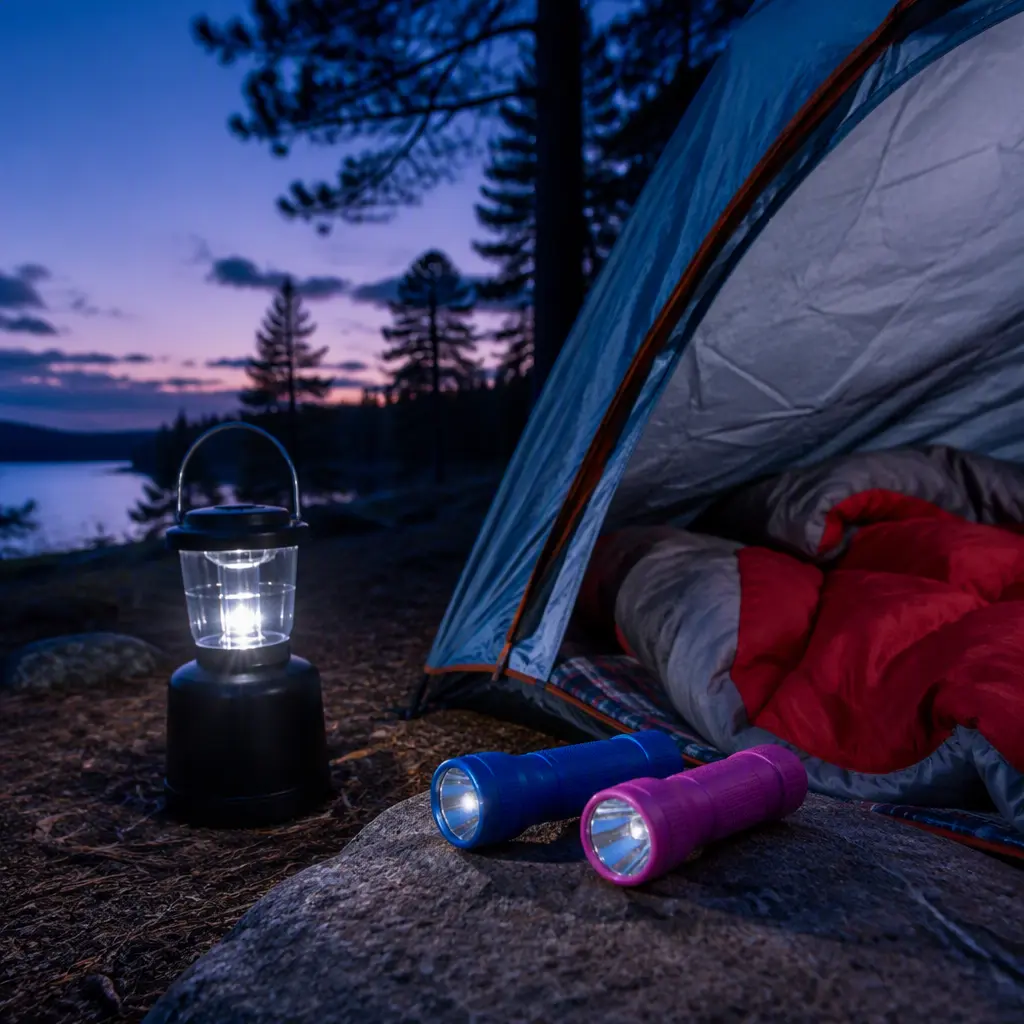
For children in the 6–8 age range, the best flashlight is usually simple, durable and easy to grip with small hands. Complicated settings and overly bright beams can become frustrating or distracting during outdoor play. It also helps to think about where the flashlight will mostly be used. Backyard campouts and indoor blanket forts place different demands on a flashlight than longer family camping trips or hikes.
- Durability matters more than extra features. Rubber edges, chunky buttons and drop-resistant construction are useful for outdoor play.
- Consider beam brightness carefully. Extremely bright lights can be uncomfortable for children and disruptive in tents or shared campsites.
- Rechargeable models reduce disposable battery waste but require regular charging access and cable management.
- Wind-up flashlights work without power outlets, making them useful for camping trips, emergency kits and travel.
- Weight affects comfort. Heavy flashlights can tire smaller hands during longer use.
- Check how easy the switch or crank is to operate independently. Some wind-up handles require more strength or coordination than others.
- Water resistance is helpful for damp grass, light rain and outdoor use, though most children still need reminders not to leave flashlights outside overnight.
- Storage can become an issue if charging docks, cables or bulky lantern-style designs are involved. Compact models are easier to pack for trips.
Age suitability
Children aged 6–8 are usually ready for more responsibility with outdoor gear, but they still benefit from straightforward controls and predictable performance. Rechargeable flashlights often suit children who already remember routines such as plugging in tablets, headphones or night lights. Wind-up flashlights can appeal to children who enjoy mechanical gadgets and hands-on interaction, although repeated cranking may become tiring during longer activities. For younger or easily frustrated children within this age band, a rechargeable flashlight with a single on-off button is often the easier option. Children who enjoy imaginative outdoor play, scavenger hunts or emergency-preparedness themes may find wind-up designs more engaging.
Options compared
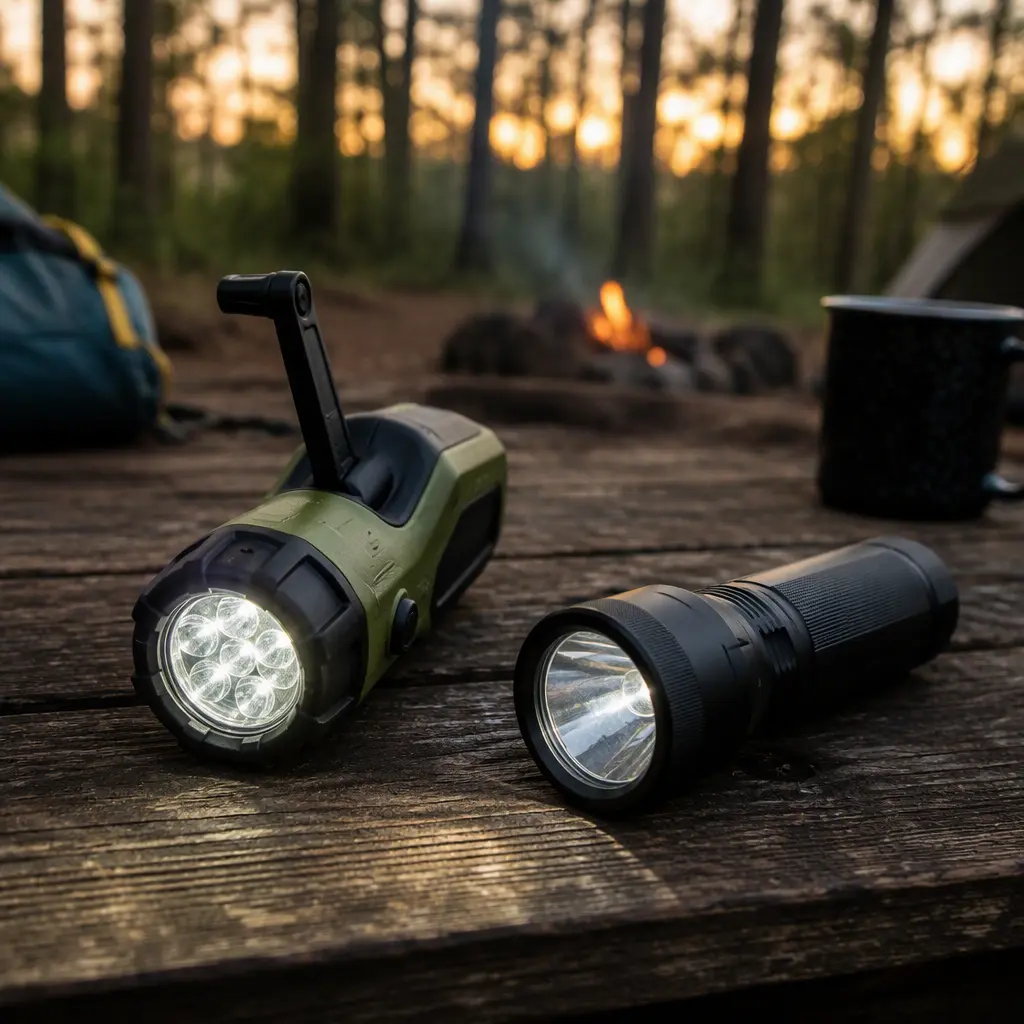
Rechargeable flashlights are often the easiest choice for frequent use at home. Many provide consistent light output and require less physical effort from children during use. They can work well for bedtime reading in tents, nighttime bathroom trips at campsites or evening backyard games. Families who already charge multiple devices may prefer adding one more rechargeable item rather than storing disposable batteries. The trade-off is that a forgotten charge can leave the flashlight unusable at the wrong moment, especially on longer trips without reliable power access.
Wind-up flashlights remove the need for spare batteries and charging cables, which can make them practical for camping bins, emergency kits or occasional outdoor adventures. They are also useful for teaching children simple cause-and-effect mechanics because the light depends on physical cranking. However, the light output is often less steady than rechargeable alternatives, and some children lose patience with repeated winding. Wind-up models may suit families who camp occasionally and want a flashlight that can sit unused for long periods without worrying about drained batteries.
- Rechargeable flashlights: best for frequent backyard use, regular camping trips, children who prefer simple controls and families comfortable with charging routines.
- Wind-up flashlights: best for emergency preparedness, occasional camping, reducing reliance on charging cables and children who enjoy mechanical play.
- Avoid very small keychain-style flashlights for this age group because they are easier to lose and can be frustrating to operate.
- Avoid oversized tactical-style flashlights that are too heavy, overly bright or designed mainly for adult outdoor use.
- Lantern-style hybrids can work for shared tent lighting but are bulkier for independent play and may take up more packing space.
Frequently asked questions
Are rechargeable flashlights safe for children?
Most child-friendly rechargeable flashlights are designed with simple enclosed batteries and easy charging systems, but adults should still supervise charging and inspect devices for cracks or damaged ports. Choosing sturdy designs with limited settings can make them easier and safer for children to use independently.
Do wind-up flashlights last as long as rechargeable ones?
That depends more on build quality and storage conditions than on the power system alone. Wind-up mechanisms can wear down over time if handled roughly, while rechargeable batteries may gradually hold less charge after years of use. For occasional camping, either type can last well if stored dry and clean.
Which type is better for camping trips?
Rechargeable flashlights are convenient for shorter trips with access to vehicle charging or power banks. Wind-up flashlights can be useful for longer trips where charging opportunities are limited. Some families keep both types available: rechargeable lights for everyday use and wind-up versions as backups.
Do children this age need very bright flashlights?
Usually not. Moderate brightness is often more practical for tents, backyard games and walking paths. Extremely bright beams can disrupt night vision, bother other campers and encourage unsafe play such as shining lights directly at faces.
Are novelty flashlight designs a good idea?
Novelty shapes can encourage children to use and carry a flashlight, but highly themed designs sometimes prioritize appearance over grip comfort or durability. For regular outdoor use, simpler designs with sturdy construction are often easier to manage and store.
For most families, the choice between rechargeable and wind-up flashlights comes down to convenience versus independence from charging. Rechargeable models tend to be simpler for regular use and frequent play, while wind-up flashlights can be reassuring for camping trips and emergency backup situations. Focusing on durability, comfortable handling and age-appropriate brightness will usually matter more than extra features or novelty styling.