Mini Trampolines vs Balance Boards for Indoor Energy
Comparing mini trampolines and balance boards for children aged 6–8, with practical guidance on storage, noise, supervision, safety and apartment-friendly indoor play.
Compare prices and availability
Check current prices and availability for this guide on eBay.
As an eBay Partner, we may be compensated if you make a purchase.
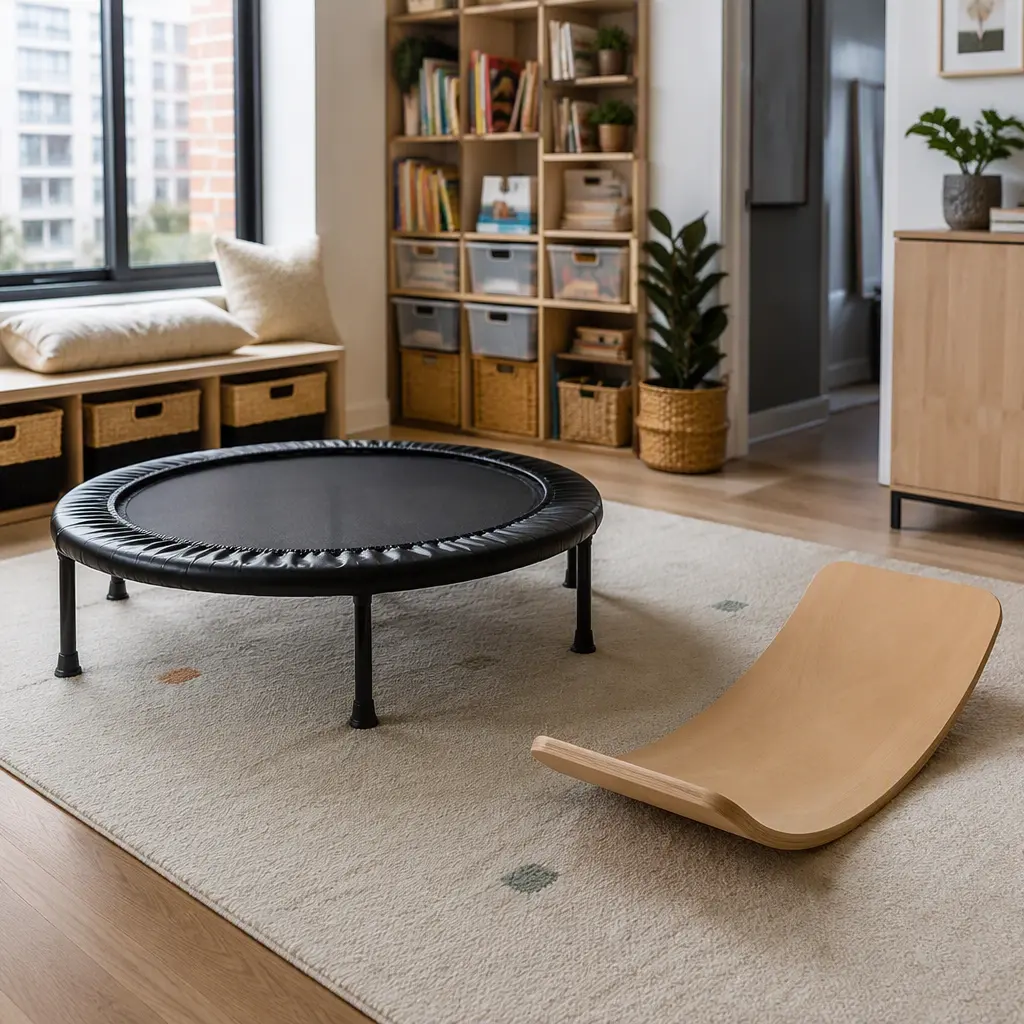
For children aged 6–8 who need active indoor play, mini trampolines and balance boards solve different problems. Both encourage movement without relying on screens, but they create very different experiences at home. A mini trampoline focuses on repetitive jumping and high-energy movement, while a balance board encourages coordination, core strength and imaginative play in a smaller footprint. For families in apartments, shared buildings or rainy climates, the better choice often comes down to noise levels, available floor space, supervision needs and how easily the toy can disappear when playtime ends.
What to look for
The biggest practical difference between these two toy types is how they affect the home around them. A trampoline creates more movement, vibration and excitement, while a balance board usually fits more quietly into everyday routines. Before choosing, think about flooring, downstairs neighbours, storage space and whether the toy will stay accessible or need to be packed away after each use.
- Check floor protection needs. Mini trampolines can transfer impact through wooden floors, while balance boards are usually quieter but may slide on smooth surfaces without a rug or mat.
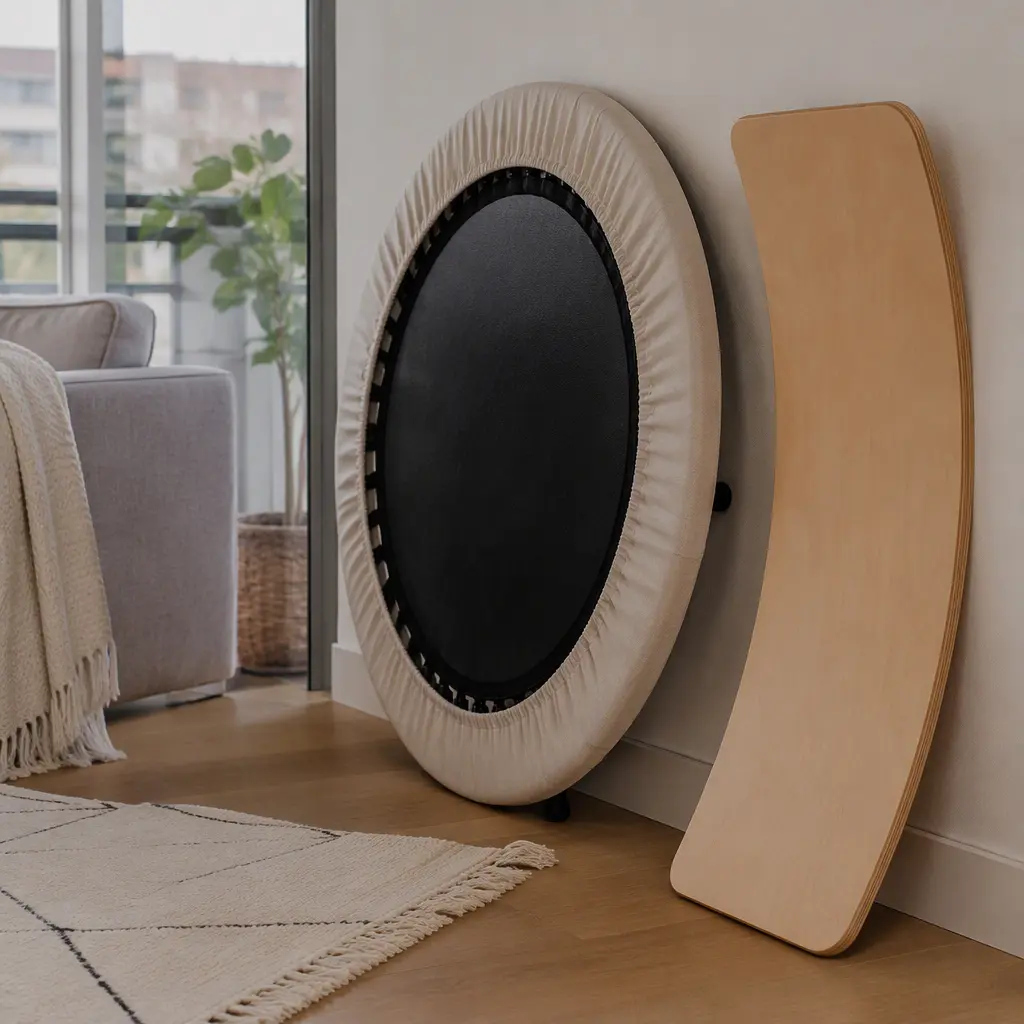
- Measure storage space carefully. Foldable trampolines still take up noticeable room, whereas most balance boards can slide under a sofa or stand vertically in a closet.
- Consider supervision levels. Trampolines generally need closer monitoring because children may attempt risky jumps or rough play with siblings.
- Think about noise tolerance. Jumping sounds and spring movement can become tiring in apartments or small homes.
- Look at long-term play value. Balance boards often double as pretend-play props, ramps, bridges or reading seats, while trampolines are more single-purpose.
- Check weight guidance and age recommendations from the manufacturer rather than relying only on marketing labels.
- Decide whether the toy needs to support independent play or short bursts of parent-guided activity. Trampolines often work best with clear household rules and time limits.
Age suitability
Children aged 6–8 usually have the coordination to use either option safely with appropriate setup and supervision, but their play style matters. Mini trampolines suit children who actively seek movement, jumping and sensory input. They can help burn energy quickly during bad weather or after school. Balance boards are often a better match for children who enjoy climbing, rocking, obstacle courses or imaginative play. Some children use them constantly in different ways, while others lose interest if they expect fast-paced physical activity. Families with younger siblings should also think about shared use. Balance boards can sometimes appeal across wider age ranges with supervision, while trampolines tend to require stricter age and safety separation.
Options compared
Mini trampolines are usually the stronger choice for children who need intense movement indoors. They provide repetitive physical activity in a relatively small area and can help during long stretches of indoor weather. For some families, this concentrated energy outlet is worth the larger footprint and higher noise level. However, they are rarely subtle. Even compact models can dominate a room visually, and the sound of jumping may not suit apartment living or late-evening play. Parents also need to enforce one-child-at-a-time rules consistently.
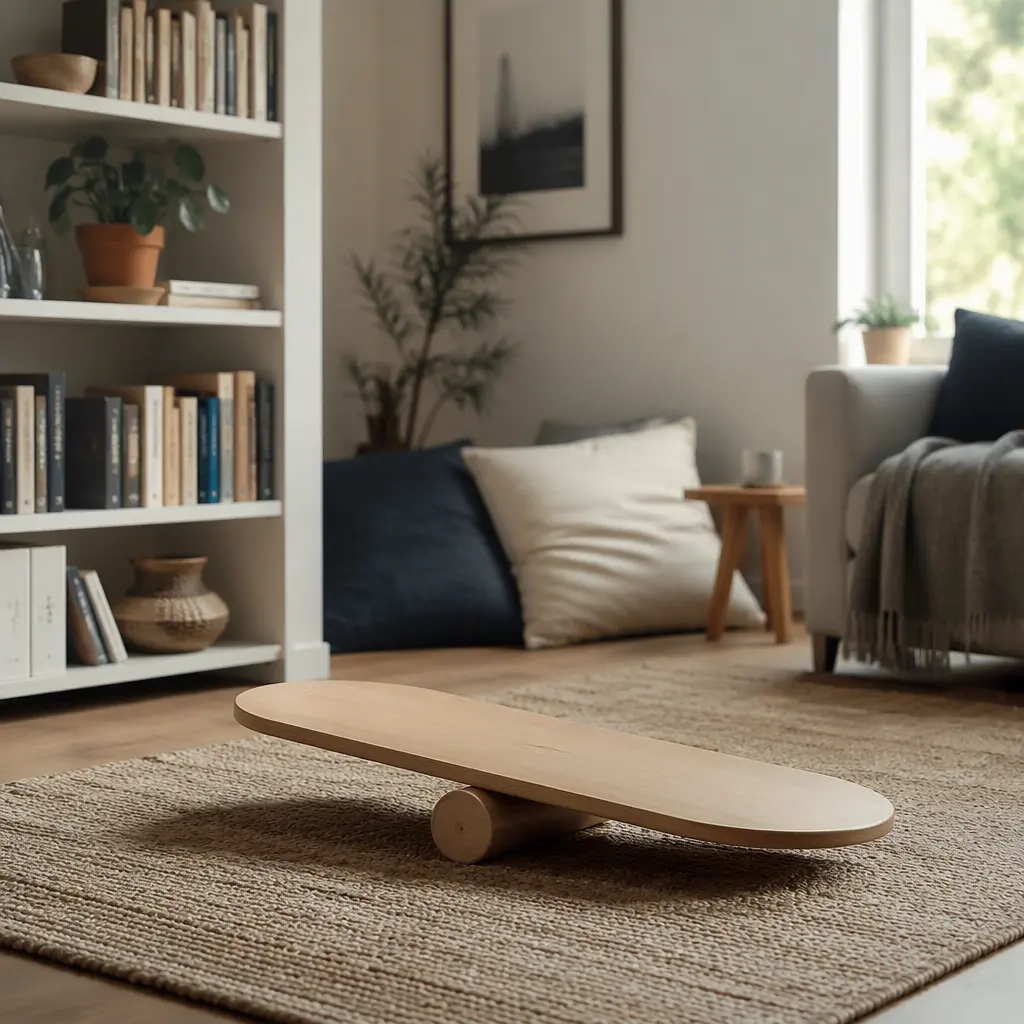
Balance boards fit more easily into shared living spaces. They are typically lighter, easier to store and less disruptive to neighbours. Many children also use them creatively beyond balancing alone, turning them into tunnels, bridges, ramps or pretend boats. This flexibility can increase long-term value, especially in homes where toy storage is limited. The trade-off is that balance boards usually provide lower-intensity exercise. A child looking for fast physical release may outgrow the novelty more quickly unless the board becomes part of obstacle courses or open-ended play.
- Choose a mini trampoline if your child mainly needs vigorous indoor movement and you have enough floor space and noise tolerance.
- Choose a balance board if storage, quiet play and flexible use matter more than high-energy exercise.
- Apartment households often find balance boards easier to manage day-to-day.
- Homes with dedicated playrooms may handle trampoline size and noise more comfortably.
- Children who enjoy structured physical activity may prefer trampolines, while imaginative players often get more varied use from balance boards.
- Families with limited storage may appreciate how easily most balance boards tuck away after use.
Frequently asked questions
Are mini trampolines too noisy for apartments?
They can be. Noise depends on flooring, insulation and how intensely children jump. Even quieter designs may create vibration that travels through floors. A protective mat underneath can help reduce sound and movement, but apartment households should still consider neighbour tolerance before buying.
Do balance boards actually keep kids active?
They encourage movement differently from cardio-focused toys. Children rock, balance, climb and invent games around them, which supports coordination and core engagement. They are less effective for children who mainly want to run, jump or burn off large amounts of energy quickly.
Which option is easier to store?
Balance boards are usually much easier to store because they are slim and lightweight. Many fit under furniture or inside closets. Mini trampolines, including foldable versions, still require more dedicated storage space and can be awkward to move frequently.
Do either of these toys require constant supervision?
Mini trampolines generally need more active supervision, especially when multiple children are nearby. Balance boards still need safe placement and occasional monitoring, but they usually involve lower-impact movement. Supervision levels also depend on the child's confidence, coordination and tendency toward risky play.
Which toy gives better long-term value?
That depends on how the child plays. Trampolines often deliver strong short-term excitement and physical activity, but they are more single-purpose. Balance boards can remain useful longer because they support imaginative play, obstacle courses and quiet movement activities across different ages.
For many families, the decision comes down to household practicality more than features alone. Mini trampolines provide a focused outlet for energetic children but demand more space, supervision and noise tolerance. Balance boards fit more naturally into smaller homes and quieter routines while offering flexible, open-ended play. Matching the toy to the child's play style and the realities of the home usually leads to the better long-term choice.