Quiet Gross-Motor Toys for Rainy-Day Indoor Play
Compare quieter climbing, balance and movement toys for ages 3–5 that fit apartment living, limited space and rainy-day indoor play without constant stomping or loud electronics.
Compare prices and availability
Check current prices and availability for this guide on eBay.
As an eBay Partner, we may be compensated if you make a purchase.
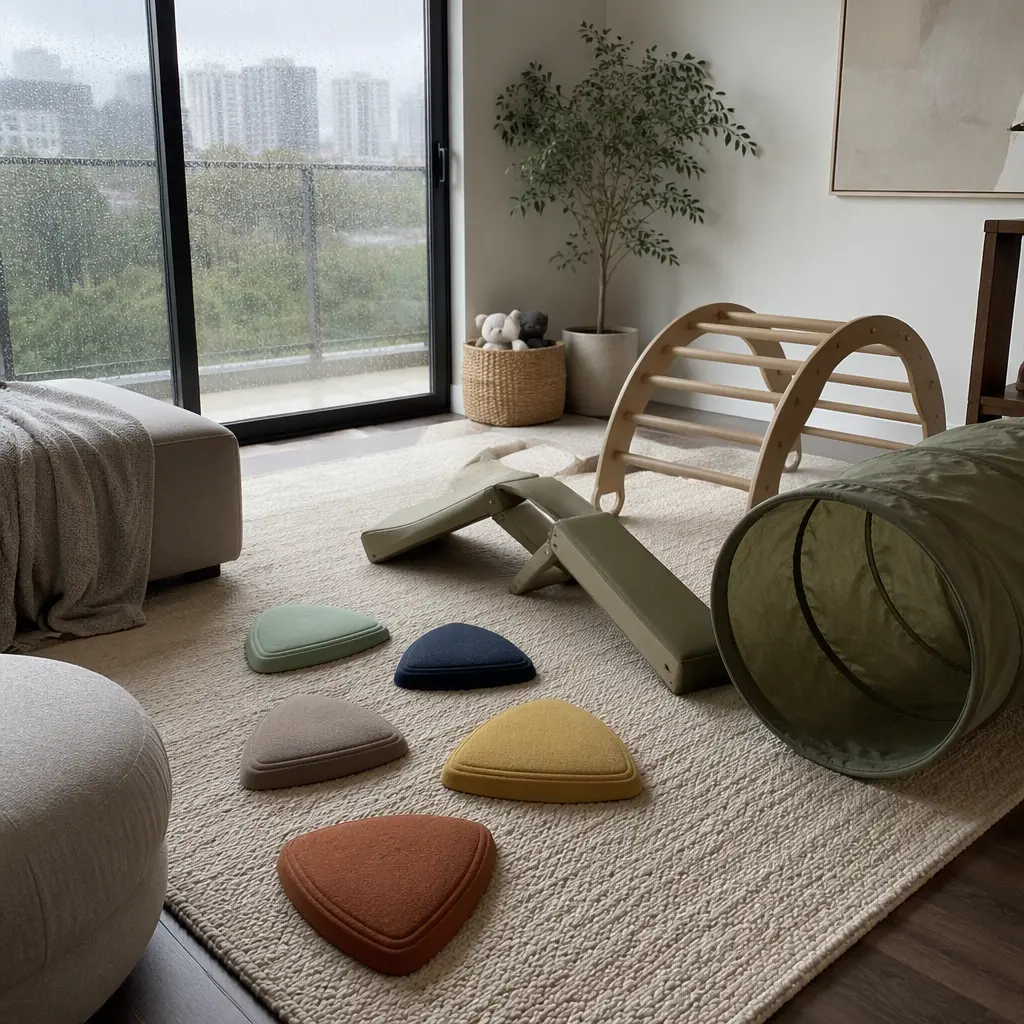
Rainy days can leave energetic preschoolers bouncing off the furniture, especially in apartments or shared homes where noise carries easily. Quiet gross-motor toys aim to give children space to climb, balance, crawl and jump without the constant crashing sounds that come with large plastic playsets or ride-on toys. For ages 3–5, the most practical choices tend to focus on controlled movement rather than speed. Foam balance paths, low climbing structures, foldable mats and stepping toys can support coordination and active play while keeping noise, storage demands and supervision needs manageable. The right choice depends less on flashy features and more on floor type, available space, cleanup and how much movement your child actually enjoys.
What to look for
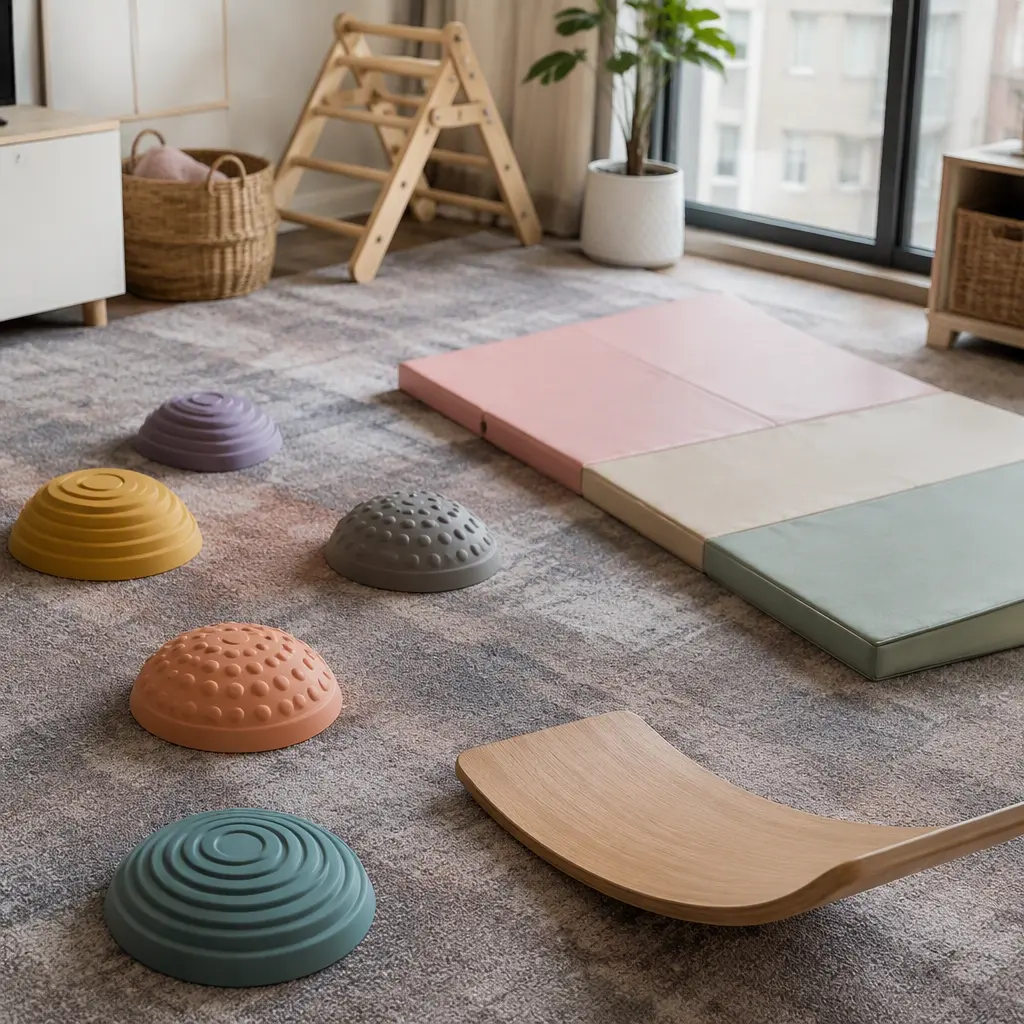
The quietest indoor movement toys usually absorb impact instead of amplifying it. Soft foam, rubberized bases and fabric-covered pieces tend to create less noise on hard floors than hollow plastic. Stability also matters. Preschoolers often repeat the same movements many times, so toys that slide across the floor or tip easily can become frustrating as well as noisy. Storage is another major factor for indoor active toys because many families need the play area to return to normal after use.
- Choose low-to-the-ground climbing and balance toys for safer indoor use in smaller spaces.
- Foam, cork and wood with rubber grips are often quieter than hard plastic play equipment.
- Check folded size and storage needs before buying larger climbing sets or mats.
- Look for toys that work on rugs or foam tiles if you live below other apartments.
- Avoid toys designed mainly for running speed indoors, especially on hardwood floors.
- Consider weight limits and whether younger siblings may also use the toy later.
- Simple open-ended movement toys usually stay interesting longer than electronic activity centers.
Age suitability
Children between 3 and 5 often want movement challenges but still benefit from predictable, structured play equipment. Three-year-olds usually do best with wide balance paths, crawl tunnels, foam stepping stones and padded mats that allow experimentation without much height. By ages 4 and 5, many children enjoy more advanced balance beams, wobble boards and modular climbing setups that can be rearranged into obstacle courses. Larger climbing frames may appeal to active preschoolers, but they also require closer supervision and more ceiling clearance than many apartment homes can comfortably provide. Families with very limited space may get more long-term use from versatile pieces that support multiple activities, such as folding mats that can become jumping spots, tumbling areas or quiet reading spaces.
Options compared
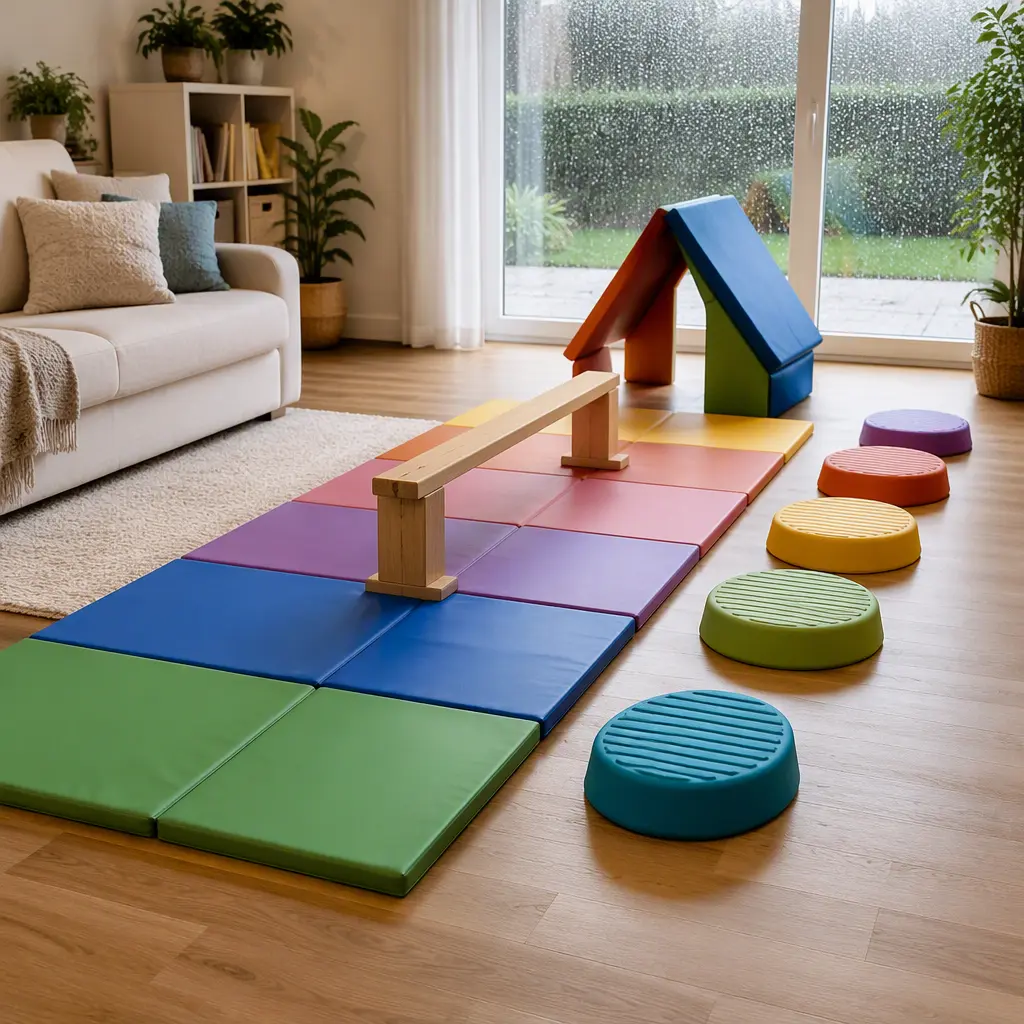
Foam stepping stones and balance paths are among the quietest options for apartment living. They encourage coordination, hopping and imaginative obstacle courses while producing relatively little impact noise. They also stack or tuck away easily. The trade-off is that they may not satisfy children who crave climbing or full-body exertion.
Foldable gymnastics mats work well for children who enjoy rolling, stretching and controlled jumping. They help absorb sound and can protect floors during active play. Mats alone are not always engaging enough for independent long sessions, though, so many families pair them with tunnels, cushions or stepping toys.
Wooden balance boards and low balance beams suit preschoolers who enjoy repetitive movement challenges. They are usually quieter than mini trampolines and can support open-ended play, but some wooden toys can create knocking sounds on hard floors unless used on rugs or foam tiles. Children who prefer high-energy jumping may lose interest quickly.
Indoor climbing arches and modular climbing sets provide more physical challenge and can grow with a child over several years. They tend to take up the most space and require the closest supervision. Even quieter wooden climbing toys can still create thumping sounds during energetic play, especially in upstairs apartments.
- Best for small apartments: foam stepping stones, foldable mats, fabric tunnels.
- Best for active climbers: low indoor climbing arches and modular soft-play sets.
- Best for easy cleanup: stackable balance toys and folding equipment.
- Best for quieter play sessions: balance beams, wobble boards and yoga-style movement toys.
- Usually least apartment-friendly: mini trampolines and hard plastic indoor slides due to repeated impact noise.
Frequently asked questions
Are mini trampolines too noisy for apartments?
They can be. Even models with padded feet still create repeated impact sounds that may travel through floors. Some families use them successfully on thick rugs or foam tiles, but quieter alternatives like stepping stones or balance paths are usually easier for shared buildings.
What flooring works best for indoor active toys?
Rugs, carpet and foam floor tiles help reduce sliding and absorb sound. Hardwood and laminate floors may increase noise and make some toys less stable. If you cannot add foam tiles permanently, foldable mats can help protect both floors and neighbors below.
Do gross-motor toys need a dedicated playroom?
Not necessarily. Many quieter movement toys are designed for flexible storage and temporary setups. Foldable mats, stackable stepping stones and compact balance beams can fit into living rooms or bedrooms and then slide under beds or into closets after use.
Which toys encourage independent active play?
Open-ended toys often hold attention longer because children can create their own obstacle courses and games. Balance paths, tunnels and stepping stones tend to work well for independent preschool play, while larger climbing sets usually need more active supervision.
Are wooden toys always quieter than plastic ones?
Not always. Solid wood toys can create knocking sounds on hard floors, especially during jumping or dragging. Foam and fabric-covered equipment are usually the quietest overall, though many wooden balance toys stay reasonably quiet when used on rugs or padded flooring.
The best quiet indoor gross-motor toys for ages 3–5 usually combine manageable noise levels with flexible play value and realistic storage needs. Families in apartments often benefit most from lower-profile equipment that supports balancing, crawling and obstacle-course play instead of high-impact jumping. A few well-chosen pieces can create active rainy-day play without turning a small home into a permanent indoor playground.