Toy Binoculars vs Magnifiers for Backyard Nature Play
Comparing toy binoculars and magnifiers for screen-free backyard nature play ages 6–8, including attention span, setup, storage, supervision, and practical trade-offs for parents.
Compare prices and availability
Check current prices and availability for this guide on eBay.
As an eBay Partner, we may be compensated if you make a purchase.
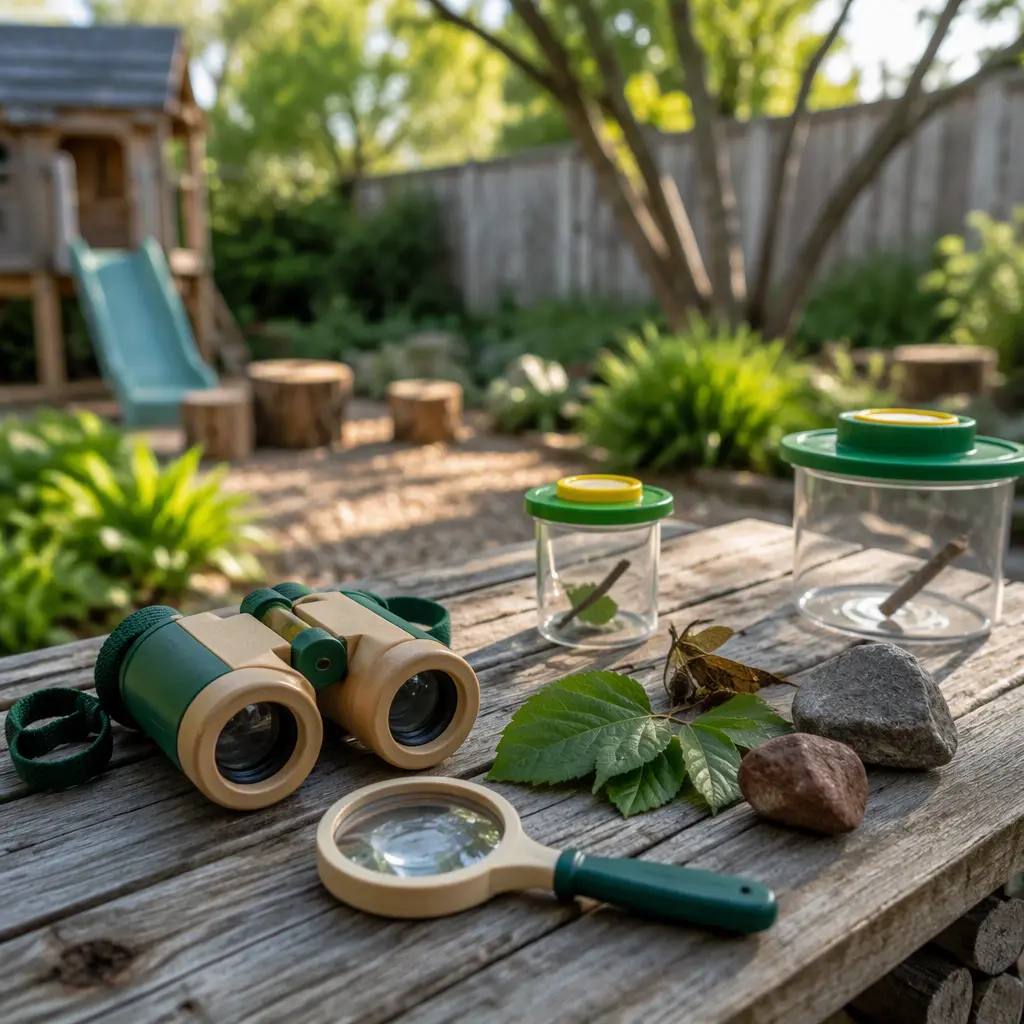
Toy binoculars and magnifiers both encourage outdoor curiosity without needing batteries, apps, or complicated instructions, but they hold children’s attention in different ways. For many children ages 6–8, binoculars create a sense of adventure and movement, while magnifiers reward slower observation and collecting. Choosing between them often comes down to how your child prefers to play, how much supervision is practical, and whether you want a toy that works during quick backyard breaks or longer outdoor sessions. Some families also find that one option creates less frustration, clutter, or lost pieces than the other.
What to look for
The most useful backyard nature toys for this age group are simple enough to grab and use immediately. Children between 6 and 8 usually stay engaged longer when they can start exploring without adult setup or detailed instructions. Lightweight designs, durable materials, and easy storage matter more than extra features. Toys that are too fragile or overly technical can quickly become frustrating outdoors.
- Choose binoculars with a comfortable neck strap and large focus wheel that small hands can adjust.
- Look for magnifiers with sturdy handles and scratch-resistant lenses rather than novelty shapes.
- Consider whether the toy encourages active movement or quiet observation, depending on your child’s personality.
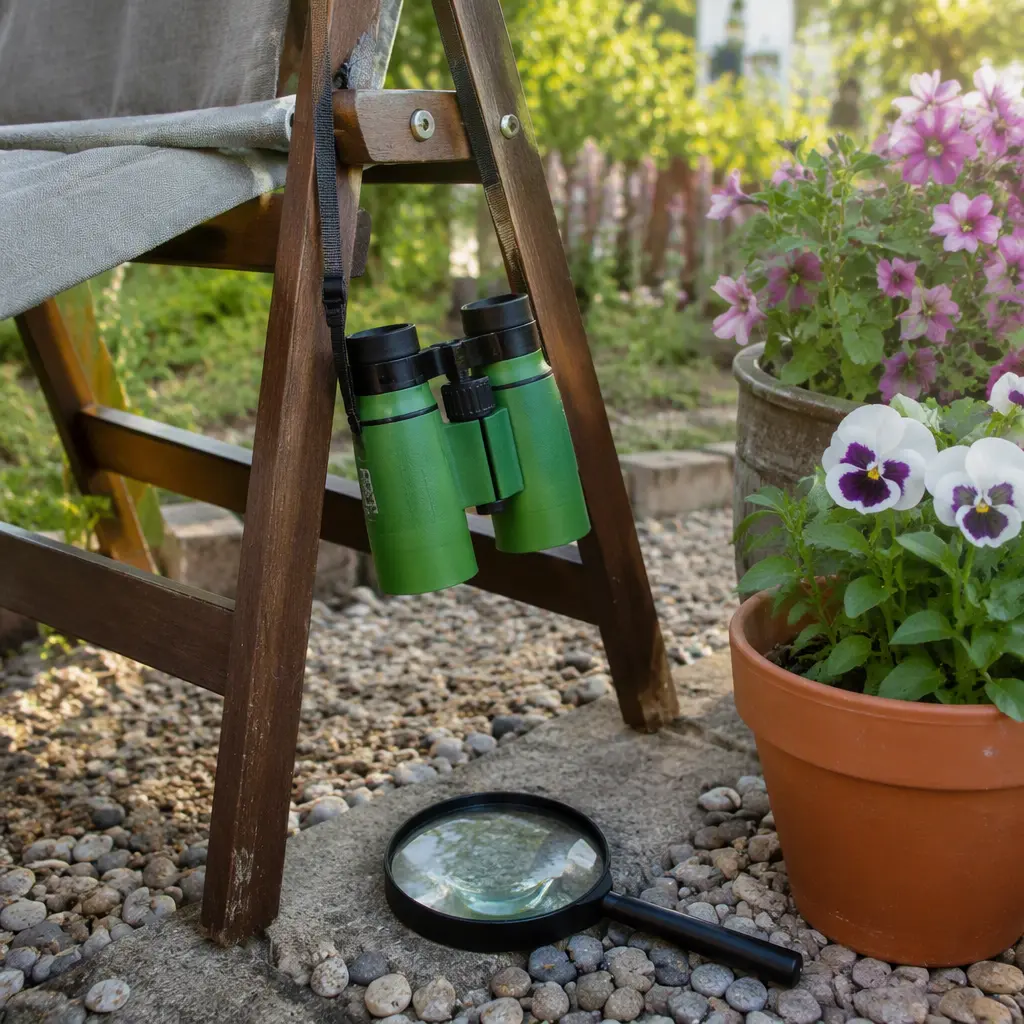
- Check storage needs. Binoculars are usually easier to hang near a back door, while magnifier kits may include containers or trays.
- Think about supervision. Magnifiers used in direct sunlight need closer monitoring.
- For shared play, binoculars often work better in pairs or group games, while magnifiers suit solo investigating.
- Avoid overly electronic versions with sounds or screens if the goal is longer offline engagement.
Age suitability
Children ages 6–8 are usually ready for simple optical tools that work like real equipment without becoming delicate or expensive. At this age, many children enjoy pretend exploration mixed with genuine observation. Binoculars tend to appeal to children who like movement, searching, and spotting birds, squirrels, rooftops, or distant objects. Magnifiers are often better for children who enjoy collecting leaves, studying insects, drawing nature finds, or spending longer periods focused on small details. Some children lose interest in magnifiers if there is not much visible wildlife nearby, while binoculars can still feel engaging in smaller outdoor spaces because they encourage scanning and imaginative play.
Options compared
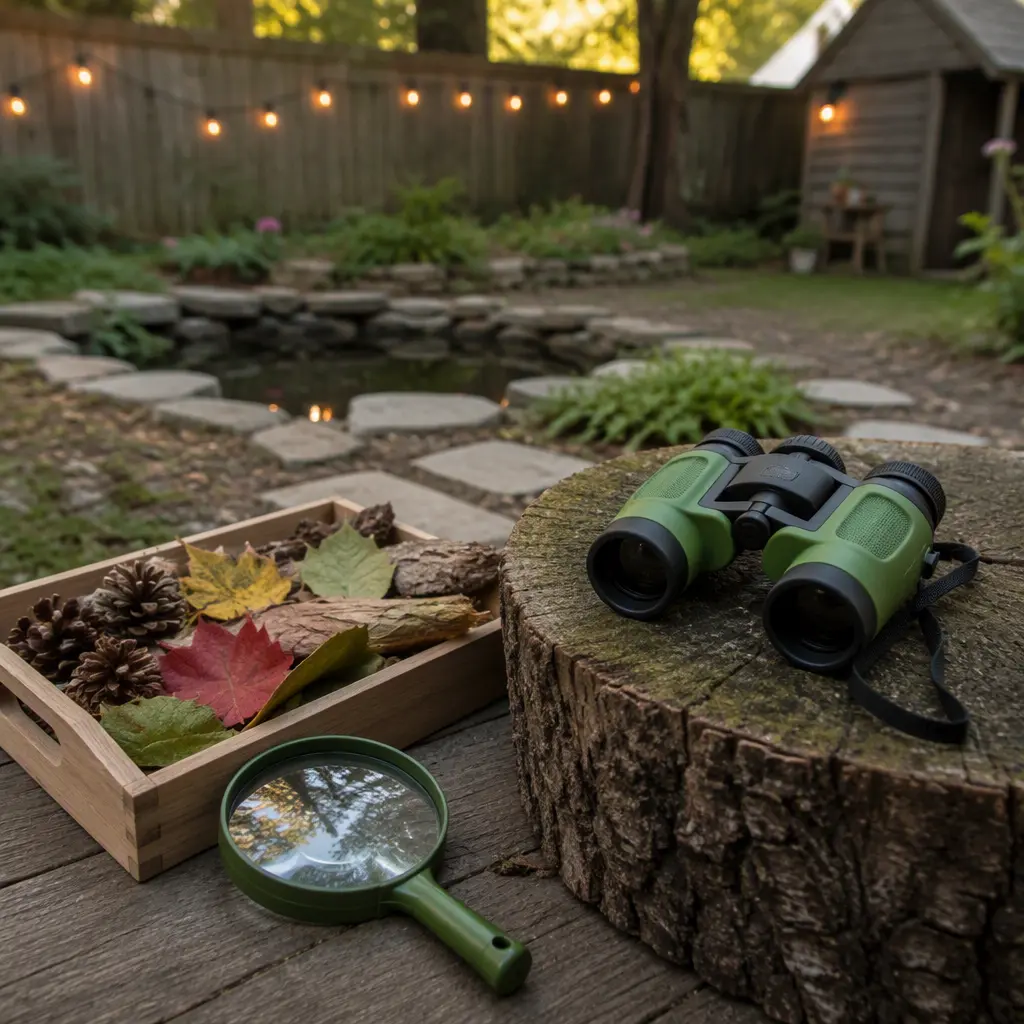
Toy binoculars usually keep energetic children engaged longer because they encourage movement and ongoing searching. A child can walk around the yard, scan fences, look into trees, or invent nature missions without needing to stay in one place. They also work well in neighborhoods where wildlife is mostly birds, pets, or distant activity. For children who enjoy pretend camping, explorer games, or scavenger hunts, binoculars often blend naturally into active outdoor play.
Magnifiers create a different kind of engagement. They tend to hold attention longest for children who enjoy careful observation and hands-on discovery. Looking closely at bark, insects, feathers, flowers, or rocks can support early science interests without needing structured lessons. However, magnifiers can lose momentum if children do not regularly find interesting objects to examine. Some children also become frustrated when inexpensive lenses distort images or require very steady positioning.
- Binoculars suit active children, group scavenger hunts, and quick outdoor play sessions.
- Magnifiers suit detail-oriented children, quiet play, and collecting nature objects.
- Binoculars generally create less mess and fewer extra accessories to track.
- Magnifiers may lead to indoor carryover activities like sketching leaves or sorting rocks.
- Binoculars are often easier to pack for walks, parks, or vacations.
- Magnifiers can work better for children interested in insects, gardening, or beginner science topics.
- For small backyards with limited wildlife, magnifiers may provide more meaningful close-up discoveries than low-powered toy binoculars.
Frequently asked questions
Which option usually holds attention longer?
For many children ages 6–8, binoculars hold attention longer because they support active exploration and imaginative play at the same time. Magnifiers can lead to longer focused sessions for children who already enjoy collecting or observing details.
Are toy binoculars frustrating for younger children?
Some are. Models with stiff focus wheels or very small eyepieces can be difficult to use. Simpler designs with wide grips and easy adjustment are usually more successful for this age group than highly realistic versions.
Do magnifiers create more cleanup?
They can. Children often gather leaves, rocks, flowers, or insects during play, which may lead to temporary collections indoors or on outdoor tables. Families who prefer low-mess activities may find binoculars easier to manage.
Is it worth owning both?
For children who regularly play outdoors, the two toys can complement each other well. Binoculars encourage searching and spotting, while magnifiers support closer investigation once something interesting is found.
Which works better for independent play?
Binoculars are usually easier for independent backyard use because children can roam and explore without handling delicate items or collecting objects. Magnifiers may require more reminders about safe use and careful handling.
For families choosing just one nature toy for ages 6–8, binoculars are often the easier option for repeated screen-free outdoor play because they encourage movement, imagination, and quick setup. Magnifiers can provide deeper, calmer engagement for children who naturally enjoy observing details and collecting natural objects. The best choice depends less on novelty and more on how your child already prefers to explore outdoors.