Curio AI Bear vs Toniebox for Bedtime Stories
A parent-focused comparison of Curio AI Bear and Toniebox for ages 3–5, covering privacy, offline playback, subscriptions, bedtime routines and whether conversational AI adds real value.

Compare prices and availability
Check current prices and availability for this guide on eBay.
As an eBay Partner, we may be compensated if you make a purchase.
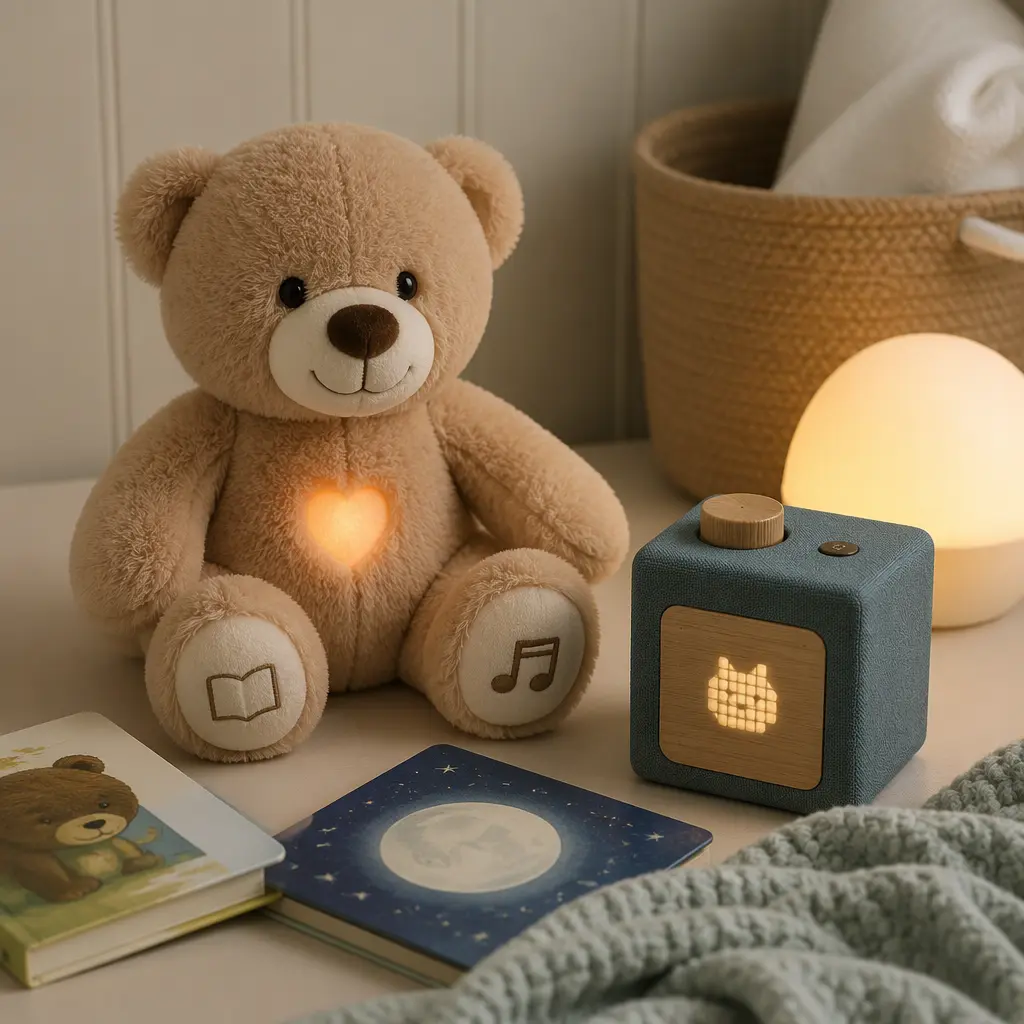
Parents looking for calmer bedtime routines are increasingly choosing screen-free audio toys instead of tablets or phones. Two very different approaches are emerging in this category: conversational AI plush toys such as Curio AI Bear, and simpler audio players such as the Toniebox. Both aim to keep children engaged with stories, songs and comforting routines, but they work in very different ways. For children aged 3–5, the biggest differences are not only entertainment features but also privacy, internet dependence, supervision needs and how predictable the bedtime experience feels from night to night.
What to look for
Bedtime toys work best when they reduce friction rather than add stimulation. Some families want a fully offline routine that works the same way every evening, while others are comfortable with connected features that allow more personalised interaction. AI toys and traditional audio story players differ sharply in how much they listen, store and process. It is also worth checking whether core features still function without Wi‑Fi, whether ongoing subscriptions are required and how easy the toy is for a tired preschooler to operate independently.
- Offline playback matters for travel, shared bedrooms and predictable routines
- AI conversation can feel engaging but may also lead to longer, more stimulating bedtime interactions
- Check whether microphones are always active or only enabled during specific interactions
- Look for clear parental controls, mute options and account settings
- Story libraries tied to apps or cloud services may become limited if support ends
- Simple controls are usually easier for 3–5 year olds to use independently
- Consider storage space for figurines, accessories or charging docks
- Soft plush toys may comfort anxious sleepers, while hard audio boxes are usually more durable
Age suitability
For most children aged 3–5, simple audio storytelling is easier to understand and manage than open-ended AI conversation. Toniebox-style systems are designed around predictable interactions: place a character figure on the box and the story starts. This consistency can help children settle more easily because the routine stays familiar. Conversational AI toys such as Curio AI Bear may appeal more to highly verbal children who enjoy asking questions or chatting with toys. However, younger preschoolers may struggle to understand what the AI can and cannot do, and some children become more alert and talkative instead of winding down. Families already limiting screen exposure and connected devices in the evening may prefer offline audio systems because they behave more like traditional story time.
Options compared
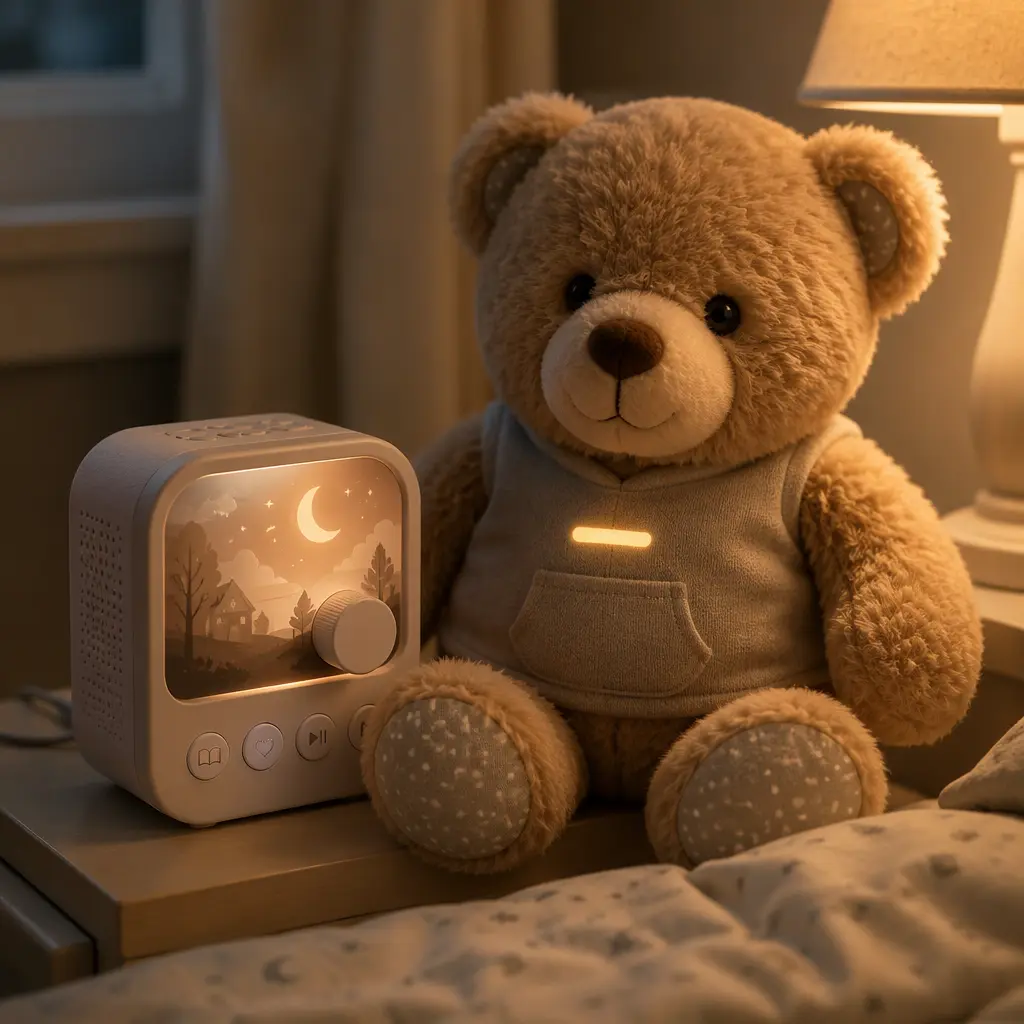
A Toniebox-style audio player focuses on structured playback rather than conversation. Children interact physically with figurines or controls, and many stories can be downloaded for offline listening after setup. This makes the experience predictable and relatively low maintenance once content is loaded. For bedtime, that predictability is often the biggest advantage. The toy does not unexpectedly change tone, answer unusual questions or encourage extended back-and-forth conversation. Parents who want a calm, repeatable wind-down routine often prefer this approach. The trade-off is that the experience can become repetitive over time, and expanding the story library may require buying additional figures or content.
Curio AI Bear represents a newer category where the toy responds conversationally rather than simply playing pre-recorded content. The added value is responsiveness: children can ask questions, request stories or interact more freely. Some families may find this comforting for independent quiet time or travel. However, the conversational element also introduces more variables. Many AI toys rely partly on cloud processing, which can mean internet dependence, account setup and ongoing updates. Parents should expect more active supervision during setup and occasional maintenance around apps, permissions or subscriptions if applicable. Another practical consideration is bedtime stimulation. Some children relax with interactive conversation, while others become more energised and resistant to sleep once the toy starts responding dynamically.
- Choose a Toniebox-style player if you want predictable offline storytelling, simple controls and minimal data concerns
- Choose a conversational AI plush toy if your child enjoys interactive dialogue and your household is comfortable with connected-device management
- Avoid AI conversation toys for children who become overstimulated easily before sleep
- Avoid figurine-based audio systems if you want a single compact toy without extra accessories to store
- For shared bedrooms, check speaker volume controls and headphone compatibility where available
- For travel, battery life and offline functionality may matter more than advanced features
Frequently asked questions
Does conversational AI actually improve bedtime routines?
It depends on the child. Some preschoolers enjoy responsive storytelling and calming conversation, while others become more engaged and less sleepy. Simpler playback systems often create more consistent bedtime habits because the interaction is limited and familiar.
Are offline story players safer for privacy?
Generally, toys that work mainly offline collect less information than cloud-connected AI systems. A traditional audio player without microphones or voice processing usually presents fewer privacy questions. Parents should still review companion apps and account settings where applicable.
Do AI plush toys work without internet access?
Some connected toys retain limited offline features, but conversational AI often depends partly on cloud services. Manufacturers may allow downloaded content or basic playback offline, but advanced interactions can require Wi‑Fi access.
Which option is easier for preschoolers to use independently?
Most children aged 3–5 find physical audio systems easier to control. Placing a figurine on a player or pressing a large button is usually more intuitive than understanding voice prompts, charging routines and conversational limits.
Will these toys replace reading together?
Audio and AI bedtime toys are usually most useful as supplements rather than replacements for shared reading. Many families use them for quiet wind-down time, independent listening or early-morning play rather than as the main bedtime connection ritual.
For most families choosing between Curio AI Bear and Toniebox-style storytelling, the decision comes down to whether bedtime should feel interactive or predictable. Conversational AI can feel novel and responsive, but it also introduces more connectivity, privacy considerations and potential stimulation. Simpler audio players remain popular because they deliver a more controlled, offline-friendly routine that many preschoolers handle well independently. The right choice depends less on technology level and more on how your child settles, listens and relaxes at the end of the day.