Toy Kitchens With Storage vs Open Shelving
Compare toy kitchens with built-in storage and open shelving designs for children aged 3–5. Learn how each style affects clutter, independent play, cleanup, and room organization.
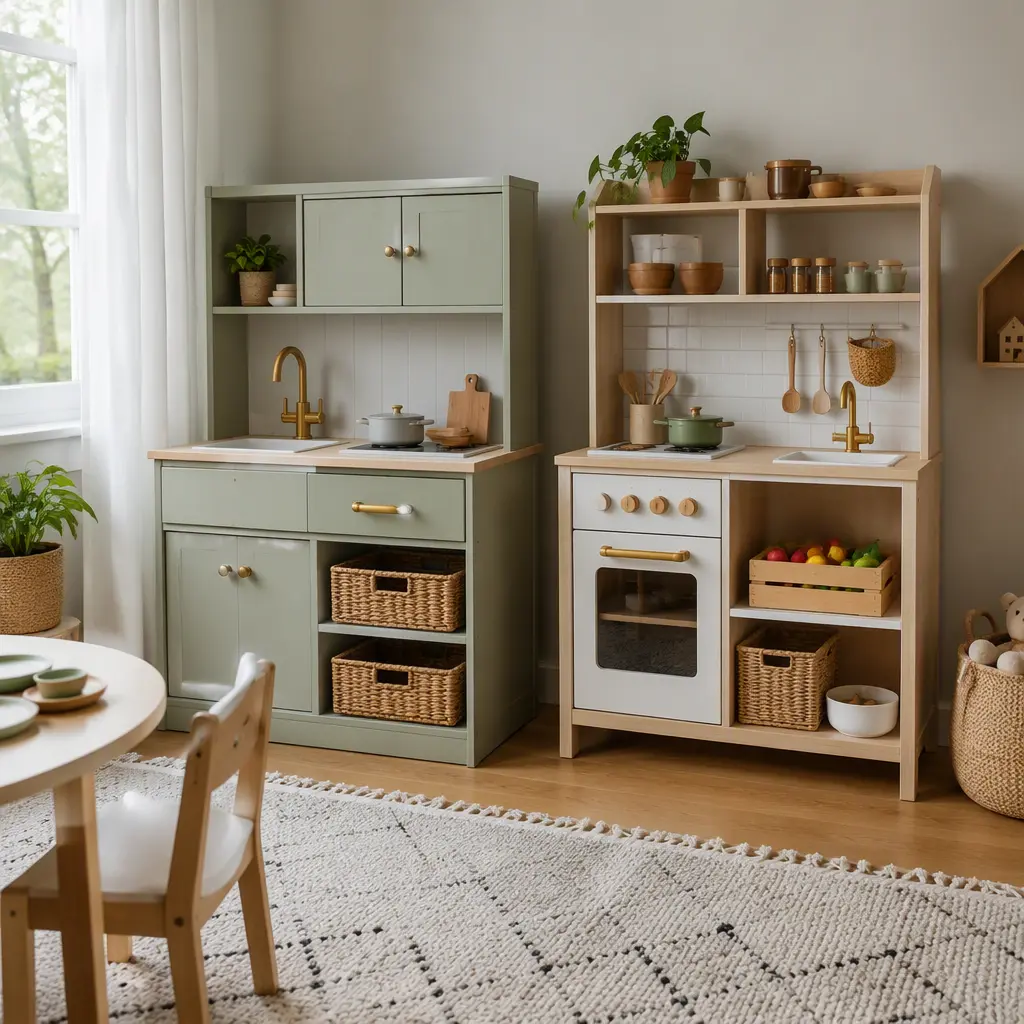
Compare prices and availability
Check current prices and availability for this guide on eBay.
As an eBay Partner, we may be compensated if you make a purchase.
Toy kitchens are one of the longest-lasting pretend play toys for preschoolers, but the layout matters more than many parents expect. A kitchen with built-in storage can help reduce visible clutter and make shared living spaces easier to manage, while an open shelving design can encourage independent play by keeping accessories easy to see and reach. For children aged 3–5, the better choice often depends on the size of the room, how many play pieces are involved, how much adult help is needed during cleanup, and whether the kitchen will stay in a bedroom, living room, or dedicated play area.
What to look for
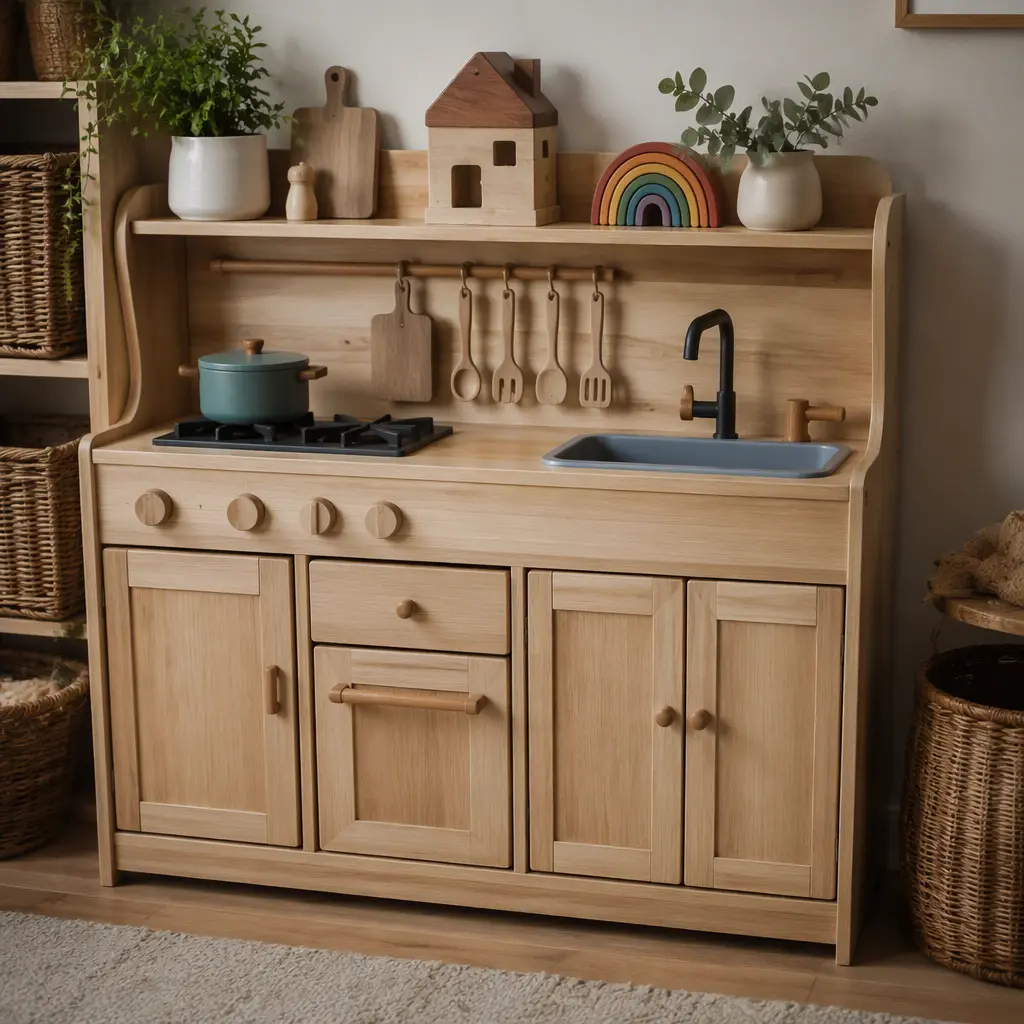
Storage style affects daily use more than decorative features. Some toy kitchens are designed to hide accessories behind doors or inside bins, while others display everything on open shelves or hooks. Neither approach is automatically better for every family. The right fit depends on how your child plays, how often the kitchen needs to be tidied away, and how much space is available around it.
- Check overall footprint carefully, especially if the kitchen will sit in a shared family room or small bedroom.
- Look at shelf height and door handles to make sure accessories are easy for 3–5 year olds to reach independently.
- Consider how many loose accessories are included or likely to be added later, such as pretend food, pans, cups, or cash registers.
- Closed storage can reduce visual clutter but may encourage children to dump everything out during play.
- Open shelving makes toys easier to find and put away but can make rooms look messier between play sessions.
- Wooden kitchens are often heavier and more durable, while lightweight plastic options can be easier to move and clean.
- Think about noise levels if the kitchen includes clicking knobs, electronic sounds, or metal accessories in smaller homes or apartments.
Age suitability
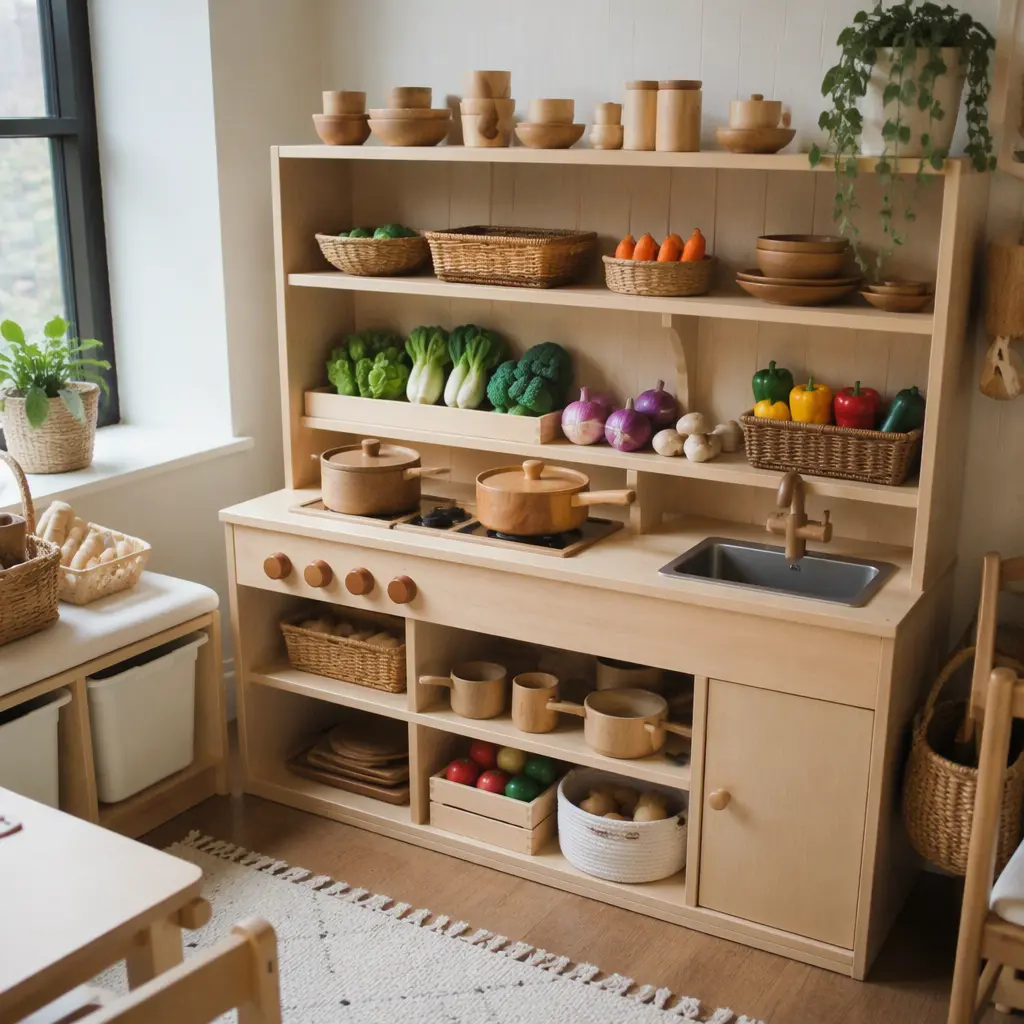
For ages 3–5, toy kitchens work best when children can access most features without adult help. Preschoolers usually enjoy sorting pretend food, copying routines they see at home, and setting up imaginative scenarios with dolls, stuffed animals, or siblings. Open shelving often supports this stage because children can immediately see what is available and return items without remembering where they belong. Kitchens with cabinets and drawers may suit slightly older preschoolers who enjoy role-play with more detailed organization, such as separating food types or storing cookware in specific spaces. Taller kitchens with multiple compartments can also continue to feel useful for longer as children grow, but very large designs may overwhelm smaller bedrooms or become difficult to supervise if many tiny accessories are involved.
Options compared
Toy kitchens with built-in storage are often chosen for homes where clutter control matters. Cabinet doors, drawers, and integrated bins can make cleanup look faster because accessories disappear from view. This style can work well in living rooms or multipurpose family spaces where parents prefer toys to blend into the room more easily. Some children also enjoy the realistic feel of opening cupboards and organizing items inside them. The trade-off is that hidden accessories are sometimes forgotten, leading to less variety during play or more frequent emptying of every compartment at once.
Open shelving kitchens usually encourage more independent access. Children can quickly spot pretend ingredients, cups, and utensils without asking for help. This can support longer stretches of self-directed play, especially for children who like setting up detailed pretend meals or switching activities frequently. Open storage also makes cleanup routines easier to teach because everything has a visible place. However, these kitchens tend to look busier even when organized well, and accessories may spread more easily into nearby rooms.
- Choose storage-focused kitchens for smaller shared spaces, families wanting less visible clutter, or children who enjoy sorting and organizing accessories.
- Choose open shelving kitchens for highly independent preschoolers, frequent pretend play sessions, or homes where toys stay accessible throughout the day.
- Hybrid kitchens with a few shelves plus one or two cabinets can balance visibility and cleanup without fully hiding accessories.
- Minimal-accessory setups are easier to maintain than large collections of pretend food and cookware, regardless of storage style.
- Wall shelves, rolling carts, or labeled baskets nearby can improve organization if the kitchen itself lacks enough storage.
Frequently asked questions
Are toy kitchens with storage easier to keep tidy?
They often look tidier because accessories can be hidden behind doors or inside drawers. However, younger children may still empty every compartment during play. Simple storage layouts usually work better than many small sections that require detailed sorting.
Do open shelving kitchens create more mess?
They can make toys more visible around the room, but they may also help children clean up more independently because everything is easy to see and return. Families who use baskets or trays alongside open shelves often find cleanup more manageable.
Which style lasts longer as children grow?
Both styles can remain appealing through the preschool years if the kitchen is sturdy and sized well. Larger kitchens with flexible storage and room for different accessories tend to adapt better as pretend play becomes more detailed.
Are wooden toy kitchens better than plastic ones?
Wooden kitchens are often chosen for durability and furniture-style appearance, while plastic kitchens may be lighter and easier to wipe clean. Material matters less than stable construction, reachable storage, and a layout that suits the available space.
How many accessories do preschoolers actually need?
A smaller set of versatile items usually supports play better than very large collections. A few pans, cups, plates, utensils, and pretend foods are enough for most 3–5 year olds. Too many accessories can make cleanup harder and storage less effective.
The best toy kitchen layout is the one that fits comfortably into daily family routines. Storage-heavy designs can help reduce visual clutter in shared spaces, while open shelving often supports more independent play and easier access for preschoolers. Before choosing, consider not only how the kitchen looks on the first day, but how it will function during everyday cleanup, storage, and imaginative play over the next few years.