Toy Tool Sets: Real Fasteners vs Snap-Together Kits
Compare toy tool sets with real screws and bolts against snap-together kits for ages 6–8. Learn the trade-offs around dexterity, safety, mess, storage, noise and long-term play value.
Compare prices and availability
Check current prices and availability for this guide on eBay.
As an eBay Partner, we may be compensated if you make a purchase.
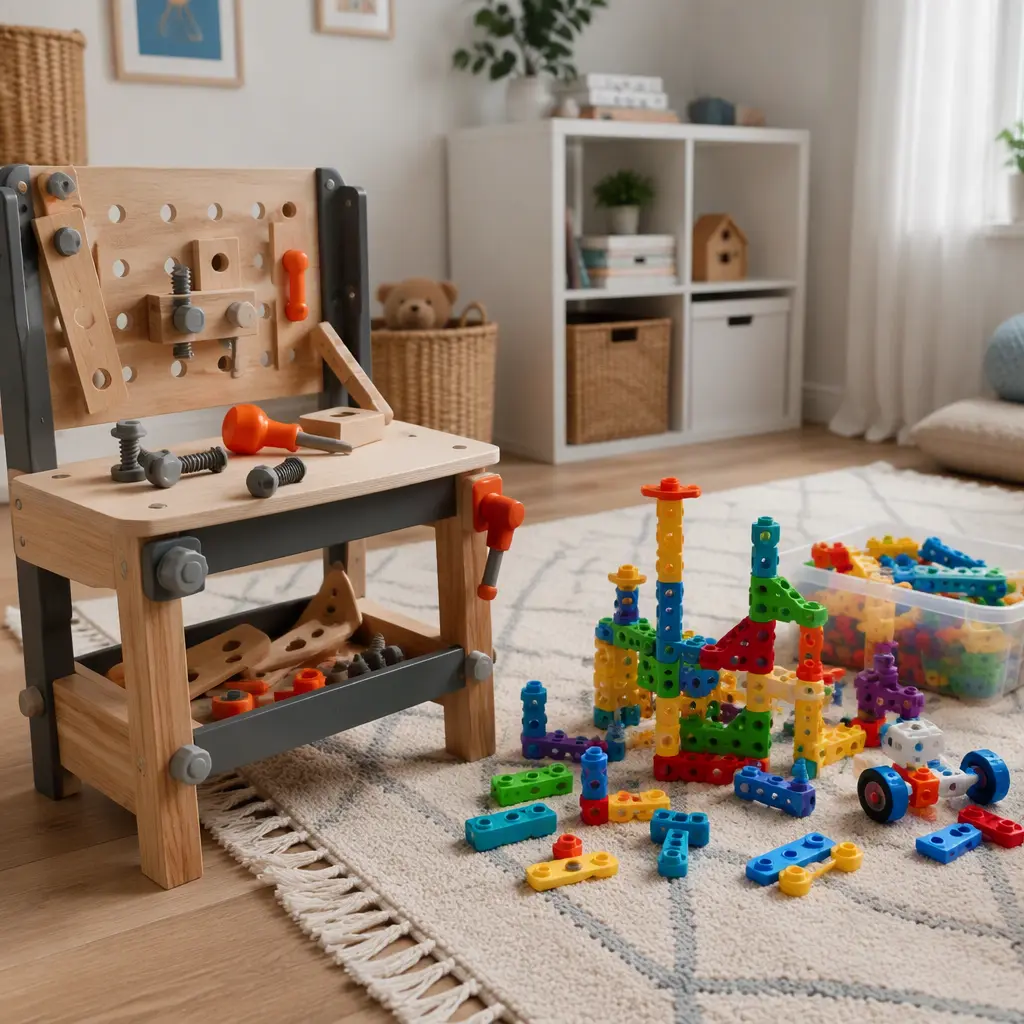
Toy tool sets for children aged 6–8 usually fall into two broad categories: realistic kits that use threaded screws, bolts and simple hand tools, and snap-together systems that click into place without twisting hardware. Both can support imaginative play, problem-solving and fine motor development, but they create very different experiences at home. The right choice depends less on marketing claims and more on how your child prefers to play, how much setup and cleanup your household can tolerate, and how closely you want the toy to resemble real tools. Some children enjoy careful building and following steps, while others want quick results and open-ended experimenting. Parents also often notice practical differences around noise, dropped pieces, supervision needs and storage space.
What to look for
Before choosing between real fasteners and snap-together parts, it helps to think about how the toy will actually be used day to day. A kit that looks impressive in the box may become frustrating if the parts are too fiddly, the instructions are overly rigid or cleanup takes too long. Children in the 6–8 range often vary widely in patience, hand strength and interest in structured building, so flexibility matters.
- Choose piece sizes that match your child's dexterity. Tiny bolts and narrow connectors can frustrate children who still struggle with finger strength or coordination.
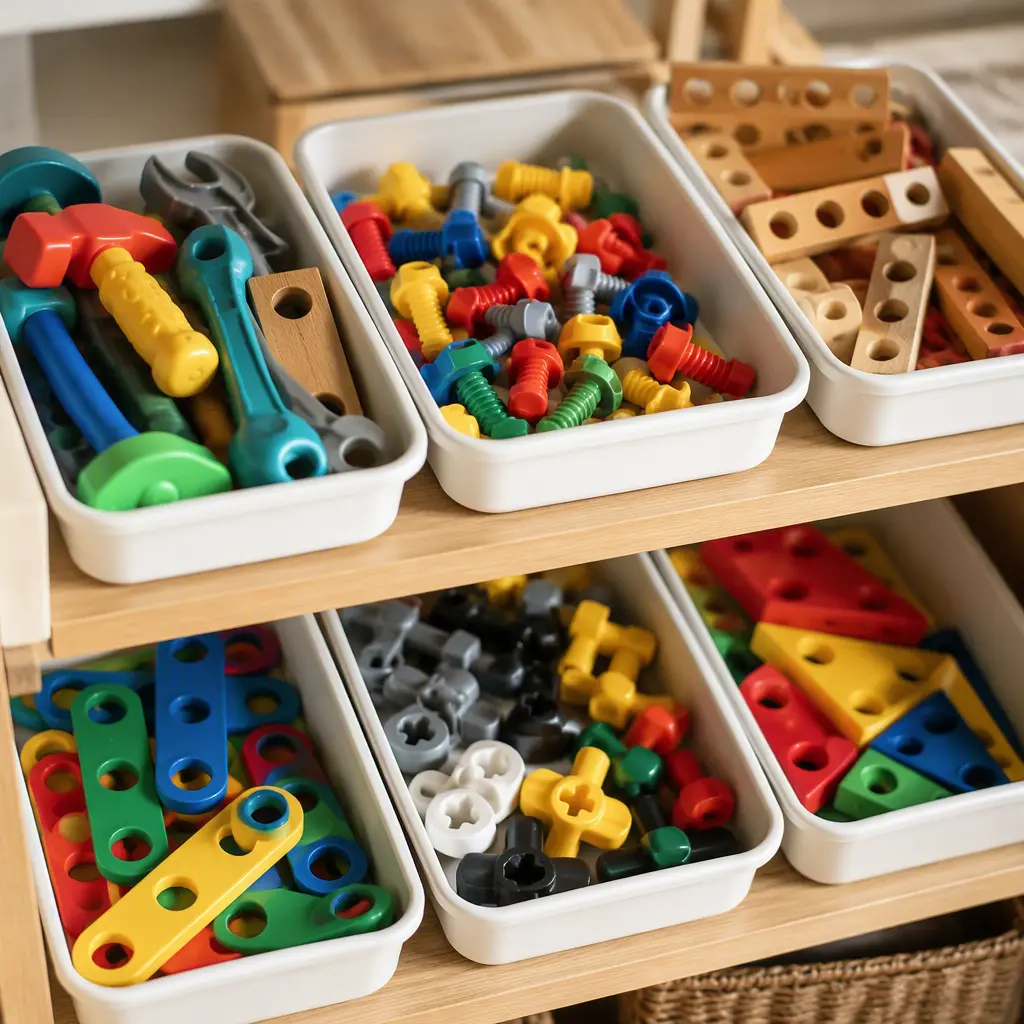
- Check how the parts are stored. Open tubs with mixed hardware can quickly become messy, while divided trays or reusable cases are easier to maintain.
- Consider the noise level. Hard plastic snap systems can create repetitive clicking sounds, while toy hammers and pretend drilling tools may be louder during active play.
- Think about independent play. Snap-together kits are usually faster to start without adult help, while threaded fasteners may require guidance at first.
- Look at durability over time. Repeated twisting can wear out lower-quality plastic threads, while snap tabs may loosen after heavy use.
- Decide whether realism matters. Some children specifically enjoy using toy screwdrivers, nuts and bolts because the actions resemble real household tasks.
- Check floor compatibility. Small loose hardware is harder to spot on carpets and can be inconvenient in shared family spaces.
- Consider expansion potential. Open-ended building systems often stay interesting longer if extra parts can be added later.
Age suitability
Most children aged 6–8 can handle either style, but the better fit depends on attention span and motor confidence rather than age alone. Real fastener kits tend to suit children who enjoy careful assembly, sorting pieces and repeating detailed actions like tightening screws or matching bolts. These sets can support patience and sequencing skills, but they may feel slow for children who prefer fast-paced imaginative play. Snap-together kits usually appeal to children who want immediate results, larger structures or more experimentation without stopping to tighten hardware. They are often easier for mixed-age siblings because younger children can participate with less frustration. For children who become upset when builds collapse or pieces jam, snap systems may provide a smoother experience. On the other hand, children fascinated by real-world tools may quickly lose interest in toys that feel overly simplified.
Options compared
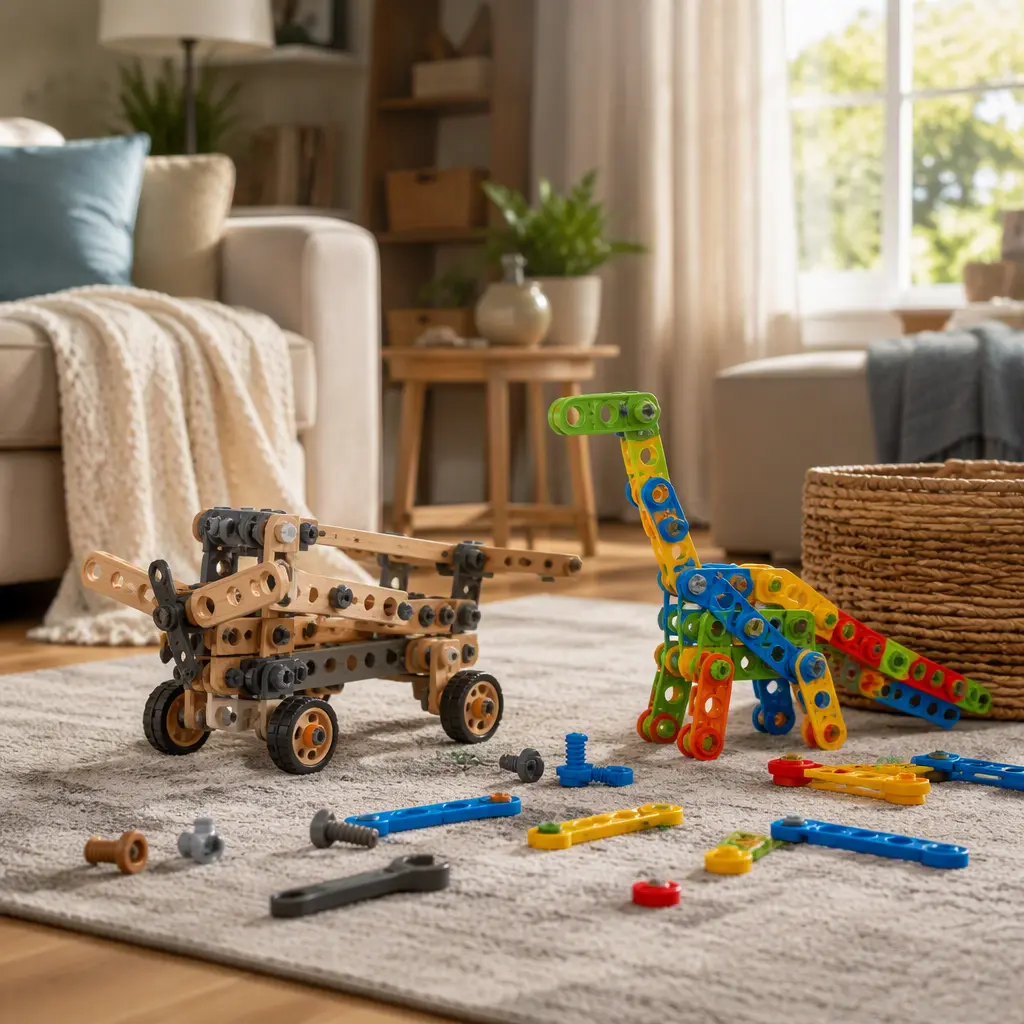
Real fastener tool sets usually focus on process-oriented play. Children use toy screwdrivers, wrenches or hand drills to attach parts using threaded hardware. This style encourages slower, more deliberate building and can help children practice bilateral coordination and grip strength. These sets often appeal to children who like copying adult activities such as assembling furniture or fixing household items. The trade-off is that builds take longer, pieces can scatter easily and younger siblings may struggle to participate. Cleanup also tends to be more demanding because bolts and washers are easy to lose under furniture.
Snap-together kits prioritize speed and experimentation. Pieces connect through clips, pegs or pressure-fit joints, allowing children to build large structures quickly and rebuild repeatedly. They generally create less frustration during independent play because connections are simpler and mistakes are easier to undo. This style can work well in busy households where toys need to be packed away quickly. However, some children outgrow snap systems if they want more realistic tool use or more complex mechanical actions. Snap connectors can also become loose after heavy use, especially if pieces are repeatedly forced apart.
- Choose real fasteners if your child enjoys detail-focused activities, follows building steps carefully or likes realistic pretend play.
- Choose snap-together kits if your child prefers quick building, collaborative play or frequent rebuilding.
- Avoid very small hardware-heavy kits in homes with toddlers who may access loose pieces.
- Consider mixed-material sets with both snapping and screwing functions if siblings have different skill levels.
- For limited storage space, compact snap systems are often easier to sort and contain than multi-tool benches with many accessories.
Frequently asked questions
Are toy tool sets educational?
Many toy tool sets encourage spatial reasoning, sequencing, hand-eye coordination and problem-solving through hands-on play. The educational value depends more on how children interact with the toy than on labels such as STEM or learning-focused packaging.
Which type creates less mess?
Snap-together kits are usually easier to tidy because they often use fewer tiny parts. Real fastener systems can spread bolts, nuts and connectors across floors quickly, especially during active building sessions.
Do realistic toy tools make children use real tools unsafely?
Pretend tool play does not automatically create unsafe habits, but children benefit from clear boundaries between toy tools and real household tools. Simple rules about where real tools are stored and when adults supervise tool use are still important.
What works best for independent play?
Children who dislike getting stuck often manage snap-together systems more independently because the connections are simpler and faster. Real fastener kits may require occasional adult help if screws cross-thread or pieces need extra hand strength.
How can parents reduce lost pieces?
Low trays, divided containers and playing on a rug rather than a hard floor can help contain parts. Some families rotate only part of a larger set into active play to reduce clutter and simplify cleanup.
For many families, the decision comes down to pace and realism. Real fastener sets suit children who enjoy careful construction and tool-like actions, while snap-together kits suit children who want fast creativity with fewer frustrations. Neither approach is automatically better for every child. Thinking about storage, supervision, tolerance for loose parts and the way your child naturally approaches play will usually lead to a more satisfying choice than focusing on branding or oversized feature lists.