Toy Tool Sets With Real Storage for Ages 3–5
A parent-focused guide to toy tool sets with built-in storage for ages 3–5, covering durability, cleanup, noise, supervision, and which styles suit different play habits.
Compare prices and availability
Check current prices and availability for this guide on eBay.
As an eBay Partner, we may be compensated if you make a purchase.
Toy tool sets are popular because they support pretend play, hand coordination, and simple problem-solving without relying on screens. For many families, though, the biggest challenge is not choosing the most realistic set. It is finding one that stays organized, survives repeated dumping and carrying, and does not scatter tiny parts across the house. Tool sets with built-in storage can make cleanup faster and help children learn independent tidy-up habits. For ages 3–5, the best options usually balance chunky pieces, simple fasteners, durable materials, and storage that children can actually use on their own. Some sets focus on portability with carry cases, while others turn the storage box into a workbench or toolbox for longer pretend-play sessions.
What to look for
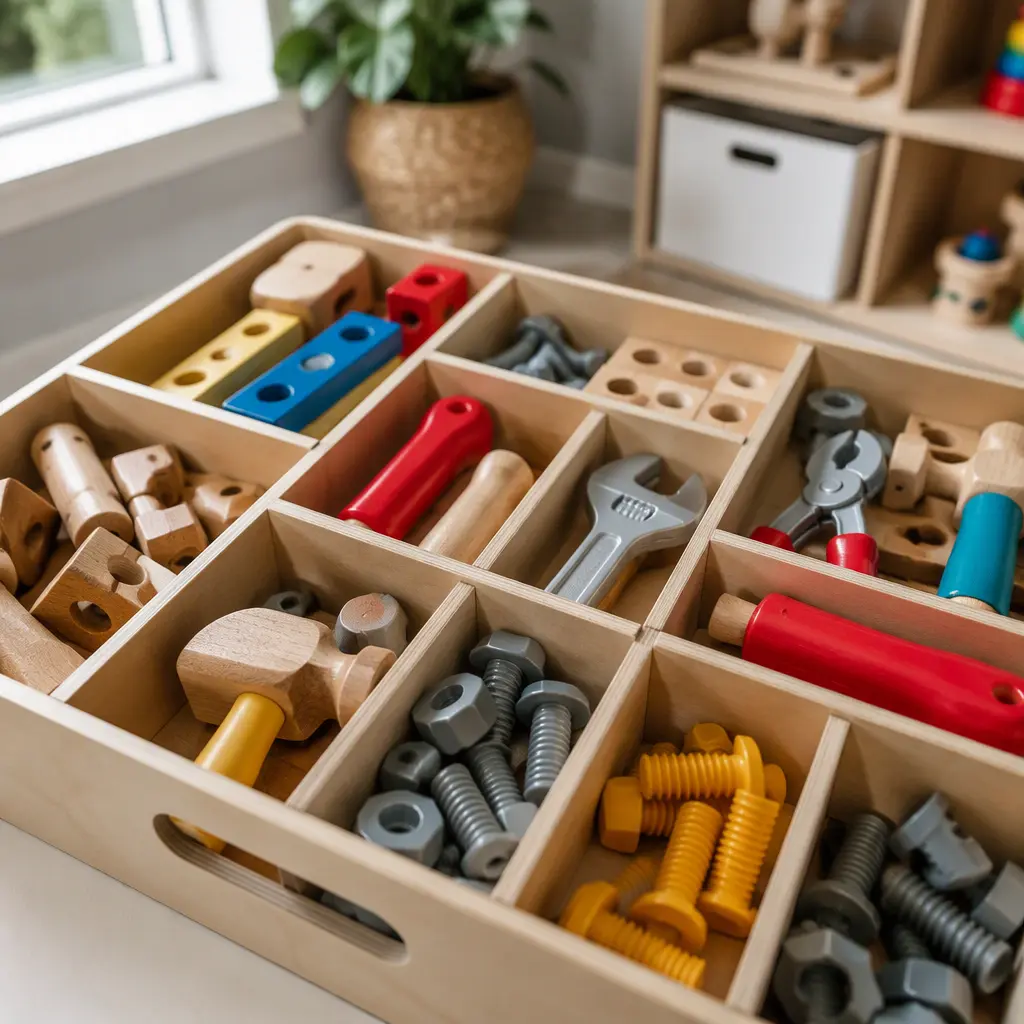
Storage matters more than many parents expect. A toy set may include a case, but some are difficult for preschoolers to open, close, or repack independently. Large compartments and clearly shaped spaces are usually easier for younger children than tightly fitted molded trays. Durability is also important because tool sets are often dropped, stepped on, or carried around by the handle. Lightweight plastic is easier to transport, while wooden pieces can feel sturdier but may add weight and create louder impacts on hard floors. Some children enjoy realistic mechanical features such as turning screws and moving gears, while others prefer simpler role-play accessories like pretend hard hats or toy phones.
- Choose chunky pieces that are difficult to swallow and easy for small hands to grip.
- Look for storage that children can repack themselves without adult help.
- Check whether the set includes many tiny connectors that can go missing quickly.
- Consider noise levels if the set includes electronic sounds or hammering surfaces.
- Fold-out workbench cases save space but may require more floor room during play.
- Wooden tools often feel more durable, while plastic sets are lighter for travel.
- Avoid overly complex construction systems for younger preschoolers who mainly want pretend play.
Age suitability
Most toy tool sets labeled for preschoolers are designed for ages 3 and up because they contain screws, bolts, connectors, or detachable accessories. At age 3, children often enjoy basic pretend tasks such as hammering, carrying tools, and copying adult routines. Simpler sets with fewer pieces tend to hold attention better at this stage. By ages 4 and 5, many children become more interested in building activities, matching shapes, and turning screws with toy screwdrivers. Sets with workbench features or simple assembly tasks may stay engaging longer for this age group. Families with siblings should also think about mixed-age safety. Smaller construction pieces that suit a 5-year-old may frustrate or pose risks for younger siblings nearby.
Options compared
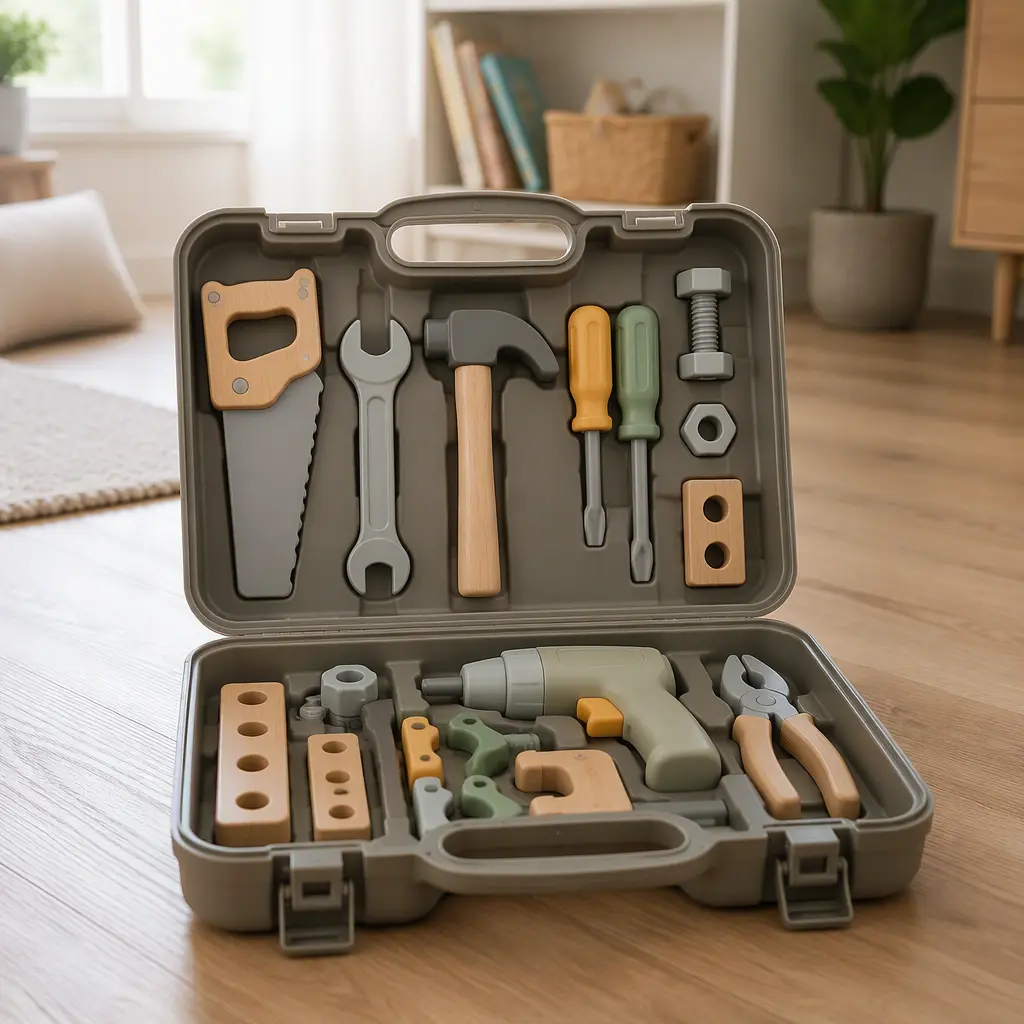
Carry-case tool kits are usually the easiest choice for small homes, travel, or shared living spaces. The tools and accessories fit into a single container that slides onto a shelf or into a closet. These sets often work well for children who enjoy transporting toys from room to room. The trade-off is that some compact cases hold fewer pieces, which may limit longer cooperative play between siblings or friends.
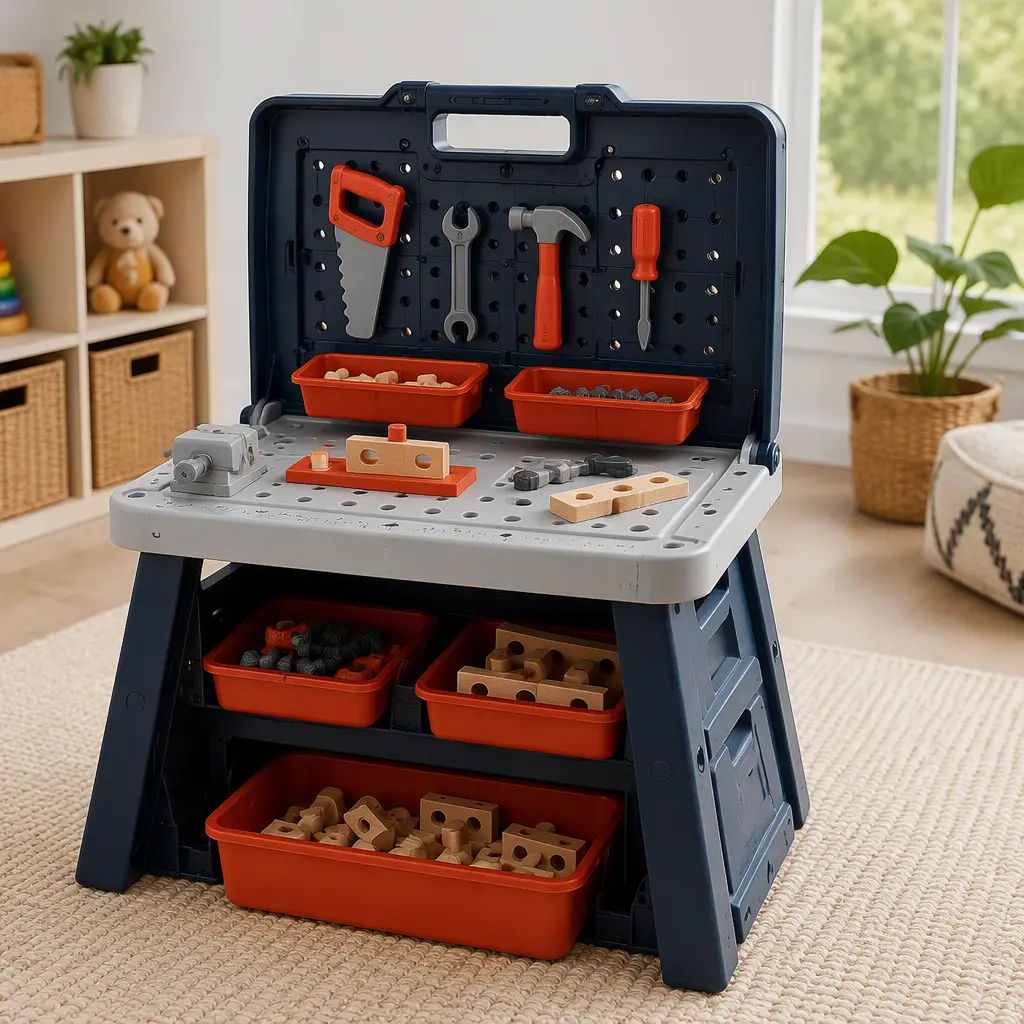
Workbench-style storage sets offer a different experience. The storage box may unfold into a small bench or activity station, creating a dedicated pretend workspace. These can encourage longer play sessions because children can stand, sort pieces, and imitate building routines. However, they take up more temporary floor space and can become cluttered if they include many bolts and connectors. Some parents prefer wooden workbench sets because they can look more furniture-like in shared rooms, though heavier materials may not be ideal for frequent moving.
- Compact carry cases: best for apartments, travel, quick cleanup, and children who like portable play.
- Fold-out workbench storage: better for longer pretend sessions and cooperative play but requires more space.
- Mostly wooden sets: often sturdier and less flashy, but heavier and sometimes louder on hard floors.
- Mostly plastic sets: lighter and easier to wipe clean, though hinges and handles may wear faster with rough use.
- Construction-focused sets with screws and bolts: suit older preschoolers who enjoy fine-motor challenges.
- Role-play-focused sets with helmets or pretend gadgets: suit younger children who mainly imitate adult routines.
Frequently asked questions
Are electronic toy tool sets worth it for preschoolers?
Electronic features such as lights, motor sounds, or talking functions can add excitement for some children, but they also increase noise and may shorten open-ended play. Many parents looking for calmer screen-free play prefer simpler manual tools that encourage imagination without batteries.
Do wooden tool sets last longer than plastic ones?
Wooden sets can resist cracking and may hold up well over time, especially during rough handling. However, quality varies widely, and some wooden pieces are heavier or less comfortable for younger preschoolers. Plastic sets are often lighter and easier to clean after outdoor or messy play.
How many pieces are practical for ages 3–5?
For most families, moderate-sized sets are easier to manage than very large collections. Around a few dozen pieces is often enough for varied play without creating overwhelming cleanup. Extremely large sets can lead to missing parts and storage frustration unless there is a dedicated play area.
What features help reduce clutter?
Built-in compartments, large storage bins, and matching spaces for tools make cleanup easier for preschoolers. Toolboxes with wide openings are usually more practical than tightly packed molded inserts that require precise organization every time.
Can toy tool sets support learning?
Pretend construction play can support hand strength, coordination, turn-taking, and vocabulary development. Children often practice sequencing and simple problem-solving while connecting parts or copying household repair routines. Open-ended sets generally allow more flexible play than highly scripted electronic toys.
The right toy tool set for ages 3–5 is usually the one that matches a family’s space, cleanup tolerance, and play style rather than the largest or most detailed option. Compact storage, durable construction, and age-appropriate pieces tend to matter more than realistic appearance. A well-designed set that children can pack away independently is more likely to stay in regular rotation instead of ending up as another bin of loose plastic parts.