Best Puzzles for Kids Who Like to Move While Playing
A parent-focused guide to jumbo, floor, and movement-friendly puzzles for ages 3–5, with tips on choosing durable pieces, right challenge levels, and safe ways to encourage active play.
Compare prices and availability
Check current prices and availability for this guide on eBay.
As an eBay Partner, we may be compensated if you make a purchase.
Some kids learn best when they can move, stretch, and explore their space. For ages 3–5, traditional tabletop puzzles can feel restrictive, especially for children with lots of energy. Active puzzle formats—like jumbo floor puzzles and games that invite standing, walking, or body movement—offer the same problem-solving benefits without requiring kids to sit still. This guide looks at puzzle types that pair thinking with motion, helping parents choose options that fit energetic play styles.
What to look for
Active puzzles still need to meet core quality and learning standards. Because these puzzles are often used on the floor and handled with whole-body movement, durability and thoughtful design matter just as much as educational value.
- Large, sturdy pieces that are easy to grip and hard to bend or tear
- Simple interlocking shapes that don’t frustrate early problem-solvers
- Materials that wipe clean and hold up to floor play
- Bright, clear images that can be recognized from a standing position
- A manageable piece count so kids can move around without losing interest
Age suitability
For children ages 3–5, puzzles should balance challenge with success. At this stage, kids are developing spatial awareness, coordination, and early reasoning skills. Floor and movement-based puzzles work best when they include fewer, larger pieces and clear visual cues. As kids approach age five, some may enjoy slightly higher piece counts or added challenges like matching shapes to outlines across a room. Parents should watch for frustration levels and adjust difficulty as skills grow.
Standout categories or types
Not all active puzzles look the same. Some focus on scale, while others encourage kids to move around as part of the challenge. Understanding these categories can help parents match a puzzle to their child’s energy level and interests.
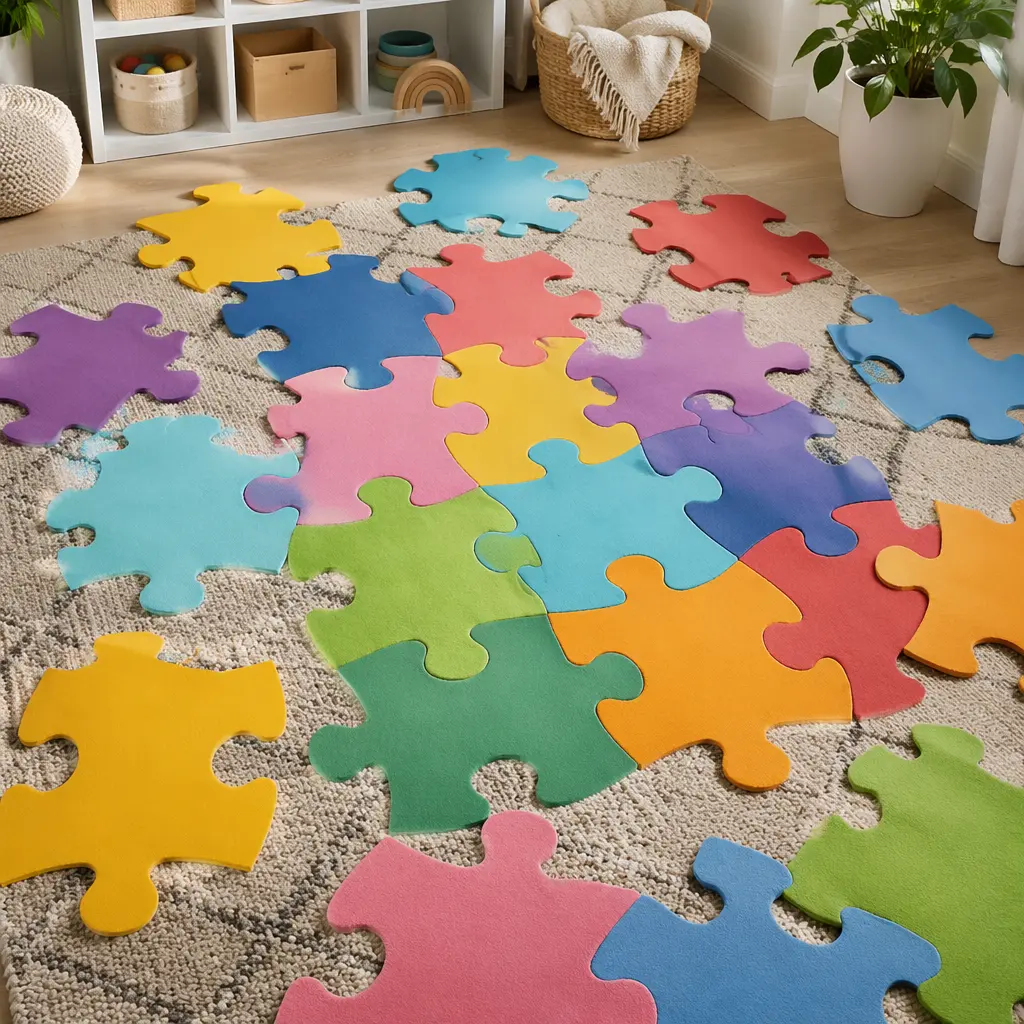
- Jumbo floor puzzles: Extra-large pieces spread across the floor, encouraging kids to stand, kneel, and walk around as they assemble the picture.
- Chunky foam puzzles: Lightweight pieces that can be assembled on the floor or against a wall, often adding a sensory element.
- Match-and-move puzzles: Games where children carry pieces from one spot to another to complete a scene or pattern.
- Shape-and-outline floor puzzles: Designs that invite kids to move their bodies to match shapes, outlines, or paths.
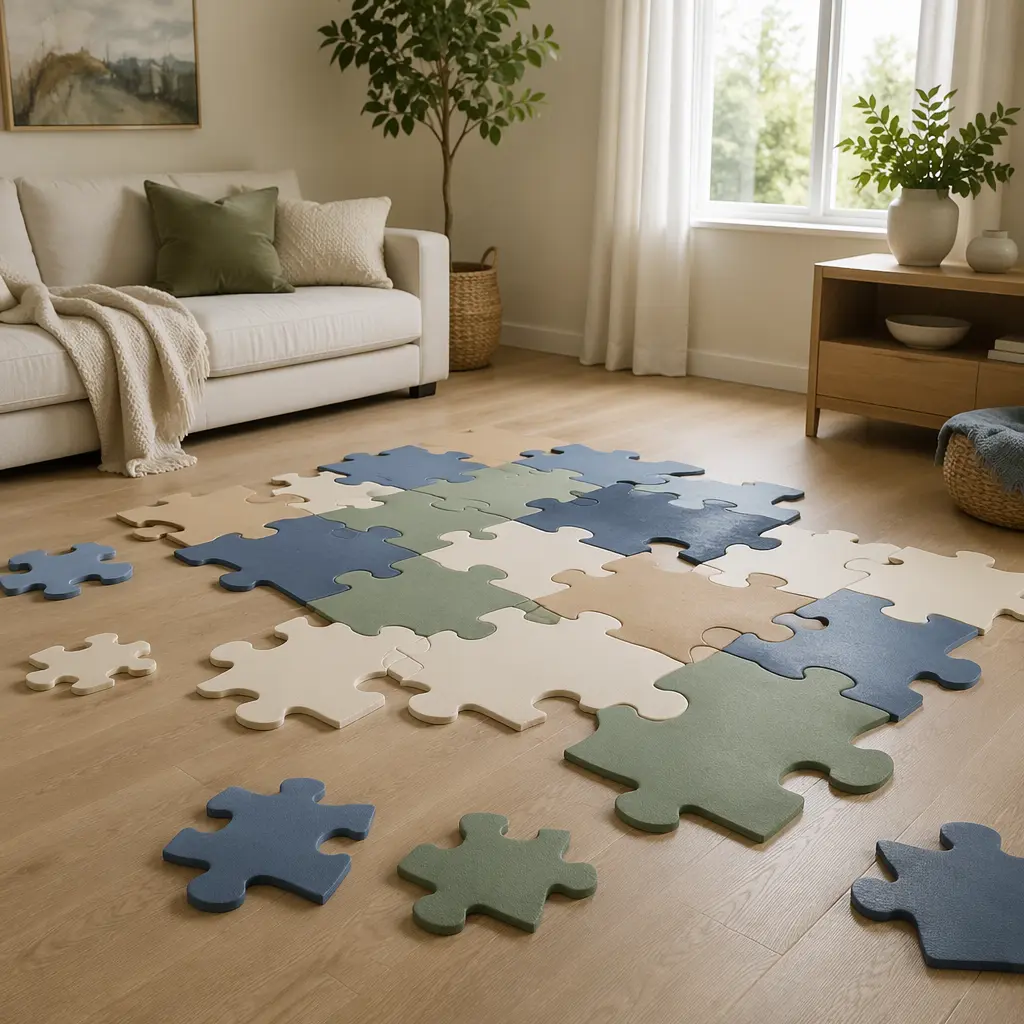
- Buildable puzzle mats: Interlocking tiles that double as play surfaces and puzzle challenges.
Frequently asked questions
Do active puzzles still support learning?
Yes. Active puzzles support the same cognitive skills as traditional puzzles, including problem-solving, visual recognition, and spatial reasoning. Adding movement can also strengthen gross motor skills and help some children stay focused longer.
How much space do floor puzzles need?
Space needs vary by puzzle size. Many jumbo puzzles require a clear area of several feet. A living room floor, playroom, or cleared bedroom space usually works well. Rolling up rugs or using foam mats can help define the play area.
Are these puzzles suitable for quiet play?
They can be. While they encourage movement, active puzzles don’t have to be loud or chaotic. Kids can work independently or with a parent, moving at their own pace without added noise or screens.
What if my child loses pieces?
Because floor puzzles cover more area, pieces can wander. Storing puzzles in large zip bags or bins and doing a quick piece count before cleanup can help keep sets complete.
Active puzzles give energetic kids a way to learn that matches how their bodies want to move. By choosing age-appropriate designs with durable materials and clear visuals, parents can offer puzzle play that feels engaging rather than restrictive. For many families, these formats turn puzzle time into a full-body learning experience.