Best Puzzles for Kids Who Hate Sitting Still
A parent-friendly guide to movement-ready puzzles for active 3–5 year olds. Learn what to look for, age fit, safety tips, and puzzle types that work on the floor and keep bodies moving.
Compare prices and availability
Check current prices and availability for this guide on eBay.
As an eBay Partner, we may be compensated if you make a purchase.
Some kids learn best on the move. If your preschooler struggles to sit still for tabletop activities, traditional puzzles can feel frustrating rather than fun. The good news is that many puzzles are designed for the floor, built with oversized pieces, and encourage kids to move, reach, and explore while they play. This guide focuses on movement-friendly puzzles for ages 3–5 that meet active kids where they are.
What to look for
Movement-friendly puzzles share a few key traits. They’re built to be used on the floor, tough enough for active handling, and designed to keep attention through physical engagement rather than quiet concentration.
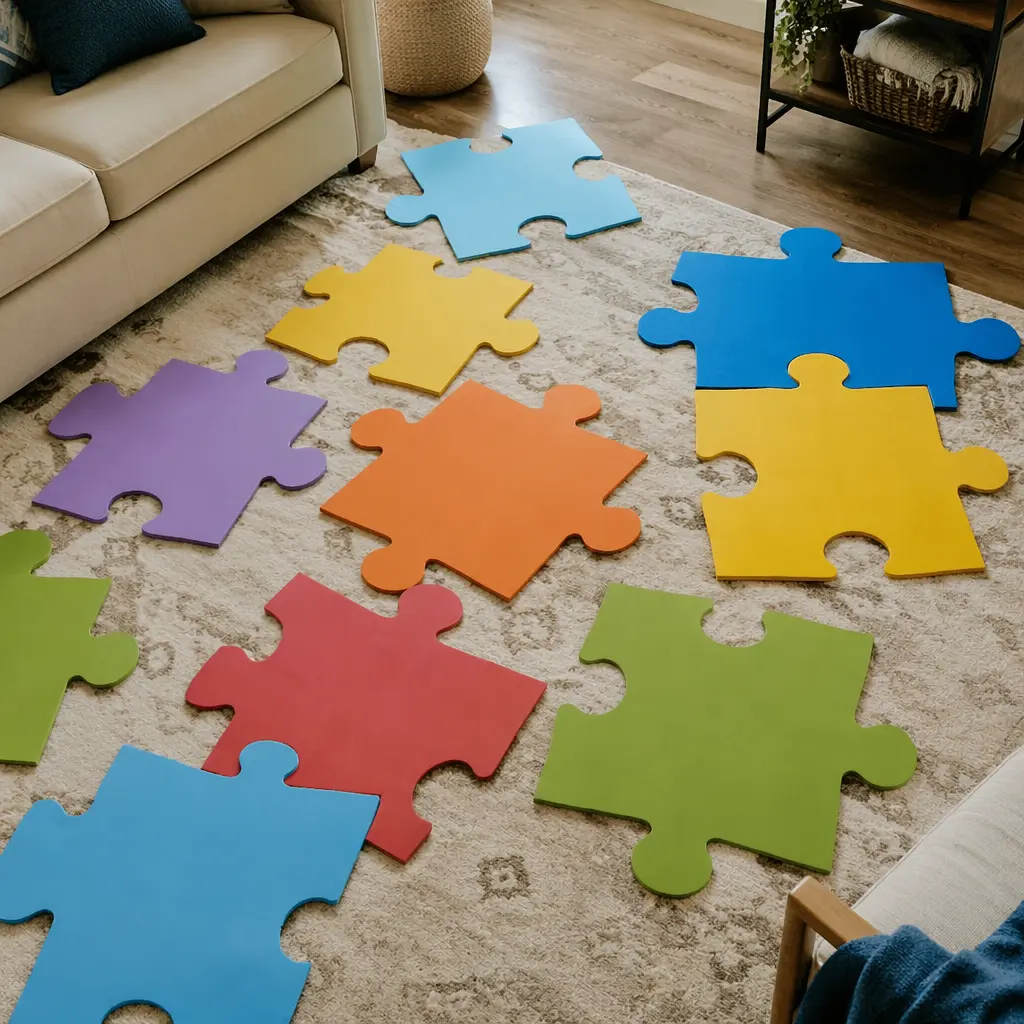
- Large, chunky pieces that are easy to grab, lift, and reposition
- Floor-scale layouts that let kids stand, kneel, or crawl while solving
- Thick cardboard, foam, or wood that won’t bend or slide easily
- Simple images or patterns that don’t require long focus
- Open-ended designs that allow trial, error, and movement
Age suitability
For ages 3–5, puzzles should balance challenge with quick wins. At this stage, kids are building spatial awareness, problem-solving skills, and body control. Puzzles with too many small pieces can lead to disengagement, while very simple ones may not hold interest. Look for options that can be completed in short bursts and revisited later, allowing kids to move away and come back without losing progress.
Standout categories or types
Not all puzzles are meant to be completed while sitting at a table. The following types tend to work especially well for kids who need to move while they think.
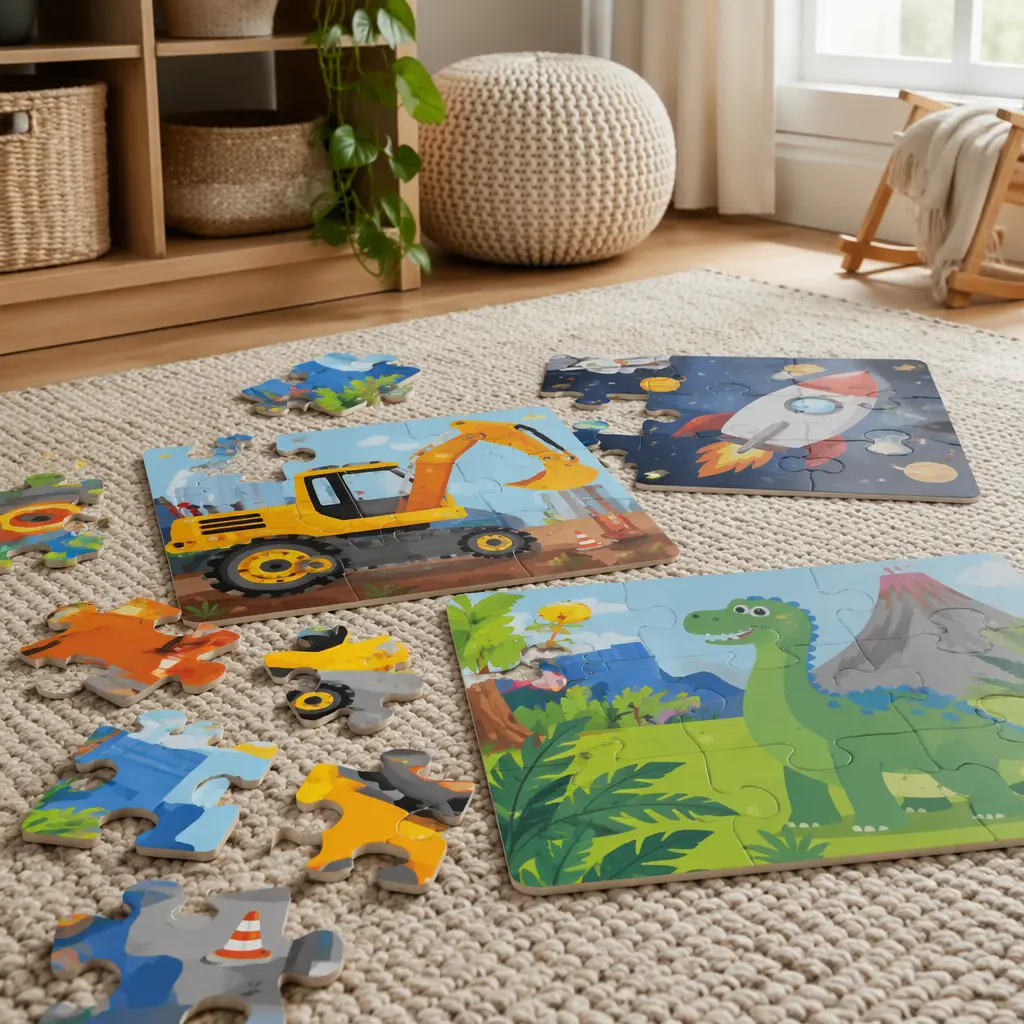
- Floor puzzles: Large-format puzzles designed to be assembled on the ground, often with bold images and fewer pieces.
- Chunky wooden puzzles: Thick pieces that can be carried, stacked, and placed while standing or kneeling.
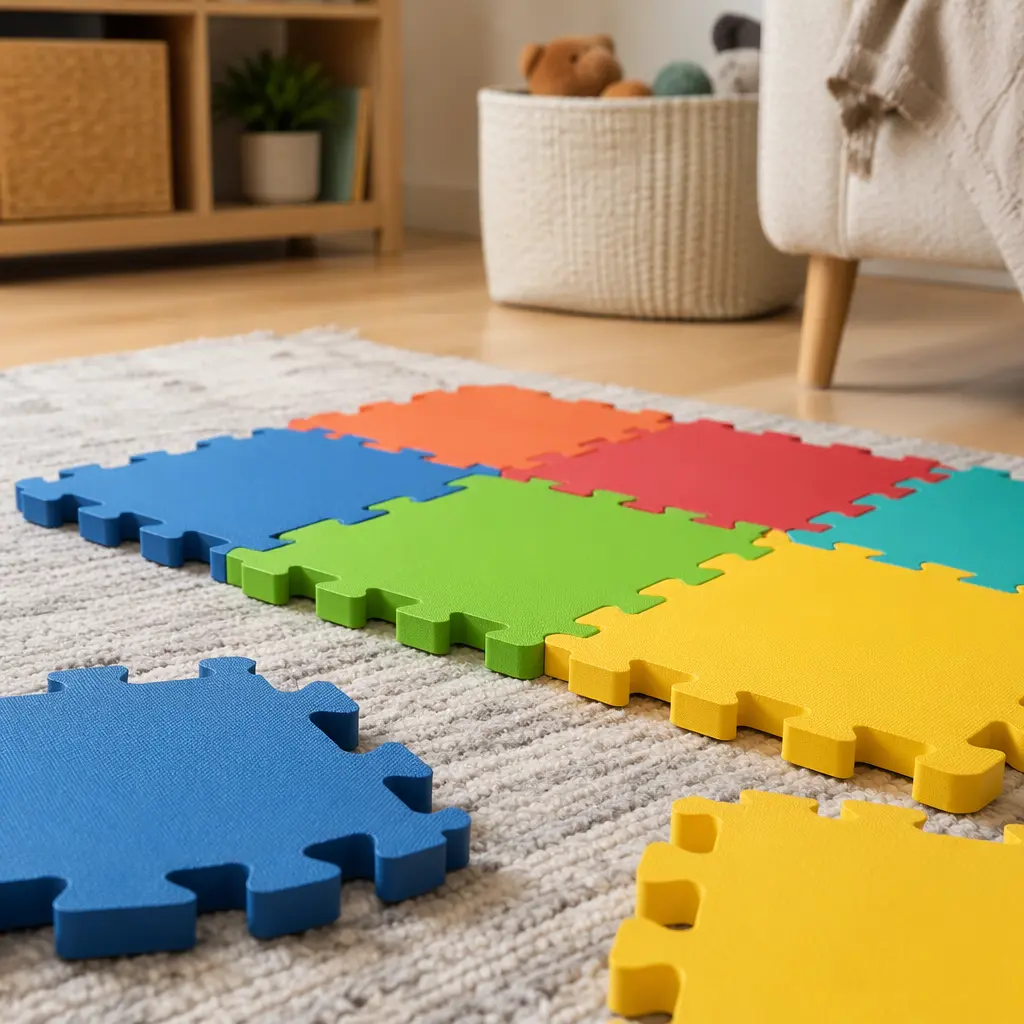
- Foam mat puzzles: Interlocking tiles that double as play mats and invite kids to move across them.
- Shape or path puzzles: Designs that encourage kids to follow routes, match shapes, or build layouts across the floor.
These categories support learning through movement. Kids can walk around the puzzle, test pieces from different angles, and use their whole body to explore solutions. That physical engagement often leads to longer playtime and less frustration.
Frequently asked questions
Are floor puzzles educational?
Yes. Floor puzzles support spatial reasoning, visual discrimination, and problem-solving. For preschoolers, they also help build gross motor skills as kids move, reach, and balance while playing.
How many pieces is best for active kids?
For ages 3–5, many active kids do well with 12–48 large pieces, depending on complexity. Fewer pieces with larger size often lead to better engagement than many small pieces.
Can puzzles really hold the attention of kids who don’t like sitting?
They can when movement is part of the experience. Puzzles that allow standing, walking around, or spreading out on the floor tend to feel more like active play than a sit-down task.
What materials are safest for this age?
Look for thick cardboard, foam, or solid wood with smooth edges. Pieces should be large enough to avoid choking risks and sturdy enough to handle energetic play.
For kids who hate sitting still, the right puzzle can turn problem-solving into an active, confidence-building experience. By choosing floor-friendly designs with chunky pieces and room to move, parents can support learning without forcing quiet time. The goal isn’t stillness—it’s engagement.