Best First Puzzle Toys for Babies 0–12 Months
A parent-friendly guide to chunky, chew-safe puzzle toys for babies 0–12 months, with tips on materials, sizing, motor-skill benefits, and age-appropriate features without lights or sounds.
Compare prices and availability
Check current prices and availability for this guide on eBay.
As an eBay Partner, we may be compensated if you make a purchase.
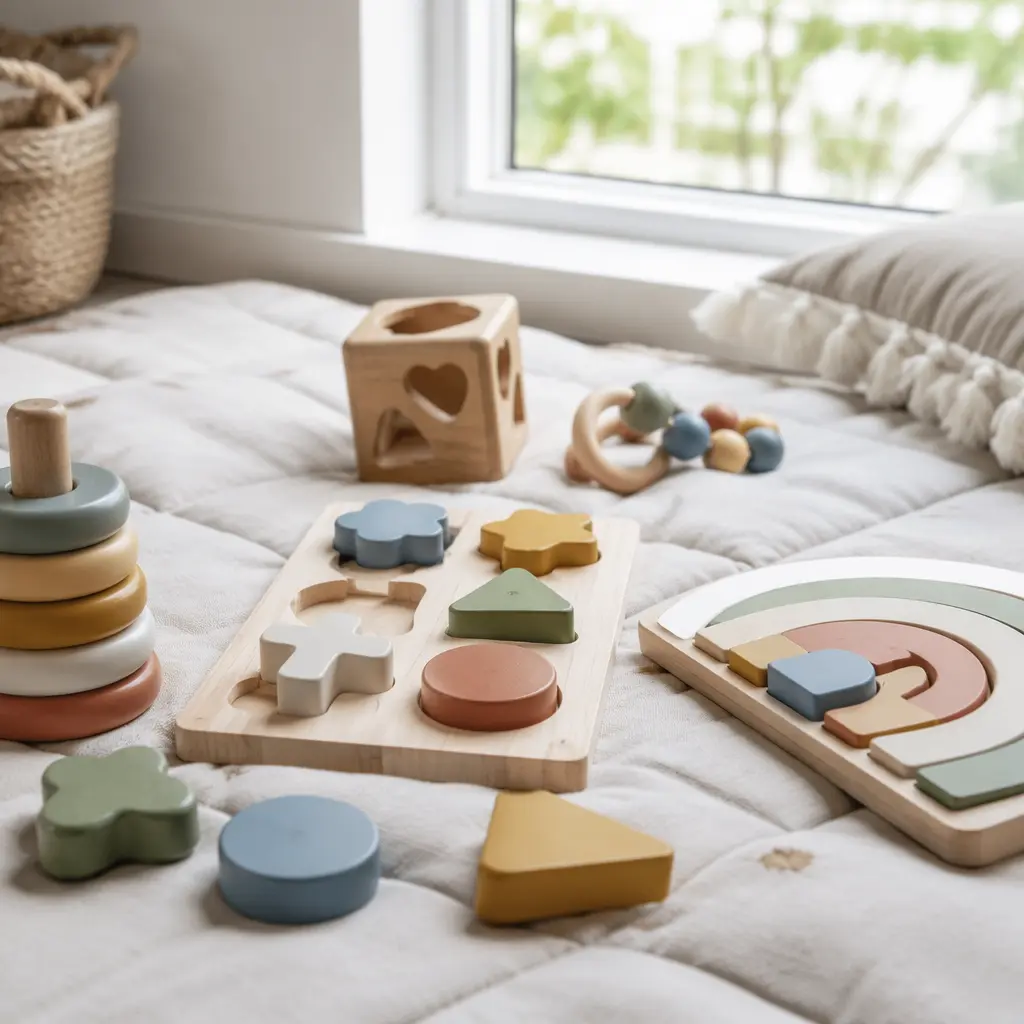
Simple puzzle toys can offer plenty of learning value during a baby’s first year, especially when they are designed with large pieces, rounded edges, and safe materials. For babies between 0 and 12 months, the best first puzzles focus less on solving complex problems and more on exploration through grasping, mouthing, lifting, stacking, and matching shapes. Chunky puzzles made from wood, silicone, or thick board materials can help support fine motor development while also encouraging sensory play and hand-eye coordination. Many parents also prefer toys without lights, sounds, or batteries during infancy, since quieter toys often leave more room for open-ended interaction and independent discovery.
What to look for
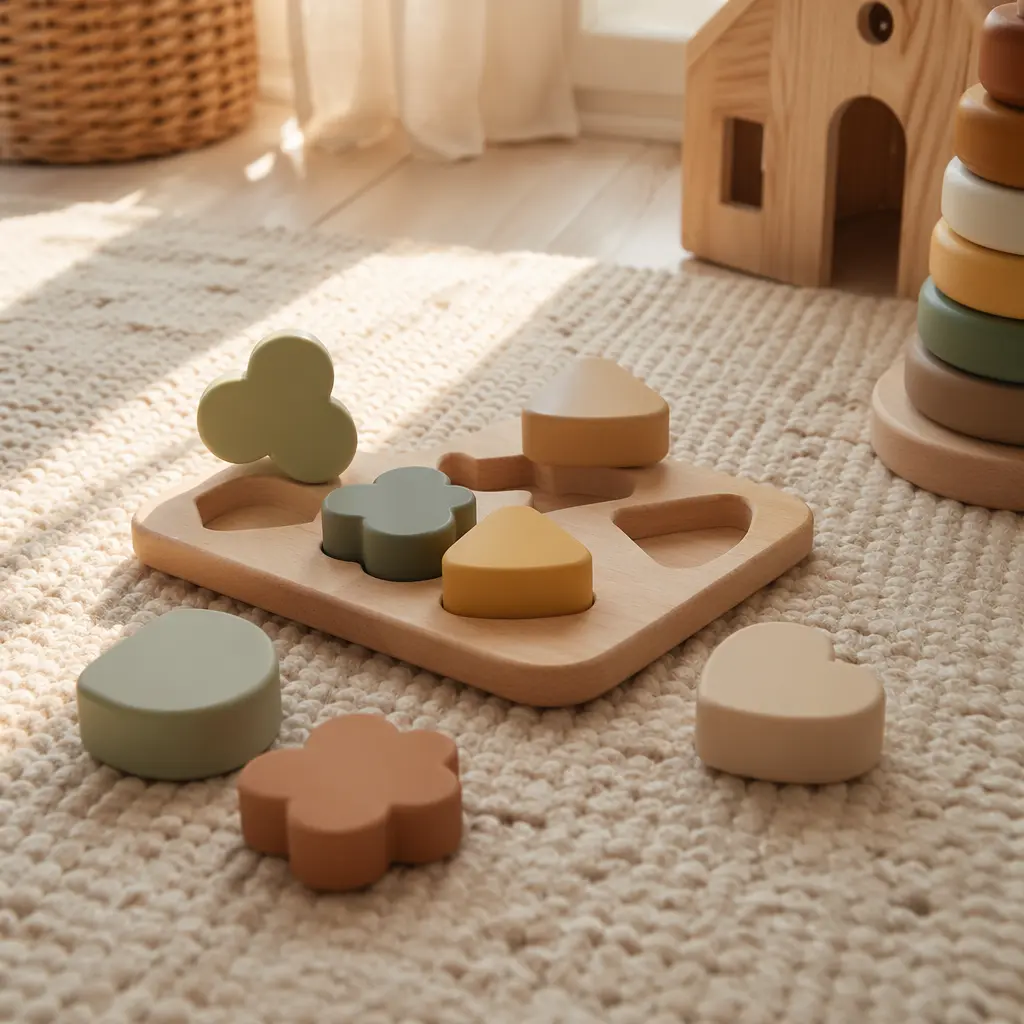
The safest and most useful first puzzles for babies are designed specifically for mouthing, grasping, and simple exploration. At this stage, babies are still learning how to coordinate their hands and fingers, so oversized pieces are usually easier to handle than small or tightly fitted puzzle parts. Materials also matter. Smooth unfinished wood, BPA-free silicone, and thick cardboard designed for infants are common choices because they are durable and easier to clean. Some puzzle toys include knobs or handles that help babies practice the pincer grasp later in the first year.
- Choose puzzle pieces large enough to avoid choking hazards.
- Look for rounded edges and smooth finishes without splinters or sharp corners.
- Check for chew-safe materials such as food-grade silicone or sealed wood.
- Simple shapes and high-contrast colors are often easier for young babies to engage with.
- Lightweight pieces are easier for younger infants to lift and manipulate.
- Avoid toys with detachable decorations, magnets, button batteries, or loose fabric details.
- Consider wipe-clean surfaces for easier everyday maintenance.
Age suitability
Babies develop quickly during the first year, so puzzle toys should match their current stage rather than a broad age label alone. Younger infants around 0 to 6 months are usually more interested in sensory exploration, texture, and grasping practice than fitting pieces into matching spaces. Soft silicone shape toys, textured stacking pieces, and extra-large wooden forms are often a better fit at this age. Between 6 and 12 months, many babies begin experimenting with object permanence, simple matching, and more intentional hand movements. Chunky peg puzzles or basic shape sorters with only a few openings can become more engaging during this period. It is normal for babies to mouth, bang, or toss puzzle pieces before using them as intended.
Standout categories or types
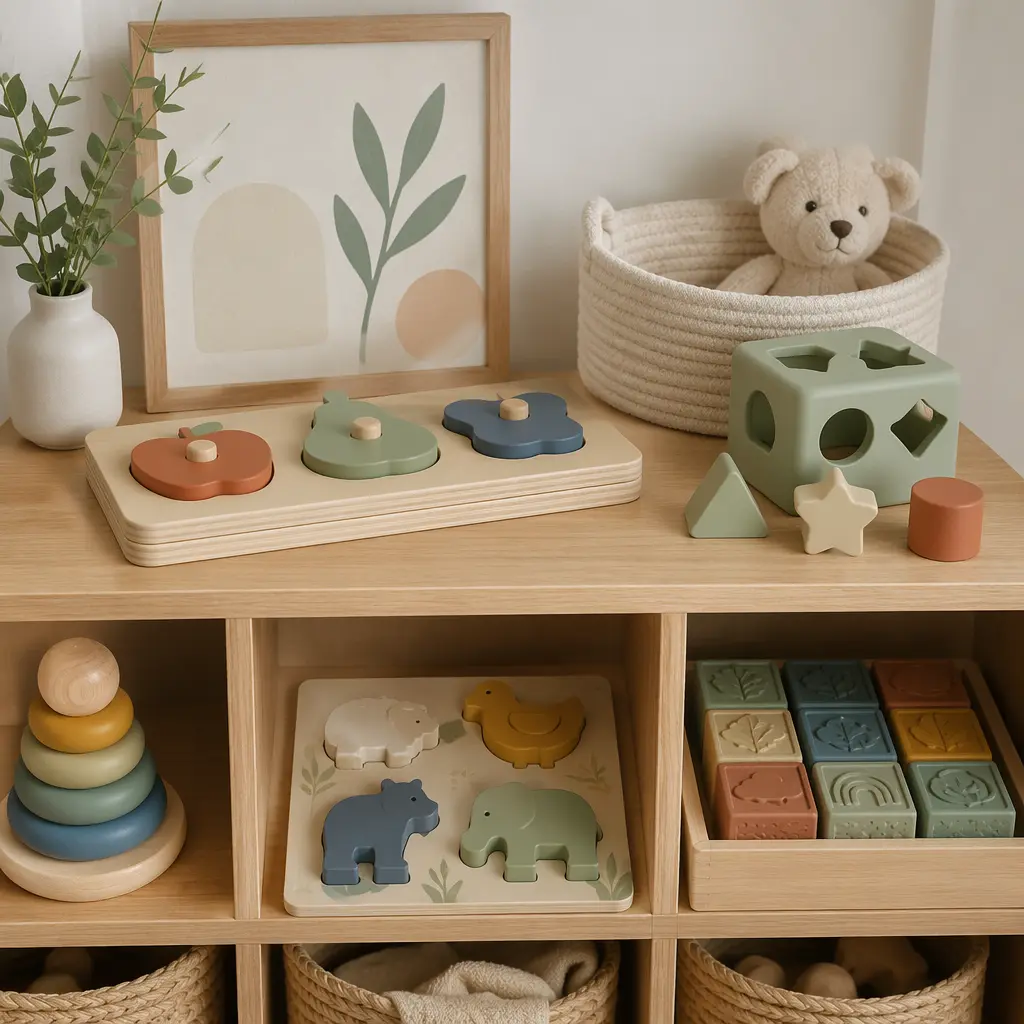
Chunky peg puzzles are one of the most common starting points for babies approaching the second half of the first year. The raised handles help little hands lift pieces more easily, while simple images or shapes keep the activity manageable. Some versions use only circles, squares, and triangles, while others include familiar objects like animals or fruits with extra-large silhouettes.
Soft sensory puzzles are another popular option for younger babies. These may use silicone, foam, or fabric elements with textured surfaces designed for mouthing and tactile exploration. While they do not always function like traditional puzzles, they still encourage early problem-solving and coordination through reaching, squeezing, and fitting pieces together. Shape sorters also overlap with puzzle play and can support spatial awareness once babies begin experimenting with placing objects into openings. For families looking to reduce noise and overstimulation, open-ended wooden puzzles without electronic features often provide a calmer play experience.
- Chunky wooden puzzles support grasping and hand control.
- Silicone sensory puzzles work well for teething-age babies.
- Simple shape sorters encourage spatial awareness and coordination.
- Knob puzzles can help develop early pincer grasp skills.
- Soft fabric or foam puzzles may suit younger infants who explore mainly through touch and mouthing.
Frequently asked questions
Are puzzle toys safe for babies under 12 months?
Puzzle toys can be safe when they are specifically designed for infants and used with supervision. Large, chew-safe pieces and durable materials are important. Avoid small detachable parts or toys intended for older children.
Do babies really learn from puzzles this early?
Yes, although learning at this age looks different from traditional puzzle solving. Babies build motor skills, hand-eye coordination, sensory awareness, and early cause-and-effect understanding through handling and exploring puzzle pieces.
What materials are easiest to clean?
Silicone and sealed wooden puzzles are usually simple to wipe clean with a damp cloth. Fabric puzzles may require more frequent washing, especially during teething stages. Always follow the manufacturer’s cleaning guidance.
Should babies use electronic puzzle toys?
Many families choose non-electronic toys for infants because they tend to encourage slower-paced, open-ended play. Simple puzzles without lights or sounds can still hold a baby’s attention while reducing extra stimulation and battery dependence.
How many puzzle pieces are appropriate for beginners?
Fewer pieces are usually better during the first year. Puzzles with two to five large pieces are often easier for babies to explore without becoming frustrated or overwhelmed.
The best first puzzle toys for babies are usually the simplest ones: chunky shapes, safe textures, and easy-to-grasp pieces that encourage exploration at a comfortable pace. By focusing on size, safety, and age-appropriate design, parents can choose puzzles that support early development without relying on flashing lights or noisy features. Quiet, hands-on toys often remain useful throughout the first year as babies grow from curious observers into more active problem-solvers.