Floor Puzzles vs Jigsaw Puzzles for Preschoolers
Compare floor puzzles and traditional jigsaw puzzles for children ages 3–5, including piece size, attention span, storage, cleanup and which style fits different play spaces and skill levels.
Compare prices and availability
Check current prices and availability for this guide on eBay.
As an eBay Partner, we may be compensated if you make a purchase.
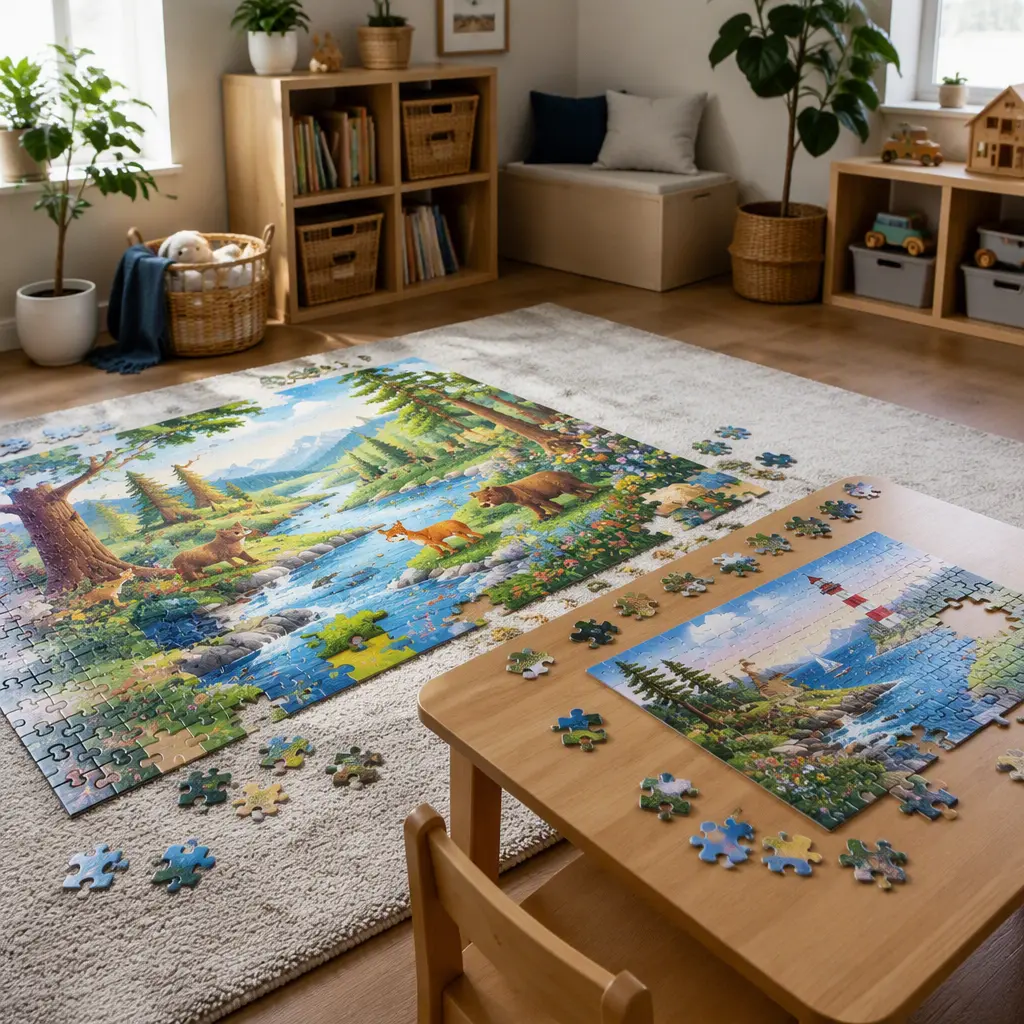
Choosing between floor puzzles and traditional jigsaw puzzles for preschoolers usually comes down to three practical questions: how large the pieces should be, how long a child can stay engaged, and how much setup and cleanup a family can manage. Both styles support problem-solving, hand-eye coordination and early spatial reasoning, but they suit different play habits and home environments. For children ages 3–5, the right choice often depends less on the picture on the box and more on the puzzle’s size, piece count, durability and where it will actually be used.
What to look for
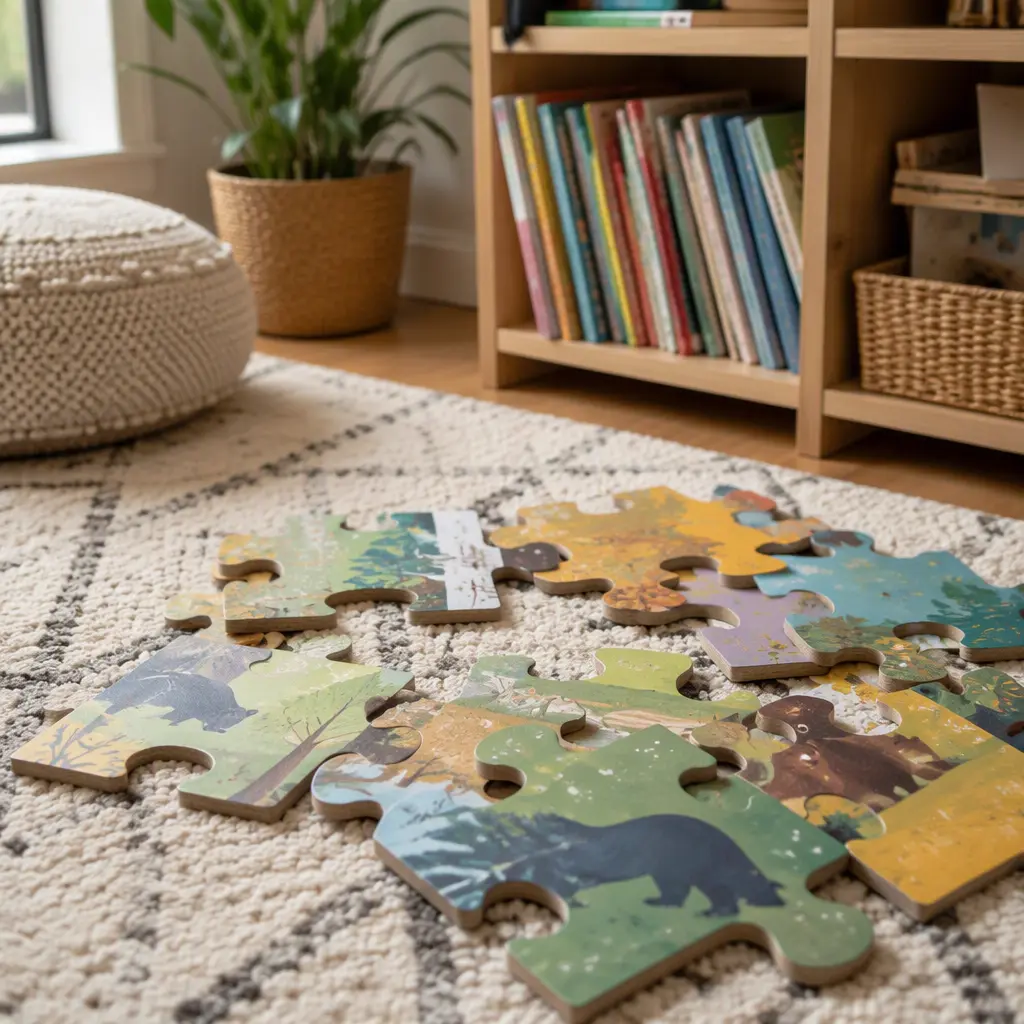
Preschool puzzle shopping is easier when parents focus on usability rather than difficulty labels alone. A puzzle that is technically age-appropriate can still feel frustrating if the pieces slide apart easily, the artwork is visually busy or the completed puzzle is too large for the available space. Floor puzzles and tabletop jigsaws each have strengths, but the best fit depends on how a child prefers to play and how much adult support is available during playtime.
- Large, sturdy pieces are easier for younger preschoolers to grip and less likely to bend or tear during repeated use.
- Floor puzzles usually support movement-based play and work well for children who struggle to sit at a table for long periods.
- Traditional jigsaw puzzles often take up less space and are easier to pause and store between play sessions.
- Simple, clear artwork with distinct color sections helps children recognize patterns and complete puzzles independently.
- Piece count matters more than the recommended age label. Many 3-year-olds do better with 12–24 pieces, while older preschoolers may enjoy 24–60 pieces depending on patience and experience.
- Cardboard puzzles are common and affordable, but wooden puzzles can last longer and resist bending, especially in busy playrooms or classrooms.
- Puzzle storage affects cleanup. Large floor puzzle boxes can become bulky, while small jigsaw pieces are easier to lose under furniture.
- Children who enjoy cooperative play may prefer floor puzzles because multiple children can work around the edges at once.
Age suitability
For most 3-year-olds, floor puzzles are often the easier starting point because the oversized pieces are simpler to handle and the large completed image feels visually rewarding. Many children at this age still prefer active play, so kneeling, stretching and moving around the puzzle can help maintain interest. By ages 4 and 5, many preschoolers begin developing longer attention spans and stronger fine motor control, making traditional tabletop jigsaw puzzles more manageable. Some children continue preferring floor puzzles simply because they enjoy the physical scale, while others become motivated by more detailed scenes and higher piece counts. Skill level varies widely at this age, so observing frustration tolerance matters more than pushing toward harder puzzles too quickly.
Options compared
Floor puzzles are usually the better choice for children who learn through movement or become restless during seated activities. Their larger pieces make early success more likely, which can build confidence for younger preschoolers or children new to puzzles. They also work well in playrooms with open floor space and can encourage collaborative play between siblings. The trade-off is storage and cleanup. Large boxes take up more room, and partially completed floor puzzles are difficult to move without breaking apart. Families in smaller apartments may find them inconvenient for daily use.
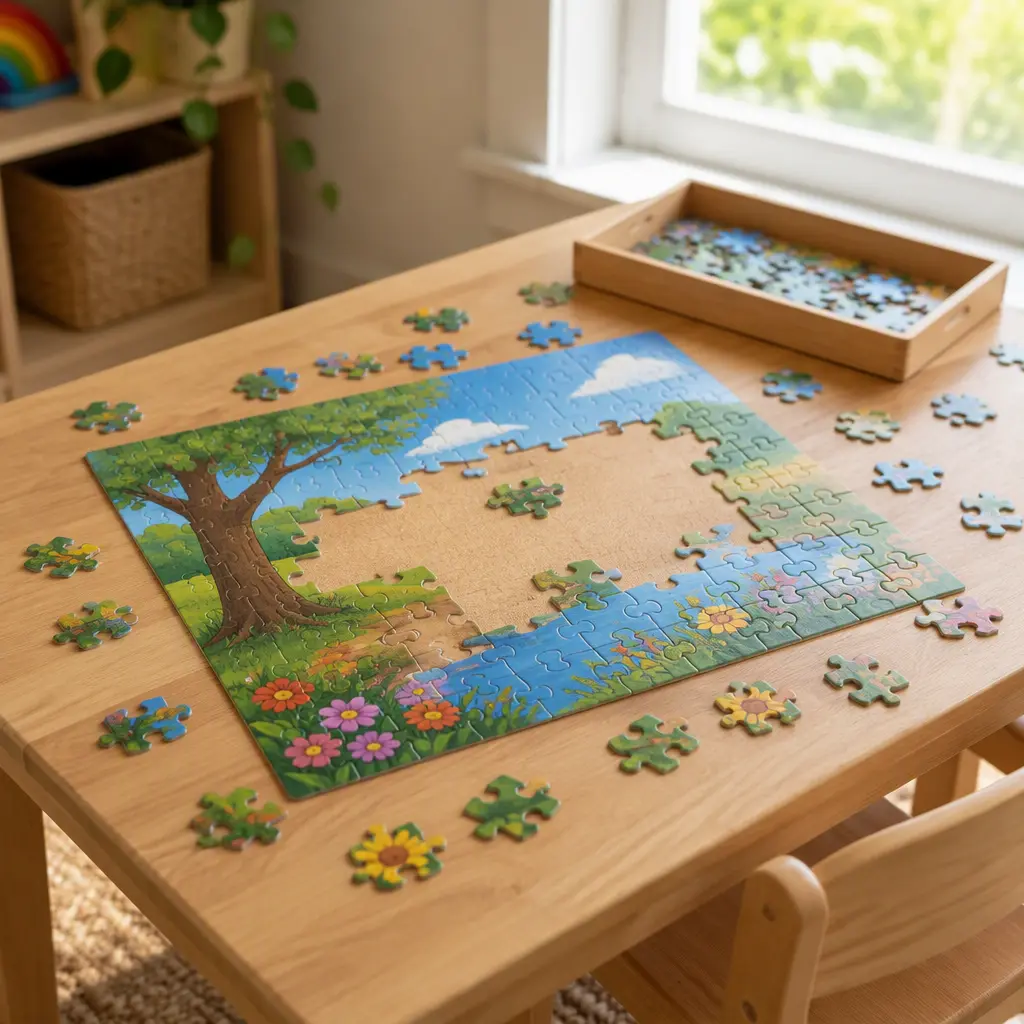
Traditional jigsaw puzzles for preschoolers are often easier to organize and store, especially when they come in compact trays or small boxes. They fit naturally into quieter tabletop activities and can support concentration for children preparing for kindergarten routines. Smaller pieces also encourage more precise finger control. However, tabletop puzzles may frustrate younger preschoolers who still need larger gripping surfaces or who dislike sitting still. Families with babies or toddlers in the same space may also find small puzzle pieces harder to manage safely.
- Choose floor puzzles for active preschoolers, shared play, larger playrooms and early puzzle beginners.
- Choose traditional jigsaw puzzles for quieter play, limited storage space and children developing longer focus.
- Wooden puzzles tend to hold up better over time but are usually heavier and sometimes more expensive.
- Large cardboard floor puzzles often create a dramatic visual payoff but may require more supervision during cleanup to avoid lost pieces.
- Multi-puzzle sets can offer better long-term value for families trying different difficulty levels without committing to one large puzzle format.
Frequently asked questions
Are floor puzzles easier than regular jigsaw puzzles?
Usually, yes. Floor puzzles are designed with larger pieces and simpler layouts that are easier for preschoolers to manipulate and visually organize. The larger completed image can also help children stay motivated.
How many puzzle pieces should a 4-year-old have?
Many 4-year-olds enjoy puzzles in the 24–48 piece range, but experience matters more than age alone. Children who are new to puzzles may still prefer lower piece counts with clear images and large pieces.
Do puzzles help preschool learning?
Puzzles can support several early learning skills, including shape recognition, visual matching, patience, fine motor control and problem-solving. Cooperative puzzle play may also encourage turn-taking and communication.
Which puzzle type is easier to clean up?
Traditional tabletop jigsaw puzzles are generally easier to store because the pieces fit into smaller containers and take up less floor space. Floor puzzles are faster to spot visually during cleanup, but the larger boxes can be awkward to store.
Are wooden puzzles better than cardboard puzzles?
Wooden puzzles are often more durable and resist bending, making them useful for frequent play or classroom settings. Cardboard puzzles are more common and usually provide a wider variety of images and piece counts at different budget levels.
For many families, the best puzzle setup is not choosing one format over the other but using both at different stages. Floor puzzles often suit younger or more active preschoolers, while tabletop jigsaw puzzles can become more appealing as attention span and fine motor skills develop. Matching the puzzle style to the child’s play habits and the family’s available space usually leads to more successful, independent play.