Best Puzzle Toys With Built-In Storage for Small Homes
A parent-focused guide to compact puzzle toys for ages 3–5 that help reduce clutter, keep pieces together, and fit smaller living spaces without sacrificing engaging play.
Compare prices and availability
Check current prices and availability for this guide on eBay.
As an eBay Partner, we may be compensated if you make a purchase.
Puzzle toys can be difficult to manage in small homes because loose pieces spread quickly, boxes split open in storage bins, and bulky sets compete for limited shelf space. For children aged 3–5, compact puzzle formats with built-in storage can make daily cleanup easier while still supporting problem-solving, fine motor skills, and independent play. The most practical options usually combine a clear storage system with sturdy pieces that are easy for preschoolers to handle without constant adult sorting.
What to look for
The best puzzle toys for smaller homes reduce both physical clutter and cleanup time. Preschool children also benefit from puzzles that feel manageable rather than overwhelming. Built-in storage can mean attached compartments, sliding cases, magnetic boards, zippered books, or tray-based designs where every piece has a visible home. Durable materials matter because younger children often carry puzzles around the house or dump them repeatedly during play.
- Choose puzzles with attached storage compartments or self-contained cases to reduce missing pieces.
- Look for large, chunky pieces that preschoolers can grip easily and tidy independently.
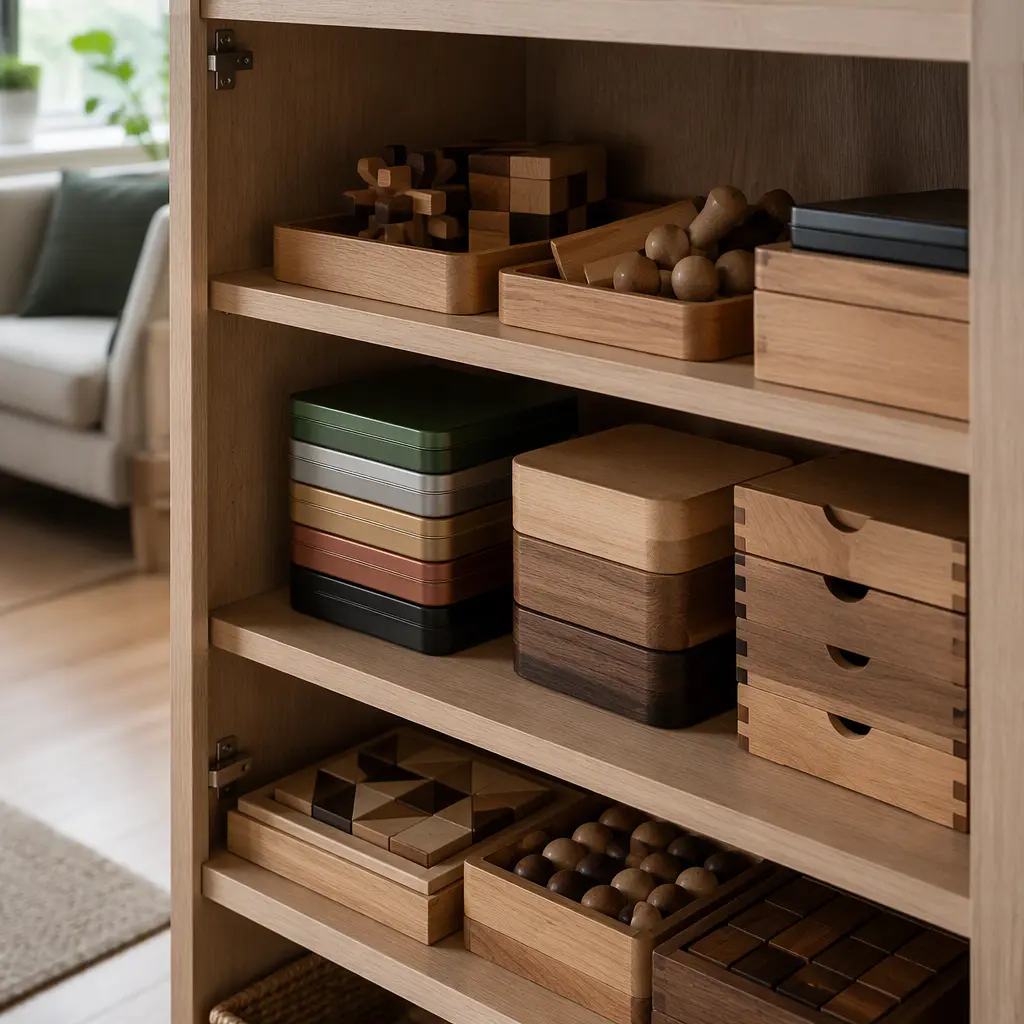
- Flat tray puzzles stack more neatly than deep cardboard boxes in small closets or shelves.
- Magnetic pieces help limit floor scatter during travel or quiet play on sofas and beds.
- Wooden and thick-board pieces generally last longer than thin cardboard in high-use households.
- Consider noise levels if storage pieces snap shut loudly or include electronic features.
- Avoid very high piece counts for younger preschoolers if cleanup frustration is already a problem.
Age suitability
Children aged 3–5 are often transitioning from simple knob puzzles toward more complex matching, sequencing, and jigsaw-style activities. Three-year-olds usually benefit from tray puzzles, peg puzzles, or chunky magnetic sets with obvious visual cues and fewer pieces. Around age four, many children enjoy lift-the-flap puzzle books, matching games with storage tins, and beginner jigsaws with larger interlocking pieces. By age five, compact puzzle cases with higher piece counts or layered challenges may hold attention longer while still fitting neatly into small storage spaces. Some travel-oriented puzzle toys work especially well for quiet time, shared bedrooms, or homes where toys need to be packed away daily.
Options compared
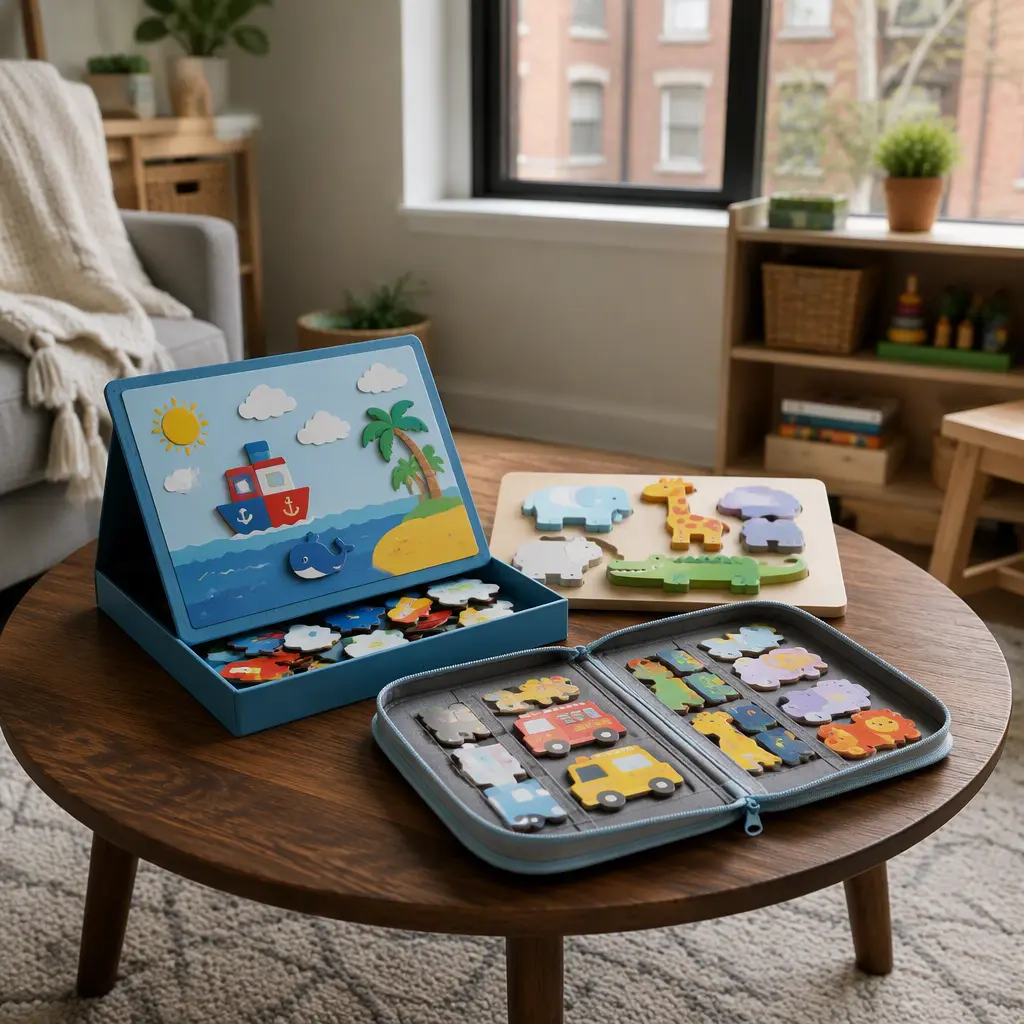
Tray puzzles are often the easiest option for small homes because the board itself acts as storage. Wooden tray puzzles stack efficiently on shelves, and children can usually see where each piece belongs during cleanup. They work well for ages three to four and for parents who want quick transitions between play and mealtimes. The trade-off is that tray puzzles may become too simple fairly quickly for older preschoolers.
Magnetic puzzle sets are useful for travel, shared spaces, and households trying to reduce floor clutter. Pieces are less likely to slide under furniture, and folding magnetic boards can store flat inside drawers or backpacks. However, magnetic sets vary widely in durability. Thin magnetic pieces can bend or peel over time if handled roughly. They are often best suited to calmer tabletop play rather than highly active playrooms.
- Puzzle books with zippered storage suit children who enjoy storytelling, matching, and quiet independent play. They are compact but may have thinner pieces that wear faster.
- Sliding-lid puzzle boxes help contain standard jigsaw pieces and can double as the play surface. These suit older preschoolers ready for larger piece counts.
- Stacking puzzle towers or nesting puzzles save shelf space and appeal to children who enjoy sorting by size and shape, though scattered stacking parts can still create cleanup challenges.
- Travel tins and compact card-style puzzles work well for restaurants, waiting rooms, and small apartments but may frustrate younger children if pieces are very small.
- Chunky wooden peg puzzles are durable and easy to organize but offer shorter play complexity for many five-year-olds.
Frequently asked questions
Are wooden puzzles better for small homes?
Wooden puzzles are often easier to stack and less likely to collapse or tear in storage bins compared with thin cardboard boxes. They also tend to stay visually tidy because pieces are thicker and easier to gather quickly. The main drawback is weight, especially if several wooden sets are stored together.
Do magnetic puzzles actually prevent lost pieces?
Magnetic puzzles can reduce lost pieces during active play because pieces stay attached to the board or case more easily. They are especially useful in cars, small living rooms, or shared bedrooms. They do not completely eliminate missing pieces, particularly if sets contain many small magnets or detachable accessories.
How many puzzle pieces are appropriate for ages 3–5?
Many three-year-olds enjoy puzzles with fewer than 20 large pieces, while older preschoolers may handle 24–60 pieces depending on interest and experience. In smaller homes, moderate piece counts are often more practical because cleanup stays manageable and storage containers remain compact.
What puzzle formats are easiest to clean up quickly?
Tray puzzles, magnetic boards, and zippered puzzle books are usually the fastest to tidy because each piece has an obvious place. Standard loose-piece jigsaw puzzles often require more floor space and sorting time, especially if several sets are mixed together.
Should puzzle toys stay permanently accessible?
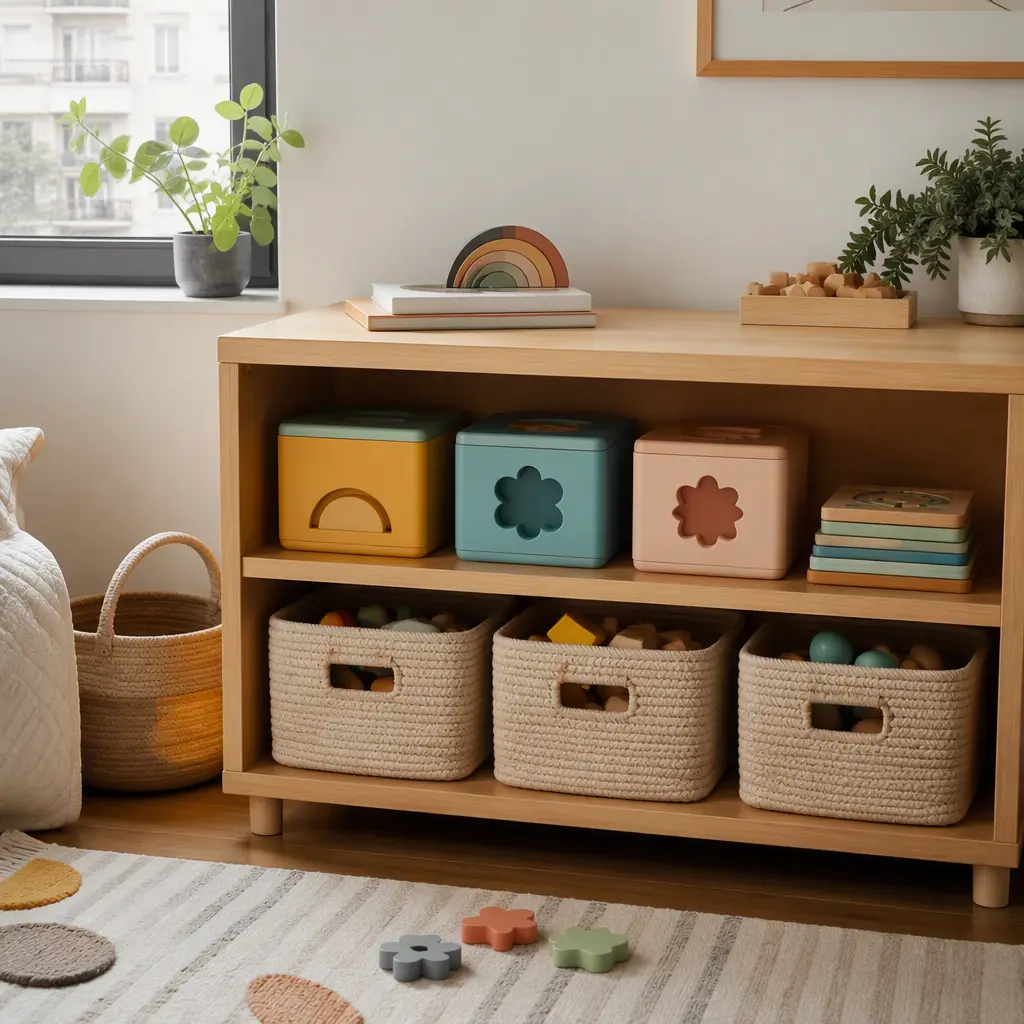
In small homes, rotating a smaller number of puzzles can help reduce visual clutter and keep children interested longer. Open shelves with only a few visible choices are often easier for preschoolers to manage independently than large overflowing bins.
For families balancing limited storage with everyday play, compact puzzle toys with built-in organization can make a noticeable difference. The right choice depends on how your child plays, how often toys need to be packed away, and how much independent cleanup you expect. Simple tray puzzles, magnetic formats, and self-contained puzzle books tend to offer the best balance between engaging play and manageable storage for ages 3–5.