Pocket-Sized Logic Games for Kids Who Travel Light
A parent-focused guide to compact solo logic games for ages 9–12, comparing puzzle styles, portability, durability, noise and travel practicality for cars, flights and waiting rooms.
Compare prices and availability
Check current prices and availability for this guide on eBay.
As an eBay Partner, we may be compensated if you make a purchase.
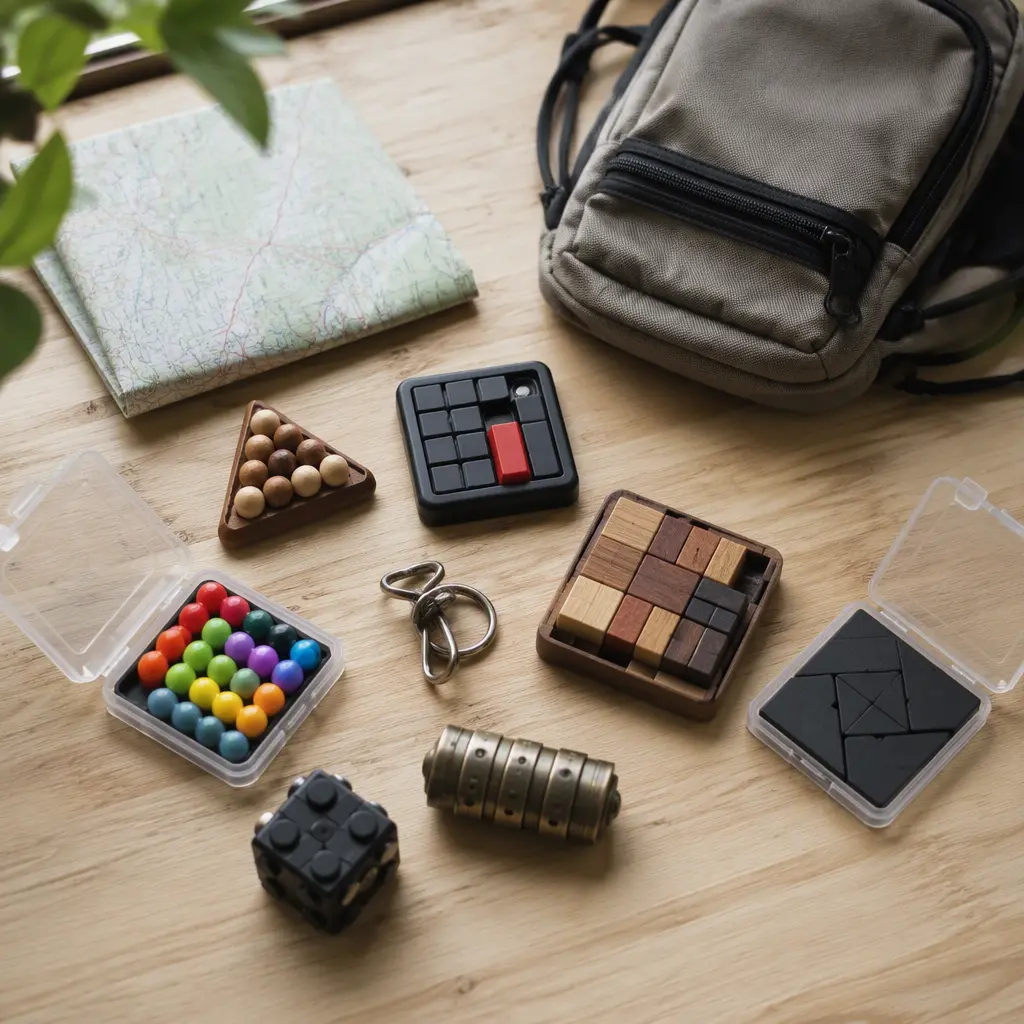
Pocket-sized logic games can make travel days quieter, reduce screen time and give older children something satisfying to solve independently. For ages 9–12, the best options usually balance challenge with true portability: they should fit easily into a coat pocket, backpack pouch or seat pocket without scattering pieces everywhere. Not every travel puzzle works equally well in cars, airports or restaurants, though. Some are nearly silent and self-contained, while others involve loose parts, timers or puzzle cards that are easy to misplace. Choosing the right type depends on where your child will use it, how patient they are with trial-and-error thinking and how much supervision or cleanup you want during trips.
What to look for
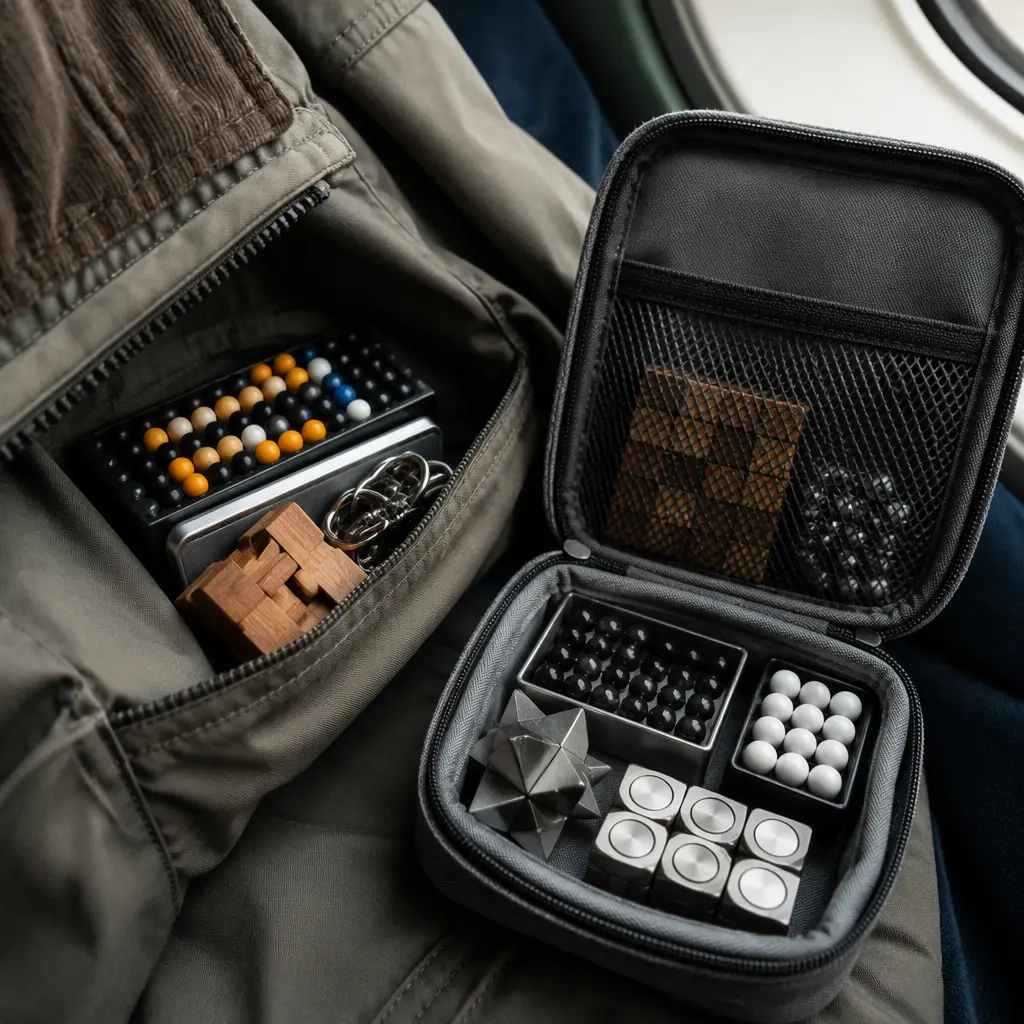
A good portable logic game for this age group should be challenging enough to stay interesting beyond the first trip while still being easy to pack and reset. Children around 9–12 often enjoy puzzles with increasing difficulty levels, pattern recognition or spatial reasoning, especially when they can solve them independently. Durability matters too. Thin cardboard pieces and flimsy hinges tend to wear out quickly when carried between bags, cars and hotel rooms. Magnetic elements, attached lids and solid plastic or wood construction generally travel better than delicate paper components.
- Look for self-contained designs with built-in storage or magnetic pieces to reduce lost parts.
- Choose puzzles with multiple difficulty levels so they stay useful for longer trips and repeated play.
- Consider noise levels if the game will be used on planes, trains or in waiting rooms.
- Check reset time: some puzzle styles are quick to replay while others require sorting many pieces.
- Think about hand size and dexterity. Tiny sliding parts may frustrate some children.
- Avoid bulky travel games that claim portability but still require tray tables or large surfaces.
- If siblings may share the toy, look for puzzle sets with many challenge cards rather than one fixed solution.
Age suitability
Most children aged 9–12 can handle more complex logic challenges than younger puzzle players, but skill levels still vary widely. Sequential deduction puzzles, sliding puzzles and spatial arrangement games often suit children who enjoy maths, coding activities or strategy games. Visual pattern puzzles may work better for children who dislike reading instructions during travel. If your child becomes frustrated easily, simpler tactile puzzles with quick wins may hold attention longer than abstract logic grids with only one solution path. Some compact brainteasers marketed to older children are actually better suited to teenagers because they require sustained concentration over long periods. For frequent travel, moderate difficulty usually works better than extremely hard expert-level puzzles that can feel discouraging in distracting environments like airports or busy cars.
Options compared
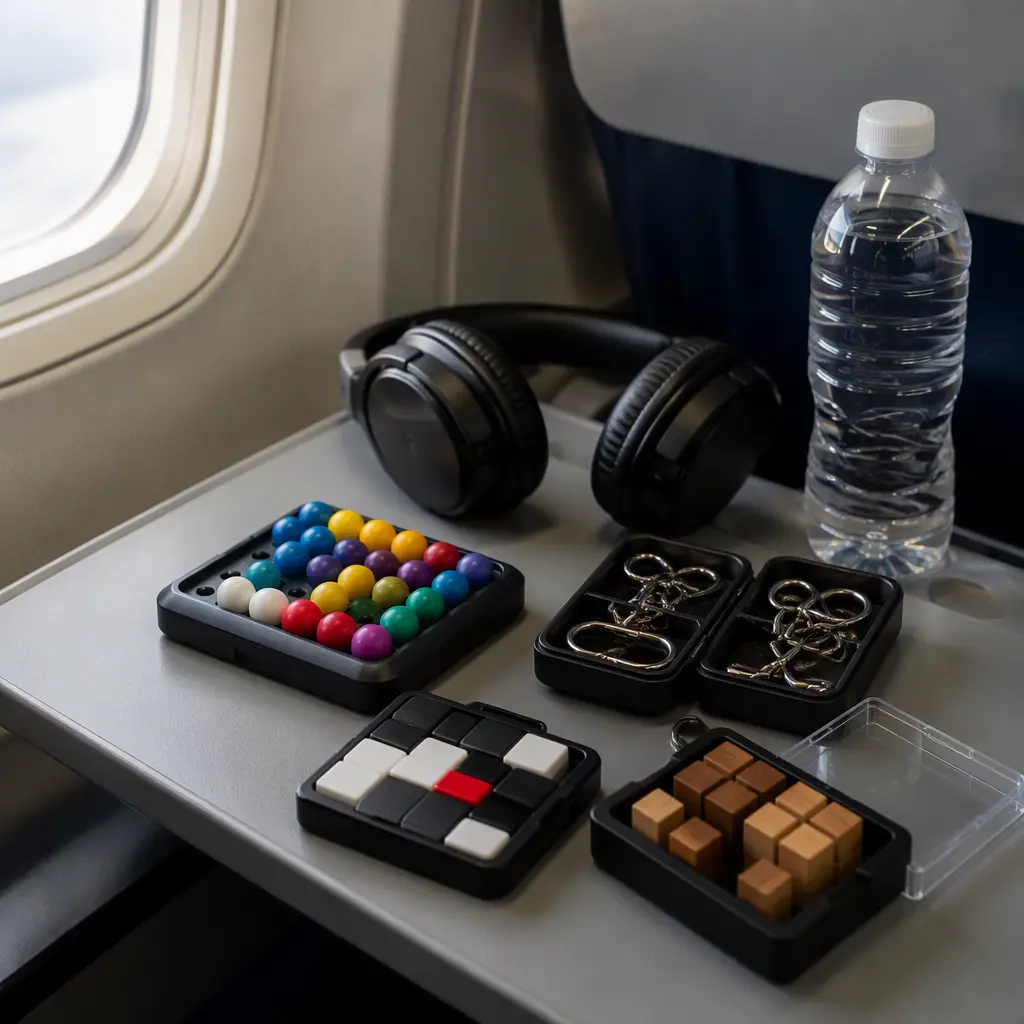
Sliding puzzles remain one of the most compact and durable choices for travel. They fit easily into pockets, make very little noise and usually survive rough handling well. Traditional number or image sliders are simple to carry but may lose appeal quickly for children who solve them fast. More advanced sliding maze puzzles with layered challenges tend to last longer. These suit children who enjoy repetition and improving speed or efficiency.
Magnetic logic games are often the most practical all-around travel option for this age range. Many use challenge cards combined with magnetic pieces inside a folding case, making them useful in cars, planes and waiting rooms. They are usually quieter and less messy than open-piece puzzles. The trade-off is size: some magnetic sets are technically portable but too large for jacket pockets. They work best for backpack travel rather than ultra-light packing.
- Mechanical disentanglement puzzles suit children who enjoy hands-on tinkering and tactile problem-solving, but metal versions can be noisy if dropped.
- Cube-style twist puzzles are highly durable and genuinely pocket-sized, though repeated turning may bother nearby passengers in quiet spaces.
- Logic card games with solo modes are lightweight and inexpensive, but cards bend easily and usually need a flat surface.
- Mini peg or marble puzzles can offer strong replay value, but loose pieces are easy to lose during travel.
- Sequential deduction games with challenge books tend to suit patient, analytical children and may feel slow for children who prefer quick interactions.
- Wooden pocket puzzles often feel sturdy and screen-free in the best sense, though heavier wood designs may add noticeable weight to small bags.
Frequently asked questions
Are pocket-sized logic games good alternatives to screens during travel?
They can work well for shorter stretches of independent entertainment, especially in queues, restaurants and transit waiting areas. Many children still alternate between puzzles and other activities, so it helps to pack more than one type of quiet option for longer journeys.
Which puzzle types create the least mess?
Enclosed sliding puzzles, magnetic travel games and twist puzzles are generally the easiest to manage because they do not rely on loose counters or cards. Open-piece puzzles are more likely to lose parts under seats or in hotel rooms.
Do these games still appeal to older children?
Many do, particularly logic puzzles with graduated difficulty levels. Older children often lose interest in very simple novelty brainteasers but stay engaged with puzzles that introduce increasingly complex patterns or strategic thinking.
What works best for airplane travel?
Quiet, self-contained games are usually easiest on flights. Magnetic folding puzzles, compact deduction games and enclosed sliders are practical because they fit on small tray tables and can be packed away quickly during boarding or landing.
How many travel puzzles should parents pack?
For longer trips, two or three different puzzle styles often work better than one larger game. Rotating between tactile puzzles, logic challenges and quick brainteasers can help maintain interest without adding much luggage weight.
The most useful pocket-sized logic games are the ones children willingly return to across many trips, not just the most complicated puzzles on the shelf. Durable construction, quiet play and easy storage usually matter more for travel than novelty features. For ages 9–12, portable solo puzzles can offer a practical middle ground between passive entertainment and bulky travel toys, especially when chosen to match a child’s patience level and preferred style of problem-solving.