First Logic Games for Kids Who Frustrate Easily
A parent-focused guide to beginner logic games for ages 6–8, with tips on cooperative play, solo options, gentle difficulty ramps, and avoiding games that trigger shutdowns.
Compare prices and availability
Check current prices and availability for this guide on eBay.
As an eBay Partner, we may be compensated if you make a purchase.
Logic games can build persistence, flexible thinking and confidence, but some children shut down quickly when a puzzle feels too hard or overly competitive. For ages 6–8, the best starting point is usually a game with short rounds, visible progress and a gentle learning curve instead of strict time pressure or complicated rules. Cooperative hints, solo-friendly formats and adjustable difficulty matter more than flashy components. Parents often get better results from games that reward experimentation rather than perfect strategy, especially for children who dislike making mistakes in front of others.
What to look for
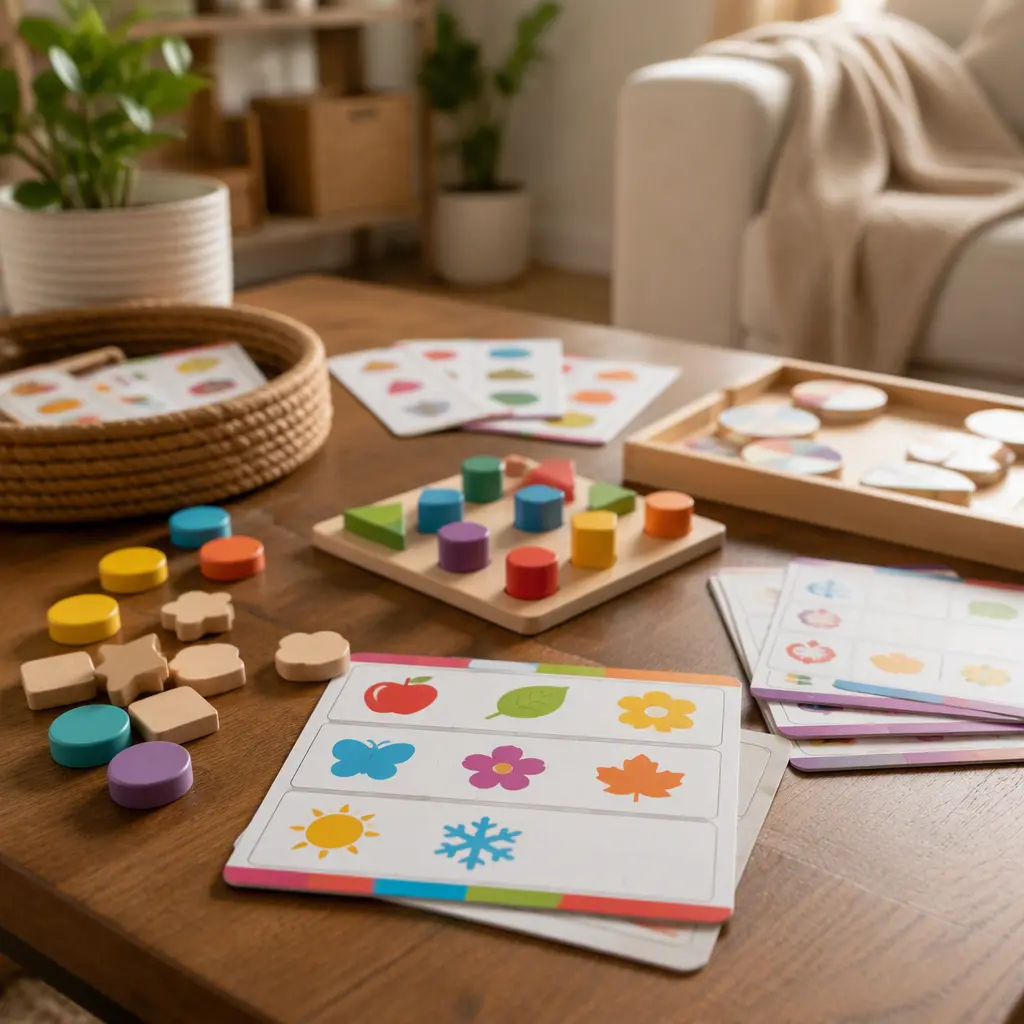
Children who frustrate easily often benefit from games that make progress visible and mistakes low-stakes. A good first logic game should feel solvable within a short session while still offering enough variety to stay interesting over time. Look closely at how the game introduces difficulty. Some titles start with guided beginner challenges and slowly add complexity, while others expect children to infer patterns immediately. Cooperative structures can also reduce pressure because adults or siblings can help without taking over.
- Choose games with beginner levels or challenge cards that increase gradually rather than sudden difficulty spikes.
- Look for solo play modes so children can work at their own pace without competition.
- Consider cooperative or discussion-based formats where hints are part of normal play.
- Short setup and play times usually work better for children who lose confidence quickly.
- Large, durable pieces are easier to manage and less frustrating than tiny components.
- Avoid games that rely heavily on reading if the child is still building confidence with text.
- Quiet tabletop games are often easier for sensitive children than noisy electronic puzzle toys.
Age suitability
The 6–8 age range covers a wide spread of attention spans and emotional tolerance for challenge. Some six-year-olds still prefer hands-on matching or sequencing puzzles, while older children may enjoy deduction and multi-step planning. A child who frustrates easily may still enjoy advanced concepts if the game allows retries without penalty. Puzzle books, pattern-building games and tactile logic sets often suit younger or more sensitive players because they provide immediate visual feedback. Children closer to eight may be ready for deduction games, maze challenges or cooperative mystery-solving as long as rounds stay manageable. If a child frequently abandons activities after one failed attempt, avoid games marketed around speed, racing or competitive scoring.
Options compared
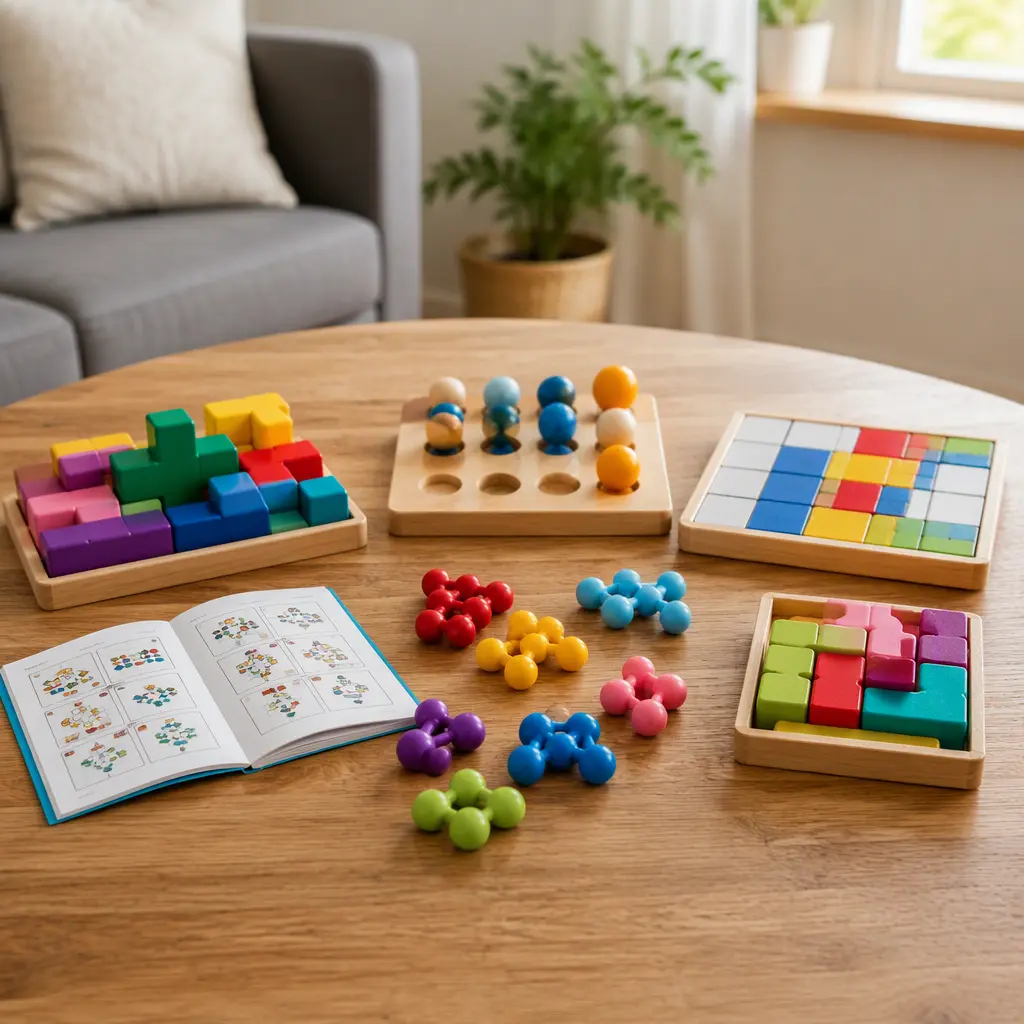
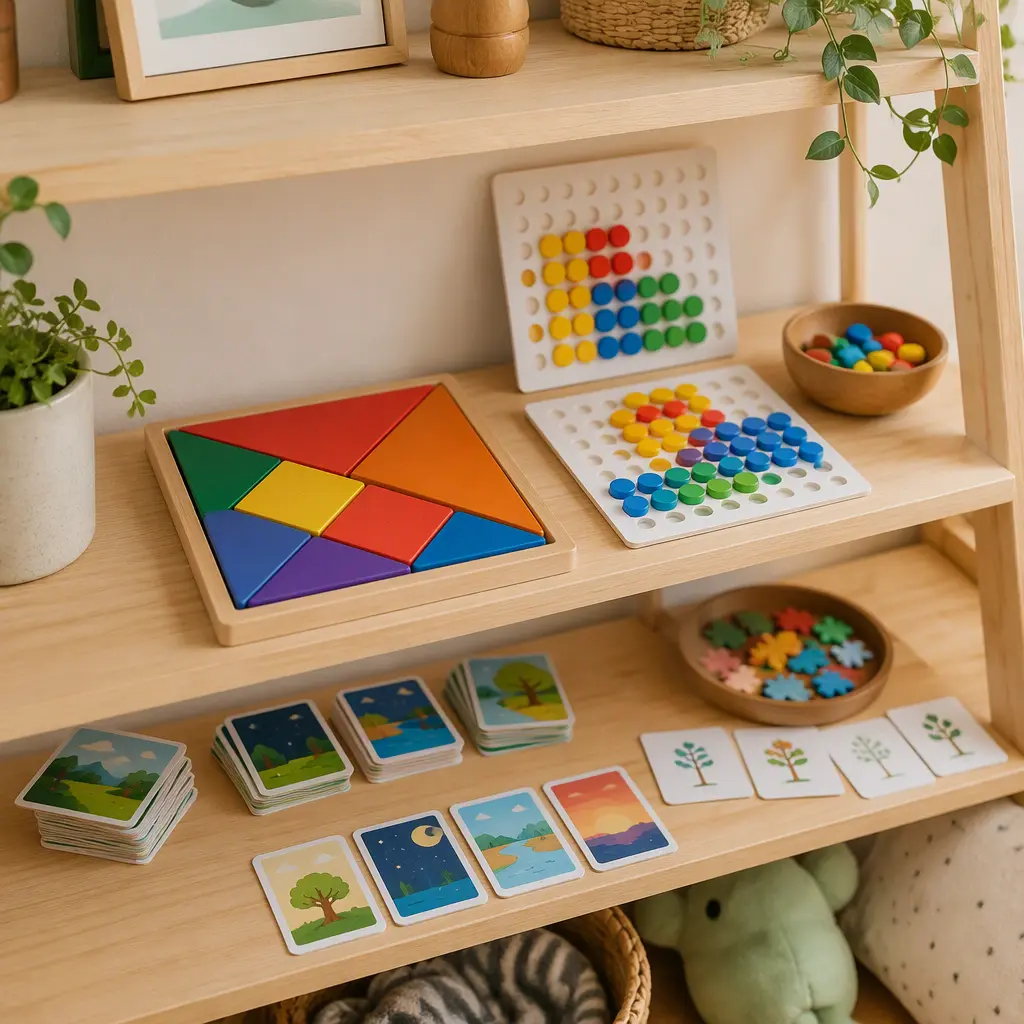
Pattern-building and spatial puzzles are often the gentlest entry point for children who dislike failure. Tangrams, magnetic shape puzzles and block arrangement challenges usually allow visible progress even before the final solution is complete. These games suit children who enjoy hands-on play and benefit from manipulating physical pieces. They are also relatively quiet and easy to replay, though some sets include many small parts that require organized storage.
Solo challenge games with progressive cards can work well because children can repeat levels privately without social pressure. Sliding puzzles, logic grids and maze-style games encourage persistence, but the best versions clearly separate beginner and advanced challenges. Some children become discouraged if later levels appear impossible too quickly, so a broad middle range of difficulty is more useful than an extremely hard endgame.
- Cooperative logic games: Best for children who dislike competition or fear getting answers wrong. These encourage teamwork and discussion but may require more adult participation.
- Solo puzzle systems: Good for independent play and quiet time. They suit children who prefer retrying challenges privately but can feel repetitive if the puzzle variety is narrow.
- Pattern and sequencing games: Often the easiest starting point for ages 6–8 because success is visual and immediate. Usually low-mess and compact for storage.
- Deduction and mystery games: Better for older or more verbally confident children. These can build reasoning skills but may frustrate children who struggle with uncertainty.
- Electronic logic toys: Sometimes motivating for reluctant players, but many rely on sounds, timers or fast feedback loops that increase pressure rather than reduce it.
Frequently asked questions
Should logic games be challenging right away?
A small amount of challenge is useful, but immediate difficulty can discourage children who already avoid puzzles. Early success matters. Games with several easy starter levels often help children build confidence before moving into more complex reasoning.
Are cooperative games better than competitive ones?
For children who frustrate easily, cooperative formats are often a safer starting point because the focus shifts from winning to problem-solving together. Competitive games can still work if rounds are short and losing does not eliminate players from the activity.
How long should a logic game session last?
Many children in this age group do best with sessions around 15 to 30 minutes, especially when learning a new game. Stopping before frustration builds too high can help preserve interest for future play.
What if a child asks for constant hints?
Structured hints can be helpful if they guide thinking instead of giving the answer away. Questions like “What have you already ruled out?” or “Which piece could fit here?” encourage problem-solving without removing ownership of the solution.
Do screen-free logic games still hold attention?
Many do, especially tactile games with physical pieces, colorful patterns or cooperative storytelling elements. Children who struggle with frustration often respond well to the slower pace and reduced sensory overload of offline play.
The best first logic games for children who frustrate easily are usually calm, flexible and forgiving rather than highly competitive or fast-paced. A gradual difficulty ramp, opportunities for cooperative problem-solving and space to retry challenges independently can make a significant difference in whether a child stays engaged. Choosing a game that matches both skill level and emotional tolerance often matters more than choosing the most advanced puzzle on the shelf.