Best Puzzle Toys for Toddlers Who Hate Sitting Still
A buyer’s guide to active, chunky puzzle toys for toddlers ages 1–2 who learn best while moving. Covers what to look for, age fit, safety notes, and puzzle styles that work beyond the table.
Compare prices and availability
Check current prices and availability for this guide on eBay.
As an eBay Partner, we may be compensated if you make a purchase.
Some toddlers are simply not wired for quiet table time. Between 12 and 24 months, many children learn best while crawling, cruising, and carrying things from place to place. For these movers, traditional flat puzzles can feel frustrating. The good news: there are puzzle toys designed to meet active toddlers where they are—on the floor, on their feet, and in motion. This guide focuses on chunky, movement-friendly puzzles that encourage problem-solving without requiring a child to sit still.
What to look for
Active toddlers need puzzles that work with their energy, not against it. The best options are easy to grip, forgiving when used roughly, and flexible enough for floor-based play. These features help reduce frustration while still supporting early cognitive skills.
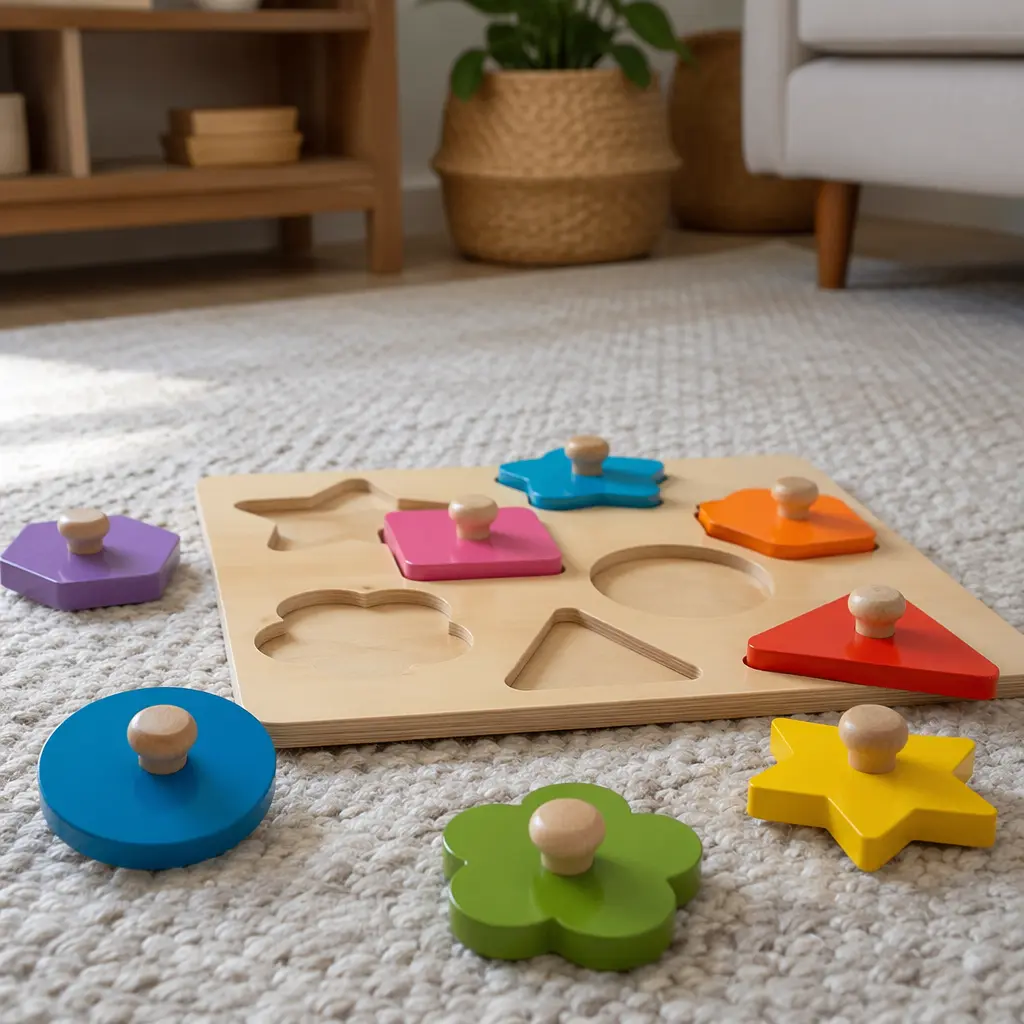
- Chunky pieces: Thick, oversized pieces are easier to grasp and harder to lose, especially for toddlers still developing fine motor control.
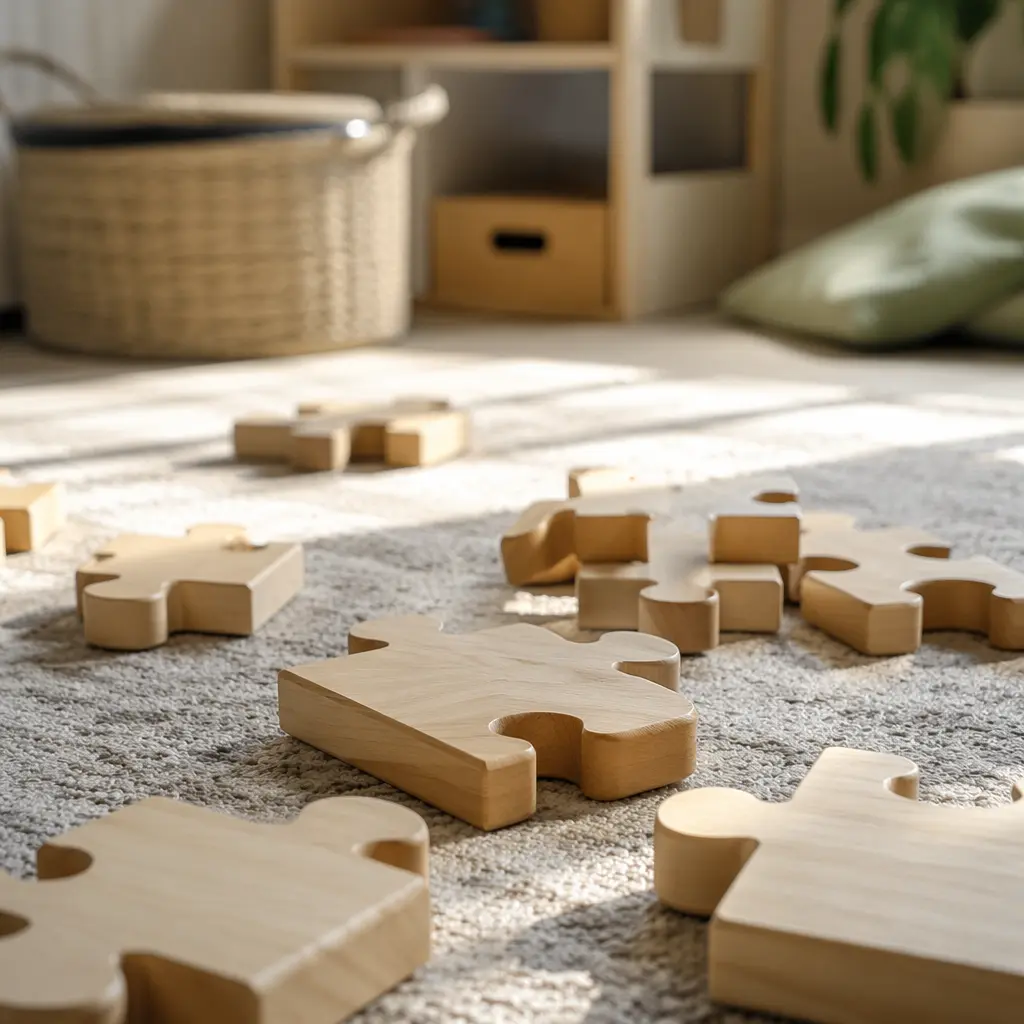
- Floor-friendly design: Look for puzzles that can be used on the floor or even stood upright, rather than requiring a tray on a table.
- Simple visual cues: Knobs, pegs, or clear outlines help toddlers self-correct without adult help.
- Durable materials: Wood or thick molded plastic stands up better to dropping, mouthing, and enthusiastic play.
- Open-ended use: Pieces that can be stacked, lined up, or carried around add value for children who like to move.
Age suitability
For the 1–2 year age range, puzzles should focus on exploration rather than precision. At this stage, toddlers may be more interested in removing pieces than completing the puzzle—and that is developmentally appropriate. Puzzles with just a few large pieces, strong contrast, and obvious orientation points tend to work best. As toddlers approach age two, they may begin experimenting with matching shapes or images, especially when the puzzle allows them to move around while doing so.
Standout categories or types
Not all puzzles expect a child to sit quietly and concentrate. Some categories are especially well suited to toddlers who prefer active play and short bursts of focus.
- Peg and knob puzzles: These allow toddlers to grab, lift, and carry pieces easily, often returning to the board multiple times during play.
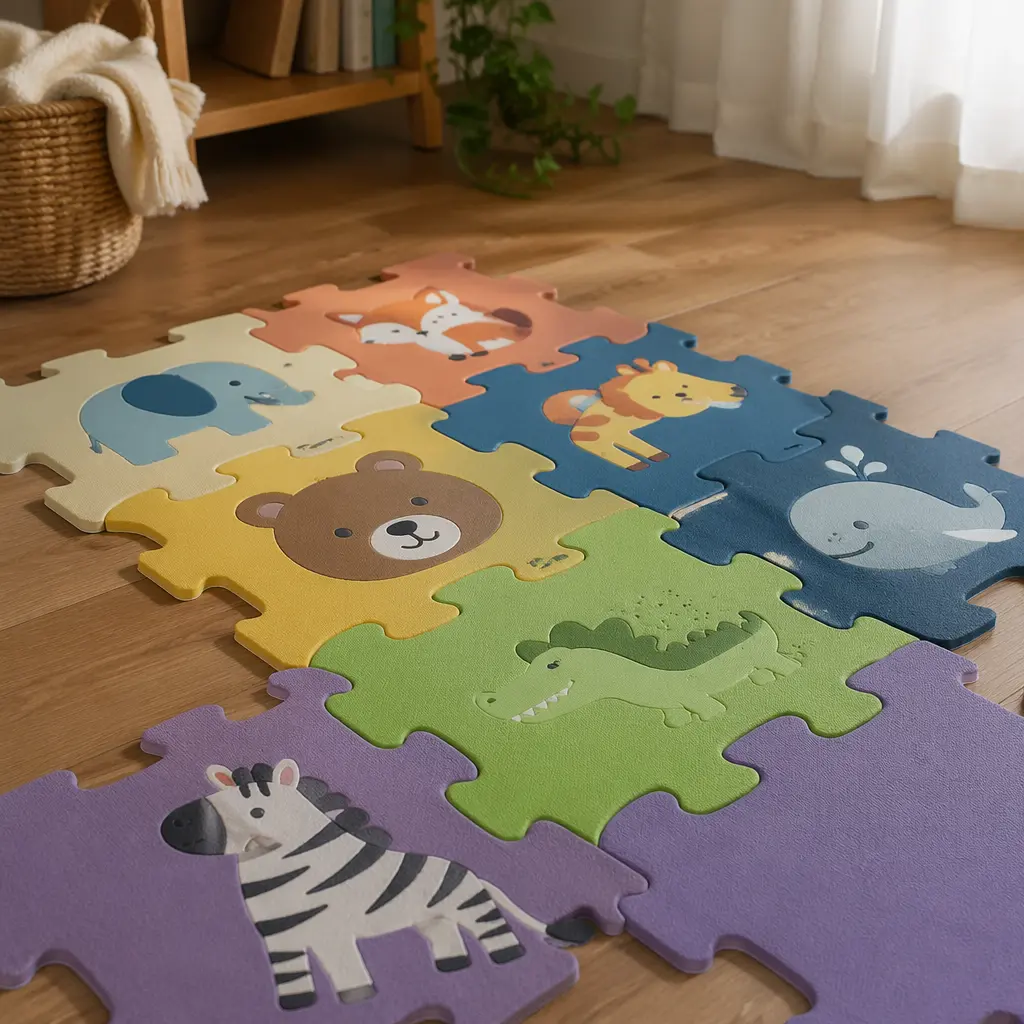
- Floor puzzles: Large interlocking pieces spread across the floor encourage crawling, standing, and stepping as part of the problem-solving process.
- Shape-sorter hybrids: Part puzzle, part sorter, these toys let toddlers move pieces around a room before matching them to openings.
- Stack-and-fit puzzles: Pieces that stack or nest add a gross-motor element and don’t require exact placement to feel successful.
- Magnetic or vertical puzzles: When used on a low metal surface or stand, these let toddlers play while standing and shifting positions.
Frequently asked questions
Can a toddler really learn from a puzzle if they don’t finish it?
Yes. For toddlers, learning comes from handling pieces, noticing shapes, and experimenting with cause and effect. Completing the puzzle is not required for developmental benefit.
Are floor puzzles better than table puzzles for this age?
Floor puzzles often work better for active toddlers because they allow movement and larger motions. Table puzzles can still be useful, but they may appeal more to children closer to age two.
How many pieces should a puzzle have for a 1-year-old?
Many toddlers do best with puzzles that have between 2 and 6 large pieces. Fewer pieces reduce frustration and make it easier for a child to understand the goal.
What skills do active puzzles support?
These puzzles support hand-eye coordination, spatial awareness, early problem-solving, and both fine and gross motor development, especially when pieces are moved around the room.
For toddlers who hate sitting still, the right puzzle can turn movement into a learning tool rather than a distraction. By choosing chunky, flexible designs that work on the floor and encourage exploration, parents can support early thinking skills without forcing quiet, seated play before a child is ready.