Best Puzzles for Toddlers Who Dump and Rebuild
A buyer’s guide to chunky, forgiving puzzles for active 1–2 year olds who love dumping pieces and starting over. Learn what to look for, age fit, safety tips, and common questions.
Compare prices and availability
Check current prices and availability for this guide on eBay.
As an eBay Partner, we may be compensated if you make a purchase.
Many toddlers don’t approach puzzles quietly and methodically. For ages 1–2, it’s common to dump all the pieces out, explore them one by one, then try again—sometimes over and over. The best puzzles for this stage are forgiving, sturdy, and simple, supporting hands-on play without requiring precision or patience a young child hasn’t developed yet. This guide focuses on puzzle styles that match how active toddlers actually play.
What to look for
Toddlers who dump and rebuild are learning through movement, repetition, and cause-and-effect. The right puzzle won’t demand exact placement or long attention spans. Instead, it should invite repeated attempts and survive plenty of enthusiastic handling.
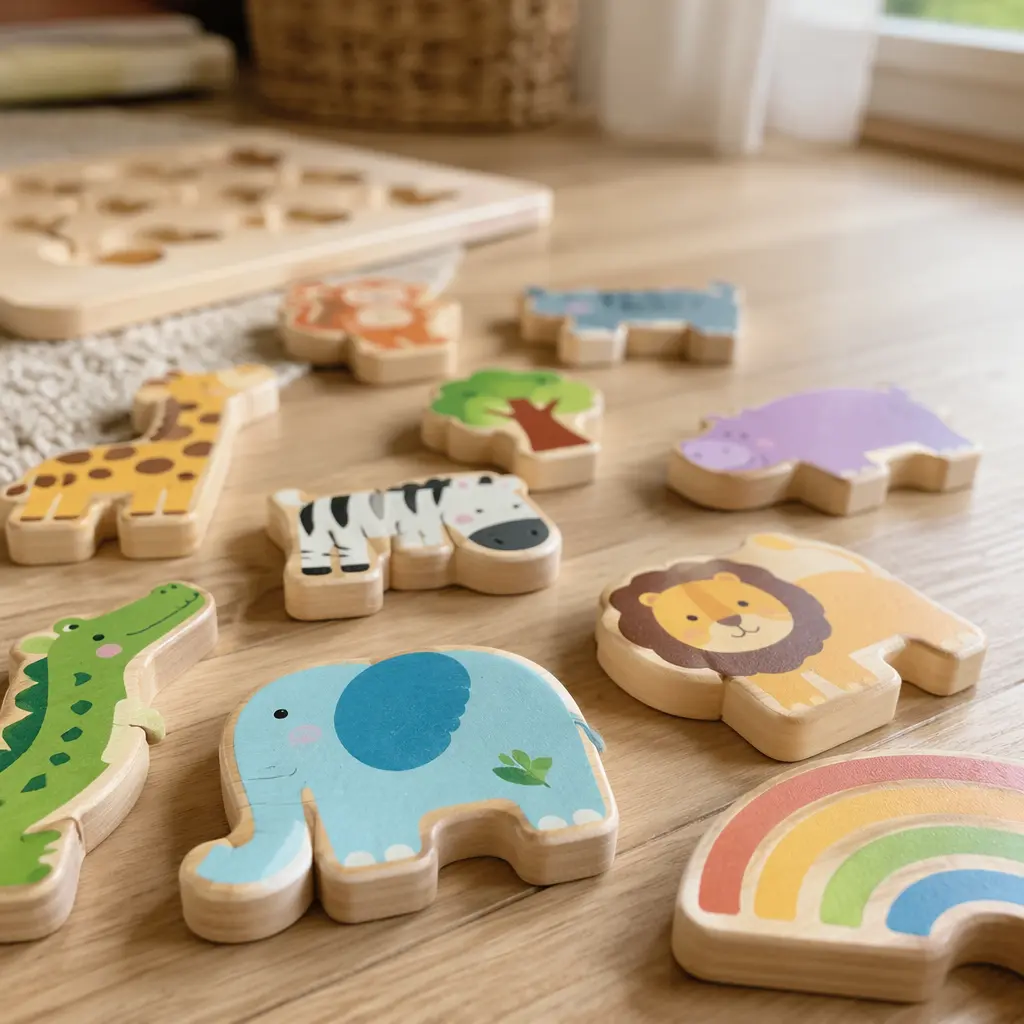
- Chunky pieces that are easy to grasp with whole hands
- Low piece count, often 3–8 pieces total
- Thick boards or bases that don’t slide easily
- Simple shapes or single images per piece
- Durable materials that can handle drops and bangs
- Clear visual cues, such as outlines or recessed wells
Age suitability
For children 1–2 years old, puzzles are less about “solving” and more about exploration. At the younger end, toddlers may only remove pieces, mouth them, or bang them together. That still counts as learning. As they approach age two, many begin matching shapes or images with guidance. Look for puzzles labeled for toddlers or early learners, and expect skills to build gradually rather than all at once.
Standout categories or types
Some puzzle styles are especially well-suited to toddlers who like to dump everything out and rebuild from scratch. These designs reduce frustration while encouraging repeated play.
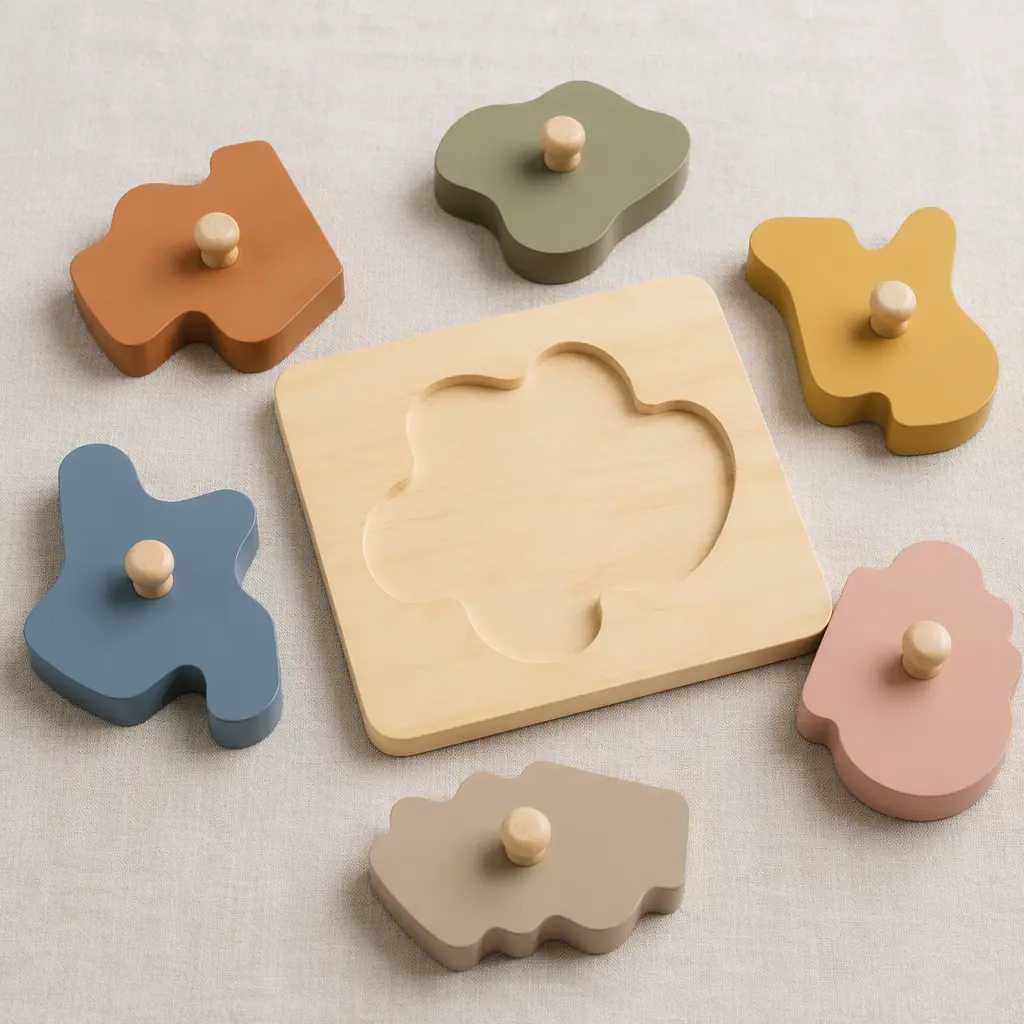
- Knob puzzles: Large knobs give toddlers something solid to grab and lift, even if they can’t match shapes yet.
- Peg or pegless shape boards: Simple geometric cutouts help toddlers practice fitting without needing perfect alignment.
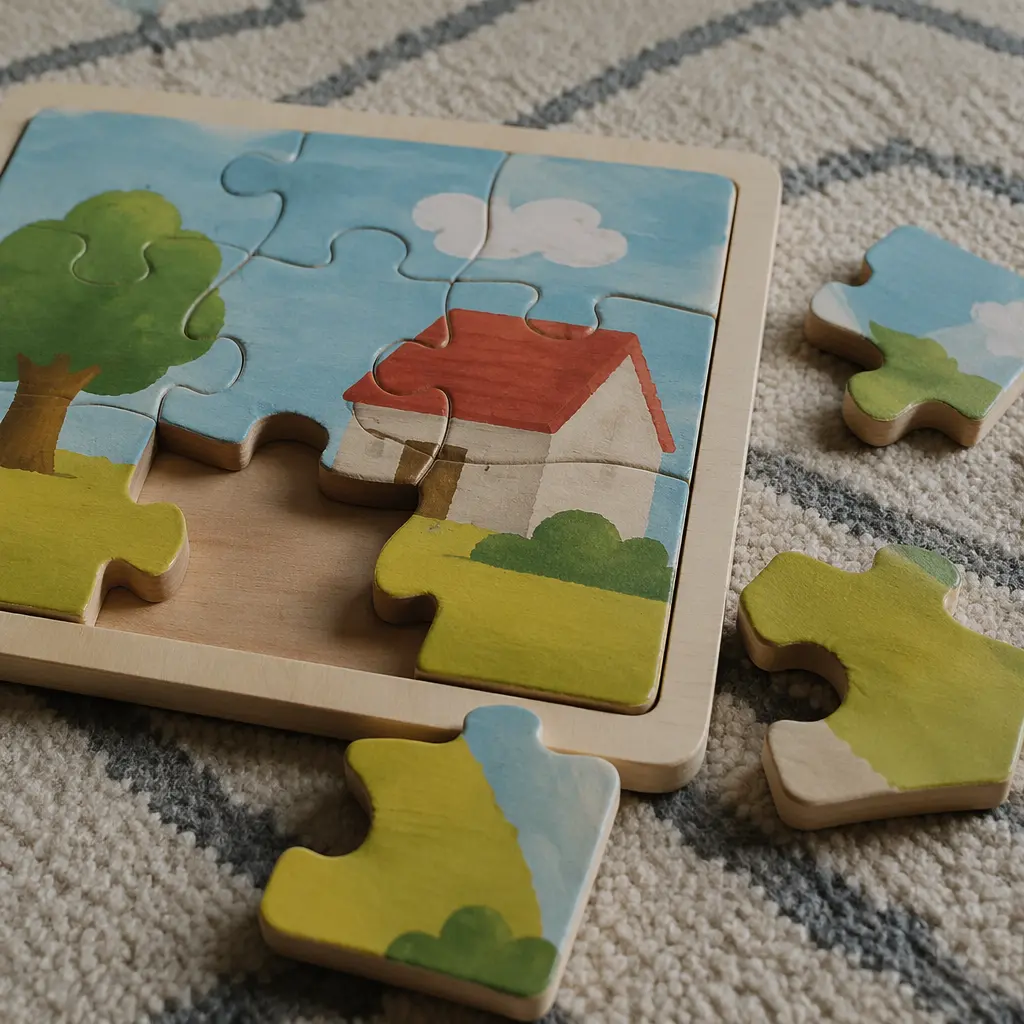
- Inset puzzles with pictures: Each piece fits into a recessed space, offering visual guidance and a clear sense of completion.
- Single-theme chunky puzzles: Animals, vehicles, or everyday objects keep focus on one concept at a time.
- Soft or foam puzzles: Lightweight pieces are quieter and more forgiving during enthusiastic dumping.
Frequently asked questions
Is dumping puzzle pieces actually helpful?
Yes. Dumping, carrying, and redistributing pieces helps toddlers develop motor control, spatial awareness, and understanding of cause and effect. It’s a normal and valuable part of early play.
How many pieces should a puzzle have for a 1-year-old?
Most 1-year-olds do best with very few pieces—often no more than three to five. Fewer pieces mean more success and less frustration, especially during early attempts.
What materials are best for toddler puzzles?
Wood and thick foam are popular because they’re durable and easy to grip. Smooth finishes and rounded edges are important for safety and comfort.
Should puzzles have pictures or just shapes?
Both can work. Shapes support early problem-solving, while simple pictures help with vocabulary and recognition. For dump-and-rebuild toddlers, clarity matters more than complexity.
Puzzles for toddlers don’t need to be impressive or complex to be effective. When pieces are chunky, sturdy, and easy to manage, children are free to explore at their own pace. Choosing puzzles that welcome dumping and rebuilding can turn everyday play into meaningful learning moments.