Best Travel Puzzle Toys for Waiting Rooms and Flights
A parent-focused guide to compact, quiet travel puzzle toys for ages 6–8, including magnetic, logic and reusable options that are easier to pack and less likely to lose pieces.
Compare prices and availability
Check current prices and availability for this guide on eBay.
As an eBay Partner, we may be compensated if you make a purchase.
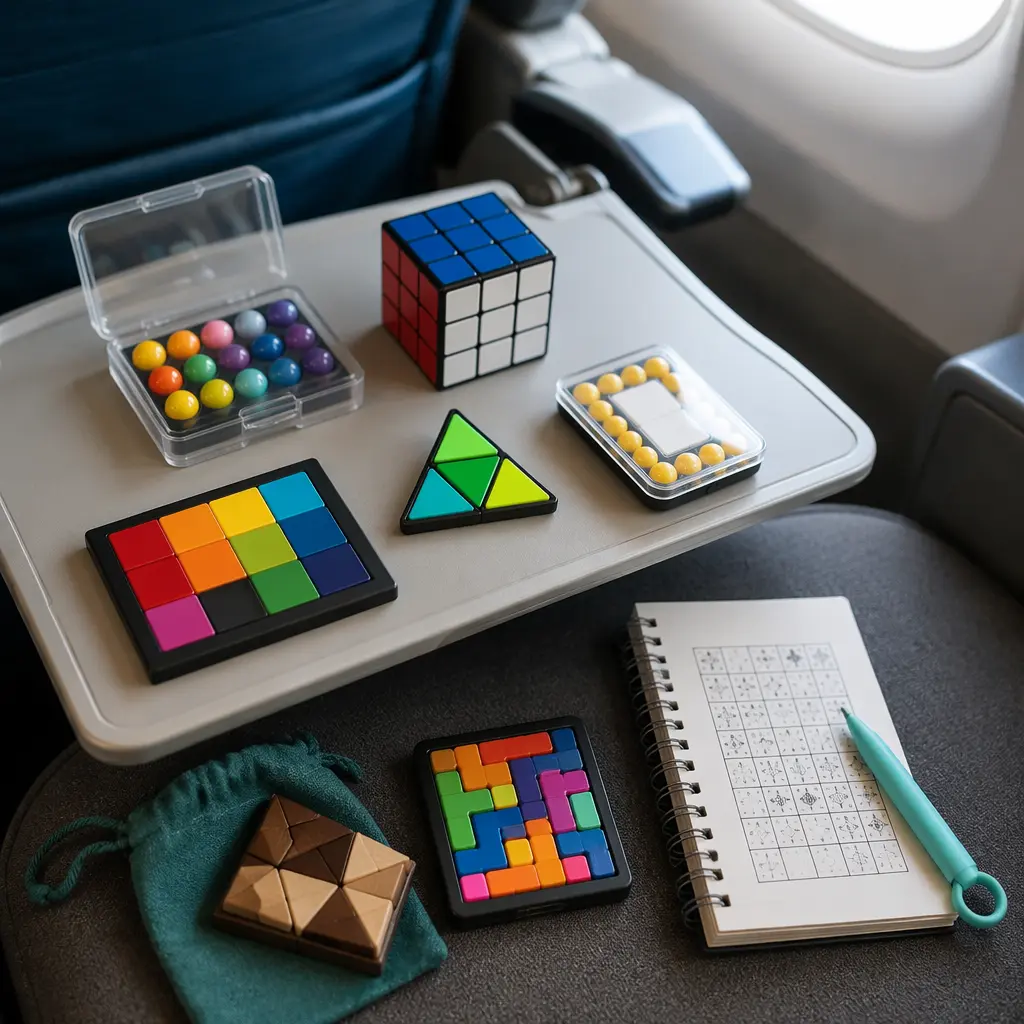
Travel puzzle toys can make long waits and flights much easier for children aged 6–8, especially when screens are not practical or parents want a quieter alternative. The challenge is finding puzzles that stay engaging without creating extra stress through tiny loose pieces, loud sounds or bulky storage. For travel, the most useful puzzle toys are compact, durable and easy to pause and restart. Magnetic formats, self-contained logic games and reusable activity books tend to work better than large jigsaws or anything requiring a wide play area. The right choice also depends on where the toy will be used. Airplanes, restaurants and waiting rooms all reward different features, particularly around noise level, tray-table space and how easily a child can play independently.
What to look for
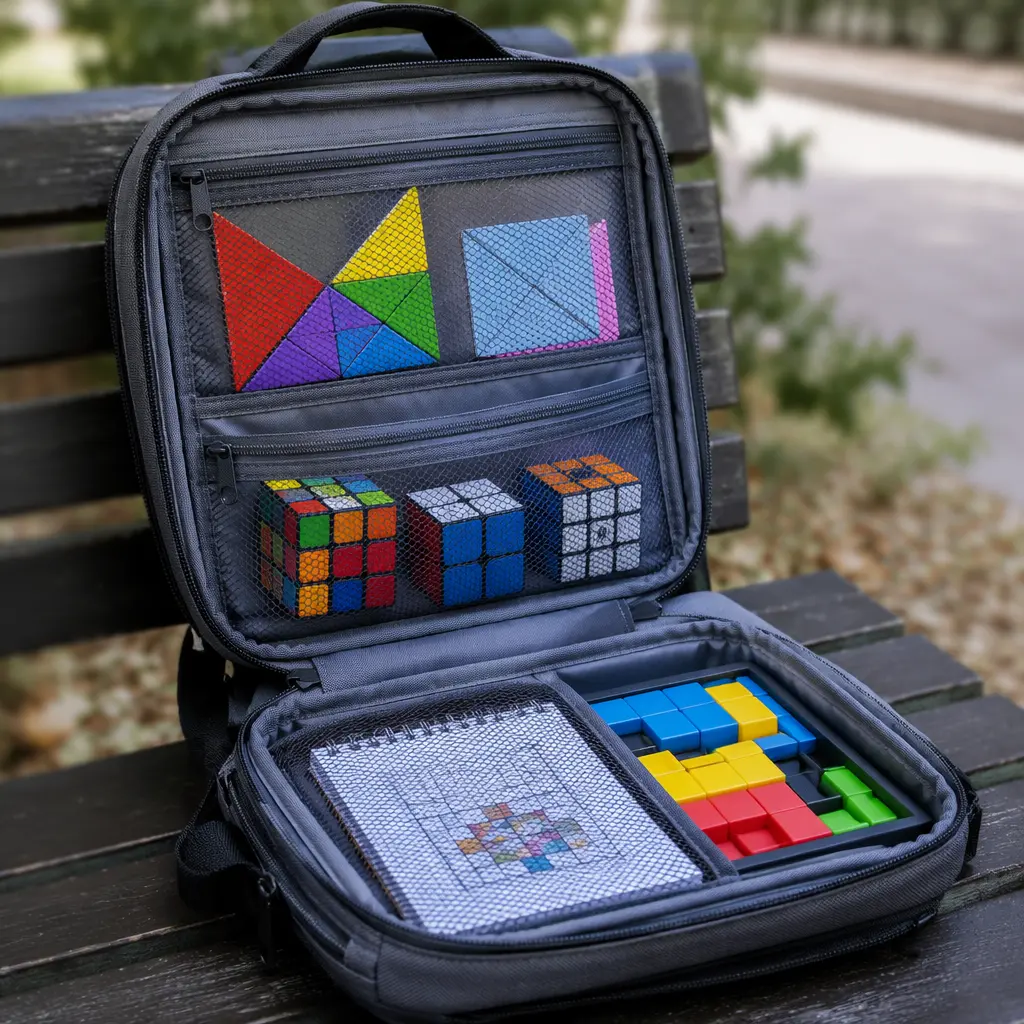
A good travel puzzle toy should work in small spaces and survive frequent packing without becoming frustrating to manage. Quiet play matters in shared spaces, but so does reset time. Some toys are fun until a piece disappears under an airplane seat. Others stay fully self-contained and can be packed away in seconds. Children in the 6–8 age range often enjoy puzzles with a clear challenge level and visible progress, so overly simple toddler travel toys may lose appeal quickly.
- Magnetic or attached pieces help reduce lost parts during flights and car journeys.
- Flat or compact storage fits more easily into backpacks and under-seat bags.
- Quiet materials such as foam, cards or silicone are usually better than electronic puzzle toys in waiting rooms.
- Independent play value matters for travel; look for puzzles children can reset without adult help.
- Reusable formats such as wipe-clean logic books can provide repeated use without extra supplies.
- Durability is important because travel toys are often dropped, squeezed into bags or used on uneven surfaces.
- Avoid puzzles with dozens of tiny pieces unless there is a tray or zippered storage case included.
Age suitability
Children aged 6–8 are usually ready for more complex puzzle formats than simple matching games. Logic grids, tangrams, sliding puzzles, maze books and compact strategy games can hold attention for longer periods, especially during delayed travel. Many children in this age group also enjoy timed or progressive challenges where difficulty increases gradually. However, puzzle difficulty still varies widely between children. A highly advanced logic game may frustrate a younger six-year-old, while repetitive beginner puzzles may feel too easy for an experienced eight-year-old. If travel includes long flights or multiple appointments, bringing two different puzzle styles often works better than relying on one toy for several hours.
Options compared
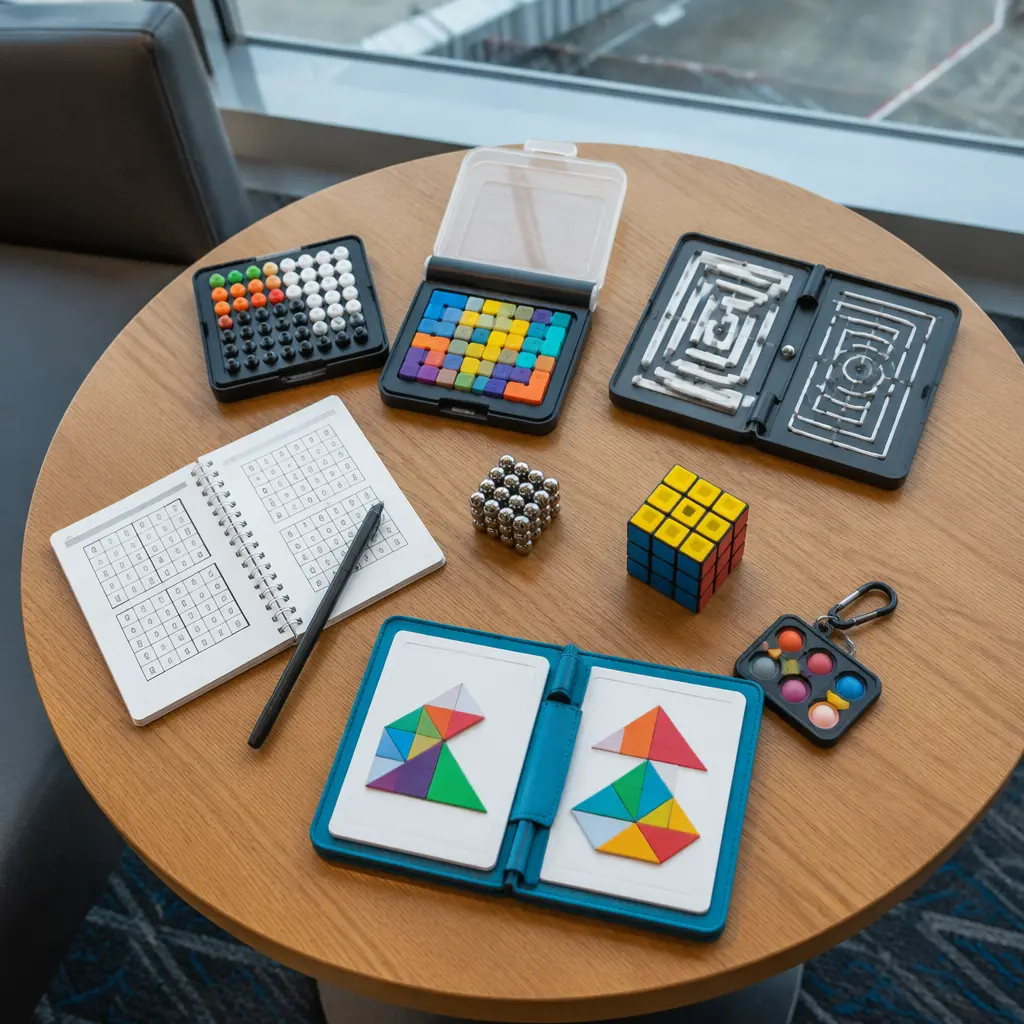
Magnetic travel puzzles are often the easiest option for flights because pieces stay attached during turbulence and can be used on tray tables without spreading everywhere. Magnetic tangrams, chess-style logic games and maze boards are especially useful for children who enjoy problem solving. The trade-off is that some magnetic sets can feel repetitive once every challenge card has been completed.
Reusable puzzle books and dry-erase logic pads work well for families prioritising lightweight packing. They are usually quiet, slim and simple to store in seat pockets or handbags. They also avoid the issue of dropped pieces. However, some children lose interest if the activities feel too close to schoolwork. Cube puzzles and handheld brain teasers suit children who like fidget-style movement and repeated challenges, though they can become noisy if constantly dropped onto hard floors or tray tables.
- Magnetic puzzle sets: best for flights and car travel where losing pieces is a concern.
- Reusable logic books: best for lightweight packing and quiet waiting-room use.
- Sliding puzzles and maze toys: best for short bursts of independent play without setup time.
- Compact strategy games: best for children who enjoy structured challenges and replay value.
- Cube and mechanical puzzles: best for children who like tactile movement and repeated practice.
- Mini jigsaw puzzles: better for hotel rooms or longer waits with table space, less practical on crowded flights.
Frequently asked questions
Are magnetic puzzle toys safe for flights?
Most small magnetic travel puzzles are designed for portable use and are practical during flights because the pieces stay connected to the board. Parents should still check for loose or very small magnets, especially if younger siblings are nearby.
What puzzle toys are quiet enough for waiting rooms?
Reusable activity books, magnetic logic puzzles and soft tactile brain teasers are usually the quietest choices. Toys with electronic sounds, hard plastic clicking parts or rolling pieces can become disruptive in shared spaces.
How many travel toys should parents pack?
For longer trips, two or three compact activities often work better than one larger toy. Children may switch attention more frequently during travel, particularly after delays or long periods sitting still.
Do travel puzzle toys help reduce screen time?
Screen-free puzzle toys can provide focused, independent play during travel and may help break up long periods of device use. Logic games and hands-on puzzles are particularly useful for children who enjoy problem solving or pattern recognition.
What should parents avoid when choosing travel puzzles?
Large sets with many tiny loose pieces are harder to manage on airplanes and in busy public spaces. Puzzle toys that require batteries, loud audio or wide floor space are also less practical for travel.
The best travel puzzle toy for ages 6–8 is usually the one that balances challenge with portability. Compact magnetic sets, reusable logic books and self-contained brain teasers are often the easiest options for flights and waiting rooms because they minimise mess and setup time. Parents travelling frequently may also benefit from rotating a few different puzzle types to keep children interested without overpacking.