Chunky First Puzzles for Toddlers Who Throw Pieces
A parent-focused guide to chunky first puzzles for toddlers aged 1–2, covering durability, safe piece sizing, frustration levels, storage, and which puzzle styles suit active throwers.
Compare prices and availability
Check current prices and availability for this guide on eBay.
As an eBay Partner, we may be compensated if you make a purchase.
Many toddlers between 1 and 2 years old enjoy the action of puzzles long before they understand how to complete them neatly. At this age, pieces are often carried around, stacked, mouthed, dropped, or thrown across the room. That does not mean puzzles are a bad fit. It usually means the puzzle needs to match the child’s stage of development. Chunky first puzzles are designed with larger pieces, simpler matching tasks, and easier hand grips that work better for active toddlers with short attention spans. Choosing the right style can reduce frustration for both the child and the adult supervising play, while still supporting fine motor skills, shape recognition, and early problem-solving without screens.
What to look for
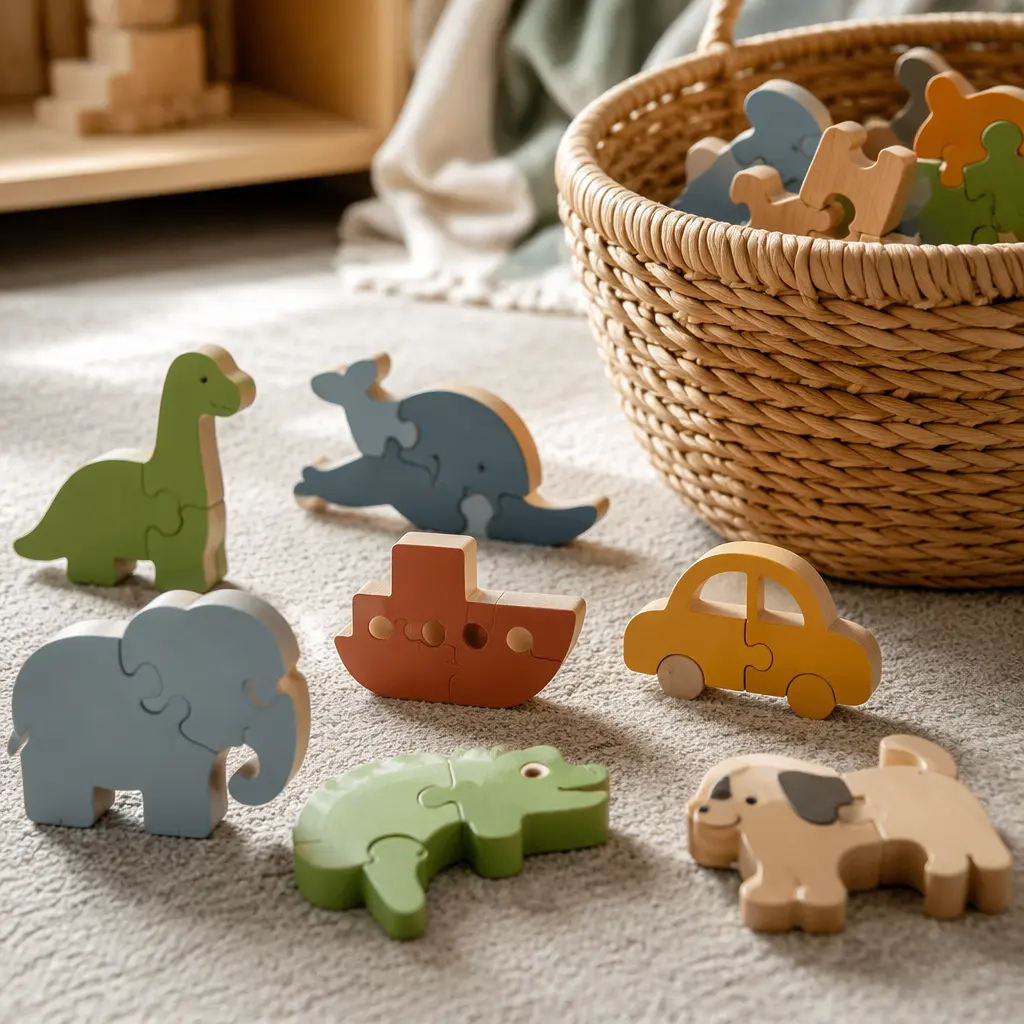
For toddlers who tend to throw pieces, durability and simplicity matter more than puzzle piece count. A puzzle that is too difficult can quickly turn into a throwing game instead of a learning activity. Thick pieces with smooth edges are easier to grip and less likely to crack when dropped repeatedly. Simple picture matching also helps toddlers feel successful earlier, which can extend attention span over time.
- Choose puzzles with very large pieces that cannot fit into a child’s mouth.
- Look for thick wooden or sturdy board pieces that tolerate repeated drops.
- Simple knob puzzles or chunky lift-out puzzles are often easier than flat jigsaws at this age.
- Bright, familiar images such as animals, vehicles, fruit, or household objects are easier for toddlers to recognize.
- Lower piece counts usually work better for children who become frustrated quickly.
- Avoid puzzles with thin cardboard pieces that bend, tear, or slide apart easily.
- Consider storage needs: tray-style puzzles are easier to tidy than loose-piece sets.
- If noise is a concern, softer foam or thick board puzzles can be quieter than wooden pieces on hard floors.
Age suitability
Most chunky first puzzles are aimed at children from around 12 months onward, but developmental readiness matters more than the printed age label. Younger toddlers may only remove pieces at first instead of replacing them correctly. That is still useful play. Around 18 to 24 months, many children begin matching shapes or pictures intentionally and can complete simple two- to five-piece tray puzzles with support. Toddlers who enjoy throwing may do better with fewer, heavier pieces that are harder to scatter widely. Some children also respond well to puzzles connected to strong interests, such as farm animals or trucks, because familiar themes hold attention longer. More advanced jigsaw-style puzzles with interlocking edges are usually better saved until a child consistently enjoys simple lift-out puzzles without becoming overwhelmed.
Options compared
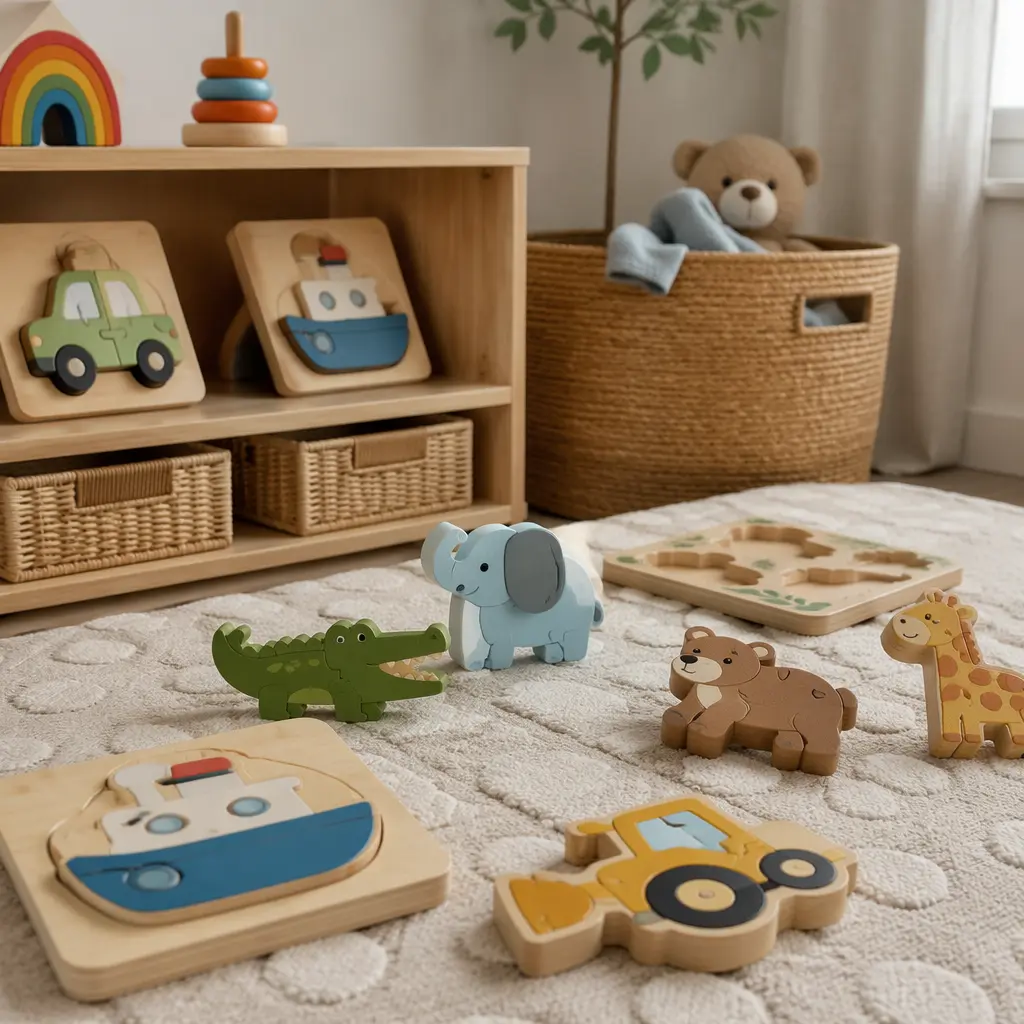
Chunky wooden puzzles are often the first choice for active toddlers because the pieces are easy to grasp and usually stand up to rough handling. Many pieces can also be used separately for pretend play, which helps keep toddlers engaged even when they are not completing the puzzle itself. The trade-off is noise. Wooden pieces hitting tile or hardwood floors can be loud, especially in apartments or shared spaces.
Knob puzzles are another strong option for younger toddlers who are still developing hand control. The raised knobs encourage a pincer grip and make pieces easier to lift. However, some toddlers lose interest quickly if the puzzle is too simple. Tray puzzles with recessed spaces tend to work well for children around 18 months and older because the matching task is more obvious visually. Foam puzzles are quieter and lighter, which some parents prefer for travel or calmer indoor play, but they may wear down faster with biting or rough use. Thick board puzzles sit somewhere in the middle: quieter than wood but usually sturdier than thin cardboard. Interlocking first jigsaws can appeal to toddlers nearing age 2 who already enjoy simpler puzzles, but they are often frustrating for children who still throw pieces impulsively.
- Chunky wooden puzzles: durable, easy to grip, good for rough handling, but noisy on hard floors.
- Knob puzzles: best for beginners learning to lift and place pieces.
- Tray puzzles: helpful for visual matching and early independent play.
- Foam puzzles: quieter and lightweight, but may wear faster.
- Thick board puzzles: a balance between durability and lower noise.
- Simple first jigsaws: suitable for older toddlers ready for more challenge.
Frequently asked questions
Why does my toddler throw puzzle pieces instead of solving the puzzle?
Throwing is common at this age and does not automatically mean a child dislikes puzzles. Many toddlers are still exploring cause and effect, sound, movement, and physical control. A simpler puzzle with fewer pieces and shorter play sessions may help reduce frustration-based throwing.
Are wooden puzzles safe for 1-year-olds?
Many wooden puzzles are designed for toddlers, but parents should still check for smooth edges, securely attached knobs or pegs, and appropriately sized pieces. Supervision remains important because younger toddlers may mouth or bang pieces together.
How many puzzle pieces should a 1- to 2-year-old have?
For most beginners, two to five large pieces are enough. Some toddlers can handle more, but very high piece counts often increase frustration and cleanup challenges without improving engagement.
What if my toddler only removes the pieces?
Removing pieces is still valuable early learning. Toddlers practice grip strength, coordination, and visual attention before they reliably replace pieces correctly. Repetition is normal, and many children spend weeks exploring puzzles this way first.
Which puzzle type is easiest to clean up and store?
Tray-style puzzles are usually the easiest because each piece has a clear place to return to. Small baskets or shallow bins also help contain loose chunky pieces and make cleanup more manageable for adults and toddlers alike.
The best first puzzle for an active toddler is usually the one that feels manageable rather than impressive. Large, sturdy pieces and simple matching tasks tend to support longer, calmer play sessions than complicated designs with many moving parts. For toddlers who throw pieces, durability and low frustration are often more important than educational claims. A well-matched chunky puzzle can become a reliable screen-free activity that grows with a child over many months of repeated play.