Magnetic Fishing Games vs Floor Puzzles for Preschoolers
Compare magnetic fishing games and floor puzzles for children aged 3–5, with practical advice on attention span, frustration level, independent play, storage and supervision.
Compare prices and availability
Check current prices and availability for this guide on eBay.
As an eBay Partner, we may be compensated if you make a purchase.
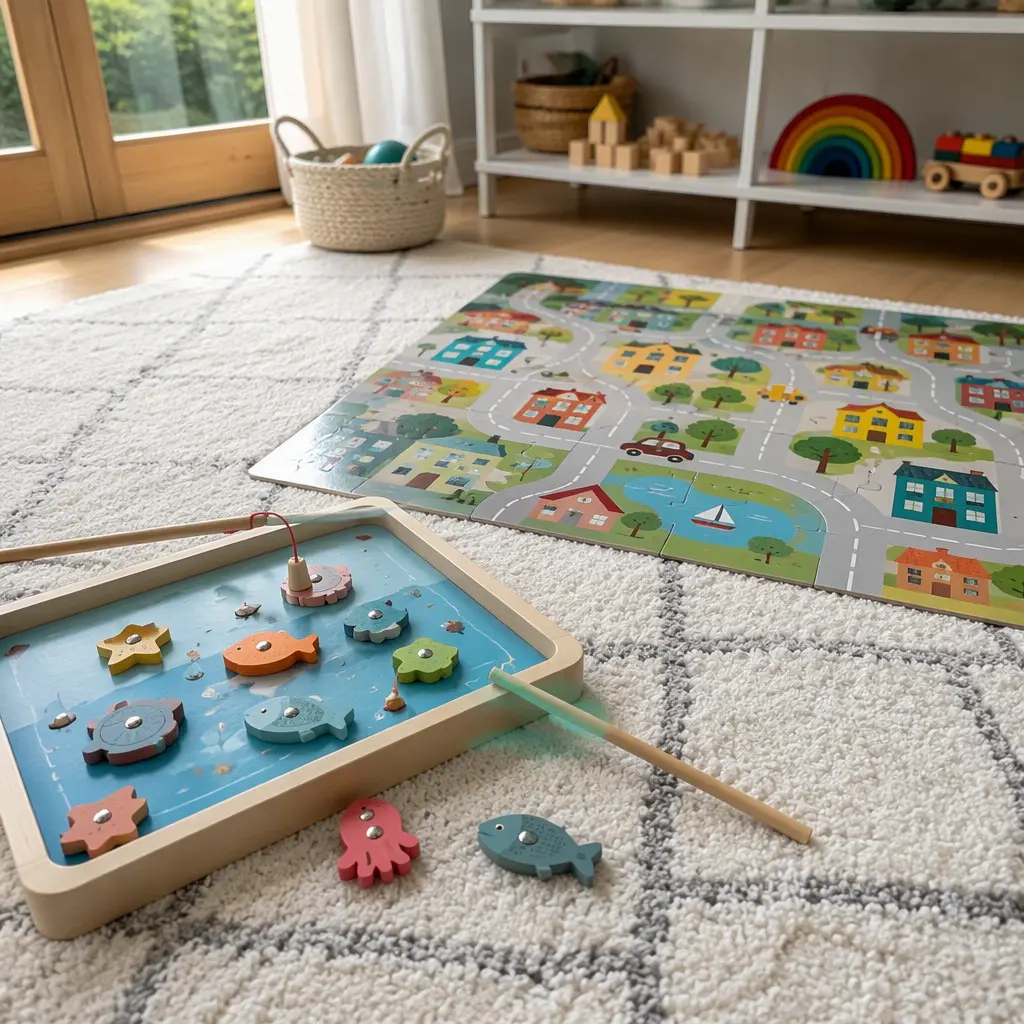
Magnetic fishing games and large floor puzzles are both popular screen-free activities for preschoolers, but they suit different personalities and play styles. For children aged 3–5, the better choice often depends on attention span, frustration tolerance and how independently they like to play. Magnetic fishing games usually offer quick success, movement and simple rules, while floor puzzles encourage patience, visual problem-solving and longer stretches of focused play. Parents deciding between the two should also think about storage space, noise level, cleanup and whether the toy will hold interest beyond a few weeks.
What to look for
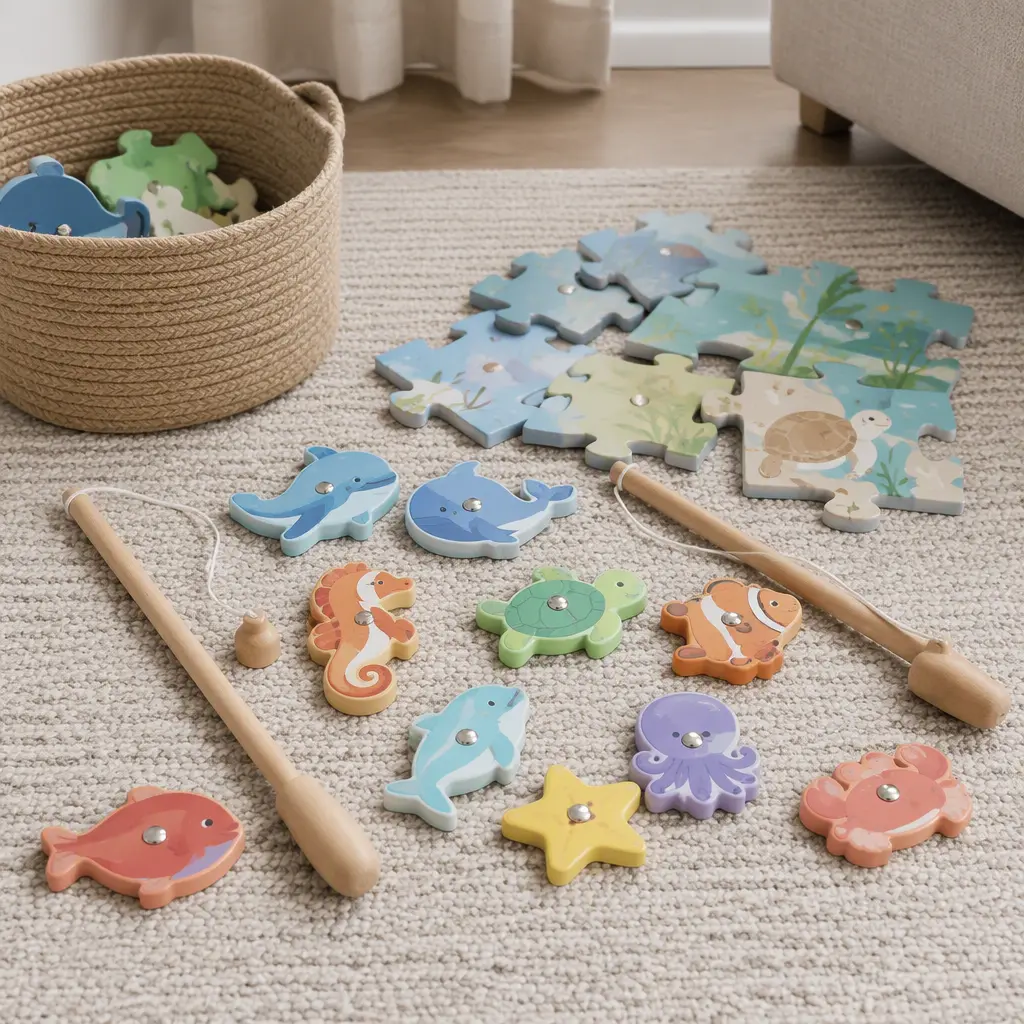
The most useful preschool toys balance challenge with achievable success. If an activity feels too difficult, many children in this age group lose interest quickly. If it is too easy, it may not keep their attention for long. Magnetic fishing games and floor puzzles both come in wide ranges of difficulty, so age guidance alone is not always enough. Consider how your child reacts to mistakes, how much adult support they usually need and whether they prefer active or quiet play.
- Choose large, sturdy pieces that are easy for small hands to grip and hard to bend or tear.
- For magnetic fishing games, look for strong magnets and simple piece designs that reduce frustration.
- For floor puzzles, fewer larger pieces are usually more manageable for younger preschoolers.
- Consider storage needs: floor puzzles can spread across a room, while fishing games often fit into a small box.
- Think about noise levels. Wooden magnetic games are usually quieter than electronic or plastic alternatives.
- Check whether the toy encourages solo play or works better with siblings or adults.
- Avoid overly complex themes that rely on reading skills for children in the 3–5 age range.
Age suitability
Children develop at very different rates between ages 3 and 5, so matching the toy to developmental stage matters more than choosing by category alone. Younger preschoolers often enjoy magnetic fishing games because the cause-and-effect action is easy to understand and success happens quickly. These games can also help with hand-eye coordination and turn-taking without requiring long concentration spans. Floor puzzles tend to become more rewarding as visual matching, patience and spatial reasoning improve. Some 3-year-olds enjoy simple floor puzzles with fewer than 20 large pieces, while many 5-year-olds are ready for more detailed scenes and higher piece counts. A child who already enjoys sorting, matching or looking for patterns may stay engaged with puzzles longer than a child who prefers movement-based play.
Options compared
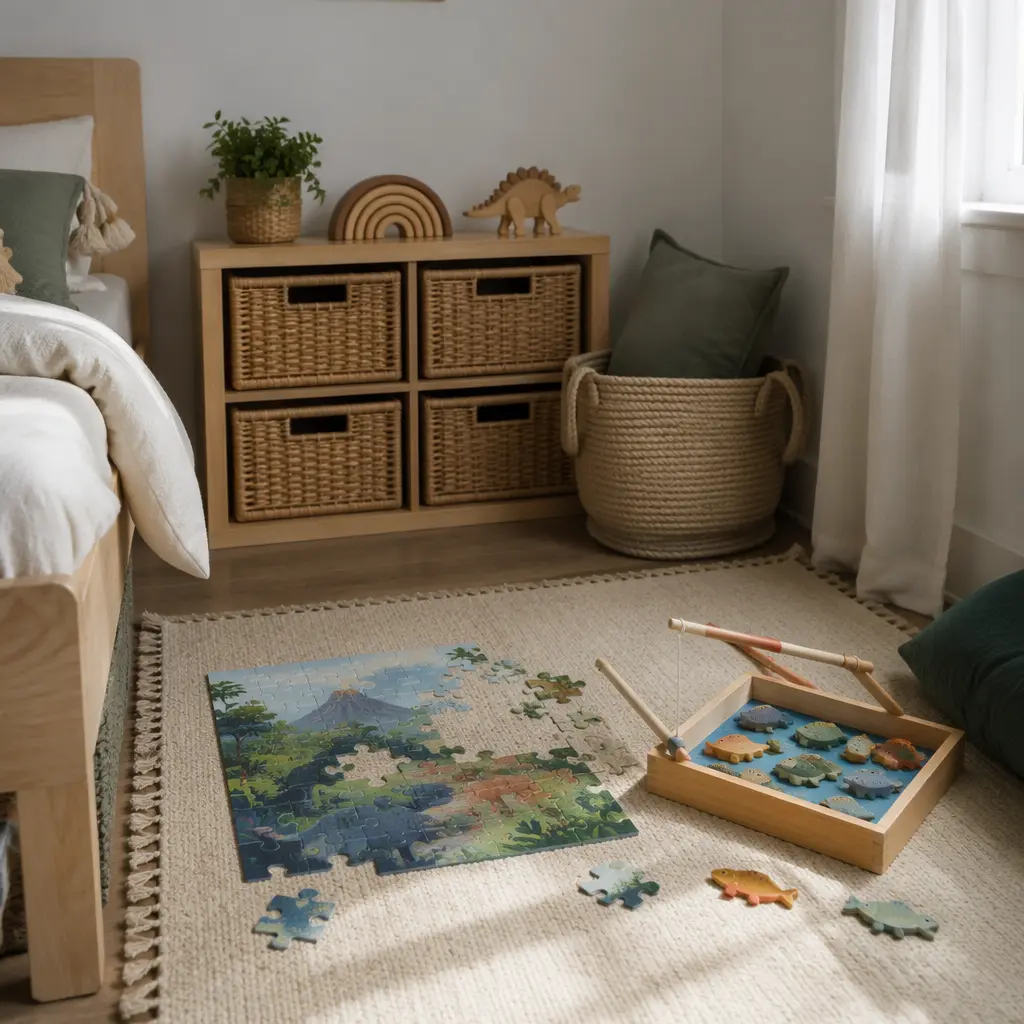
Magnetic fishing games are often the easier starting point for children who become frustrated quickly. The play pattern is repetitive and predictable: lower the rod, connect the magnet and lift the piece. That immediate reward can help children build confidence and stay engaged without much adult guidance. These games also suit children who like movement and sensory feedback more than sitting still for extended periods. They work well for short play sessions, travel or rotating toy shelves because they are usually compact and quick to set up.
Floor puzzles are generally better for building sustained concentration and independent problem-solving. A child may spend longer experimenting with piece placement, recognizing shapes and completing sections without direct help. However, puzzles can lead to frustration if the image is visually busy, the pieces are too similar or the difficulty level jumps too quickly. Some children enjoy returning to the same puzzle repeatedly, while others lose interest once the picture becomes familiar. Families with limited floor space may also find oversized puzzles inconvenient during busy parts of the day.
- Magnetic fishing games usually suit energetic children, shorter attention spans and children who enjoy active hand movement.
- Floor puzzles often suit children who like quiet activities, visual matching and gradual challenges.
- Fishing games are often easier for independent success at age 3, while puzzles may require more parent support at first.
- Floor puzzles typically offer more long-term difficulty progression as children grow.
- Magnetic games are easier to store and transport in smaller homes or for travel.
- Puzzles can encourage cooperative problem-solving between siblings but may also cause disputes over pieces or space.
- Children sensitive to frustration may respond better to fishing games before moving into more advanced puzzles.
Frequently asked questions
Which option is better for independent play?
Magnetic fishing games are often easier for independent play because the rules are simple and success happens quickly. Floor puzzles can also support independent play, but younger preschoolers may need help sorting pieces or staying motivated when stuck.
Do floor puzzles help with school readiness?
Floor puzzles can support skills linked to early learning, including visual discrimination, persistence, spatial awareness and pattern recognition. They are not a replacement for broader play experiences, but they can encourage focused thinking in a screen-free way.
Are magnetic fishing games too repetitive?
Some children enjoy the repetition because it feels calming and predictable. Others may lose interest once they master the basic action. Rotating the game with other activities or adding simple counting and color-sorting challenges can extend interest.
What if my child gets frustrated easily?
Choose activities with a low barrier to success. Magnetic fishing games are often a gentler starting point because children can succeed within seconds. For puzzles, begin with large-piece designs and avoid highly detailed images that make matching difficult.
Which is easier to keep tidy?
Magnetic fishing games are usually easier to store because the pieces are compact and contained. Large floor puzzles can take up significant space during play, and missing pieces are more likely if they are packed away frequently.
For many families, the decision comes down to whether a child needs active, confidence-building play or longer, quieter concentration practice. Magnetic fishing games are often the better fit for energetic preschoolers and quick play sessions, while floor puzzles tend to reward children who enjoy visual challenges and gradual problem-solving. Both can support screen-free learning when matched carefully to a child’s temperament, developmental stage and home environment.