Portable Logic Games vs Puzzle Books for Travel
Choosing between compact logic games and puzzle books for ages 9–12? This guide compares replay value, lost-piece risk, storage, noise and offline entertainment time for trips.
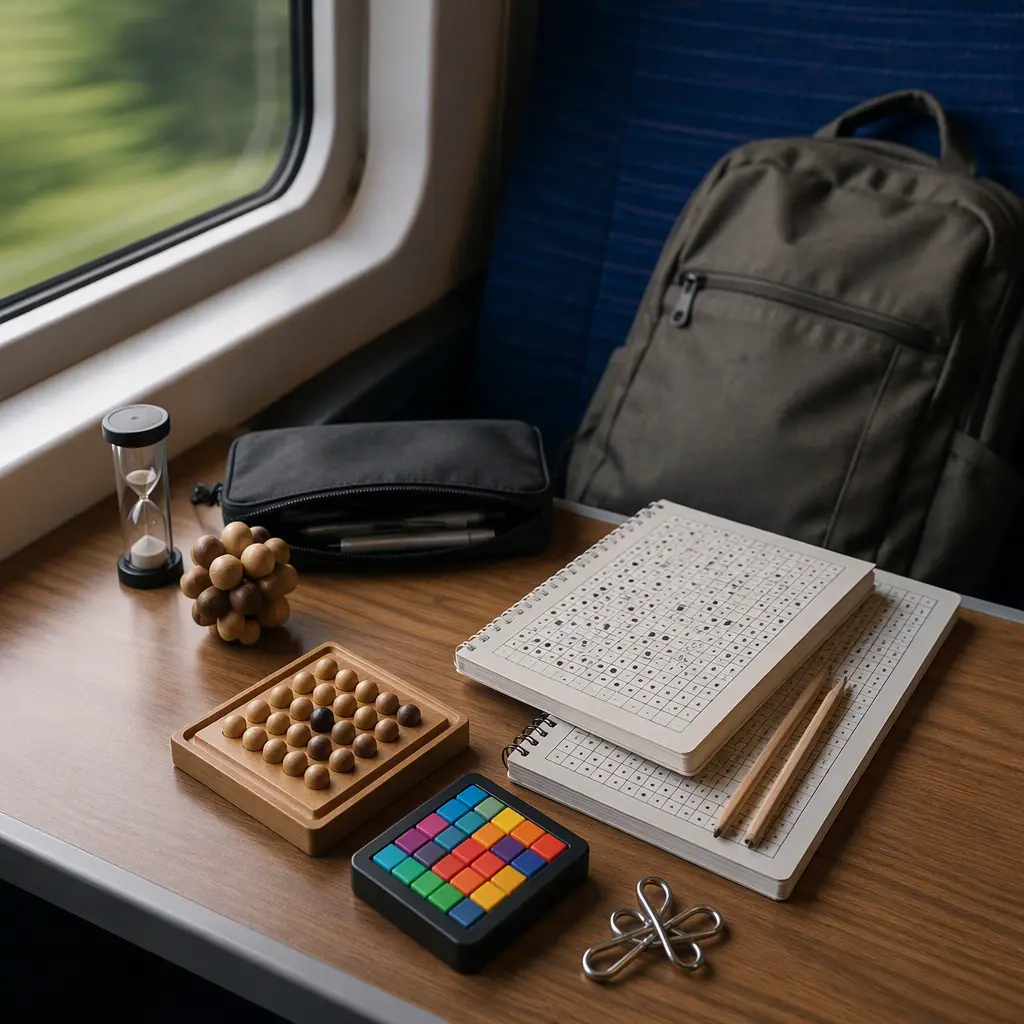
Compare prices and availability
Check current prices and availability for this guide on eBay.
As an eBay Partner, we may be compensated if you make a purchase.
Portable logic games and puzzle books both give older children a screen-free way to stay occupied during travel, but they solve different problems for parents. Logic games usually use physical pieces that fit into a compact board or case, while puzzle books rely on pens or pencils and printed challenges. For children aged 9–12, the better choice often depends less on difficulty and more on practical travel concerns such as replay value, how likely pieces are to go missing, how much space is available, and how long the activity can realistically hold attention during flights, car rides or waiting periods.
What to look for
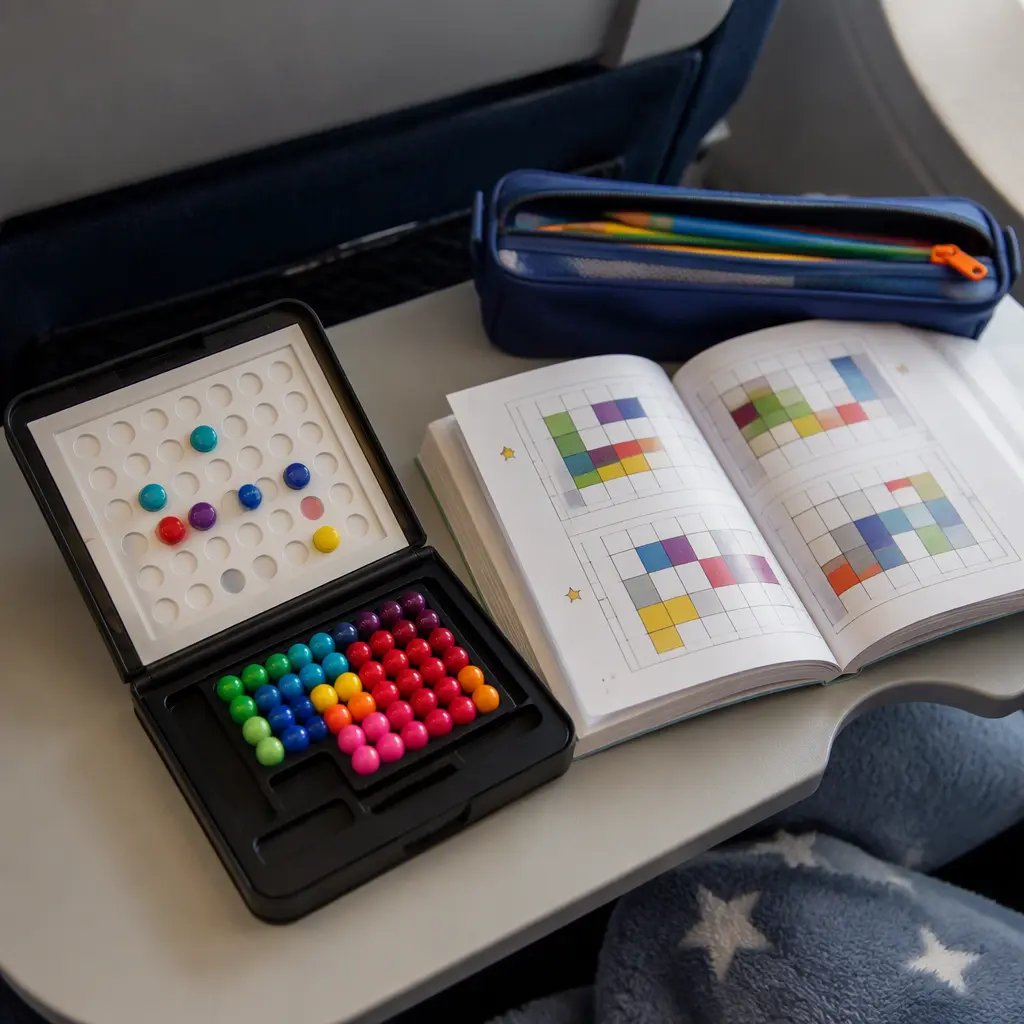
The most useful travel puzzle activities balance independence, portability and staying power. Children in the 9–12 age range often want challenges that feel more mature than simple maze books or preschool travel toys, but they also benefit from activities that do not require constant parent setup. Some families prefer single-player logic games because they can be reused repeatedly, while others value puzzle books because they are lightweight and difficult to damage. The right option depends on where and how the toy will be used.
- Replay value matters on longer trips. Logic games with multiple challenge cards or adjustable difficulty levels generally last longer than single-use puzzle books.
- Consider lost-piece risk carefully. Games with loose tiles, marbles or tokens may become frustrating in cars, airports or airplane seats.
- Puzzle books are easier to pack flat into backpacks or seat pockets and usually create less setup mess.
- Magnetic pieces or self-contained travel cases are easier to manage in moving vehicles.
- Think about writing supplies. Puzzle books require pencils, sharpeners or erasers unless designed for pen use.
- Noise levels vary. Most logic games are quiet, but hard plastic pieces can create clicking sounds on trays or tables.
- Children who enjoy collecting, sorting and spatial thinking often prefer physical logic games, while strong readers may gravitate toward word puzzles and codes.
- Storage at home also matters. Puzzle books can be recycled or passed along when completed, while reusable games require shelf or drawer space.
Age suitability
For ages 9–12, both formats can work well when the challenge level is appropriate. Younger children within this range may enjoy visual logic puzzles involving shapes, patterns or movement, especially if they can solve problems independently. Older children often prefer more complex deduction puzzles, strategy-based challenges or mixed puzzle books with crosswords, number games and coded messages. Puzzle books can sometimes feel repetitive if the difficulty does not increase gradually, while logic games may become frustrating if the rules are too abstract or require extended concentration in a busy travel environment. Children who dislike losing progress may also prefer reusable logic games over write-in books where mistakes are permanent.
Options compared
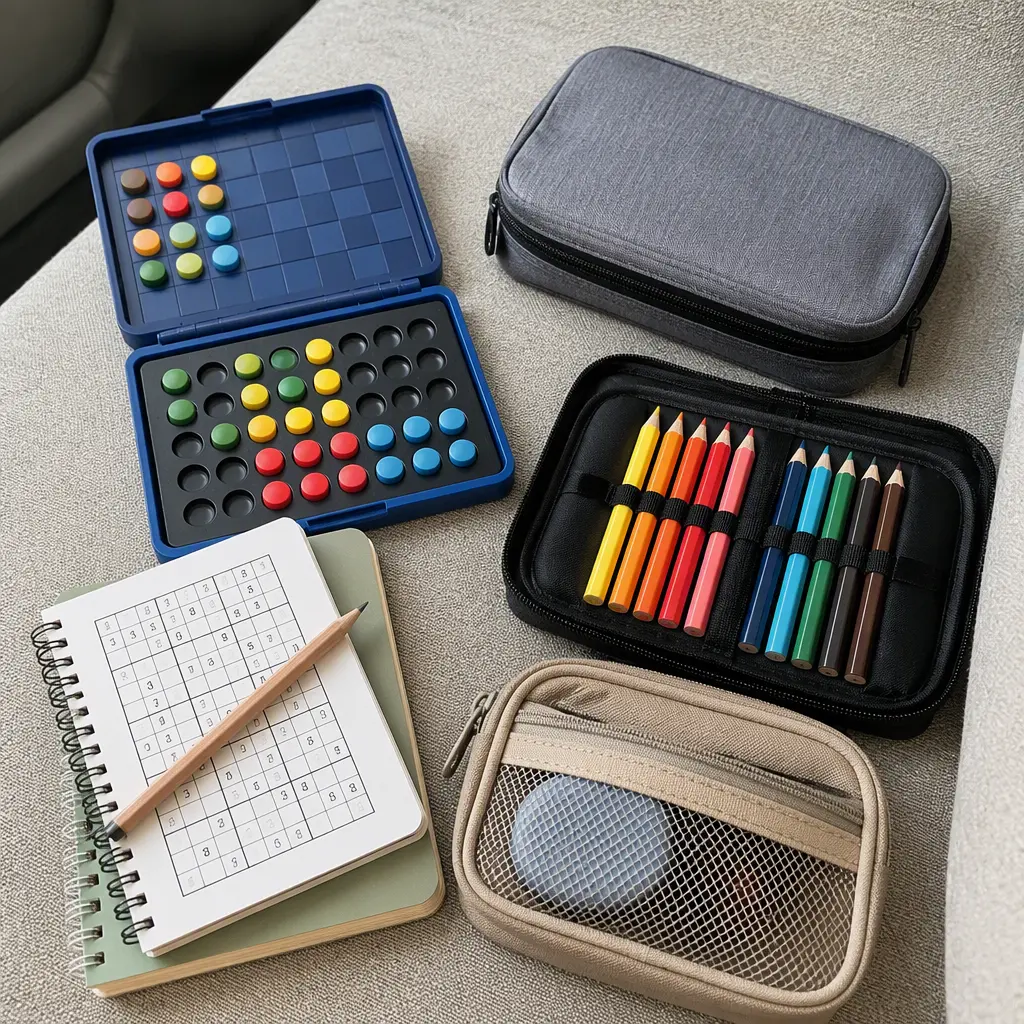
Portable logic games are usually the stronger choice for replay value. Many are designed around reusable challenges where players rearrange pieces to solve increasingly difficult problems. This format suits children who enjoy trial-and-error thinking, spatial reasoning and independent problem solving. A well-designed travel logic game can stay interesting across multiple trips because solutions are reset after each round. Magnetic versions are especially practical for planes and cars because pieces stay attached during movement.
The main drawback is the risk of missing components. Even self-contained games can become unusable if key pieces disappear. Some also require table space or careful setup that is difficult during crowded travel. Children who become upset when pieces are lost may find these games stressful outside the home. Parents should also expect occasional interruptions when pieces slide onto floors or under seats.
Puzzle books are usually simpler to manage. They pack easily, weigh little and rarely create cleanup problems. They work particularly well for children who like switching between activities because many books combine word searches, sudoku, trivia, mazes and logic grids in one format. Puzzle books also suit situations where tray space is limited because they can often be used on laps.
- Choose portable logic games if the priority is replayability, long-term challenge and hands-on problem solving.
- Choose magnetic or self-contained logic games for flights, trains and restaurants where dropped pieces are difficult to retrieve.
- Choose puzzle books if the priority is low mess, simple packing and minimal supervision.
- Choose mixed-activity puzzle books for children with shorter attention spans who like variety.
- Avoid loose-piece logic games for cramped travel spaces unless the storage system is very secure.
- Avoid large puzzle books with thin paper if the child presses hard when writing or tends to erase frequently during travel.
Frequently asked questions
Which option keeps children occupied for longer during travel?
Portable logic games often provide longer-term engagement because challenges can be replayed and difficulty levels increase gradually. Puzzle books may hold attention for shorter periods unless they contain a wide mix of activities.
Are puzzle books better for airplanes?
They are often easier to manage on airplanes because there are no loose pieces to retrieve in tight seating areas. However, compact magnetic logic games can also work well when tray-table space is available.
What works best for siblings sharing activities?
Puzzle books with multiple puzzle types are often easier for siblings to share or swap between themselves. Single-player logic games usually suit one child at a time unless the activity encourages collaborative problem solving.
Do reusable logic games become repetitive?
Some do, especially if the number of challenges is limited. Games with progressive difficulty or multiple solution paths tend to stay interesting longer for children in the 9–12 age range.
Are digital puzzle apps a better alternative?
Digital apps can be convenient, but offline physical activities avoid battery concerns, reduce screen time and are often easier to use during takeoff, road trips or locations with limited internet access.
For most families, the decision comes down to travel style. Portable logic games usually offer stronger replay value and deeper problem solving, while puzzle books are easier to pack, simpler to supervise and less likely to create frustration from missing parts. Many parents ultimately combine both: a reusable logic game for focused quiet time and a puzzle book for flexible, low-maintenance entertainment between stops.