Viewfinder 3D Reels: The Tiny Discs That Sold the Adventure
Long before digital slideshows, Viewfinder-style 3D reels turned small plastic discs into collectible windows to cartoons, travel scenes, and movie tie-ins that children revisited for years.
Compare prices and availability
Check current prices and availability for this guide on eBay.
As an eBay Partner, we may be compensated if you make a purchase.
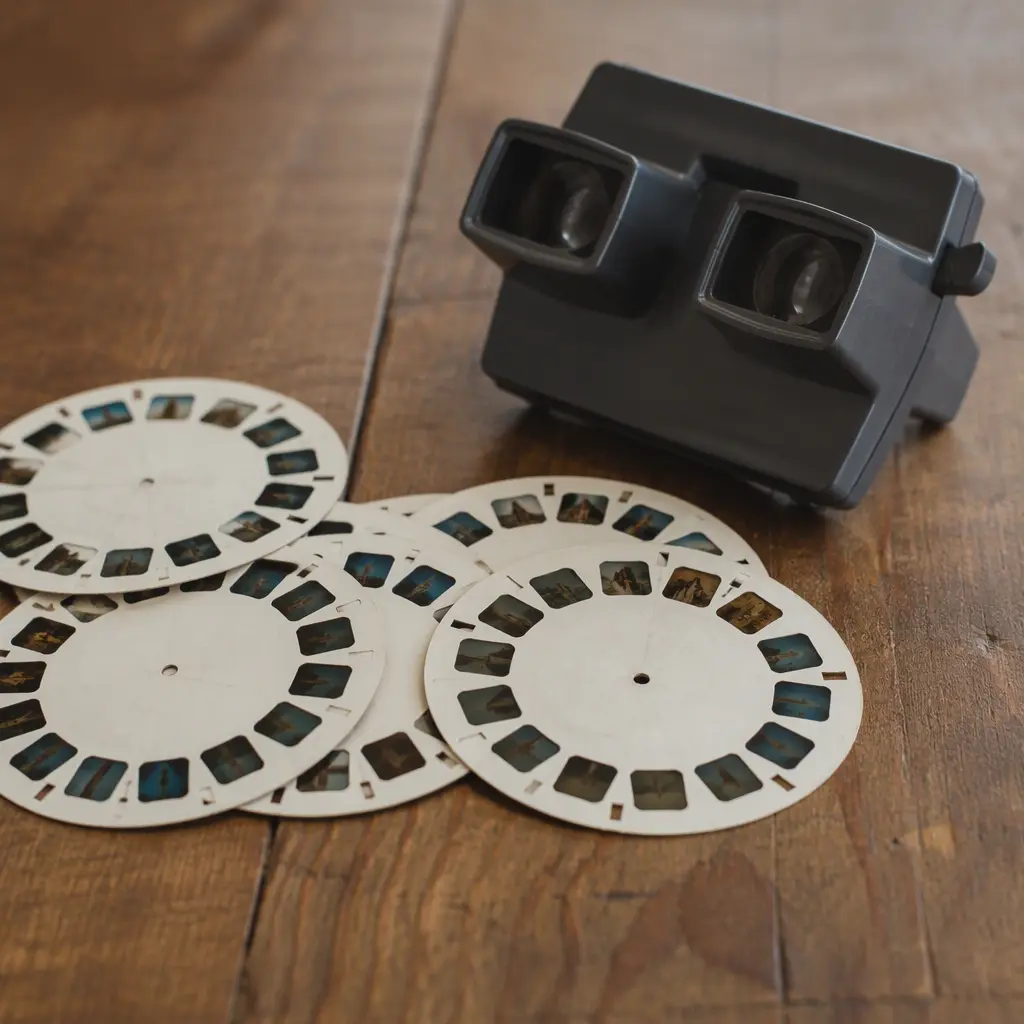
For many children of the late twentieth century, the most memorable part of a stereo image viewer was not the viewer itself but the reels tucked into a pocket, shoebox, or spinning display rack at a toy store. Those thin circular discs carried miniature worlds inside them: animated adventures, wildlife tours, famous landmarks, television tie-ins, and snapshots of fantasy settings rendered in surprising depth. The reels were inexpensive, easy to collect, and endlessly replayable, which helped transform a simple optical toy into a long-running cultural fixture.
Where it came from
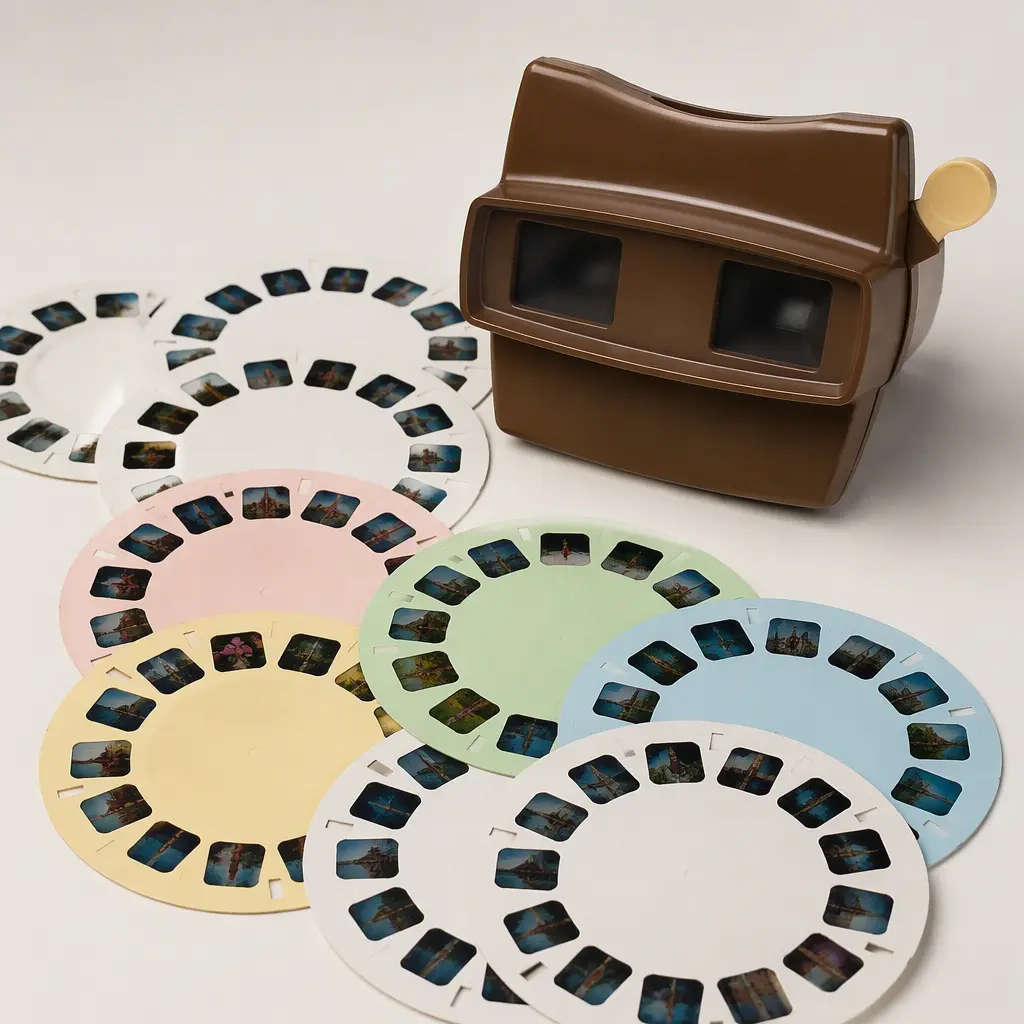
Stereo viewing toys trace their roots back to nineteenth-century stereoscopes, which used paired photographs to create the illusion of depth. By the middle of the twentieth century, manufacturers had adapted that principle into lightweight handheld viewers aimed at children and families. The format became especially popular during the 1960s, when brightly colored plastic reels filled with tiny transparency images began appearing in department stores, souvenir shops, and toy aisles.
The reels worked because they turned photography into a collectible medium. Instead of asking families to buy expensive film equipment or projectors, companies sold small themed image sets that could be swapped in seconds. Travel scenes let children explore distant cities from a bedroom floor. Licensed entertainment reels connected toys to television and movies. Educational packs covered animals, space exploration, and history. By the late twentieth century, the reels had become almost interchangeable with the viewer itself, and many collectors today remember specific reel themes more vividly than the plastic viewer they used to see them.
Why it works
The design succeeded because it balanced simplicity with a convincing illusion. Each reel contains pairs of tiny images positioned slightly apart. When viewed through the stereo lenses, the brain combines those pairs into a three-dimensional scene. Unlike modern screens, there are no batteries, menus, or moving parts beyond a click mechanism that advances the reel one frame at a time. That mechanical rhythm became part of the experience. Children would pause at each image, absorb the details, then press the lever for the next scene.
The reels also encouraged collecting in a way many toys did not. A single viewer could support dozens or even hundreds of themes, which made the discs feel closer to books, trading cards, or records than ordinary toy accessories. Families often accumulated them over years of birthdays, vacations, and holiday trips. Because the images were photographic rather than illustrated, they also captured a distinct visual history of fashion, architecture, tourism, and entertainment trends from different decades.
- Compact discs that were easy to store, trade, and collect
- Simple stereo photography that created a convincing 3D illusion
- Themes ranging from cartoons and movies to travel and science
- No batteries or screens required
- Durable format that could survive years in toy boxes and drawers
Who it's for
Stereo reel viewers were primarily designed for children, usually elementary-school age and older, but they developed a strong adult following over time. Younger users enjoyed the tactile clicking action and bright imagery, while older collectors became interested in the photography, packaging, and historical themes. Today, the reels appeal to several groups at once: nostalgia-driven adults, photography enthusiasts, vintage toy collectors, and children discovering analog media for the first time. The toy remains accessible because the basic concept is immediately understandable even to someone raised on digital devices.
Variants and what to look for today
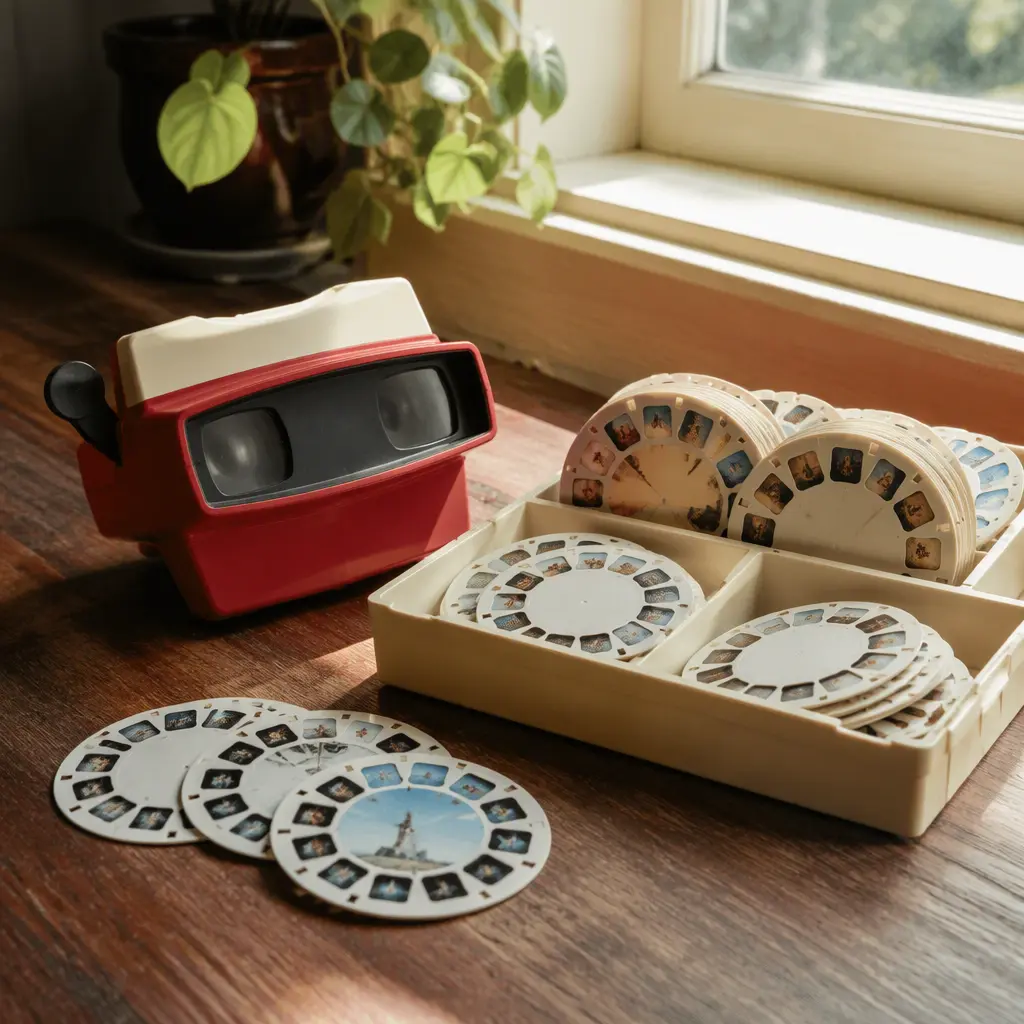
Modern buyers will find several kinds of stereo reels on the market. Vintage reels from the 1960s through the 1990s remain popular with collectors, especially travel sets and entertainment themes tied to major cultural moments. Reproduction reels are also common and can be a good choice for families who want the experience without worrying about damaging older items. Some contemporary creators even produce custom reels using modern photography techniques.
Condition matters more than rarity for most casual collectors. Scratched lenses, faded transparencies, and warped reels can affect image clarity. Storage is important because heat and moisture may damage older film images over time. Generic reproduction viewers are widely available, though build quality varies. Collectors often prefer viewers with smoother advance mechanisms and sharper optics rather than simply choosing the oldest version available.
- Look for clean, unfaded image transparencies
- Check that reels advance smoothly without sticking
- Inspect lenses for scratches or cloudiness
- Consider reproduction reels for regular child use
- Store vintage reels away from direct sunlight and humidity
Frequently asked questions
Are vintage reels still usable today?
Yes. Many older reels still work well if they have been stored carefully. Image quality depends largely on whether the film transparencies avoided heat, moisture, and heavy scratching over the years.
Why did the reels become collectible?
The themes changed constantly over the decades, creating a large catalog tied to specific eras of entertainment, tourism, and popular culture. Many people collect reels connected to childhood memories or particular historical subjects.
Do modern viewers work with older reels?
In many cases they do, since the reel format remained fairly consistent for decades. Compatibility can vary slightly depending on the manufacturer and age of the viewer, but the overall system stayed remarkably stable.
Can children still enjoy them in the age of tablets and phones?
Many children still find the format engaging because it feels tactile and interactive in a different way from a touchscreen. The physical act of inserting a reel and advancing each image gives the experience a slower pace that can feel novel today.
Viewfinder-style 3D reels endured because they transformed a simple optical trick into an expandable library of tiny adventures. The viewer may have been the hardware, but the reels carried the stories, destinations, and memories that kept children returning to the toy again and again. Decades later, those small discs still capture something distinctive about analog play: the excitement of holding a miniature world up to the light and seeing it suddenly gain depth.