Are AI Robot Pets Too Loud for Apartment Living?
A parent-focused guide to AI robot pets for apartments, comparing typical noise, movement, charging habits and connected features for children aged 3–5.
Compare prices and availability
Check current prices and availability for this guide on eBay.
As an eBay Partner, we may be compensated if you make a purchase.
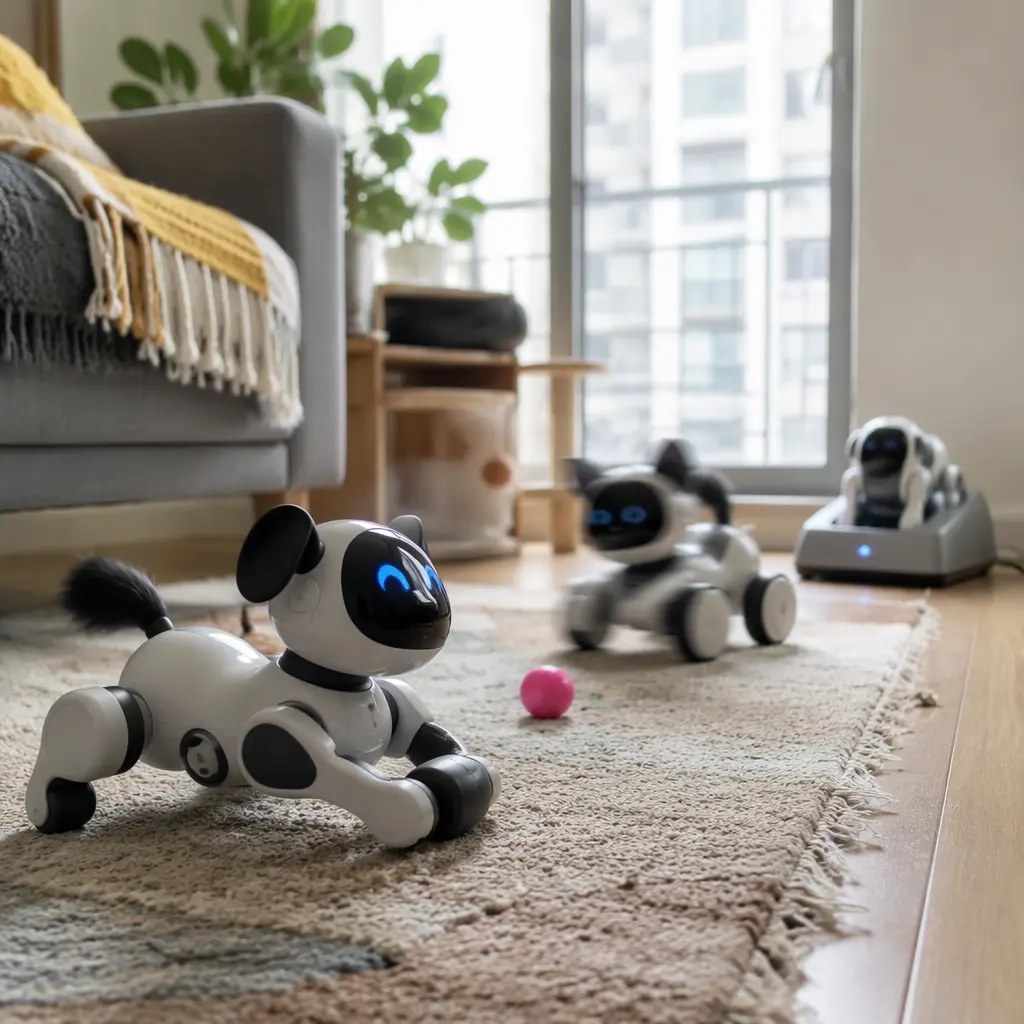
AI robot pets are designed to react, move and sometimes converse in ways that feel more lifelike than older electronic pets. For apartment living, though, the main question is often practical rather than technical: how noisy are they during everyday play? Current robot pets vary widely. Some mostly make soft chirps and short motor sounds, while others include louder speakers, repeated voice responses, energetic movement or hard plastic wheels that carry across thin apartment floors. Charging routines, app dependence and nighttime behavior also affect whether a toy feels manageable in a smaller shared space. For children aged 3–5, the quieter and simpler models are often easier to live with than highly active AI companions built for older kids.
What to look for
Manufacturers use the term "AI" loosely in toy marketing. Some robot pets genuinely use cloud-connected voice interaction or app-based learning features, while others mainly rely on preset reactions, touch sensors and simple obstacle detection. For apartment households, the difference matters because connected features can increase audio prompts, require regular charging and depend on internet access. A quieter toy with limited offline functions may suit preschoolers better than a constantly talking assistant-style pet.
- Check whether movement uses soft padded feet, slow walking motions or hard plastic wheels, which tend to sound louder on apartment flooring.
- Look for adjustable volume settings or mute modes. Some robot pets allow sound effects to be reduced but not fully disabled.
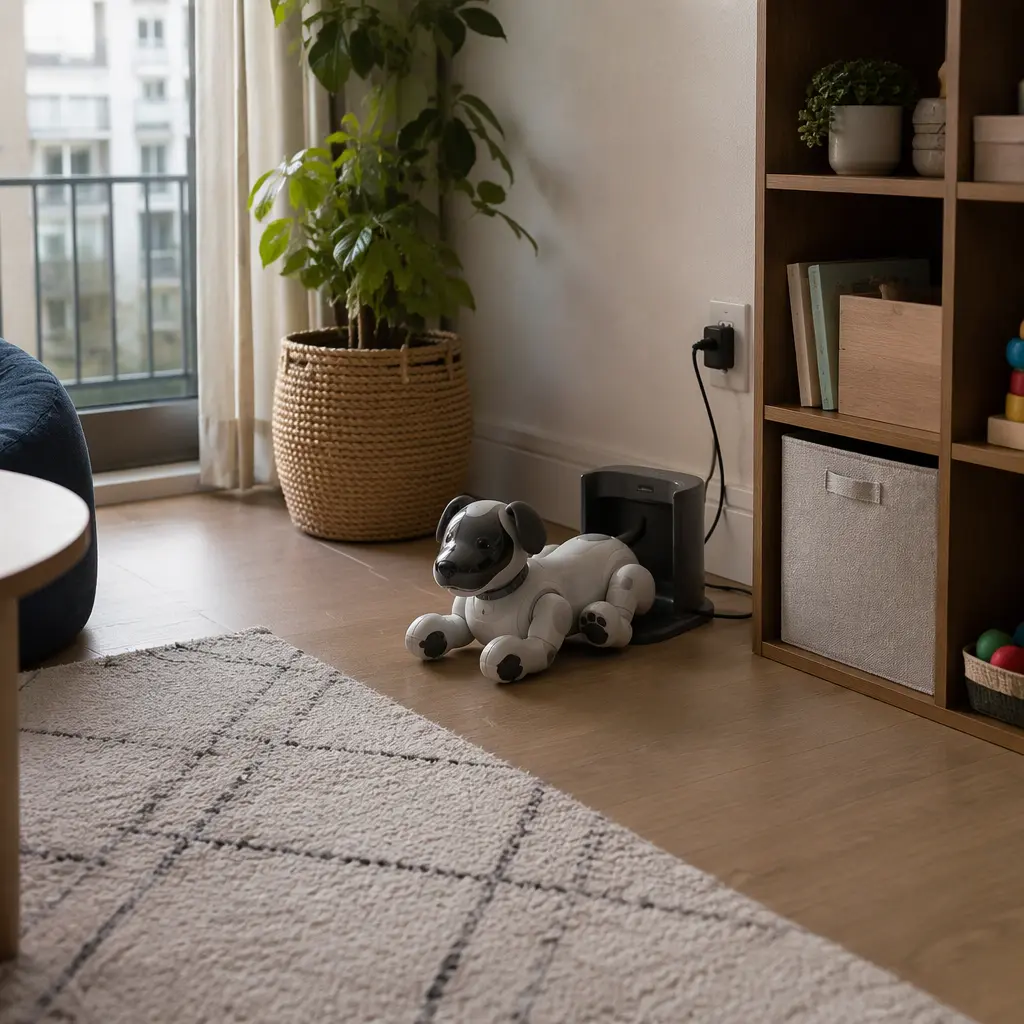
- Consider charging habits. Active robot pets may need daily charging during heavy use, and some emit sounds or light effects when docking.
- Read whether key features require a companion app, cloud account or subscription. A toy that loses functions offline may frustrate younger children.
- For apartments with downstairs neighbors, lighter pets with slower movement usually create less vibration than jumping or spinning designs.
- Look at sleep or standby behavior. Some interactive pets wake unexpectedly after sound triggers or touch activation.
- Check device compatibility and regional support if the toy relies on voice apps or connected services.
Age suitability
Most AI robot pets marketed toward preschoolers simplify controls into touch responses, buttons or short voice commands. For ages 3–5, toys that focus on pretend care routines, simple reactions and predictable movement are generally easier to understand and less overstimulating. More advanced conversational robot pets aimed at older children can become frustrating for younger users because speech recognition is inconsistent with preschool voices and internet-dependent features may not work smoothly every time. Parents should also expect some children in this age group to treat robot pets roughly. Softer exteriors, fewer exposed joints and simpler charging connectors often hold up better in everyday family use.
Options compared
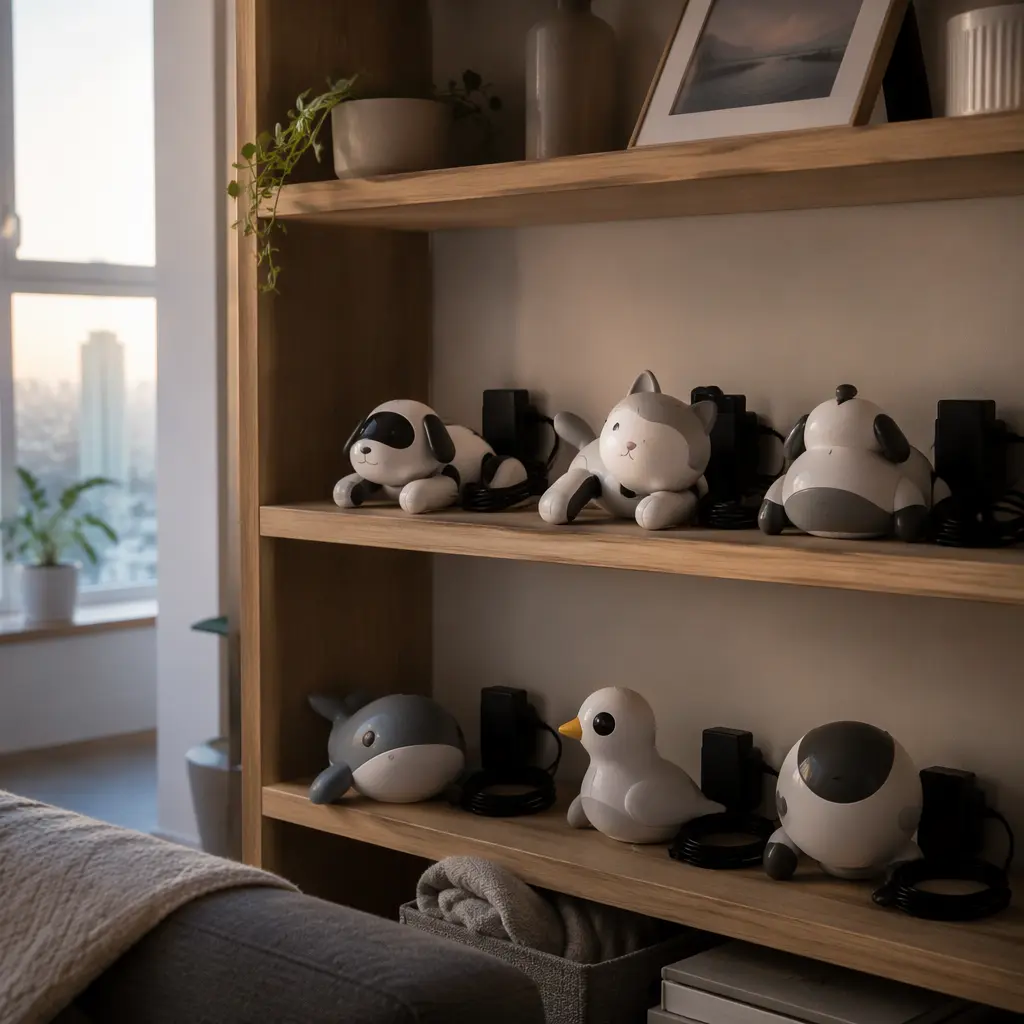
Current robot pets generally fall into three categories. The quietest are simple interactive pets with touch sensors, short prerecorded sounds and limited movement. These are often the easiest fit for apartments because they produce less motor noise and usually work fully offline. Brands in this category may resemble classic electronic pets with added responsiveness rather than true AI behavior. They suit children who mainly want cuddly pretend play and predictable reactions.
Mid-range robot pets add app connectivity, obstacle avoidance or more expressive movement. These can be entertaining in small homes because they patrol rooms, follow users or respond to routines, but the extra motors and speakers increase background noise. Wheel-based movement tends to be more noticeable on hardwood or laminate floors. Parents in apartments often prefer models with adjustable activity settings so the toy can be quieter in the evening.
The most advanced AI robot pets include conversational features, cameras or cloud-connected voice systems. Examples in the wider market include companion-style robot dogs and interactive pets linked to mobile apps. These may offer facial recognition, longer spoken interactions or evolving personalities according to manufacturer claims. In practice, they are also the least apartment-friendly for some households. They usually need frequent charging, stable Wi‑Fi and companion apps, and they may produce unexpected sounds from notifications, updates or wake-word activation. Privacy considerations are also more important when microphones or cameras are included in a child’s bedroom or play area.
- Simple electronic pets: quieter, lower maintenance, easier for preschoolers, usually less realistic.
- App-connected robot pets: more movement and interaction, moderate noise, often better for families comfortable with charging and updates.
- Advanced AI companions: strongest conversational features, highest app dependence, potentially louder and more distracting in small spaces.
Frequently asked questions
Do robot pets make noise when not in use?
Some do. Certain models enter standby quietly, while others occasionally chirp, light up or react to nearby movement and sound. Reading the manual or retailer questions section can help identify whether a toy has a reliable sleep mode.
Are AI robot pets suitable for shared walls and thin floors?
They can be, but movement style matters more than advertised intelligence. Soft-footed walking pets are usually quieter than wheeled models that spin or race across hard flooring. Foam play mats can also reduce vibration noise in apartments.
Do connected robot pets work without Wi‑Fi?
Many connected toys retain basic movement and touch interactions offline, but conversational or app-linked features may stop working. Some manufacturers also limit updates or voice services by region, so long-term support is worth checking before purchase.
How often do robot pets need charging?
Charging frequency varies with movement and speaker use. Highly active robot pets with cameras, voice interaction or roaming behavior generally need charging more often than simpler pets with limited motion. Preschoolers may also forget to dock them consistently.
Are AI robot pets better than traditional plush toys for ages 3–5?
That depends on the child and the home environment. Robot pets can encourage interaction and routine-based play, but some preschoolers prefer quieter open-ended toys that do not interrupt play with sounds or required charging. In small apartments, lower-maintenance toys are often easier to store and manage.
For apartment living, the best robot pet choice is usually the one with the fewest surprises. Lower-volume audio, slower movement, dependable offline play and predictable charging routines tend to matter more day to day than advanced AI marketing claims. Families with limited space or noise-sensitive neighbors may find that simpler interactive pets strike the most practical balance for ages 3–5.