Toniebox Lite vs Jooki for Screen-Free Bedtime in 2026
Comparing Toniebox Lite and Jooki for preschool bedtime routines, with a focus on setup, offline playback, sibling sharing, app dependence and long-term ease for parents.
Compare prices and availability
Check current prices and availability for this guide on eBay.
As an eBay Partner, we may be compensated if you make a purchase.
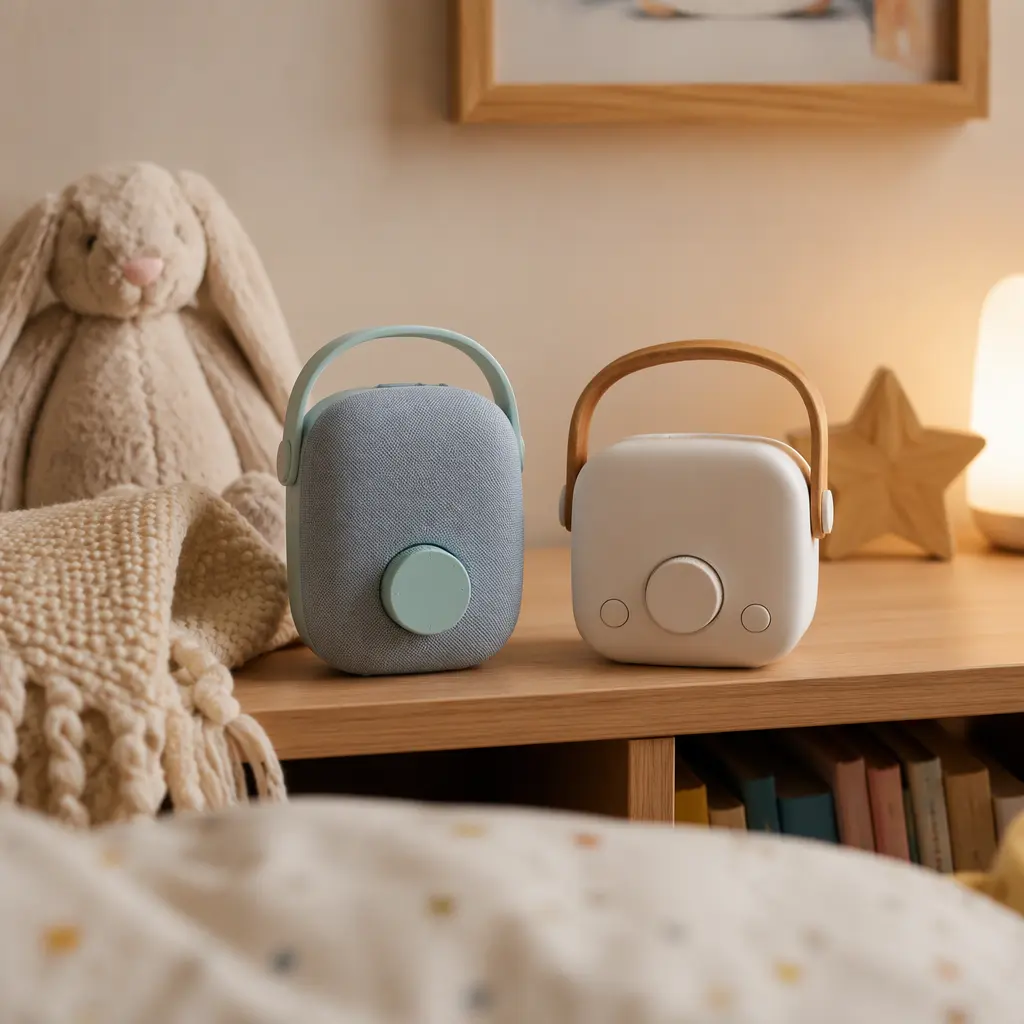
Screen-free audio players are often marketed as calmer alternatives to tablets at bedtime, but the day-to-day experience for parents depends less on the bedtime story itself and more on setup, reliability and how much troubleshooting the system needs after the first week. Toniebox Lite and Jooki both aim to give preschoolers independent audio control without open internet browsing or distracting screens, yet they approach that goal differently. Toniebox Lite focuses on simple character-based playback with a padded speaker box and physical figures, while Jooki works more like a connected audio hub using tokens, playlists and streaming-service integration. For families with children aged 3 to 5, the choice usually comes down to how much flexibility is needed versus how much ongoing app management parents are willing to handle.
What to look for
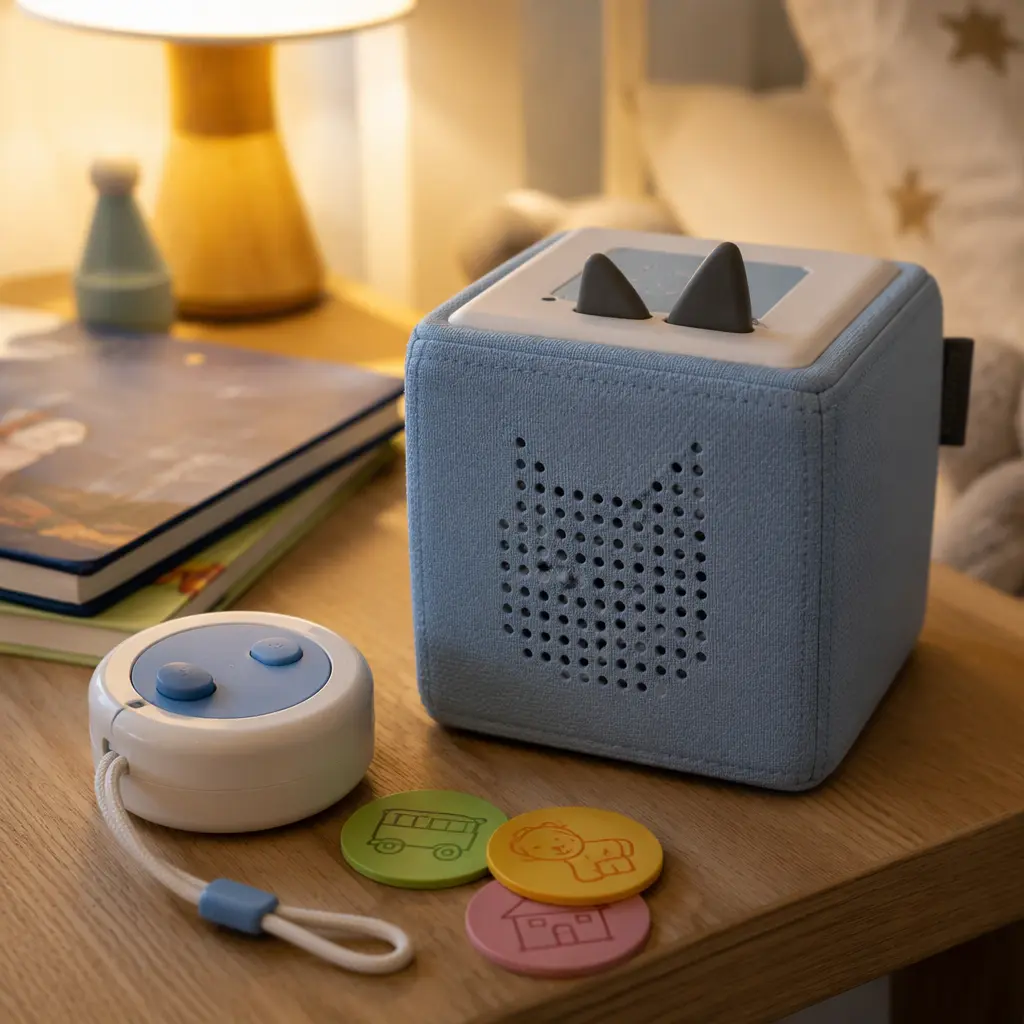
Connected audio toys vary widely in how dependent they are on apps, cloud services and home Wi-Fi. Some systems become frustrating if playlists stop syncing or a subscription changes, while others continue working mostly offline after initial setup. For bedtime use, parents often care more about consistency and simplicity than feature depth. Preschoolers also tend to respond better to large physical controls and predictable routines than to systems requiring frequent phone interaction.
- Offline playback after initial setup, especially for travel or unreliable Wi-Fi
- Simple controls children can operate independently in low light
- How audio is selected: physical figures, cards, tokens or app menus
- Whether siblings can share content without arguments over ownership
- Battery life and charging convenience for nightly use
- Volume limits and whether playback can become unexpectedly loud
- How much content requires subscriptions, credits or streaming accounts
- App dependence for updates, playlist changes or troubleshooting
- Durability of small accessories such as figures, tokens or NFC tags
- Storage space for accessories and whether replacements are expensive
Age suitability
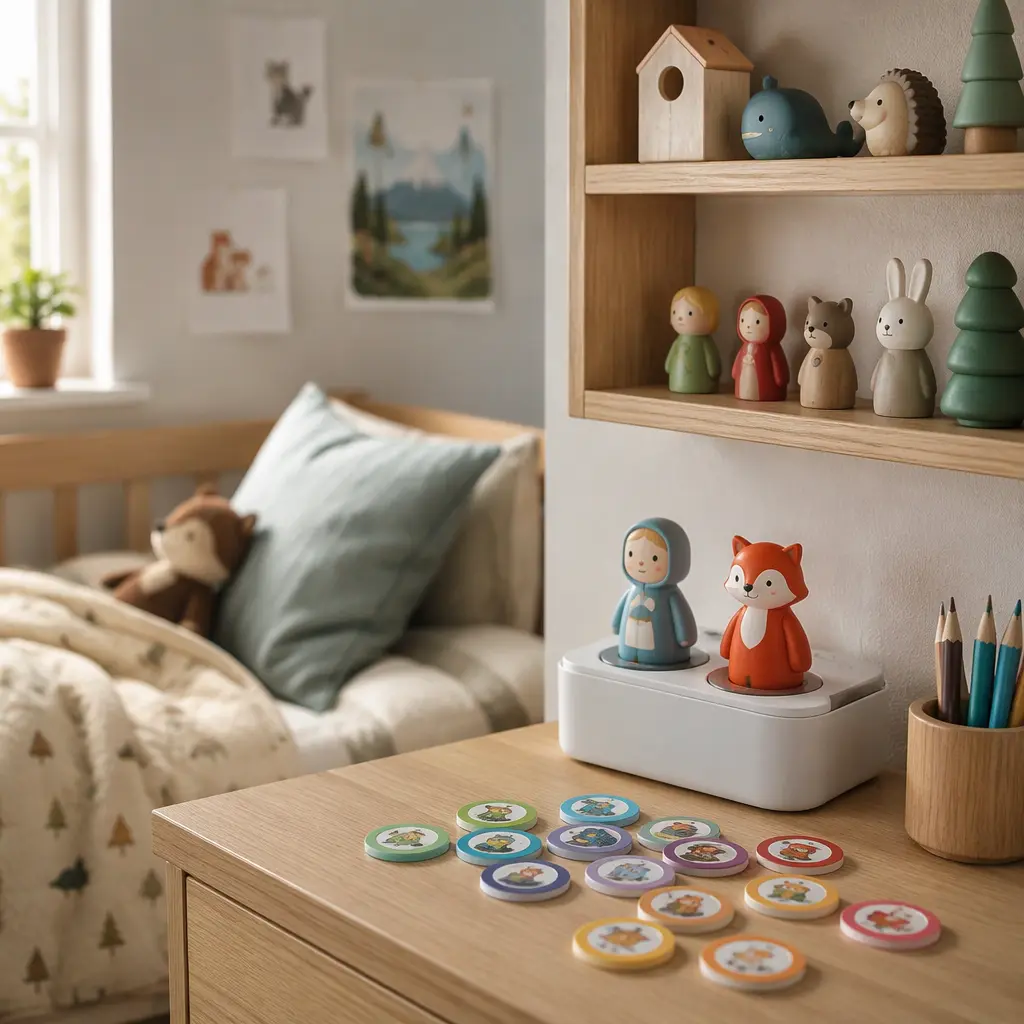
Both Toniebox Lite and Jooki are generally aimed at preschool and early elementary ages, but they suit different stages of independence. Children closer to age 3 usually adapt faster to Toniebox-style systems because the interaction is highly physical and repetitive: place a figure on top, tap or tilt for controls, then listen. Jooki often suits slightly older preschoolers who can understand playlists, switching content categories and using tokens linked to different albums or stories. Families with multiple children may also notice different learning curves. Younger siblings may accidentally reassign or lose Jooki tokens more easily, while Tonie-style figures are larger and easier to track. Neither system completely removes parent involvement during setup, content management or charging.
Options compared
Toniebox Lite is designed around low-friction use. The biggest advantage for bedtime is predictability. Once content is downloaded to the device, children can usually start playback without opening an app or relying on live streaming. The physical figurine system also makes sharing straightforward for younger children because each figure visibly represents a story or playlist. For families trying to reduce evening screen exposure and parent intervention, that simplicity can matter more than advanced features. The trade-off is flexibility. Expanding the library may require buying additional figures or compatible accessories, and content organization is less customizable than a playlist-based system.
Jooki offers more flexibility for families already using digital music or audiobook services. Instead of relying mainly on dedicated figures, it can connect tokens to playlists or albums through a companion app. That can reduce physical clutter if children listen to large libraries, and older preschoolers may enjoy having broader content choices. However, this flexibility can also create more setup friction. Parents may spend more time pairing tokens, managing accounts or troubleshooting sync issues. Long-term usability depends heavily on app support and service compatibility. If a streaming integration changes, the experience may become less seamless than a mostly self-contained player.
- Toniebox Lite usually suits younger preschoolers, bedtime routines and families wanting minimal app interaction.
- Jooki often suits households wanting customizable playlists, shared family audio libraries or broader music integration.
- Tonie-style systems tend to work better for children who benefit from tactile play and simple repeatable controls.
- Jooki may appeal more to families comfortable managing connected devices and streaming accounts.
- Families with frequent travel or unstable internet should pay close attention to offline playback behavior for either system.
- Parents concerned about clutter should compare storage needs for figures, cards or tokens before buying.
Frequently asked questions
Do these players work without Wi-Fi?
Most screen-free audio players support some form of offline playback after content is initially downloaded or synced. The details vary by manufacturer. Tonie-style systems are often designed to continue working offline once content is stored locally. Jooki systems may still depend more heavily on syncing and connected services during setup or playlist updates.
Which system is easier for siblings to share?
For younger children, larger physical figures are usually easier to identify and less likely to disappear under furniture. Token-based systems can work well for older preschoolers but may require more organization. Shared playlist management can also become confusing if multiple children want different audio choices linked to the same account.
Are subscriptions required?
Some audio systems can be used without ongoing subscriptions, while others become more useful when linked to streaming services or paid content libraries. Parents should check whether core playback features still function without monthly fees and whether purchased content remains available if services change in the future.
How durable are the accessories?
Soft-sided audio boxes are generally designed for rough preschool handling, but the small accessories deserve closer attention. Figures, NFC tokens and charging cables can all wear out or go missing over time. Larger accessories are typically easier for younger children to manage independently.
Is one option quieter for bedtime?
Volume control matters more than speaker quality in most bedtime routines. Parents should look for systems with reliable volume limiting and controls children cannot accidentally increase too easily during quiet evening listening.
For most families choosing between Toniebox Lite and Jooki for ages 3 to 5, the decision is less about audio quality and more about household tolerance for maintenance. Toniebox Lite generally prioritizes simplicity, predictable offline use and easy independent control for younger children. Jooki offers broader flexibility and playlist customization but may ask more from parents in account management and setup. Families wanting the lowest-friction bedtime routine often lean toward the simpler system, while households already comfortable with connected audio ecosystems may prefer the added flexibility of Jooki.