Rechargeable vs Battery Walkie Talkies for Camps
Compare rechargeable and battery-powered walkie talkies for kids’ camps and outdoor trips, including durability, charging, range expectations, weather use and practical parent trade-offs.
Compare prices and availability
Check current prices and availability for this guide on eBay.
As an eBay Partner, we may be compensated if you make a purchase.
Walkie talkies remain one of the few electronics that support genuinely screen-free outdoor play. For children around 9 to 12 years old, they can add independence during camping trips, hikes, backyard games and group activities while still giving adults a simple way to stay in contact. The biggest buying decision is usually whether to choose rechargeable models or traditional battery-powered versions. Both can work well, but the better fit depends on trip length, charging access, weather conditions and how rough the devices are likely to be treated. A model that works perfectly for weekend family camping may be frustrating during longer trips or large group camps where charging opportunities are limited.
What to look for
Many walkie talkie packages advertise long-distance range, but real-world performance depends heavily on terrain. Open fields allow better communication than forests, campsites with hills or crowded public parks. For most family camping and outdoor play, reliability and ease of use matter more than maximum advertised distance. Younger users also benefit from larger buttons, clear audio and durable casings rather than advanced features they may never use.
- Rechargeable models reduce ongoing battery costs and are convenient for short trips with regular access to charging.
- Battery-powered models are easier to keep running during multi-day camps because spare AA or AAA batteries can be swapped quickly.
- Water resistance matters for hiking, lakeside camping and unpredictable weather, especially if devices may be dropped on damp ground.
- Simple controls are often better for ages 9 to 12 than menus packed with extra channels and alert tones.
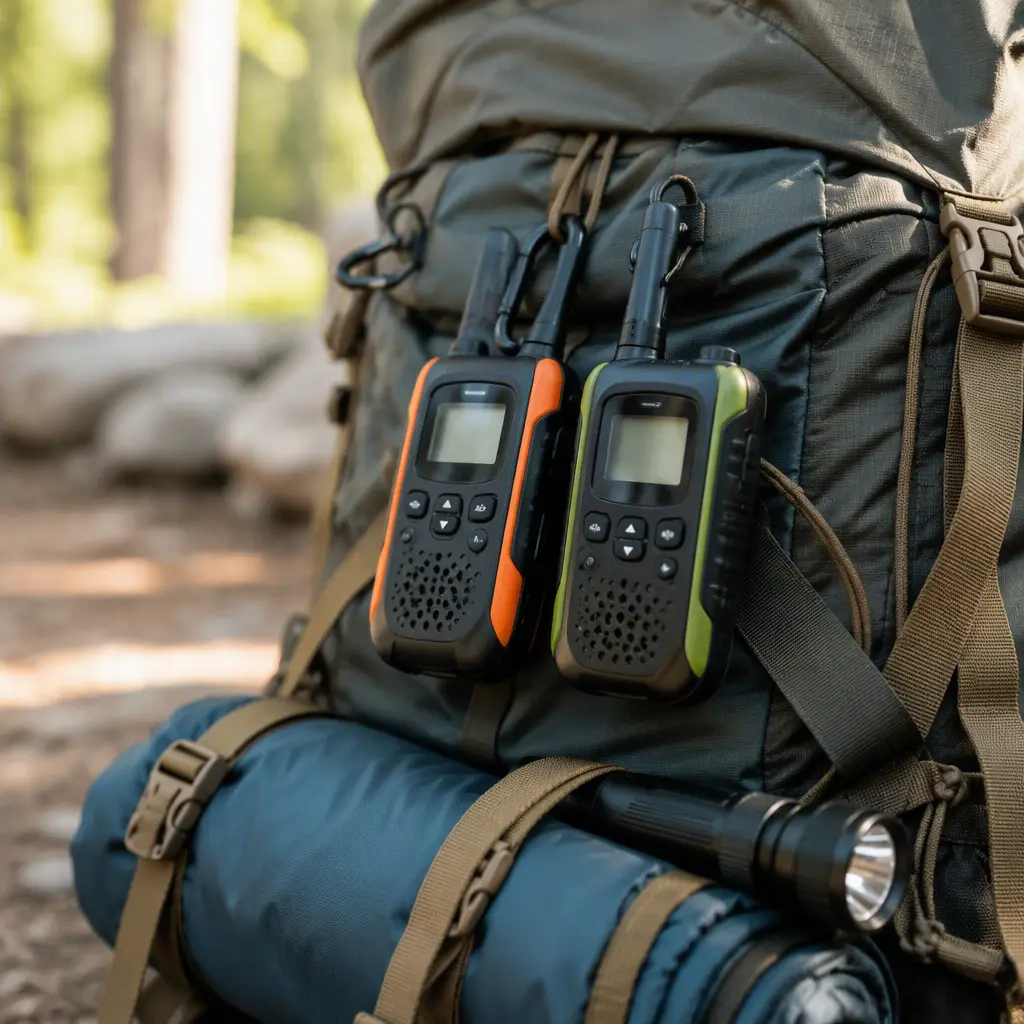
- Clip attachments or wrist straps help prevent devices from being lost during active outdoor play.
- Volume clarity is more useful than loud sound effects or flashing lights in shared camp environments.
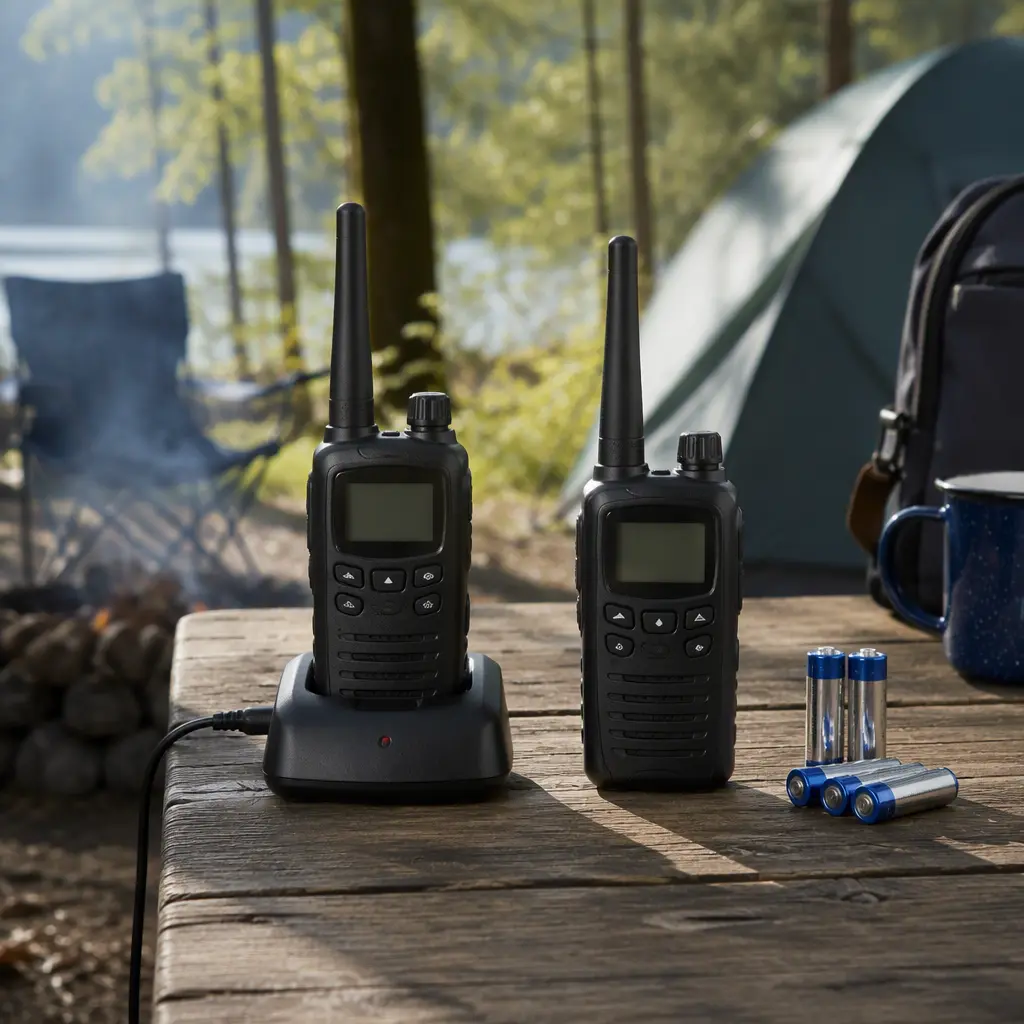
- Consider storage space if packing for family travel, since charging docks and cables add bulk compared with spare batteries.
Age suitability
Children aged 9 to 12 are usually ready for walkie talkies with more realistic communication features and greater outdoor range than toy-style preschool versions. At this age, many children can manage charging routines responsibly, understand basic radio etiquette and use channels correctly during hikes or campsite activities. Rechargeable models tend to suit older children who already charge other devices regularly and can remember to plug units in overnight. Battery-powered options may work better for children who are more forgetful or for shared camp groups where devices are passed between users. Some compact adult-oriented radios can also suit this age group, but very small controls or complicated menus may become frustrating during outdoor use.
Options compared
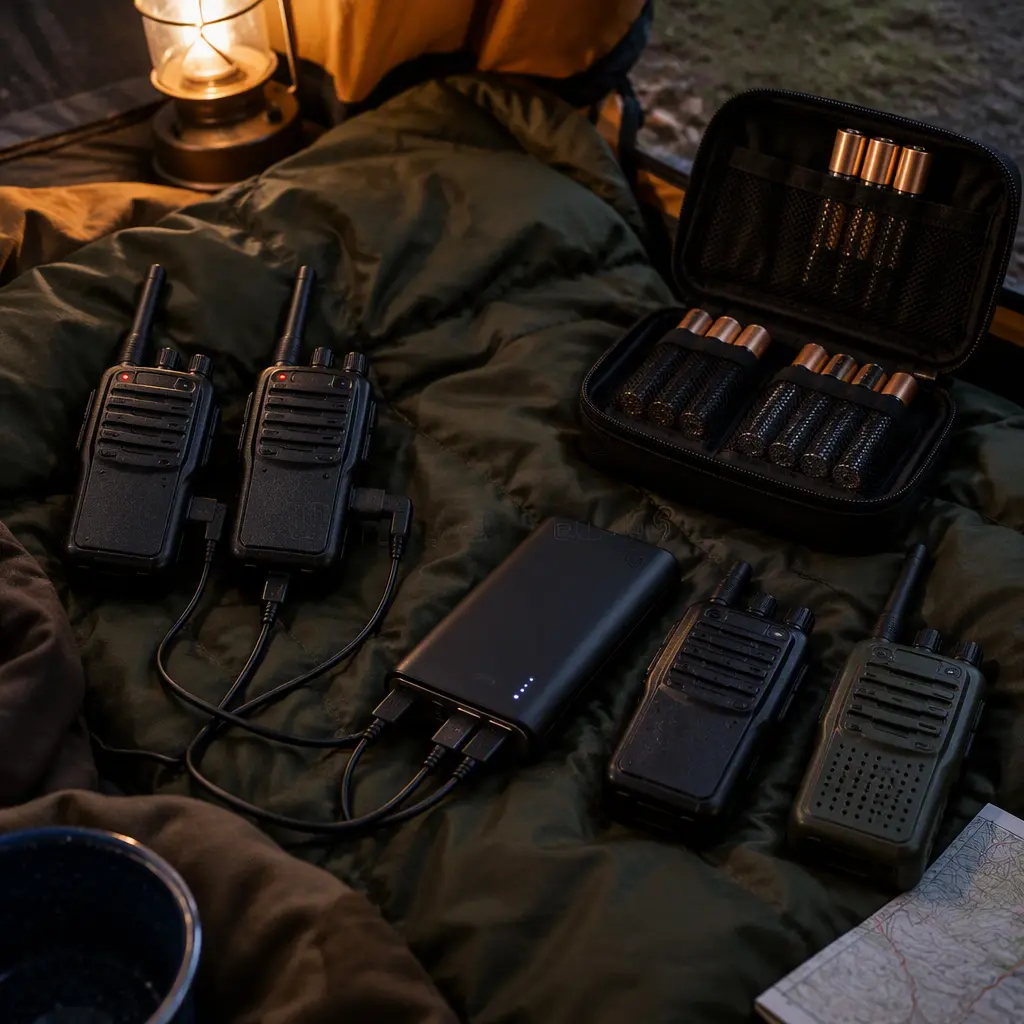
Rechargeable walkie talkies are often the most convenient choice for families who camp occasionally, take day trips or have reliable access to electricity. They remove the need to keep buying disposable batteries and are easier to prepare before a weekend away. Many families already carry power banks for phones or lanterns, which can simplify charging if the devices use standard USB cables. Rechargeable models also tend to appeal to children because they feel more like modern gadgets than traditional radios.
The downside is that rechargeable units can become inconvenient on longer trips. If batteries drain during a hike or overnight activity, charging may not be practical. Some sealed rechargeable batteries also lose capacity over time, especially if devices are stored for long periods between camping seasons. For camps where devices are heavily shared, charging routines can become difficult to manage.
- Rechargeable walkie talkies suit weekend camping, family travel with car charging access, backyard adventures and households trying to reduce disposable battery use.
- Battery-powered models suit extended camps, scouting trips, emergency backup kits and situations where quick battery swaps are easier than charging.
- Rugged outdoor-focused models usually handle drops and dirt better than lightweight indoor toy versions.
- Compact walkie talkies are easier for hiking but may have smaller speakers and shorter battery life.
- Higher-powered radios may provide better range but can be bulkier and less comfortable for younger users to carry all day.
- Very cheap multipacks can work for simple backyard play but may disappoint during forest hikes or larger campgrounds where signal consistency matters.
Frequently asked questions
Do rechargeable walkie talkies save money over time?
They often reduce ongoing costs for families who use walkie talkies regularly, since fewer disposable batteries are needed. However, replacement charging cables or declining battery performance over several years can offset some savings.
Are battery-powered walkie talkies more reliable for camping?
For longer trips without dependable electricity, replaceable batteries are usually more practical because fresh batteries can be packed and swapped immediately. They are also useful for emergency preparedness kits where devices may sit unused for months.
How much range should parents realistically expect?
Real-world range is normally much shorter than the maximum distances printed on packaging. Trees, hills, buildings and weather conditions all affect performance. For most campsites and family hikes, clear communication across moderate distances is a more realistic expectation than long-range operation.
Are walkie talkies too noisy for shared campsites?
Some models include loud alert tones, roger beeps and sound effects that can become irritating in quiet campgrounds. Models with adjustable alerts or headphone compatibility may work better in shared outdoor spaces.
What features are worth avoiding?
Very bright flashing lights, excessive sound effects and overly complicated menus often add frustration without improving communication. For ages 9 to 12, durability, battery management and clear audio usually matter more than novelty extras.
Choosing between rechargeable and battery-powered walkie talkies comes down to how and where they will actually be used. Rechargeable models offer convenience for short trips and regular family use, while battery-powered versions remain practical for longer camps and less predictable outdoor schedules. Focusing on durability, realistic range expectations and easy operation will usually lead to a better experience than prioritising flashy features or exaggerated distance claims.