Tech Toys for Toddlers That Teach Cause and Effect
A parent-friendly guide to simple electronic toys for ages 1–2 that teach cause and effect without overwhelming lights or noise. Learn what features matter, age fit, and safety tips.
Compare prices and availability
Check current prices and availability for this guide on eBay.
As an eBay Partner, we may be compensated if you make a purchase.
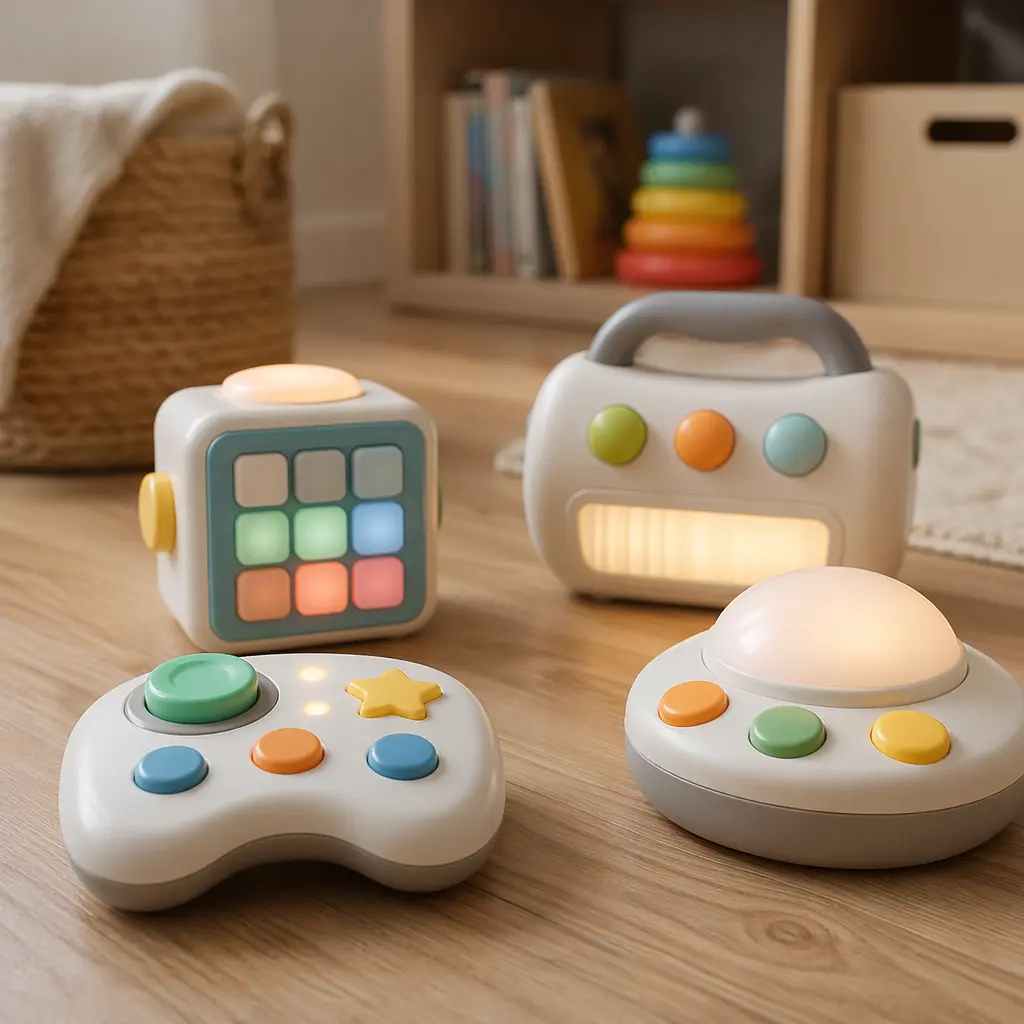
For toddlers, learning often starts with a single discovery: “When I do this, something happens.” That’s the core of cause-and-effect play. Simple tech toys—those with gentle lights, sounds, or motion—can support this learning without overwhelming young children. For ages 1–2, the best options focus on one clear action and one clear response, helping toddlers connect their movements with predictable outcomes.
What to look for
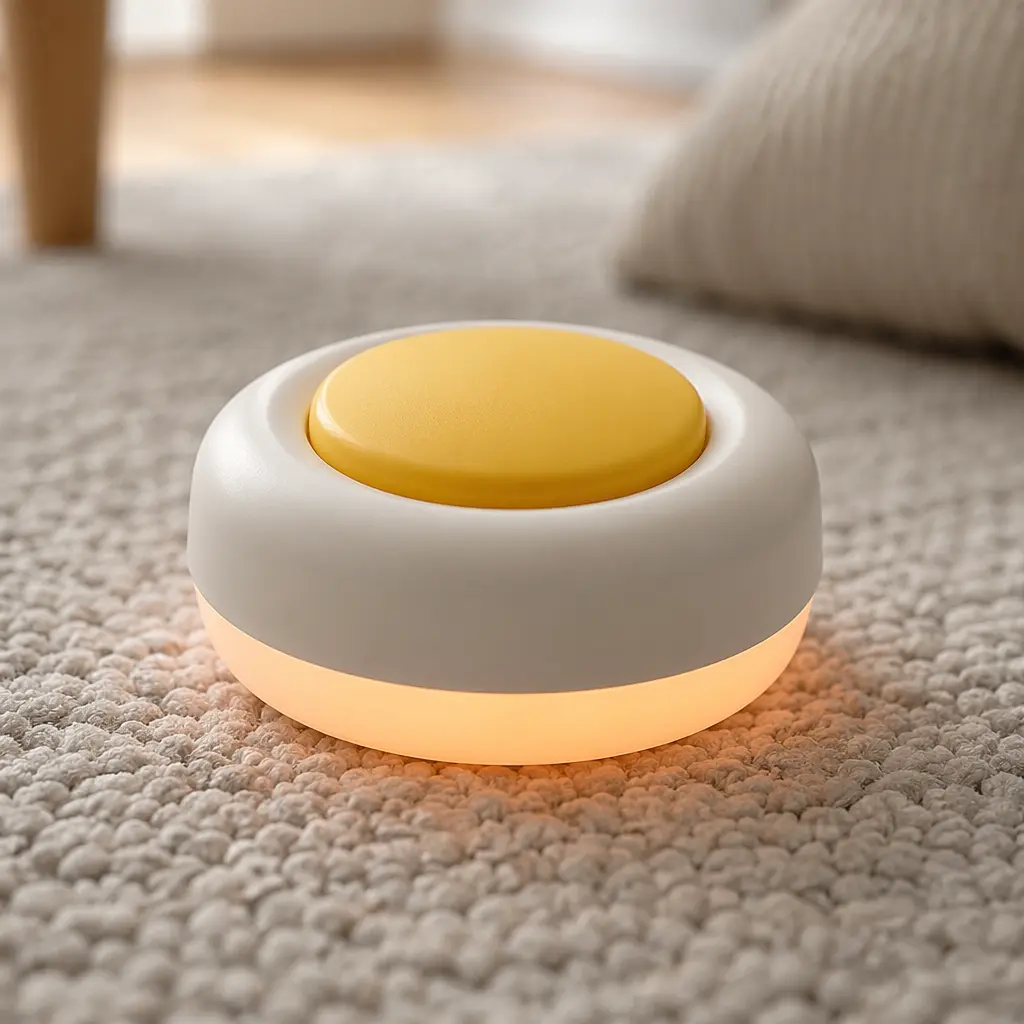
Not all electronic toys are built with toddlers in mind. At this age, simplicity is a feature, not a drawback. Look for toys that respond clearly to a child’s action and give them time to understand what just happened.
- One-step interactions: pressing, turning, or sliding should trigger a single, obvious response.
- Gentle feedback: soft lights, brief sounds, or calm music instead of flashing patterns or loud noise.
- Durable design: thick plastic or sealed components that hold up to drops and mouthing.
- Slow pacing: responses that don’t rush or stack too many effects at once.
- Easy on/off control for adults to manage battery use and quiet time.
Age suitability
For children between 12 and 24 months, cause-and-effect toys should match developing motor skills and attention spans. Younger toddlers benefit from large buttons and immediate responses. As they approach age two, they may enjoy simple sequences, such as pressing one button after another to hear different sounds. Toys labeled for a wide age range can still work, but check that the core play pattern doesn’t rely on complex menus, tiny controls, or fast-changing lights.
Standout categories or types
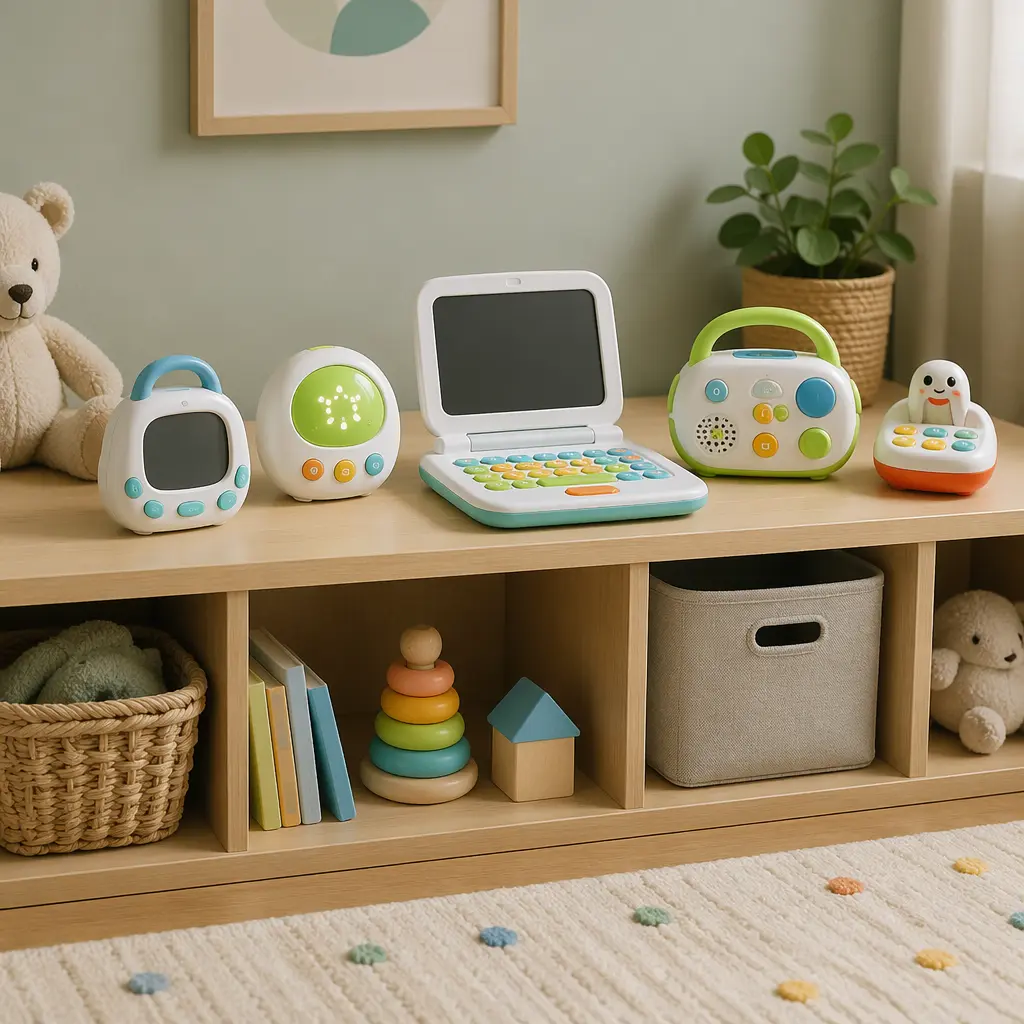
Within the broad category of tech toys, some types are especially well-suited to teaching cause and effect for toddlers. These toys tend to focus on repetition and predictability rather than novelty.
- Button-activated light toys that glow briefly when pressed.
- Sound toys that play a single tone or short tune in response to an action.
- Pop-up or motion toys where a press or slide reveals movement.
- Simple musical panels with one sound per control.
- Electronic books or boards with one sound per page or icon.
Frequently asked questions
Are electronic toys okay for toddlers?
Yes, when they are age-appropriate and used in moderation. Simple electronic toys can support learning by reinforcing cause and effect. The key is choosing toys that don’t overstimulate and balancing tech play with hands-on, non-electronic activities.
How much light and sound is too much?
For toddlers, less is usually better. Look for steady lights instead of flashing ones and sounds that stop on their own. If a toy is hard for an adult to tolerate in a quiet room, it’s likely too intense for a young child.
Do these toys replace traditional cause-and-effect toys?
No. Electronic toys work best alongside traditional options like stacking toys, shape sorters, and simple puzzles. Each offers a different kind of feedback, helping toddlers learn through varied experiences.
What skills do toddlers build with cause-and-effect tech toys?
These toys support early problem-solving, fine motor development, attention, and confidence. When toddlers see that their actions matter, they’re more likely to keep exploring and trying new things.
When chosen carefully, tech toys for toddlers can be calm, supportive tools for early learning. By focusing on simple interactions and gentle feedback, parents can find options that encourage curiosity without turning playtime into sensory overload.