Ride-On Toys That Work in Small Homes
A buyer-focused guide to compact ride-on toys for ages 1–2. Learn which space-smart designs build balance and coordination without overwhelming small apartments or shared rooms.
Compare prices and availability
Check current prices and availability for this guide on eBay.
As an eBay Partner, we may be compensated if you make a purchase.
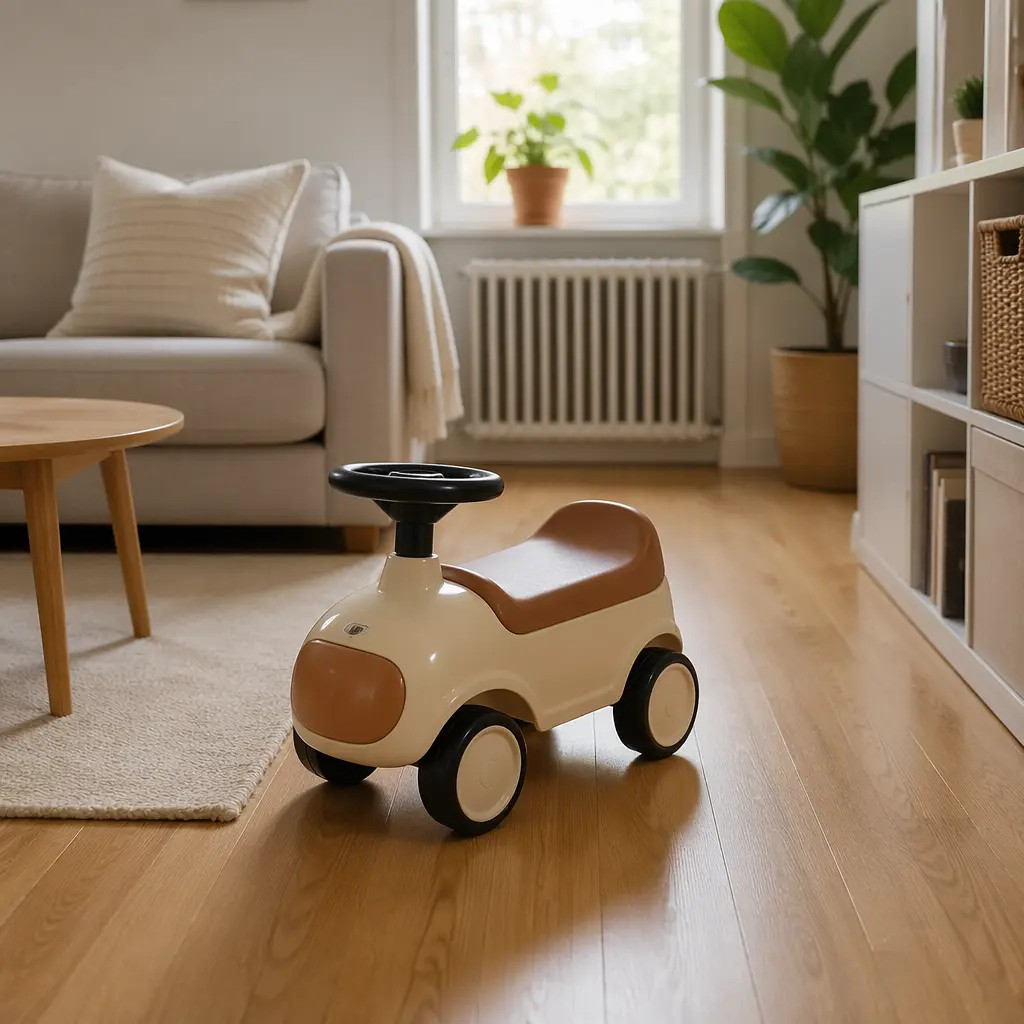
Ride-on toys can be great for early movement skills, but in small homes they often feel like furniture you didn’t ask for. Parents of 1–2 year olds usually want something that encourages balance, coordination, and confidence without taking over the living room. The good news: many ride-ons are designed to be compact, lightweight, and easy to live with, even in apartments or shared spaces.
What to look for
When space is limited, size matters—but it’s not the only factor. Compact ride-ons should still support safe, meaningful play for young toddlers who are learning to push, scoot, and steer.
- Small footprint: Shorter length and narrow width make it easier to park against a wall or slide under a table.
- Low seat height: Toddlers should be able to place both feet flat on the floor for stability and confidence.
- Lightweight build: Easier for adults to move and for toddlers to reposition without tipping.
- Simple steering or fixed wheels: Fewer moving parts often means better control in tight spaces.
- Indoor-friendly wheels: Smooth, non-marking wheels help protect floors and reduce noise.
Age suitability
For children ages 1–2, ride-on toys should focus on scooting rather than speed. At this stage, toddlers are refining balance, leg strength, and spatial awareness. Compact ride-ons work well because they encourage short bursts of movement and frequent stops—ideal for early walkers and cruisers. Look for designs that allow a child to sit securely, push with their feet, and turn gradually without sharp angles or high centers of gravity.
Standout categories or types
Not all ride-ons are built the same, and some styles are easier to live with in small homes. Understanding the main categories can help you choose a design that fits both your child’s needs and your floor plan.
- Low-profile scooters: These usually have a simple seat and minimal body shape, making them easy to tuck away.
- Ride-on push cars: Compact versions without extra dashboards or tall backs can double as walkers and ride-ons.
- Balance-style ride-ons: Often shorter and lighter, these focus on leg movement and balance rather than pretend play.
- Convertible ride-ons: Some designs shift from a push toy to a ride-on, reducing the need for multiple bulky toys.
In small spaces, simpler designs often get more use. Toys that are easy to grab, move, and store tend to come out more often than larger, feature-heavy options that require setup or dedicated floor space.
Frequently asked questions
Can ride-on toys be used indoors?
Yes, many ride-ons are designed specifically for indoor use. Look for smooth wheels and compact frames to reduce noise and protect floors. Clear a short path and remove obstacles for safer play.
How much space does a toddler ride-on need?
Most compact ride-ons only need a few feet of clear space. Toddlers at this age tend to scoot in short distances rather than ride continuously, which works well in hallways or open living areas.
Are ride-ons better than push walkers?
They support different skills. Push walkers focus on standing and early steps, while ride-ons encourage seated balance and leg strength. In small homes, a compact ride-on can complement walking practice without adding much bulk.
When should a child stop using a ride-on?
Many children outgrow basic ride-ons around age 2 or when their knees bend too much while seated. At that point, families often transition to larger balance toys or outdoor options.
Compact ride-on toys can be a practical choice for small homes when they’re selected with intention. By focusing on size, simplicity, and age-appropriate design, parents can support early motor development without sacrificing valuable living space.