First Ride-On Toys That Work in Small Homes
A parent-friendly guide to compact, foot-powered ride-on toys for ages 1–2. Learn what to look for, age fit, and space-smart categories that build confidence without crowding your home.
Compare prices and availability
Check current prices and availability for this guide on eBay.
As an eBay Partner, we may be compensated if you make a purchase.
For many families, a first ride-on toy needs to do two jobs at once: help a young toddler build balance and confidence, and fit comfortably into a smaller home. The good news is that simple, foot-powered ride-ons can meet both needs. These toys encourage movement without batteries, bulky tracks, or oversized frames, making them easier to live with in apartments or tighter floor plans. This guide focuses on space-conscious options for children roughly 1–2 years old, with an emphasis on confidence-building play that doesn’t take over the house.
What to look for
When space is limited, every feature matters. The best first ride-on toys for small homes tend to be simple by design and easy to move or store. Instead of flashy extras, focus on how the toy fits your child’s size, your available floor space, and your daily routine.
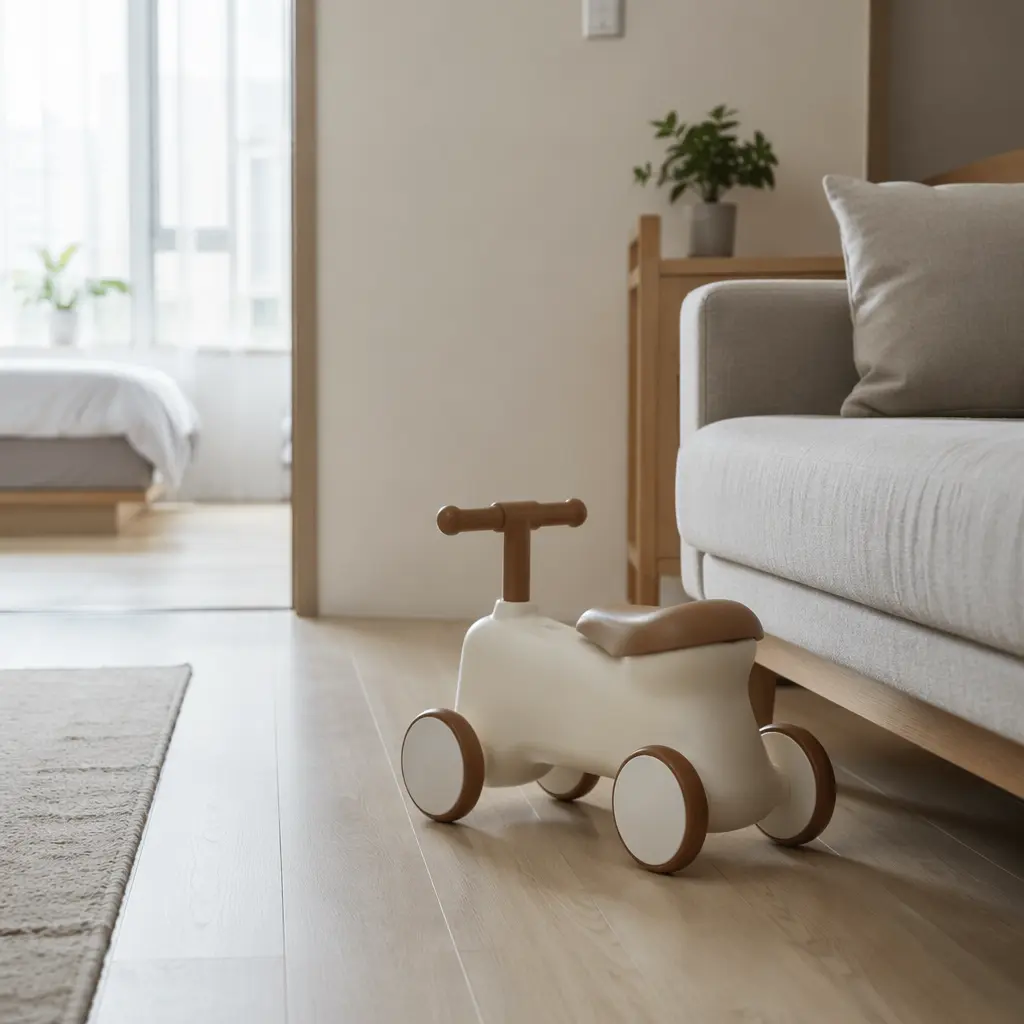
- Compact footprint: Look for a short length and narrow width so the toy can turn easily in hallways or living rooms.
- Low seat height: A low, stable seat lets toddlers keep both feet flat on the floor, which builds confidence and reduces tipping.
- Lightweight build: Lighter toys are easier for adults to pick up and tuck away, and easier for toddlers to maneuver.
- Simple steering or no steering: Limited steering angles or fixed handlebars can be easier for beginners and take up less space.
- Quiet movement: Foot-powered wheels without electronic sounds are more apartment-friendly and less overwhelming for young children.
Age suitability
For children between 1 and 2 years old, ride-on toys should support early gross motor skills without requiring advanced coordination. At this age, most toddlers are learning to push off with their feet, steer in a basic way, and stop safely. A good first ride-on allows slow, controlled movement and gives children a sense of independence without encouraging speed. Always check the manufacturer’s stated age and weight range, but also consider your child’s height and confidence level, which can matter more than the number on the box.
Standout categories or types
Not all ride-on toys are created equal, especially when you’re working with limited square footage. Certain categories tend to be more small-home friendly and better suited to first-time riders.
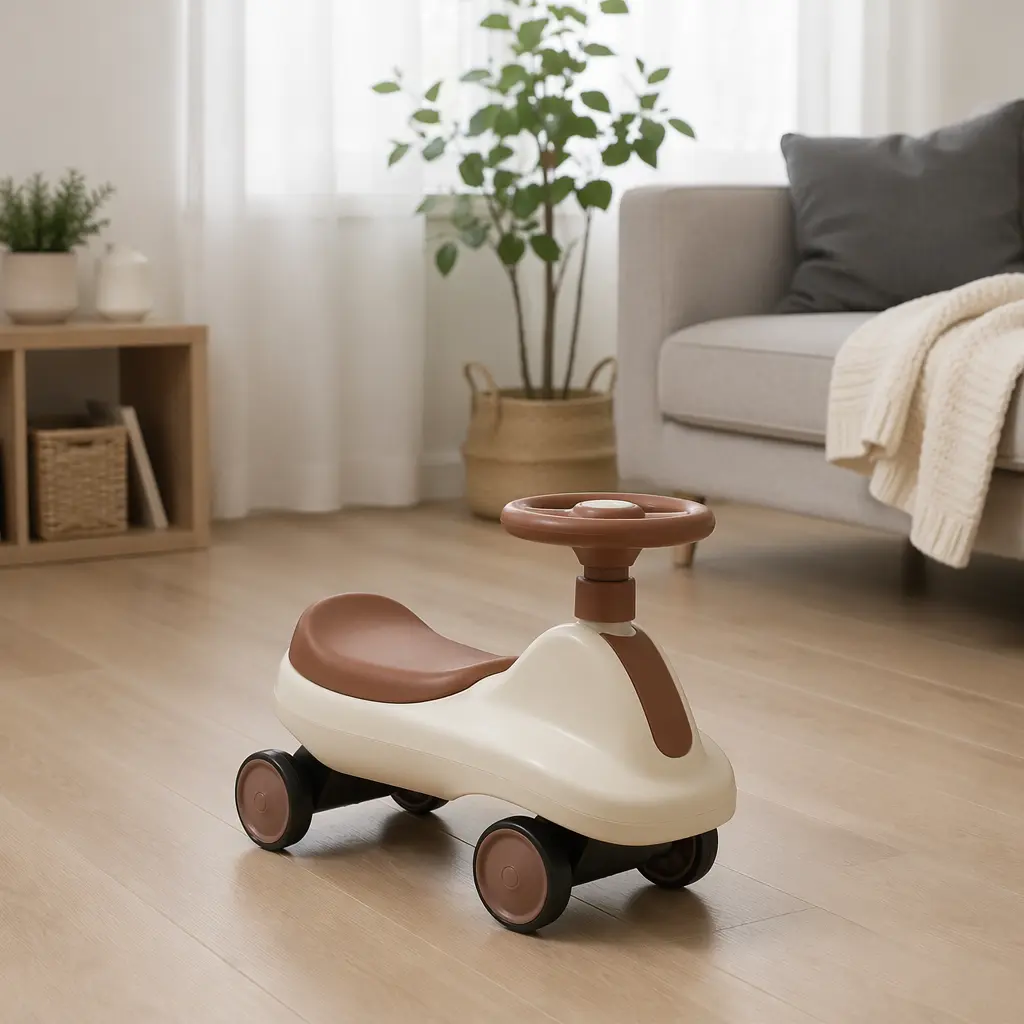
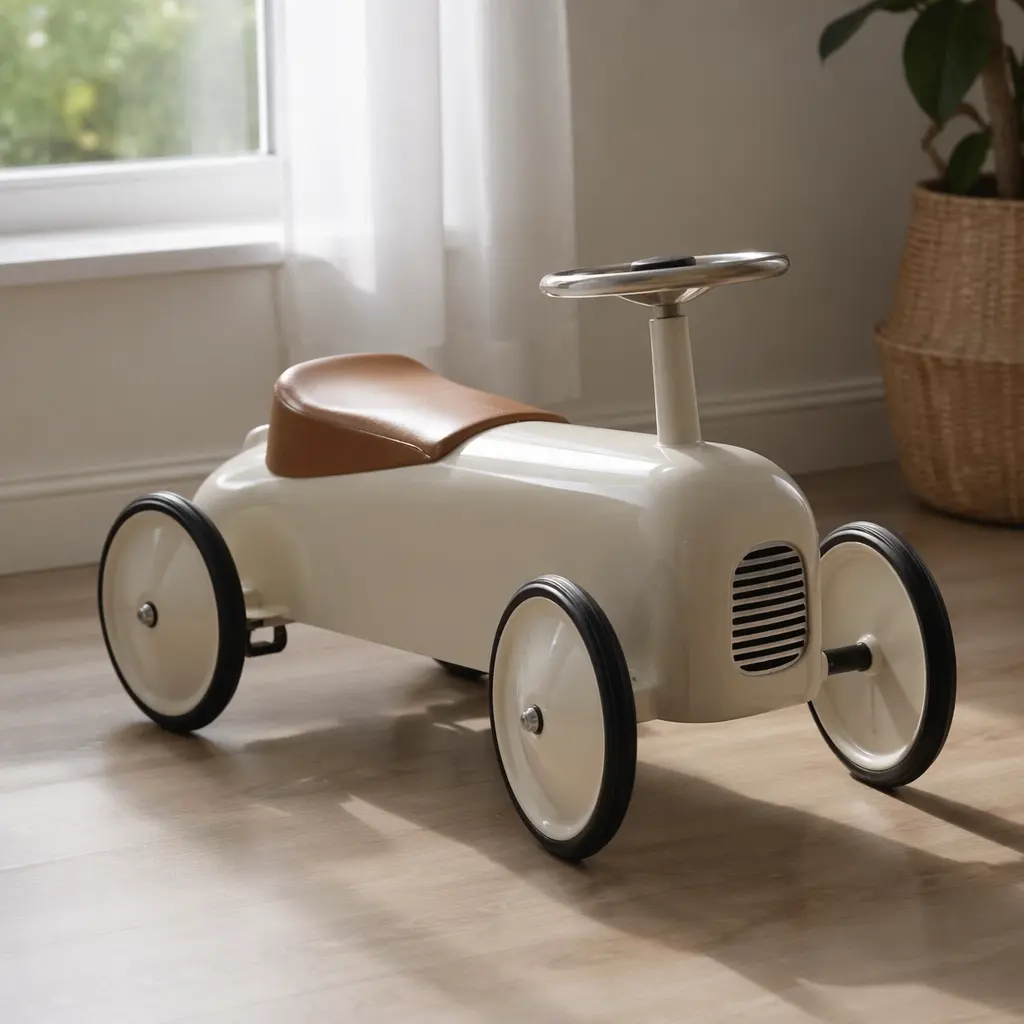
- Foot-to-floor ride-ons: These are classic first options. Toddlers sit and push with their feet, controlling both speed and direction. Their simplicity makes them easy to store and ideal for indoor use.
- Rock-and-ride hybrids: Some compact toys switch between a rocker base and a rolling base. This adds play value without needing multiple large toys, though storage of the extra piece should be considered.
- Push-along ride-ons: Designed to be used both as a ride-on and as a walker-style push toy, these can grow with your child while keeping a modest footprint.
- Soft-wheel indoor ride-ons: Models with quiet, floor-friendly wheels are better for apartments and shared living spaces, helping protect floors and reduce noise.
Frequently asked questions
Can ride-on toys really be used indoors?
Yes. Many first ride-on toys are designed specifically for indoor use, with limited speed and smooth wheels. Choosing a compact, foot-powered model makes it easier to use safely inside without needing a large playroom.
How much space does a toddler need to ride?
Toddlers don’t need much room at this stage. A clear stretch of floor a few feet long is often enough for scooting and turning. Open-plan living rooms or cleared hallways can work well with supervision.
Are ride-on toys better than push walkers?
They serve different purposes. Ride-ons encourage seated balance and leg strength, while push walkers focus more on standing and stepping. For small homes, a compact ride-on or a hybrid that offers both modes can be a practical choice.
What materials work best for small spaces?
Smooth plastics and sealed wood are easier to clean and tend to slide less on indoor floors. Lightweight materials also make it simpler to move the toy out of the way when it’s not in use.
A first ride-on toy doesn’t have to dominate your living space to be valuable. By focusing on foot-powered, compact designs that match your child’s developmental stage, you can support early movement skills while keeping your home functional. In small homes, thoughtful choices make all the difference, turning everyday floor space into a safe place for confidence-building play.