Manual Go-Karts vs Electric Ride-Ons for Older Kids
A parent-focused comparison of manual go-karts and electric ride-ons for ages 9–12, covering skill-building, safety, maintenance, and long-term value to help families choose the right upgrade.
Compare prices and availability
Check current prices and availability for this guide on eBay.
As an eBay Partner, we may be compensated if you make a purchase.
As kids approach the 9–12 age range, many outgrow basic ride-ons and want something faster, tougher, and more challenging. Two common upgrade paths are manual go-karts and electric ride-ons. Both can deliver outdoor fun, but they differ in how they build skills, how much supervision they need, and how long they stay interesting. This guide breaks down the key differences to help parents choose a ride that fits their child’s abilities and your family’s priorities.
What to look for
For older kids, the right choice is less about novelty and more about fit, durability, and how the ride will be used over time. Manual and electric options meet these needs in different ways.
- Skill development: steering control, braking, and decision-making
- Speed and power: appropriate limits for a 9–12 age group
- Build quality: frame strength, wheels, and components
- Maintenance needs: charging, replacement parts, and wear
- Space requirements: driveway, yard, or local riding area
- Longevity: whether the ride will still feel engaging next year
Age suitability
Kids ages 9–12 are typically ready for more responsibility and coordination. Manual go-karts reward physical effort and practice, making them appealing to kids who enjoy mastering a skill. Electric ride-ons, by contrast, focus on controlled speed and ease of use, which can suit kids who want a smoother, less physically demanding experience. Both can work well in this age band when size limits, weight ratings, and safety features are matched to the child.
Standout categories or types
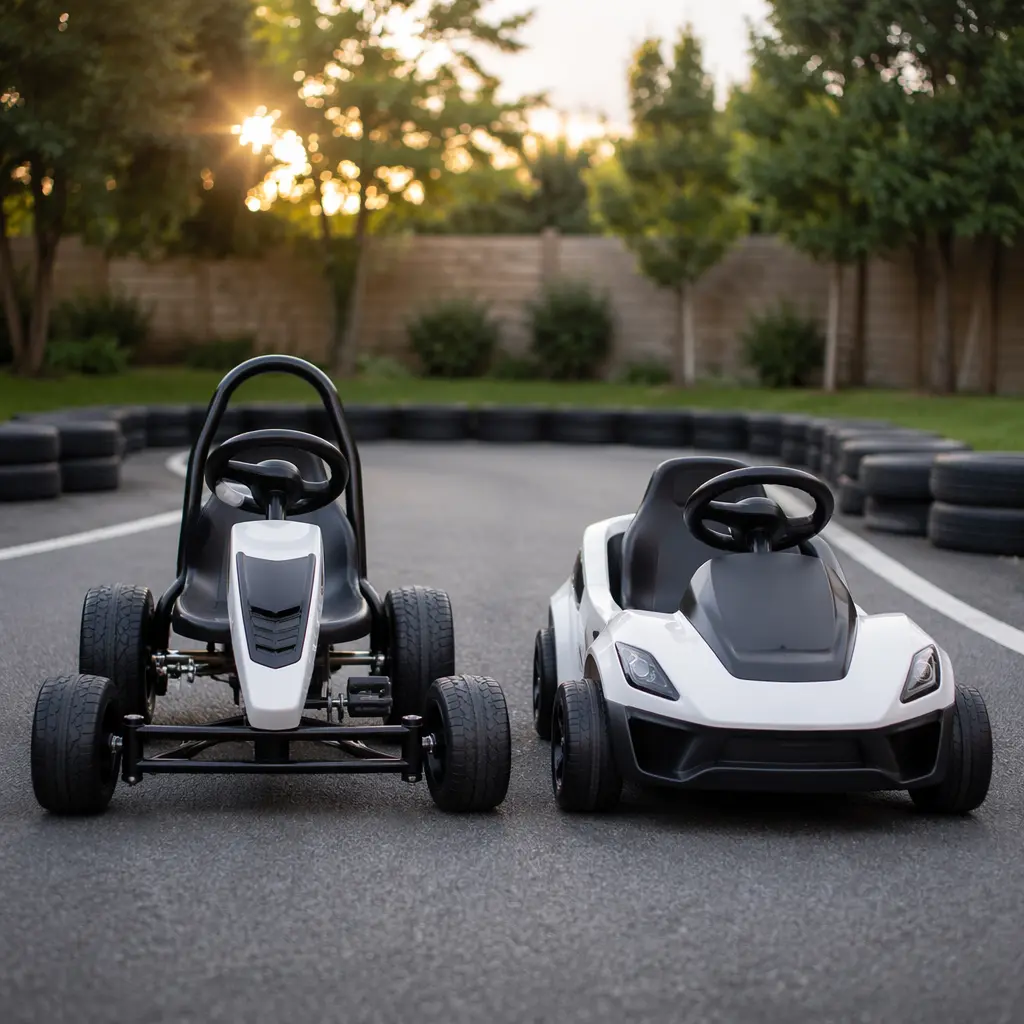
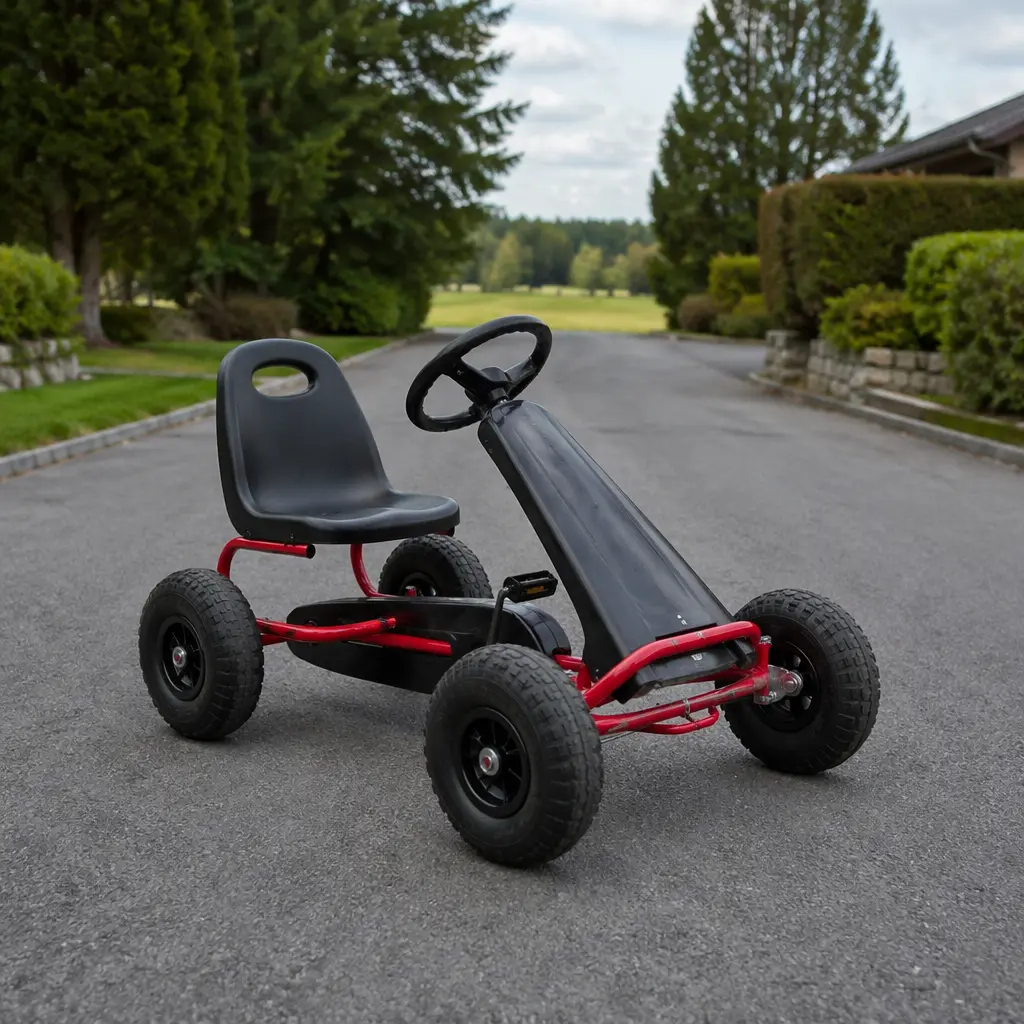
Manual go-karts generally fall into pedal-powered or chain-driven styles. These rely on the rider’s strength and coordination, which can improve endurance and confidence over time. Because there is no motor, ride time is unlimited, and performance improves as kids get stronger and more skilled.
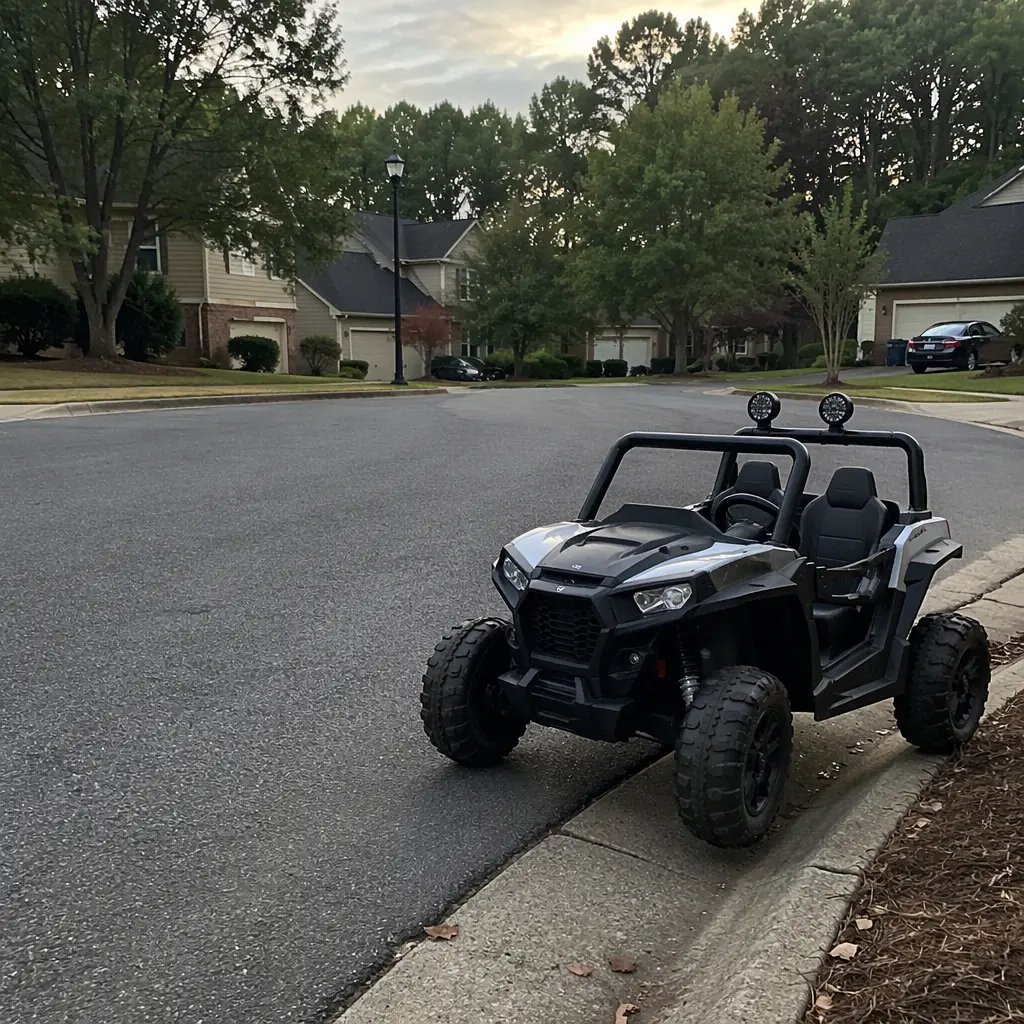
Electric ride-ons typically focus on consistent speed and simple controls. Many include adjustable speed settings, forward and reverse, and responsive braking. This makes them approachable and predictable, but ride time depends on battery life and charging habits. For some families, the convenience of push-button power outweighs the added upkeep.
Frequently asked questions
Which option builds more skills?
Manual go-karts tend to build more physical and mechanical skills. Kids learn how effort affects speed, how to handle corners, and how to manage momentum. Electric ride-ons still teach steering and awareness but rely less on physical input.
Are electric ride-ons safer because they are powered?
Safety depends more on speed limits, braking, and supervision than on power type. Electric ride-ons often have governed speeds, which can help, while manual go-karts usually top out based on the rider’s strength. Proper gear and clear riding rules matter most.
Which lasts longer as kids grow?
Manual go-karts often have longer appeal because performance scales with the child’s ability. Electric ride-ons can feel limiting once kids crave more speed or longer sessions, especially if battery capacity becomes a constraint.
What about maintenance and upkeep?
Manual options usually require basic checks like tightening bolts or lubricating chains. Electric ride-ons add battery care, charging time, and eventual battery replacement. Families who prefer low maintenance often lean manual.
Is one better for limited space?
Electric ride-ons can be easier to manage in smaller areas due to predictable speeds. Manual go-karts may need more room for comfortable pedaling and turning, especially as kids gain confidence.
Choosing between a manual go-kart and an electric ride-on comes down to how your child likes to play and learn. If they enjoy physical challenges and long-term skill growth, manual may be the better fit. If they prefer straightforward fun with minimal effort, electric can deliver. Either way, matching the ride to your child’s maturity and your available space helps ensure it stays a favorite, not a phase.