AI Homework Robots for Kids 9–12: What Parents Should Check
A parent-focused guide to AI homework robots for ages 9–12, covering supervision, privacy, hallucination risks, subscriptions, offline use and whether chat features genuinely support learning.
Compare prices and availability
Check current prices and availability for this guide on eBay.
As an eBay Partner, we may be compensated if you make a purchase.
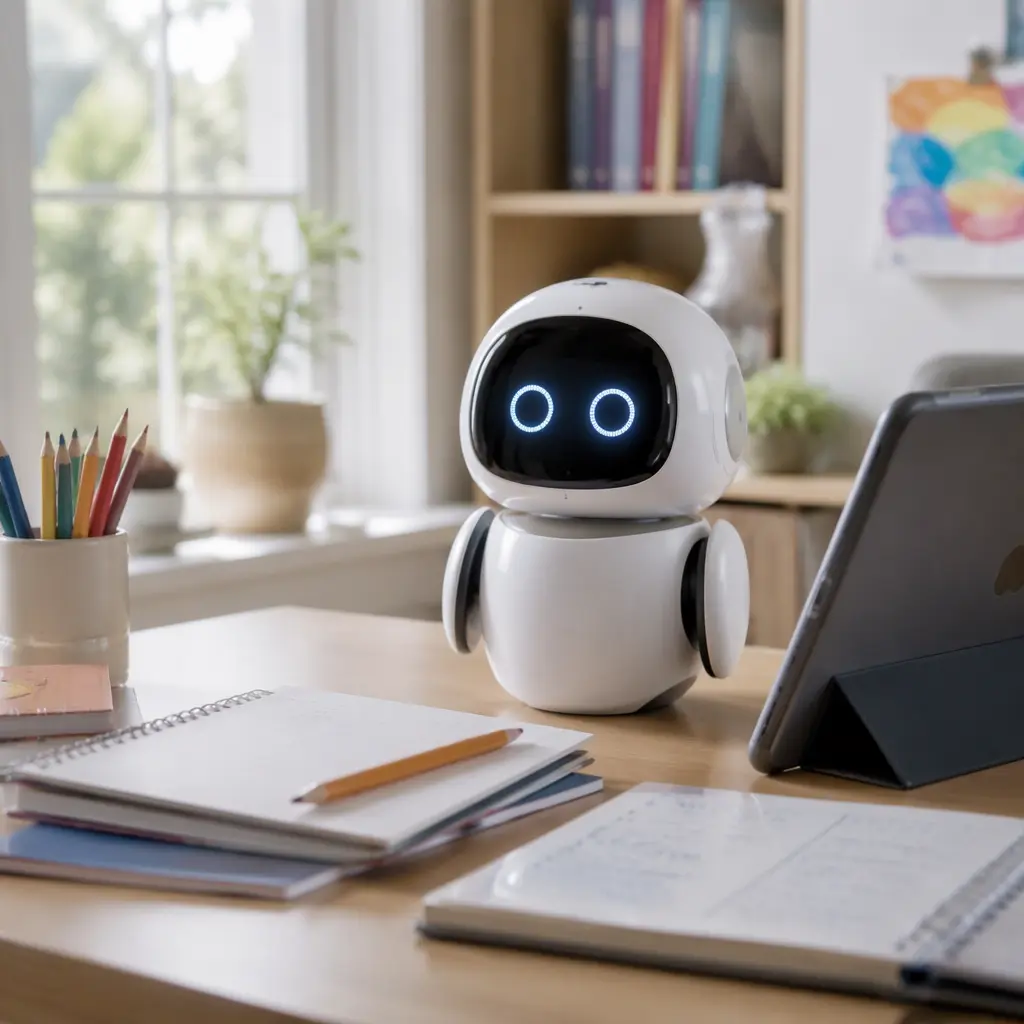
AI homework robots aimed at children ages 9–12 sit somewhere between educational toys, smart speakers and study apps. Some focus on answering questions through a chatbot interface, while others combine cameras, microphones or simple movement features with homework help and quizzes. The main buying decision is not whether the robot feels futuristic, but whether the connected features improve learning enough to justify the supervision, privacy considerations and ongoing app dependence. For this age group, the strongest options usually support curiosity, explain steps clearly and encourage independent thinking rather than simply generating finished answers.
What to look for
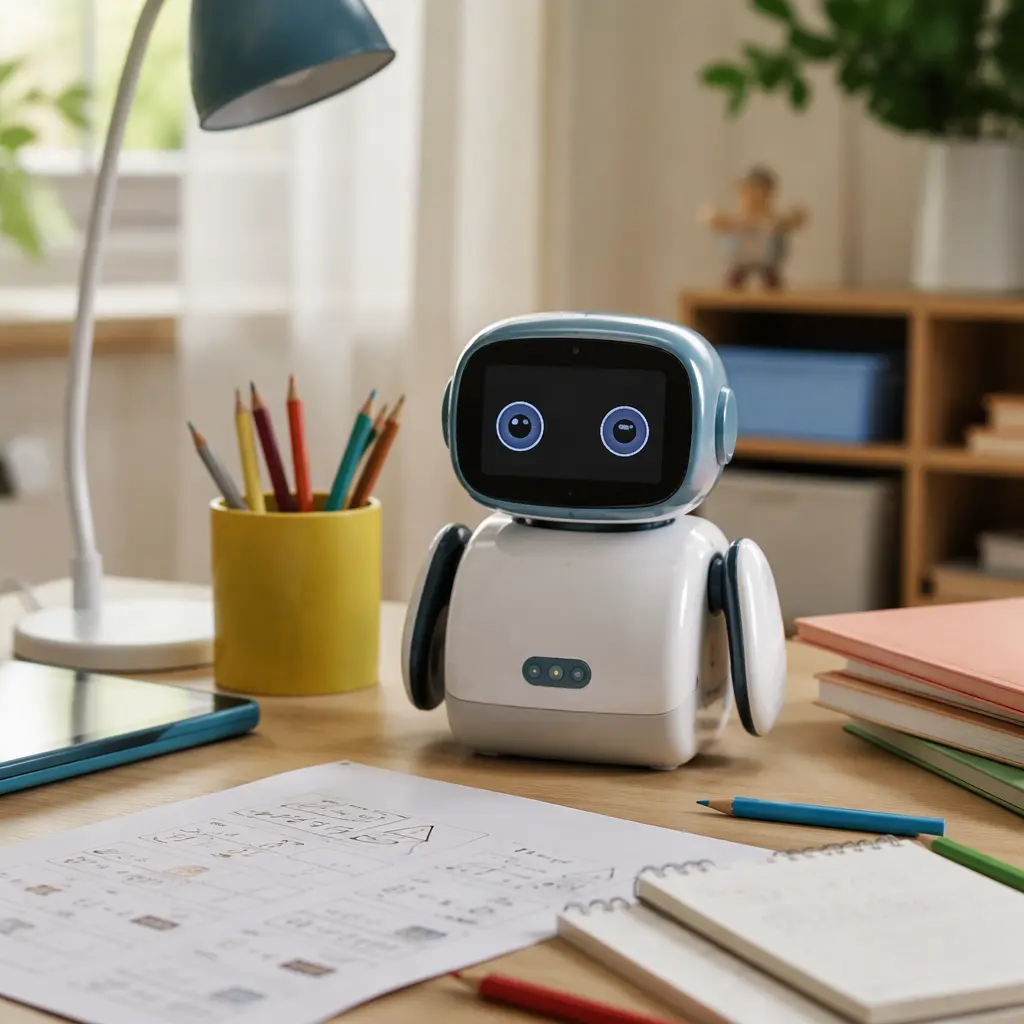
Many products marketed as AI homework robots use very different technology behind the scenes. Some rely on large language model chat systems connected to cloud services, while others use simpler scripted responses, voice commands or quiz systems. Parents should focus less on marketing terms and more on how the device handles learning tasks, what information it collects and how much oversight it requires during daily use.
- Check whether the robot requires a constant internet connection or still offers useful offline activities.
- Look for clear parental controls, including account management, chat history access and content filtering.
- Find out whether the robot stores voice recordings, images or conversation data in the cloud.
- Consider whether the subscription model limits core features through credits, locked lessons or premium AI responses.
- Assess how often the system may produce incorrect answers or fabricated information, sometimes called hallucinations.
- See whether the robot explains reasoning step by step instead of only giving final answers.
- Think about practical household factors including microphone sensitivity, speaker volume and battery charging needs.
- Check device compatibility if the robot depends on a phone or tablet app for setup and updates.
- Consider support life and regional availability because some cloud-based toys lose features when servers close or apps stop receiving updates.
Age suitability
Children ages 9–12 are often capable of using AI study tools independently for short periods, but most still need active guidance when evaluating answers. This age range is old enough to ask detailed questions and experiment with prompts, yet many children cannot reliably spot inaccurate information generated confidently by AI systems. A child who already enjoys reading instructions, solving puzzles or researching topics may benefit more from an AI homework robot than a child who mainly wants entertainment or fast answers. Families looking for fully screen-free educational play may also find these products less satisfying because even robot-style devices usually depend heavily on apps, accounts or cloud chat systems.
Options compared
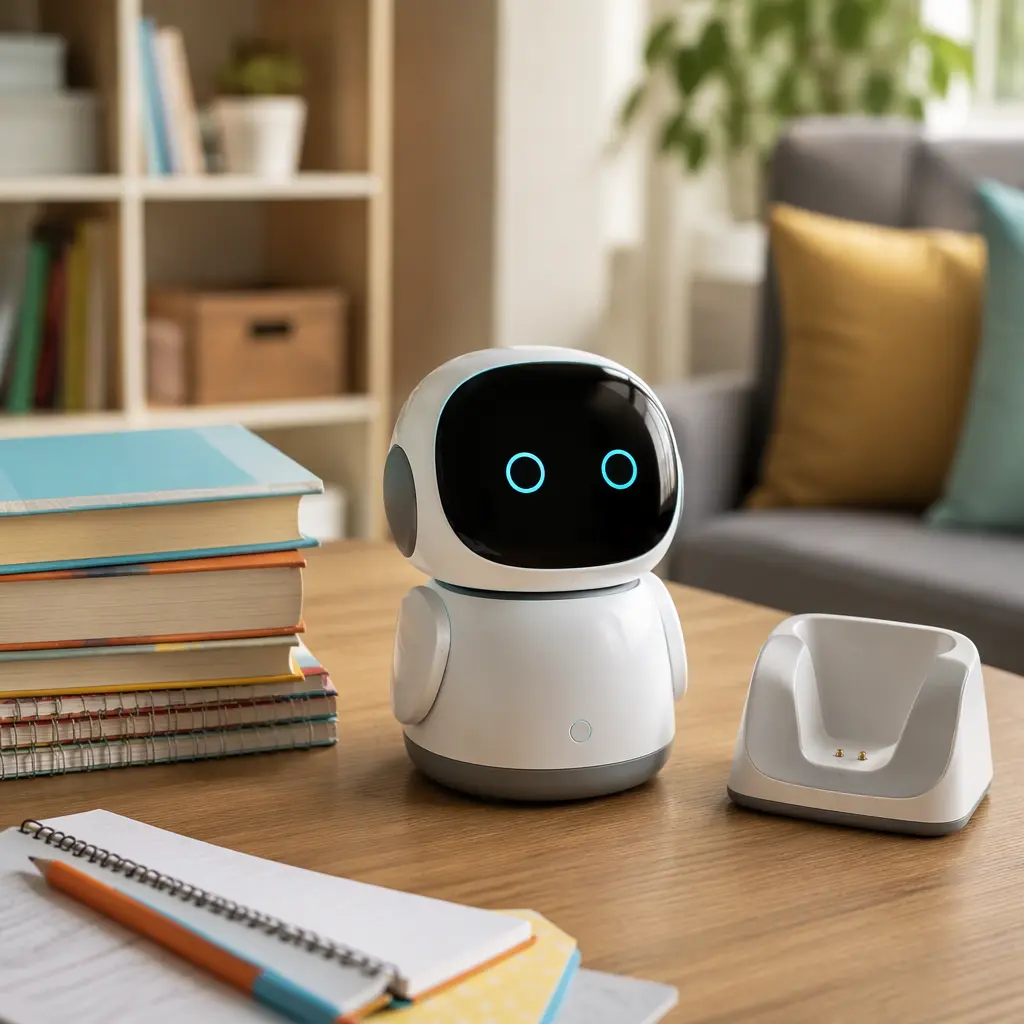
The simplest category includes voice-assistant-style robots that answer factual questions, run quizzes and guide basic educational games. These can work well for children who enjoy conversational learning, but they often provide shallow explanations and may rely heavily on cloud processing. If internet access drops or the company reduces support, functionality can shrink quickly. Parents who value low maintenance may prefer these simpler devices because setup is usually easier than with coding-focused robotics kits.
More advanced AI homework robots combine chat systems with cameras, expressive faces or interactive movement. The added hardware may increase engagement for some children, especially reluctant learners, but it also raises practical concerns. Microphones and cameras create additional privacy considerations, and animated interactions can blur the line between educational guidance and entertainment. Some products encourage open-ended discussion and brainstorming, which may help with writing prompts or science questions, while others mainly package standard chatbot functions inside a toy-like shell.
- Chat-focused AI robots suit curious children who enjoy asking follow-up questions and discussing school topics.
- Coding and robotics hybrids fit children interested in STEM projects, troubleshooting and hands-on building.
- Quiz and tutoring robots may help with repetition and revision but can feel limited once novelty wears off.
- Subscription-heavy systems may frustrate families who want predictable long-term costs.
- Robots with strong offline modes suit households limiting internet time or managing unreliable Wi-Fi.
- Highly animated companion-style robots may distract children who already struggle to stay focused during homework.
Frequently asked questions
Do AI homework robots actually improve learning?
They can support learning when used as guided study tools rather than answer machines. Products that explain reasoning, encourage questions and provide practice activities are generally more educational than systems focused on quick homework completion. Outcomes also depend heavily on supervision and how children use the tool.
What are hallucinations in AI toys?
Hallucinations are incorrect or invented answers presented confidently by an AI system. A robot may provide inaccurate historical facts, flawed math explanations or fake citations that sound believable. Children in the 9–12 age range often need help checking whether information is trustworthy.
Are microphones and cameras necessary?
Not always. Voice interaction can make educational tools feel more natural, especially for younger children or reluctant readers, but cameras and always-listening microphones increase privacy concerns. Some families may prefer app-based systems with limited sensor use or hardware mute controls.
Can these robots work without subscriptions?
Some can, but features may become limited over time. Manufacturers sometimes place advanced AI conversations, lesson libraries or homework support behind monthly plans or usage credits. Checking what remains available after setup is important before buying.
Are AI homework robots better than regular educational toys?
That depends on the goal. Traditional educational toys often provide more durable, screen-light play and fewer distractions. AI robots may add value for children who enjoy interactive discussion, adaptive quizzes or guided explanations, but they usually require more supervision and technical maintenance.
For most families, the best approach is to treat AI homework robots as optional learning companions rather than academic replacements. A strong product should encourage questioning, problem-solving and curiosity without demanding constant subscriptions or collecting unnecessary personal data. Parents comparing options should prioritize transparency, offline usefulness and realistic educational value over novelty features alone.