Connected STEM Kits With Less App Dependence
A parent-focused guide to connected STEM kits for ages 9–12 that still work well without constant app updates, subscriptions or cloud features.
Compare prices and availability
Check current prices and availability for this guide on eBay.
As an eBay Partner, we may be compensated if you make a purchase.
Connected STEM kits can make coding, electronics and engineering more approachable for children aged 9–12, but some rely heavily on apps, accounts and cloud services that may not last as long as the hardware itself. Parents shopping in this category often want a balance: interactive features that genuinely help learning without turning the toy into another device that stops working after a discontinued update. The most durable choices usually combine physical building or experimentation with software that can run locally, continue offline or still offer useful play even if the connected features become limited later.
What to look for
The biggest difference between connected STEM kits is how much of the experience depends on an app or online service. Some kits only use a phone or tablet for optional tutorials, while others require accounts, internet access or ongoing subscriptions for core functions. For long-term usability, it helps to focus on products that still provide meaningful play if the app changes or support eventually ends. Physical quality matters too. A sturdy robot, electronics kit or programmable building set may stay useful for years if the software side remains simple and stable.
- Look for offline modes or downloadable lessons that do not require constant internet access.
- Check whether the kit works with standard coding languages such as Scratch-style blocks or Python instead of proprietary systems only.
- Prefer kits with physical controls, onboard buttons or screens so children can experiment without always needing another device.
- Review device compatibility carefully, especially for older family tablets or Chromebooks.
- See whether the manufacturer describes parental controls, data collection and microphone or camera use clearly.
- Consider storage needs. Robotics and electronics kits often include many small components.
- Rechargeable hardware can reduce battery costs, but replaceable batteries may be simpler for occasional use.
- Avoid kits that lock advanced features behind recurring subscriptions unless ongoing lessons are the main goal.
Age suitability
For ages 9–12, the strongest STEM kits usually move beyond simple cause-and-effect toys and introduce open-ended problem solving. Children in this range can often handle beginner coding concepts, circuit design, robotics logic and engineering challenges with limited adult help after setup. However, reading level and patience still matter. Kits with heavy calibration steps, unreliable Bluetooth pairing or account setup may frustrate children who want immediate hands-on experimentation. Families with limited screen time policies may prefer systems where the connected device acts more like a setup tool than the main activity. Children who already enjoy Minecraft, LEGO building, crafting or puzzle games often adapt well to modular STEM systems that encourage iterative experimentation rather than fixed outcomes.
Options compared
Coding robots are often the easiest entry point for this age group because the connection between code and movement is immediate. The better long-term options store programs directly on the robot or controller so children can continue using them offline after setup. Some robots also support drag-and-drop coding in a browser instead of requiring a frequently updated mobile app. These suit children who enjoy experimentation and visual feedback. They may be less appealing for children who dislike troubleshooting wireless connections or firmware updates.
Electronics and circuit kits tend to age well because the physical components remain useful even if companion software changes. Some connected versions add app-guided experiments, sensors or programmable microcontrollers. These are often a good fit for children interested in engineering, inventing or science fair projects. Parents should check whether projects can still be completed from printed guides or onboard instructions instead of app-only tutorials. Modular building systems that combine coding and construction can encourage longer play sessions, but large kits may require significant storage space and table space.
- Microcontroller kits: Strong long-term learning potential, especially if they support standard coding tools and USB connections rather than app-only control.
- Coding robots: Engaging and approachable, but check whether cloud accounts are mandatory for programming features.
- Connected science kits: Useful for guided experiments, though some become limited if online lesson libraries disappear.
- Smart building systems: Good for creative children who enjoy engineering challenges, but setup time and storage needs are higher.
- Screen-light hybrid kits: Often the best compromise for families wanting connected features without constant screen dependence.
Frequently asked questions
Do connected STEM kits still work if the app is removed later?
It depends on the design. Some kits store projects directly on the hardware or use open coding tools that continue working independently. Others depend entirely on proprietary apps or cloud servers. Parents concerned about longevity should prioritize kits with offline play, downloadable software or browser-based coding support.
Are subscriptions common in STEM toys?
Some connected STEM products offer optional subscriptions for extra lessons, coding challenges or project libraries. Others require recurring access for major features. Before buying, check whether the included experience is complete enough without additional payments and whether educational content can be accessed offline.
What devices are usually needed?
Many kits support iPads, Android tablets, Chromebooks or Windows laptops, but compatibility varies widely. Browser-based systems are often easier to maintain over time than app-only products tied to specific operating system versions. Families sharing one household device may also prefer kits that allow offline use after initial setup.
Are these toys noisy or messy?
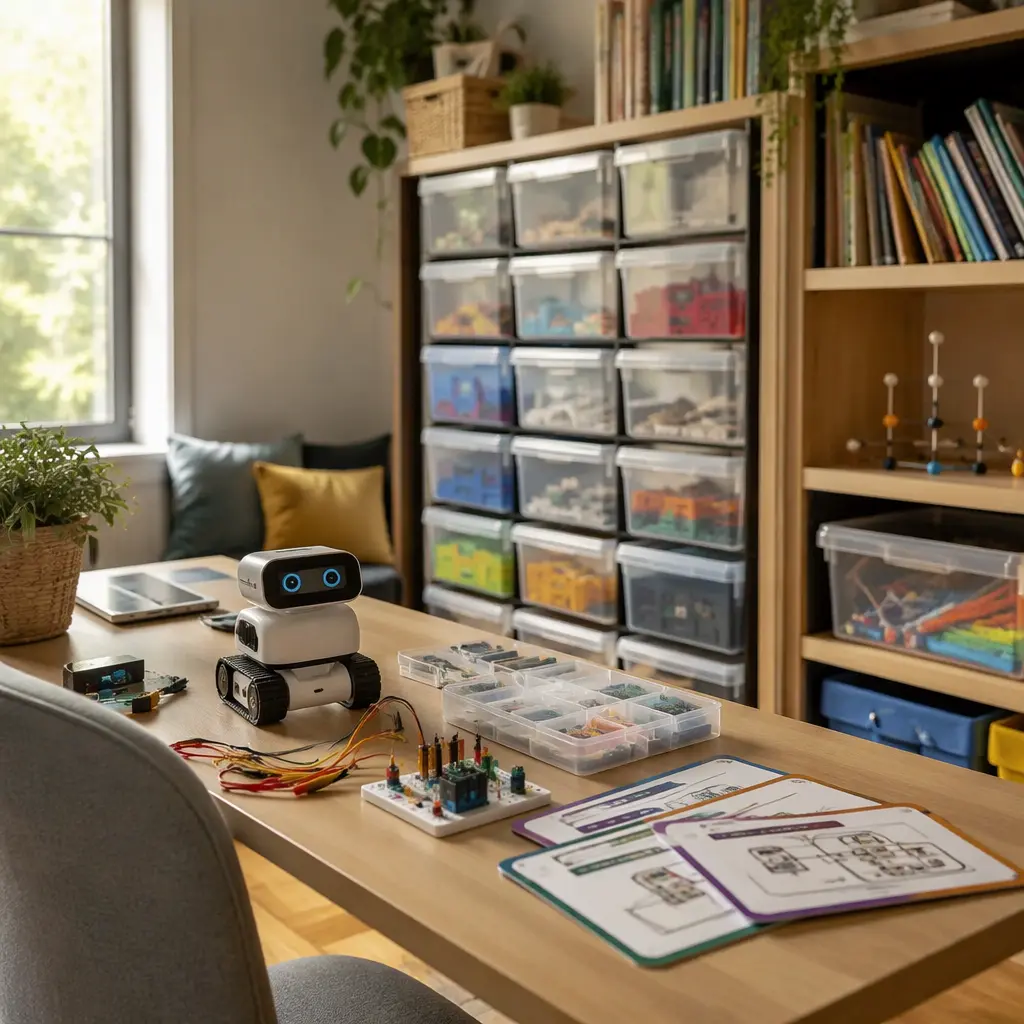
Most connected STEM kits are quieter than electronic gaming toys, although robotics kits with motors can create mechanical noise on hard floors. Electronics and engineering kits may involve many small parts, wires and building pieces, so organized storage containers are helpful. Dedicated table space can make longer projects easier to manage.
What makes a connected STEM toy genuinely educational?
The strongest kits encourage experimentation, debugging and creative problem solving instead of simply following app prompts. Open-ended systems that let children modify projects, test ideas and gradually increase complexity tend to provide more lasting educational value than heavily scripted experiences.
A connected STEM kit does not need constant updates or cloud features to remain useful. For many families, the most practical choice is hardware that stands on its own while using apps only as a supplement. Durable components, flexible coding options and offline functionality generally matter more for long-term satisfaction than flashy connected features that may not last beyond a few software cycles.