Connetix Ball Runs: How magnetic tiles became engineering toys
Connetix Ball Runs turned open-ended magnetic tile play into a hands-on engineering system, blending construction, motion, and problem-solving for kids and adults alike.
Compare prices and availability
Check current prices and availability for this guide on eBay.
As an eBay Partner, we may be compensated if you make a purchase.
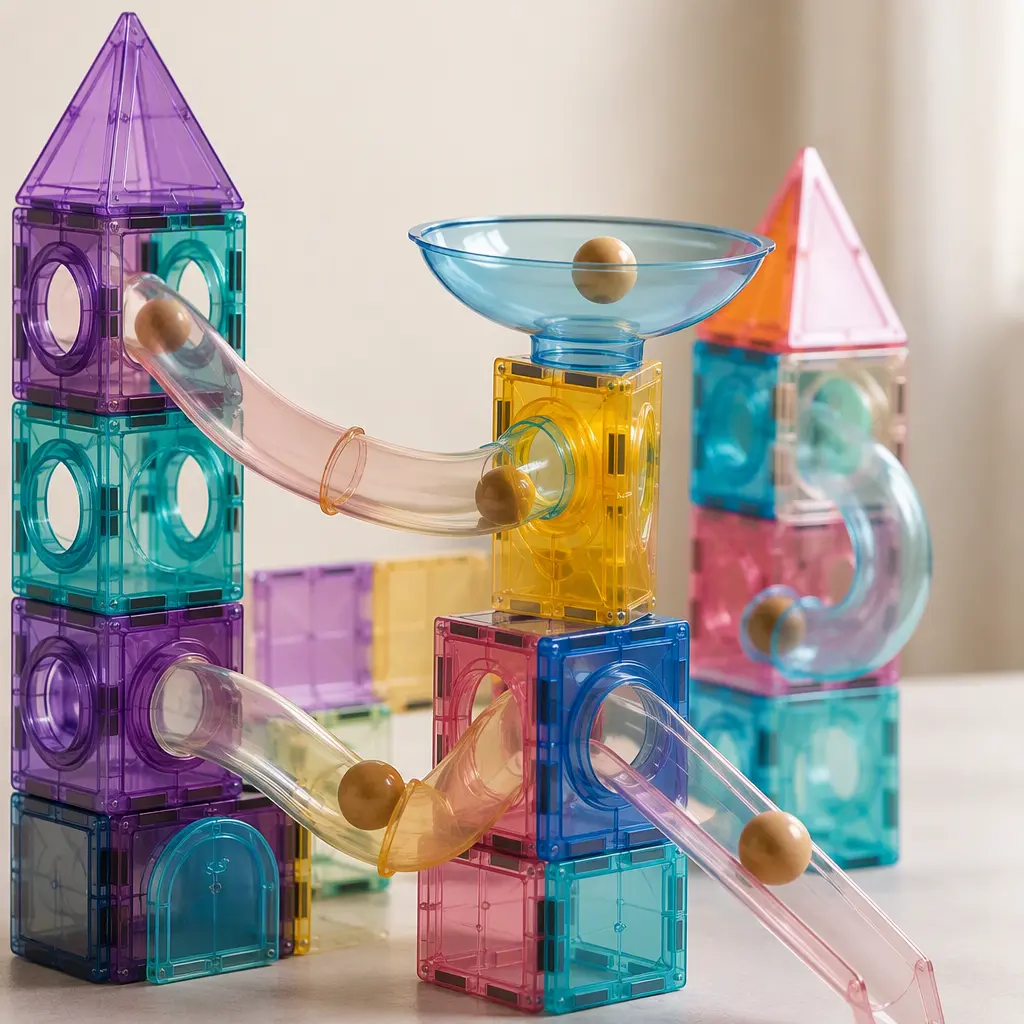
Magnetic tiles were already a familiar sight in playrooms before ball run systems arrived, but Connetix Ball Runs shifted the category in a noticeable way. Instead of simply stacking colorful translucent shapes into castles or towers, children could suddenly build working pathways where gravity, speed, and structure all mattered. The result was a toy that sat somewhere between classic marble runs, architectural building kits, and early engineering exercises. Since their introduction in 2021, Connetix Ball Runs have become one of the most talked-about extensions of the magnetic tile trend because they encourage experimentation as much as construction.
Where it came from
Connetix emerged from Australia during a period when magnetic construction toys were already well established, but many sets focused mainly on flat geometric building. The company leaned heavily into open-ended play, using stronger magnets and clear, prism-like plastic pieces that cast colored light patterns during play. Parents and educators quickly adopted the tiles for everything from basic shape recognition to large collaborative builds.
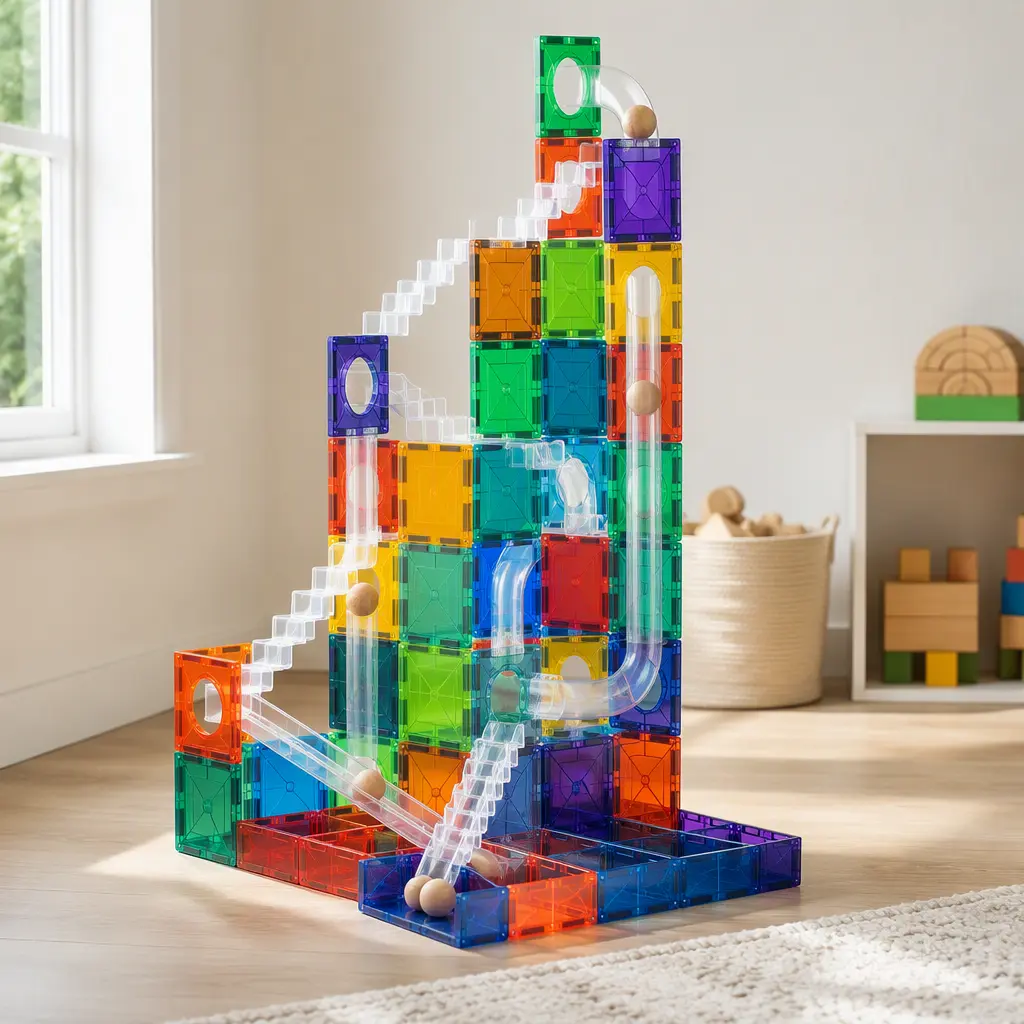
The Ball Run range, launched in 2021, expanded the idea by adding motion. Instead of building static structures, children could create functioning systems with tubes, bowls, ramps, and intersections. The concept itself was not new; marble runs have existed for decades. What made the Connetix approach stand out was the modular connection between magnetic architecture and moving parts. Children could redesign paths endlessly, experimenting with gravity and stability while still using the same tile ecosystem they already knew.
Why it works
The appeal of Connetix Ball Runs comes from the balance between freedom and constraint. The magnetic tiles are easy enough for younger children to snap together quickly, but the ball run components introduce real engineering challenges. A tower that looks stable may wobble once moving balls add vibration. A pathway that seems correct may slow the ball too much or create jams at intersections. Kids naturally begin adjusting angles, reinforcing walls, and redesigning layouts through trial and error.
Unlike some construction toys that depend on strict instructions, ball run systems reward improvisation. There is no single correct outcome. A child can build a compact spiral tower one day and a sprawling chain-reaction course the next. The transparent pieces also help children see movement clearly, making cause-and-effect relationships easier to understand. That visual feedback is a major reason educators often place magnetic tile ball runs into STEM-focused classrooms and maker spaces.
- Open-ended construction without fixed outcomes
- Clear tubes and translucent tiles that make motion easy to follow
- Strong magnetic connections that support taller builds
- Mix of architecture, physics, and problem-solving
- Expandable systems that work with existing magnetic tile collections
Who it's for
Connetix Ball Runs are generally approachable for preschool and elementary-age children, though younger builders often need help stabilizing taller structures. Older children tend to get more deeply involved with planning complex pathways, experimenting with speed, or building symmetrical designs. The toy also has unusual staying power with adults. Parents frequently end up participating because collaborative building naturally emerges once structures become larger and more ambitious. In classrooms, the sets are commonly used for cooperative problem-solving activities where groups test and refine designs together.
Variants and what to look for today
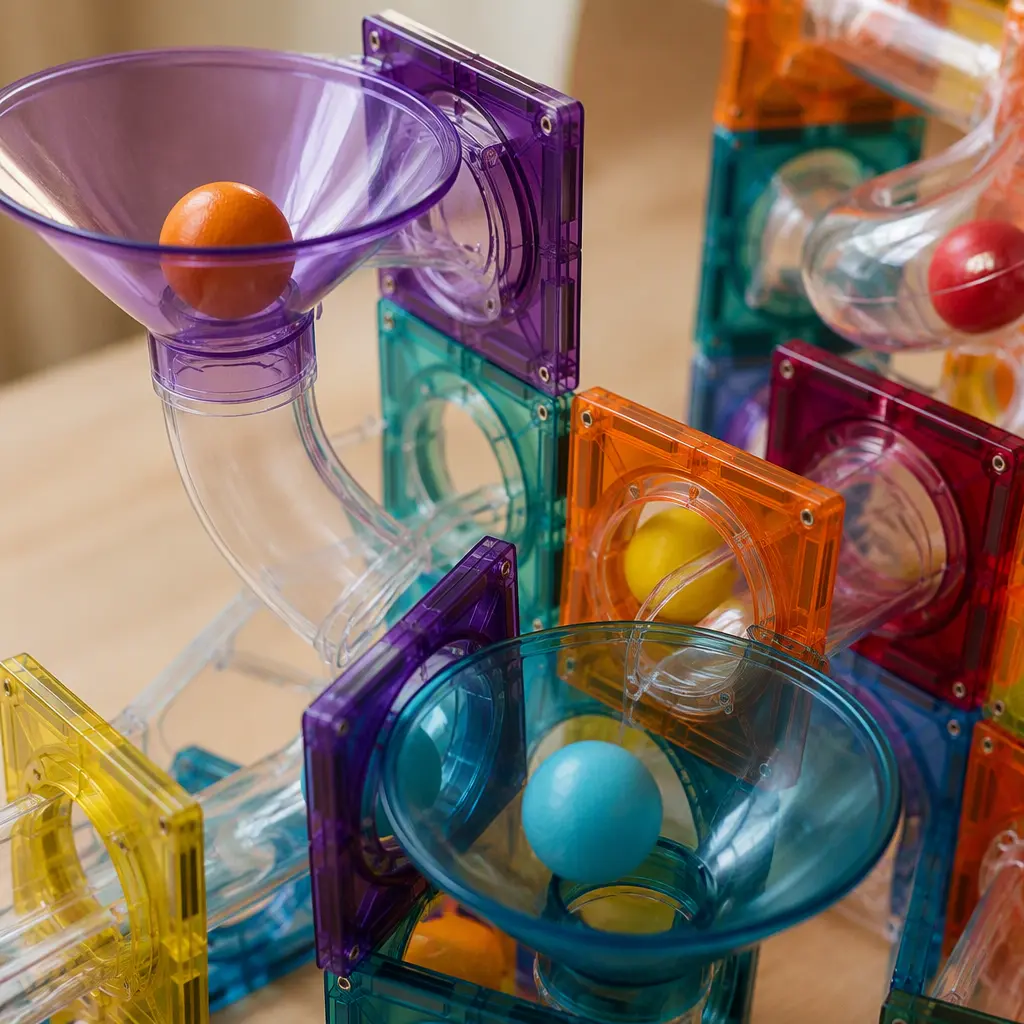
The modern magnetic tile market is crowded, and many brands now offer marble-run style accessories. Connetix remains one of the better-known names because of its strong magnets, clear plastic construction, and compatibility across its own tile ecosystem. Ball run sets are typically sold as standalone kits or as expansion packs intended to combine with larger tile collections.
When shopping today, buyers should pay attention to compatibility and material quality. Lower-cost magnetic tiles can vary widely in magnet strength and durability. Weak connections become especially noticeable in tall ball runs because moving balls create stress on joints and towers. Some generic sets may also use cloudy plastic that reduces the visual appeal of the translucent design. Families who already own magnetic tiles from another brand often check whether sizing aligns before mixing systems.
- Starter sets for smaller tabletop builds
- Expansion packs with extra tubes and funnels
- Pastel and rainbow color styles
- Large-piece collections for classroom or group use
- Storage-friendly sets with stackable components
Frequently asked questions
Are Connetix Ball Runs educational?
They are often used as educational toys because they naturally introduce concepts like gravity, momentum, structural stability, and sequencing. Much of the learning happens through experimentation rather than formal instruction.
Can they be combined with regular magnetic tiles?
Yes. The ball run pieces are designed to work with standard magnetic tile structures, which is part of their appeal. Many families begin with basic tiles and later add motion-focused components.
Do adults enjoy building them too?
Surprisingly often, yes. Large ball run systems can become intricate collaborative projects, especially when builders attempt loops, branching pathways, or tall freestanding towers. The construction process can feel closer to model-building or kinetic sculpture than traditional children's toys.
How durable are magnetic ball runs?
Higher-quality systems tend to hold up well to repeated assembly and disassembly. The stress points are usually the magnetic seams and tube connectors, so stronger magnets and thicker plastic generally make a noticeable difference over time.
Connetix Ball Runs arrived at a moment when many parents were looking for toys that balanced creativity with meaningful hands-on engagement. By turning magnetic tile construction into something active and kinetic, the system expanded a familiar category into a more engineering-focused experience. That mix of colorful design, experimentation, and replay value explains why the toy has become a modern staple in homes, classrooms, and play spaces.