Cuisenaire Rods: The Color-Coded Math Tool That Endured
Invented in the early 1950s, Cuisenaire Rods turned arithmetic into a hands-on visual system. Their simple color-coded design still shapes classrooms, tutoring, and home learning today.
Compare prices and availability
Check current prices and availability for this guide on eBay.
As an eBay Partner, we may be compensated if you make a purchase.
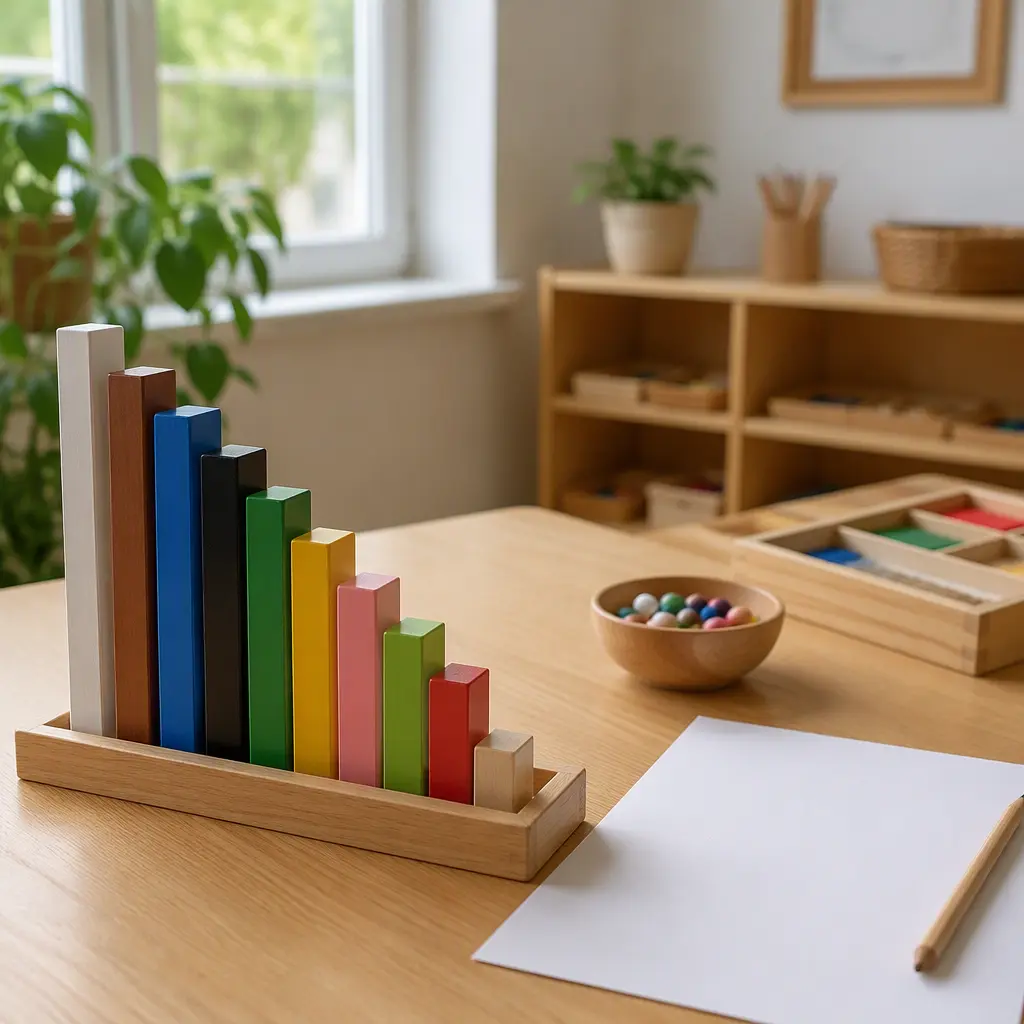
Cuisenaire Rods are one of those educational tools that can look almost too simple to matter. They are just small rectangular rods in different lengths and colors, originally designed to help children understand numbers through touch and comparison instead of memorization alone. Yet over decades, these rods became a quiet fixture in classrooms around the world, influencing how teachers approached arithmetic, fractions, ratios, and even early algebra. Long before apps and interactive screens became common in schools, Cuisenaire Rods offered something direct and physical: children could literally hold mathematical relationships in their hands.
Where it came from
The rods were developed by Belgian primary school teacher Georges Cuisenaire, who began refining the idea in the 1940s before wider publication and international distribution in the early 1950s. Cuisenaire was searching for a better way to teach arithmetic to young children who struggled with abstract symbols on a page. His approach emphasized discovery learning: instead of telling students that numbers relate in specific ways, he wanted them to see and test those relationships for themselves.
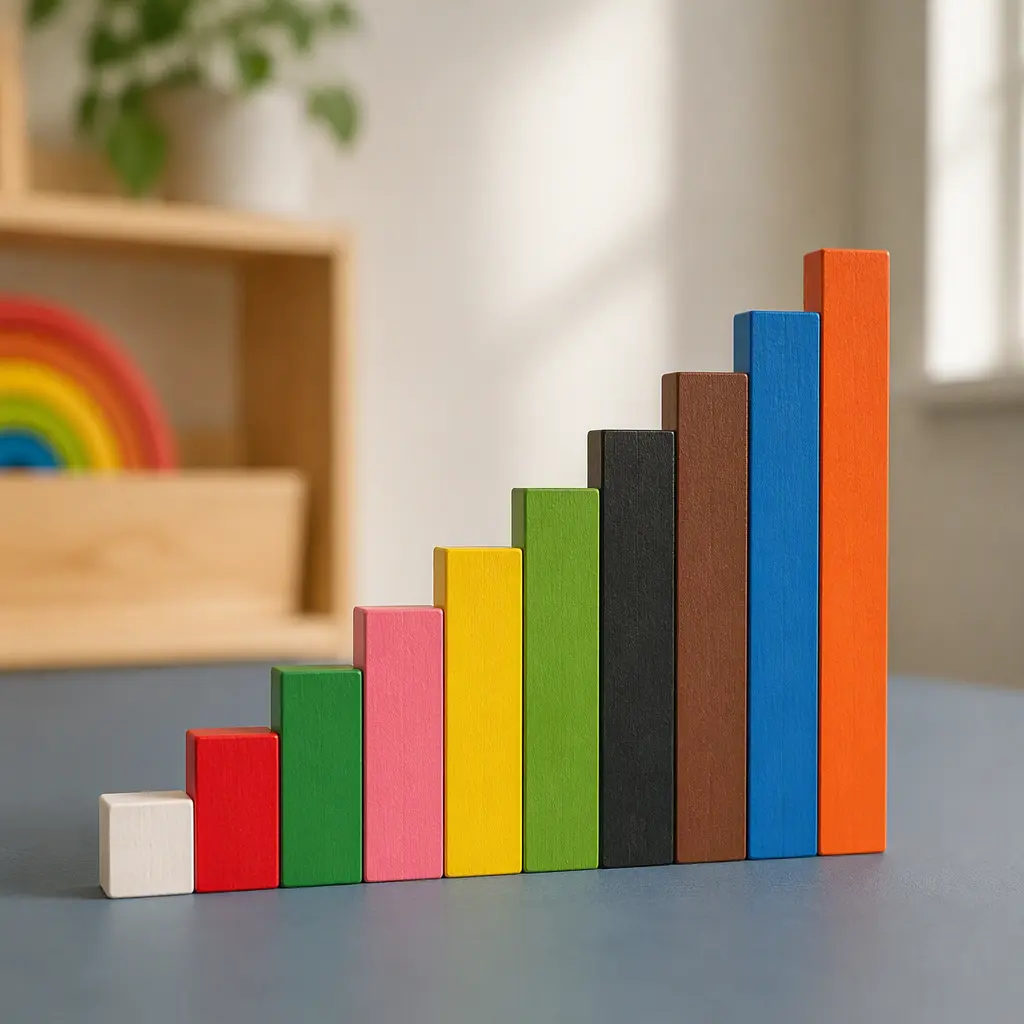
British educator and mathematician Caleb Gattegno helped spread the rods internationally after recognizing their classroom potential. Gattegno promoted them not just as counting aids but as tools for deeper mathematical understanding. The rods eventually appeared in schools across Europe, North America, and beyond, often packaged in wooden boxes with sets of ten color-coded lengths. The shortest rod represented one unit, while progressively longer rods represented larger values. The consistency of the color system allowed children to quickly recognize patterns without relying entirely on printed numerals.
Why it works
The strength of Cuisenaire Rods comes from how many concepts they communicate at once. A child does not only count with them. The rods also show proportion, equivalence, sequencing, addition, subtraction, multiplication, and fractions in a visual and tactile way. Two shorter rods can physically match the length of a longer one. A fraction becomes visible instead of symbolic. Patterns emerge naturally through repeated handling.
This kind of physical interaction matters because early math learning is often tied to spatial reasoning and sensory experience. The rods encourage experimentation without making mistakes feel permanent. Children can rearrange pieces, test combinations, and discover numerical relationships independently. Teachers and parents also appreciate that the rods scale surprisingly well from preschool counting exercises to more advanced explorations of ratios and introductory algebraic thinking.
- Color-coded lengths make numerical relationships easy to spot
- Physical manipulation supports tactile and visual learners
- Useful for counting, fractions, ratios, and early algebra
- Open-ended design encourages experimentation and discovery
- Works in classrooms, tutoring sessions, and home learning environments
Who it's for
Cuisenaire Rods are most commonly introduced to children between preschool age and the later elementary years, but their appeal extends beyond early arithmetic. Tutors often use them with older students who need a more concrete understanding of fractions or proportional reasoning. Homeschooling families continue to adopt them because the rods do not depend on batteries, screens, or complicated instructions. Adults studying education also encounter them as an example of classic manipulative-based learning design. Their durability and simplicity have helped them survive multiple waves of changing classroom technology.
Variants and what to look for today
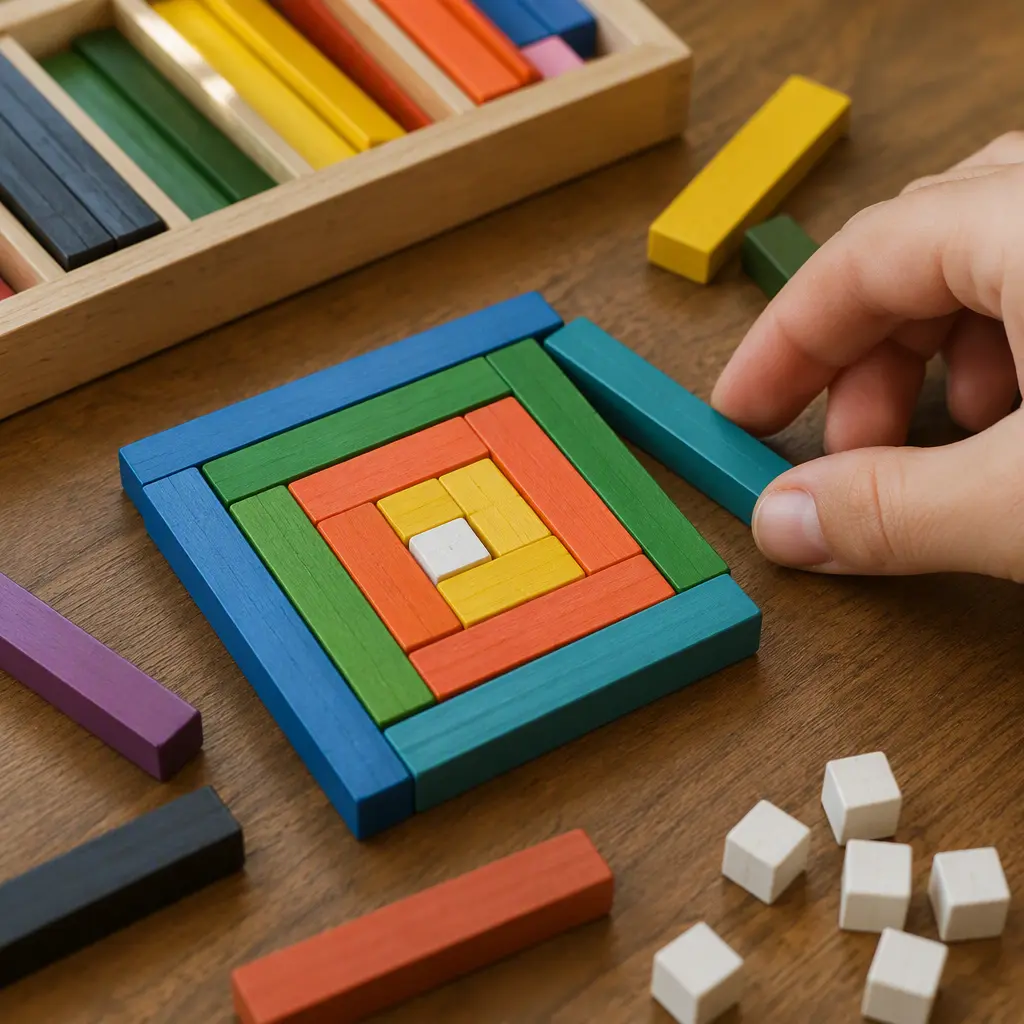
Modern versions of Cuisenaire-style rods are available in wood and plastic, with classroom-sized kits and smaller home sets both common. Wooden rods remain especially popular because of their weight and tactile feel, while plastic versions are often easier to clean and less expensive for larger groups. Most sets still follow the classic color-and-length system established decades ago, since consistency is important for instructional materials and lesson plans.
When shopping today, the biggest difference is usually build quality rather than functionality. Well-made rods have smooth edges, consistent sizing, and durable color finishes that withstand repeated handling. Some inexpensive imitation sets use inaccurate sizing or uneven coloring, which can interfere with the visual relationships that make the rods effective in the first place.
- Wooden sets offer a traditional tactile feel
- Plastic sets are lightweight and classroom-friendly
- Look for consistent sizing and clean edges
- Storage trays or compartment boxes help keep sets organized
- Large demonstration rods are available for group teaching
Frequently asked questions
Are Cuisenaire Rods still used in schools?
Yes. While teaching styles vary between schools and regions, Cuisenaire Rods remain widely used in elementary education, tutoring programs, and homeschooling. Many teachers continue to value hands-on manipulatives for building number sense.
Do children need instructions to use them?
Basic guidance helps, but part of the rods' appeal is their open-ended nature. Children often begin by stacking, sorting, and comparing lengths naturally before moving into structured math activities.
What subjects can they teach beyond arithmetic?
The rods are commonly used for fractions, multiplication, division, ratios, geometry patterns, and introductory algebra concepts. Some language teachers have also adapted them for sequencing and pattern exercises.
Are vintage sets collectible?
Older wooden classroom sets are collectible for some education historians and toy enthusiasts, especially those with original storage boxes and teaching materials. Many families, however, still buy vintage sets simply because they remain functional and durable decades later.
Cuisenaire Rods never depended on flashy branding or electronic features to stay relevant. Their endurance comes from a straightforward idea that still feels modern: people often understand concepts better when they can explore them physically. In an era filled with digital learning tools, these quiet little rods continue to prove that effective educational design does not always need to be complicated.