Luka AI Cube vs AI Reading Pens for Struggling Readers
A parent-focused comparison of Luka AI Cube and AI reading pens for ages 6–8, covering pronunciation support, independence, offline use, privacy, supervision and long-term practicality.
Compare prices and availability
Check current prices and availability for this guide on eBay.
As an eBay Partner, we may be compensated if you make a purchase.
Parents looking for extra reading support often end up comparing two different categories of connected learning toys: AI story companions such as the Luka AI Cube, and electronic reading pens designed to help children sound out words independently. Both aim to reduce frustration around reading practice, but they solve different problems. For children aged 6–8 who avoid reading because it feels difficult or tiring, the biggest differences usually come down to how much independence the toy encourages, whether it helps with pronunciation in the moment, and how useful it remains when internet access or apps are unavailable. The right choice depends less on novelty and more on the child's reading stage, attention span and willingness to practise without constant adult prompting.
What to look for
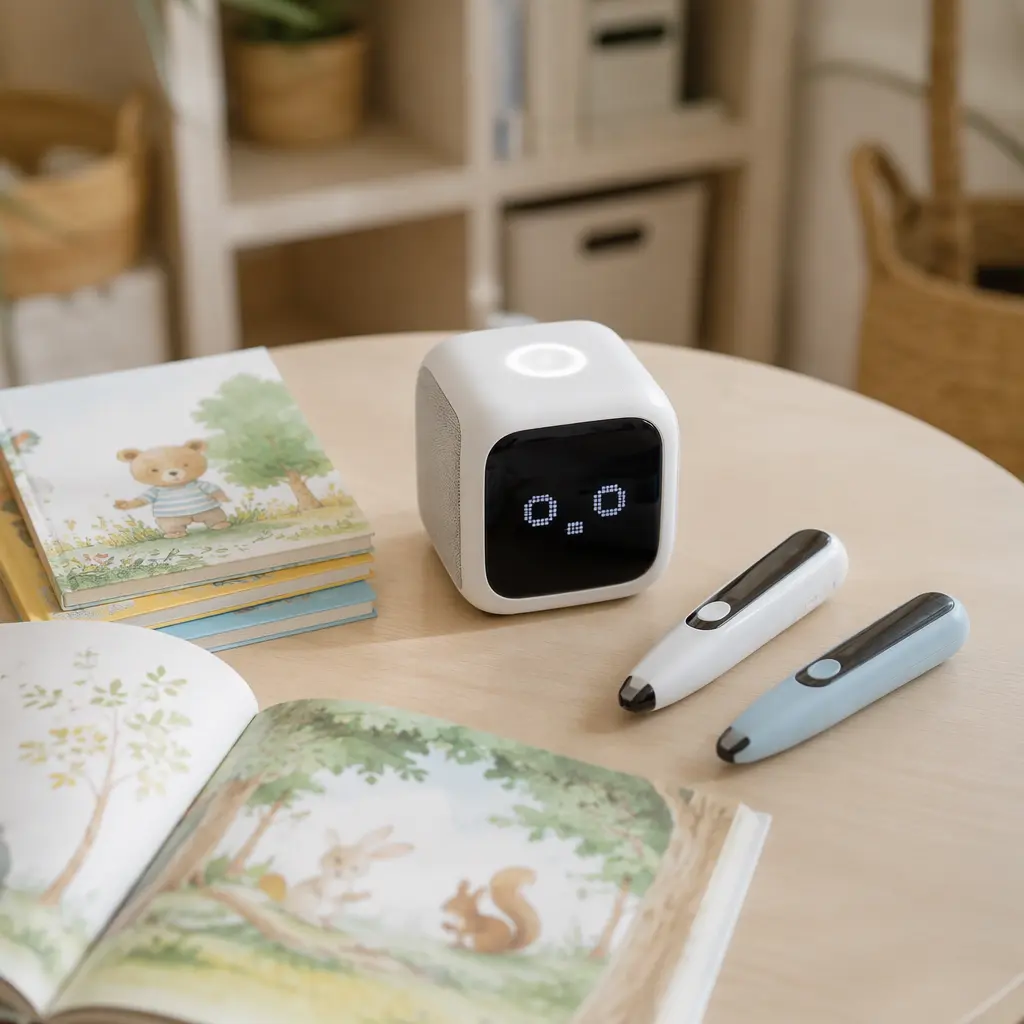
Connected reading toys vary widely in how they work. Some products mainly play back audio from compatible books, while others scan printed words and provide pronunciation or dictionary support. A toy described as AI-powered may rely heavily on cloud processing and app connections, or it may simply use speech recognition and audio matching. For struggling readers, practical details matter more than marketing language. Parents should pay close attention to whether the toy supports active reading skills or mainly provides entertainment through listening.
- Check whether the device works offline or loses key features without Wi‑Fi or a companion app.
- Look for clear pronunciation support that helps children decode unfamiliar words instead of only reading entire pages aloud.
- Consider book compatibility. Some systems require specific branded books, while reading pens may work across many printed materials.
- Review microphone and camera features carefully. Connected toys may collect voice data or usage information through companion apps.
- Think about supervision needs. Younger children may still need help pairing books, charging devices or navigating menus.
- Battery life and charging convenience matter for daily reading routines and travel use.
- Noise level can become an issue if audio playback is loud or repetitive in shared family spaces.
- Storage and durability are important for school bags and regular handling by younger children.
Age suitability
For ages 6–8, the best option depends on whether the child is learning foundational decoding skills or mainly needs confidence and reading stamina. Children who already recognise many common words but resist independent reading may respond well to an AI story companion that makes books feel interactive and less intimidating. These toys can reduce the pressure of reading aloud and encourage repeated exposure to stories. However, children still struggling to sound out words often benefit more from reading pens that give targeted pronunciation help while keeping the child engaged with the printed page itself. Some reading pens also support vocabulary building and phonics practice, which can be useful for children needing structured reinforcement. Families should also consider whether the child is easily distracted by gadgets. A highly interactive connected toy can sometimes shift attention away from reading and toward pressing buttons, replaying sounds or browsing features.
Options compared
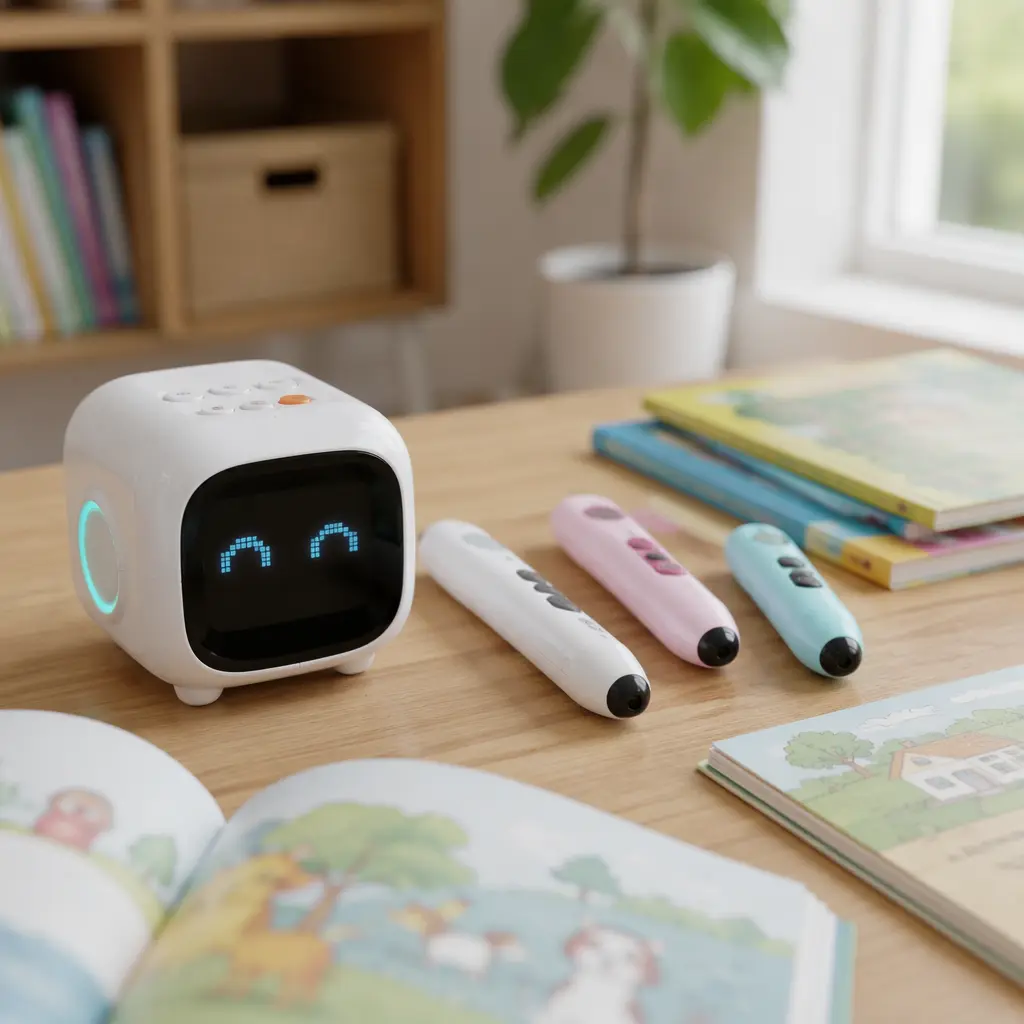
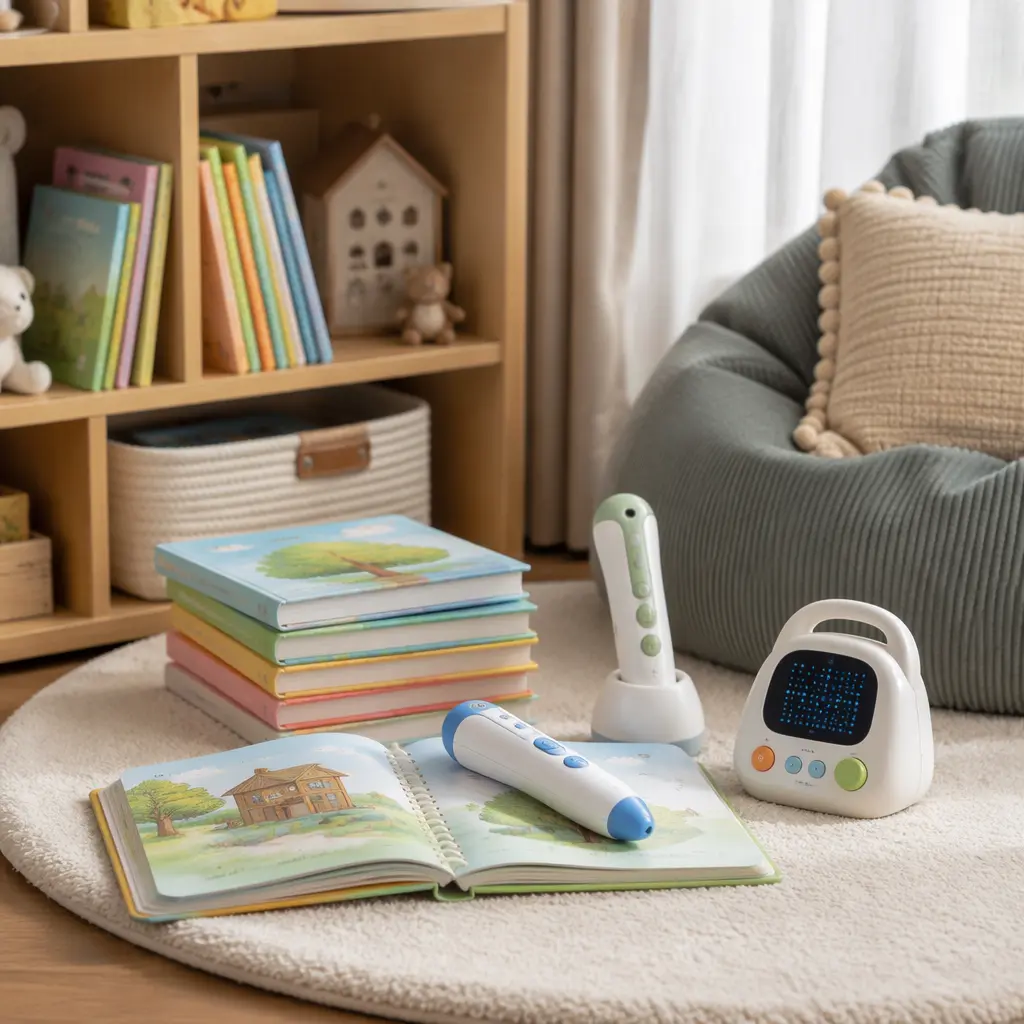
The Luka AI Cube category focuses on interactive listening and book engagement. Manufacturer descriptions for these products typically emphasise storytelling, conversational interaction and audio playback linked to compatible books. For reluctant readers, this can make reading time feel more approachable because the child can follow along while hearing expressive narration. The cube-style format is usually compact and easier to use independently than a tablet app. Some families also prefer that these devices avoid large screens entirely.
The trade-off is that AI story companions may provide less direct decoding support. If a child encounters an unfamiliar word in another book, the toy may not help unless the material is part of a supported library. Cloud-connected features can also create long-term uncertainty. App support, subscriptions, regional content availability and server dependence may affect how useful the toy remains over time. Parents concerned about microphones or connected data collection should review privacy policies carefully before enabling voice features.
AI reading pens usually take a more practical approach. Many scan printed words or symbols and play back pronunciation, definitions or sentence audio. This makes them especially useful for children who avoid reading because they become stuck frequently. Instead of waiting for an adult to help, the child can continue independently. Reading pens also tend to work across more materials, including school worksheets, library books or phonics cards, depending on compatibility. Some products marketed as AI pens are not truly conversational AI systems but scanning devices with audio databases and speech features.
The downsides are different. Reading pens can feel more like learning tools than playful companions, so some children may lose interest if reading already feels like work. They may also require careful positioning to scan text accurately, which can frustrate younger users. Audio quality and recognition accuracy vary between brands. Offline usefulness is often stronger than with cloud-dependent toys, but some advanced vocabulary or translation functions may still require apps or internet access. For families wanting a low-distraction homework aid with broad book compatibility, reading pens often provide the more flexible long-term option.
Frequently asked questions
Do AI reading toys actually teach children to read?
They can support reading practice, but they are not replacements for structured reading instruction. Story-focused AI toys mainly encourage listening and engagement, while reading pens are more helpful for practising pronunciation and decoding unfamiliar words. Children with persistent reading difficulties may still benefit from teacher guidance or specialist support.
Are reading pens useful without internet access?
Many reading pens keep their core scanning and audio playback features offline, which can make them practical for travel, classrooms or homes with limited connectivity. However, some updates, downloadable content or advanced language tools may still require an app or internet connection.
What connected features should parents check carefully?
Look at whether the toy includes microphones, companion apps, cloud accounts or voice recordings. Parents should review how data is stored, whether accounts are required for setup and whether features stop working if app support ends. Regional language support and customer support availability can also differ.
Which option is better for reluctant readers?
Children who mainly dislike sitting down with books may respond better to interactive story companions because they feel less like formal learning tools. Children who become frustrated by difficult words usually gain more practical support from reading pens that provide immediate pronunciation help during independent reading.
Can these toys replace screen time?
They can provide a more focused alternative to tablets for some families because most use audio and physical books rather than open-ended apps or videos. However, connected toys still rely on technology and should ideally be balanced with regular offline reading, conversation and free play.
For most struggling readers aged 6–8, the strongest buying decision comes down to whether the child needs motivation or decoding support. Luka-style AI story companions can make books feel inviting and interactive, especially for children resistant to reading routines. AI reading pens are usually the more practical choice for children who frequently get stuck on pronunciation and need help continuing independently. Parents looking for broader offline usefulness, school compatibility and lower dependence on apps often lean toward reading pens, while families prioritising engagement and storytelling may prefer the companion-style approach.