Luka AI Cube vs Tonies for Early Reading Support
A parent-focused comparison of Luka AI Cube and Tonies for ages 3–5, covering guided reading help, accents, offline use, subscriptions, supervision needs and everyday practicality.
Compare prices and availability
Check current prices and availability for this guide on eBay.
As an eBay Partner, we may be compensated if you make a purchase.
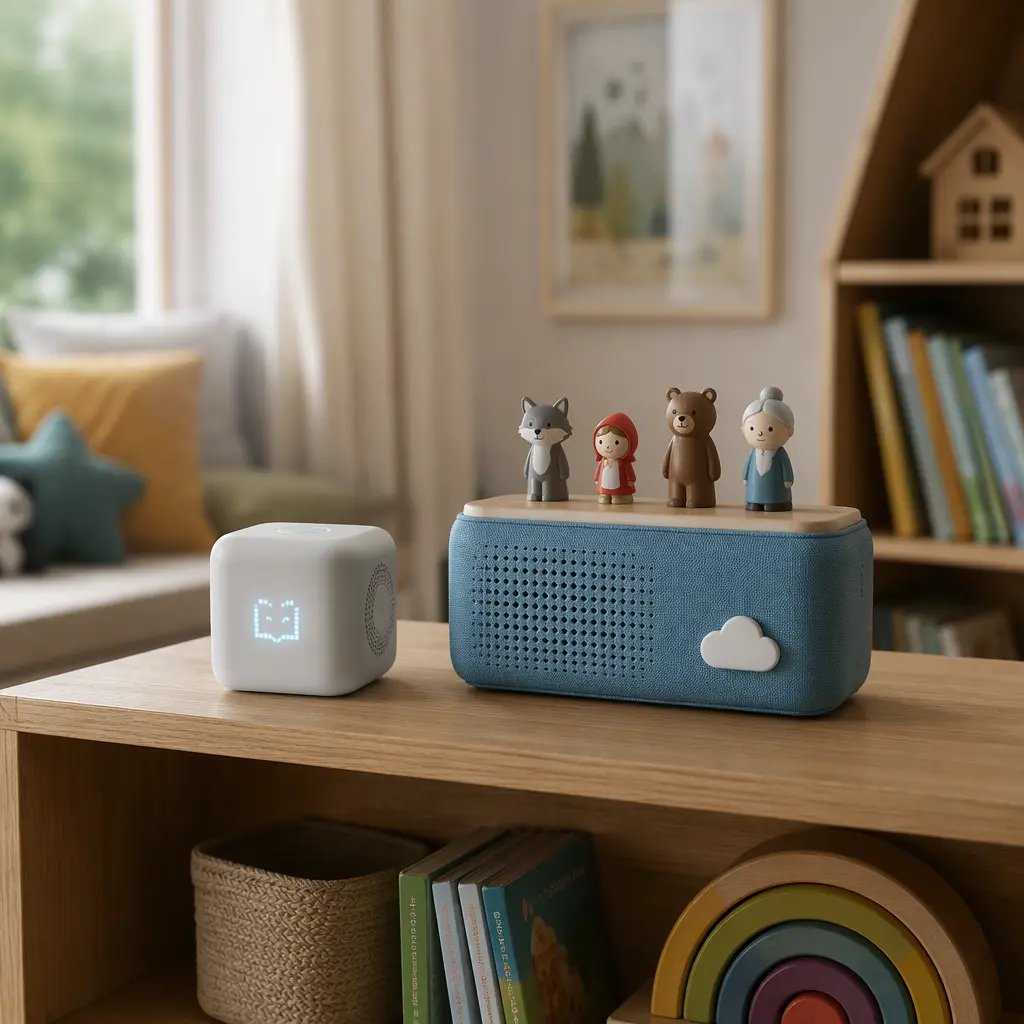
Parents comparing Luka AI Cube and Tonies are usually trying to solve slightly different problems. Luka AI Cube is designed around guided reading support, using a camera and AI-powered recognition to read compatible books aloud and encourage word tracking. Tonies is primarily an audio storytelling system built around music, stories and routine-based listening. Both can support language development for children aged 3–5, but they fit different households, supervision styles and expectations. The biggest differences are how interactive the toys really are, how dependent they are on apps or cloud features, how much adult setup they need and whether a child is expected to sit with books or simply listen independently.
What to look for
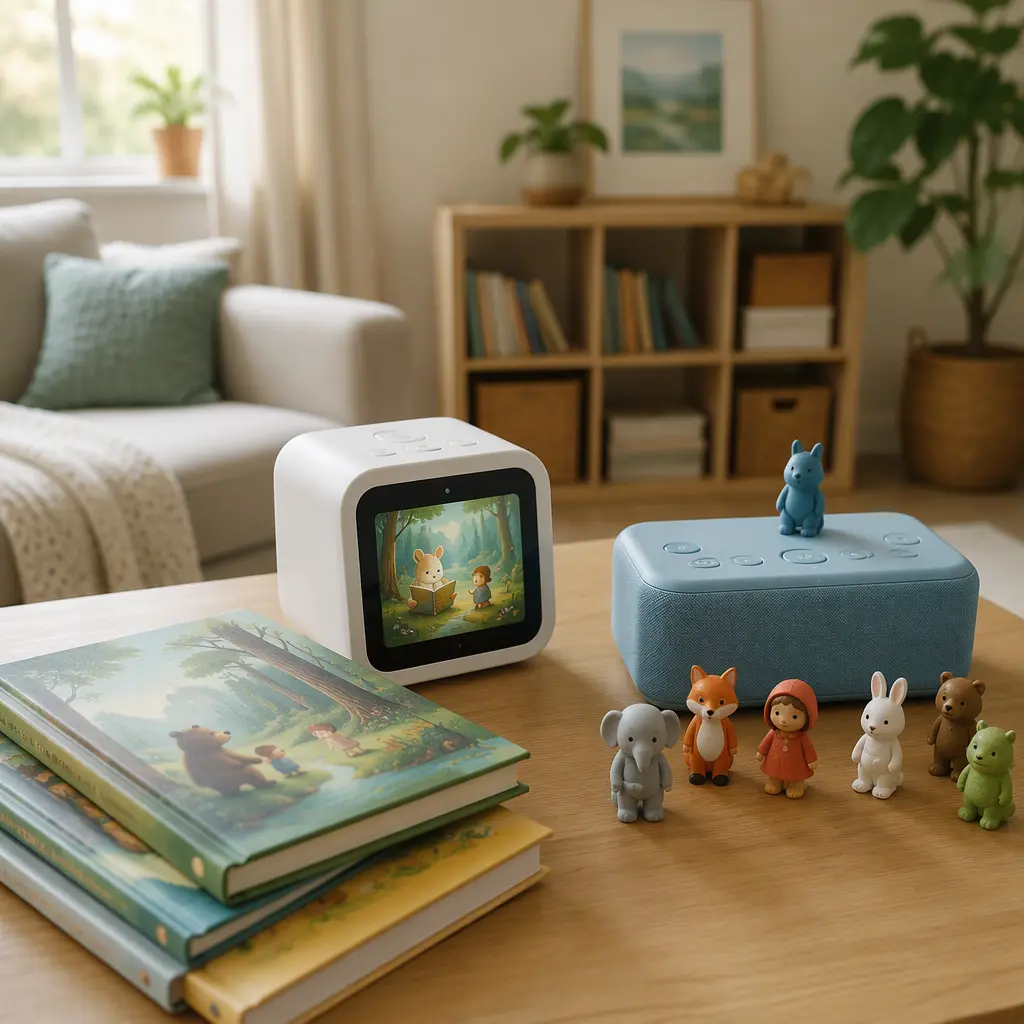
For early reading support, it helps to separate literacy practice from general entertainment. Luka AI Cube aims to build engagement with printed books by recognizing pages and reading aloud. Tonies focuses more on listening comprehension, storytelling routines and independent audio play. Neither replaces adult reading time, but each can fit into a broader literacy routine in different ways.
- Check whether the toy works meaningfully offline or loses major features without Wi‑Fi.
- Look at the book or content ecosystem carefully. Luka depends on compatible books, while Tonies depends on audio figures and downloadable content.
- Consider accent support and pronunciation style. Some parents prefer broader accent exposure, while others want narration closer to local classroom speech.
- Review whether subscriptions, cloud accounts or content credits are required for ongoing use.
- Think about supervision realistically. Younger preschoolers may still need help selecting books, changing figures or troubleshooting connections.
- Assess storage and clutter. Tonies collections can grow quickly, while Luka may encourage a growing library of matching books.
- Check device compatibility if an app is required for setup or content management.
- Consider noise levels and household routines. Tonies is designed for repeated listening and can become background audio during play.
Age suitability
For most families, both systems fit best from around age 3 onward, but they support different developmental stages. Luka AI Cube tends to work better for children already interested in picture books and page-turning routines. Children who enjoy sitting with a caregiver and following spoken words may engage more deeply with it around ages 4–5. Tonies often works well slightly earlier because the interaction is simpler: place a figurine on the speaker and listen. That simplicity can suit younger preschoolers who are not yet ready to focus on printed words for long periods. Children who are highly active or easily frustrated by setup steps may find Tonies easier to use independently.
Options compared
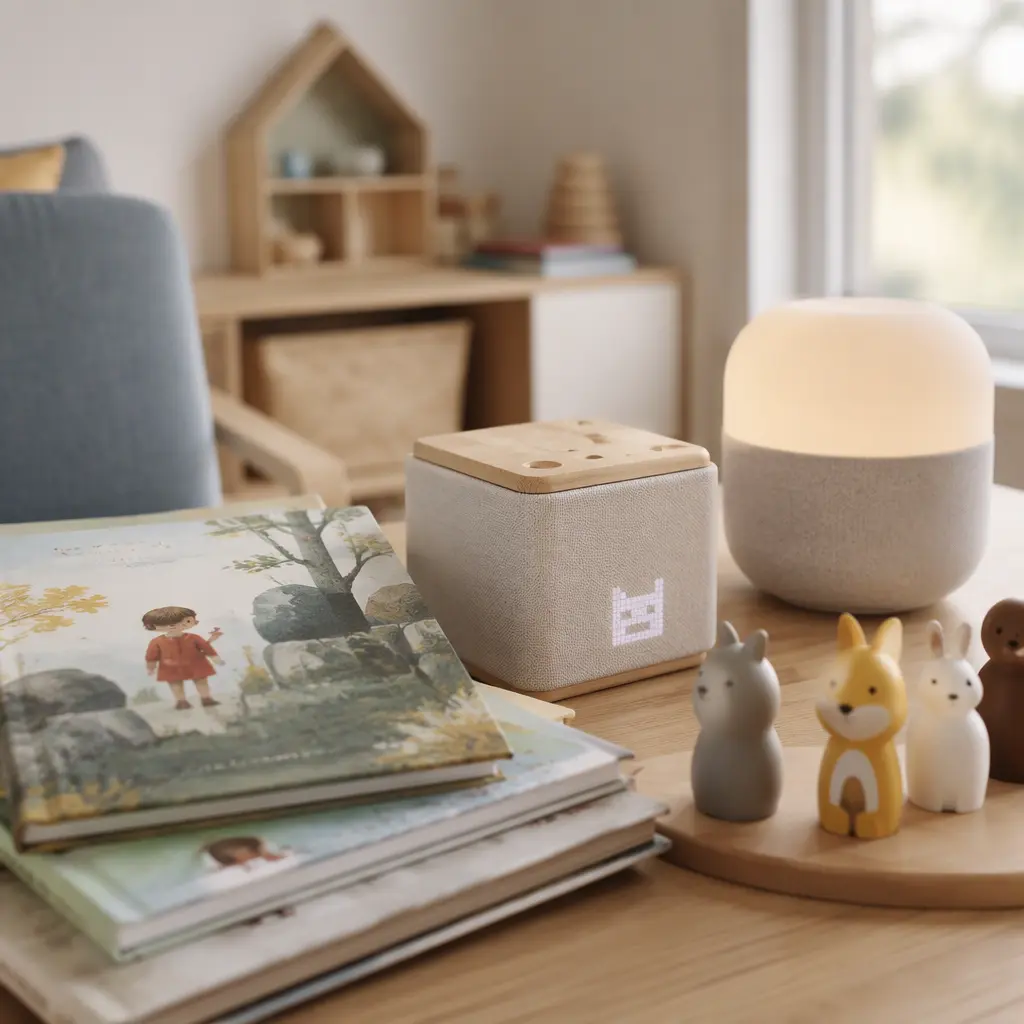
Luka AI Cube stands out because it attempts active reading support rather than passive playback. According to manufacturer descriptions, the device uses image recognition to identify compatible books and read them aloud while tracking pages. That can help children connect spoken language with printed material, especially when they revisit familiar books repeatedly. The trade-off is that the experience depends heavily on book compatibility and setup quality. Parents should expect some supervision, especially for younger preschoolers who may struggle with positioning books correctly or navigating occasional recognition errors. Because the system uses AI and camera-based features, privacy and long-term support are also more relevant considerations than with a simpler audio player.
Tonies takes a lower-tech approach. The Toniebox itself is not an AI device in the same sense; it mainly uses NFC-enabled figurines to trigger stored audio content. For many families, that simplicity is the appeal. Children can operate it independently without navigating screens or cameras, and much of the listening can happen offline once content is downloaded. Tonies can support vocabulary, listening stamina and storytelling habits, but it is less focused on decoding words or building direct reading skills. Parents looking specifically for guided reading practice may find it more complementary than instructional. On the other hand, households wanting lower supervision demands, fewer privacy concerns and easier independent play may prefer Tonies despite the ongoing cost of additional figurines.
- Choose Luka AI Cube if the main goal is encouraging book engagement and supported read-along experiences.
- Choose Tonies if the priority is independent listening, bedtime routines or screen-free entertainment with simple controls.
- Luka may suit children already showing interest in letters, page tracking and repeated story reading.
- Tonies may suit children who enjoy audio stories during free play, quiet time or travel.
- Families sensitive to cloud-connected devices, cameras or app accounts may prefer the simpler Tonies setup.
- Parents wanting a toy usable without constant internet access should check exactly which Luka features remain available offline.
Frequently asked questions
Does Luka AI Cube actually teach reading?
It is better viewed as a reading support tool rather than a complete reading program. It may help children connect spoken words with books and maintain interest in stories, but preschool literacy development still depends heavily on adult interaction, conversation and repeated reading practice.
Can Tonies help with literacy even though it is not an AI reader?
Yes. Audio storytelling can support vocabulary growth, listening comprehension, memory and narrative understanding. Those skills are useful foundations for later reading, even though Tonies does not directly guide children through printed text.
Which option works better without internet access?
Tonies is generally designed to continue playback offline after content has been downloaded and configured. Luka AI Cube may rely more heavily on connected features depending on the book library and setup requirements, so parents should review current manufacturer guidance carefully before buying.
Are accents and narration styles important for preschoolers?
They can be. Some children adapt easily to varied narration accents, while others benefit from speech patterns closer to what they hear at home or preschool. Parents teaching phonics may especially want to listen to pronunciation samples before committing to a system.
Do either of these replace parent read-aloud time?
No. Both products work best as supplements. Shared reading time helps children build attention, emotional connection, vocabulary and comprehension in ways automated narration alone cannot fully replicate.
For families focused specifically on early reading support, Luka AI Cube offers more direct interaction with books and printed language, but also brings more setup complexity, compatibility limits and connected-device considerations. Tonies is simpler, more routine-friendly and often easier for preschoolers to manage independently, though it functions more as an audio storytelling platform than a guided reading tool. The better choice depends less on which toy is more advanced and more on how your child already engages with stories, books and independent play.