Screen-Free STEM Kits for Easy Kitchen-Table Learning
A parent-focused guide to screen-free STEM kits for ages 9–12, with practical advice on mess, setup time, supervision, storage and which project styles work best at the kitchen table.
Compare prices and availability
Check current prices and availability for this guide on eBay.
As an eBay Partner, we may be compensated if you make a purchase.
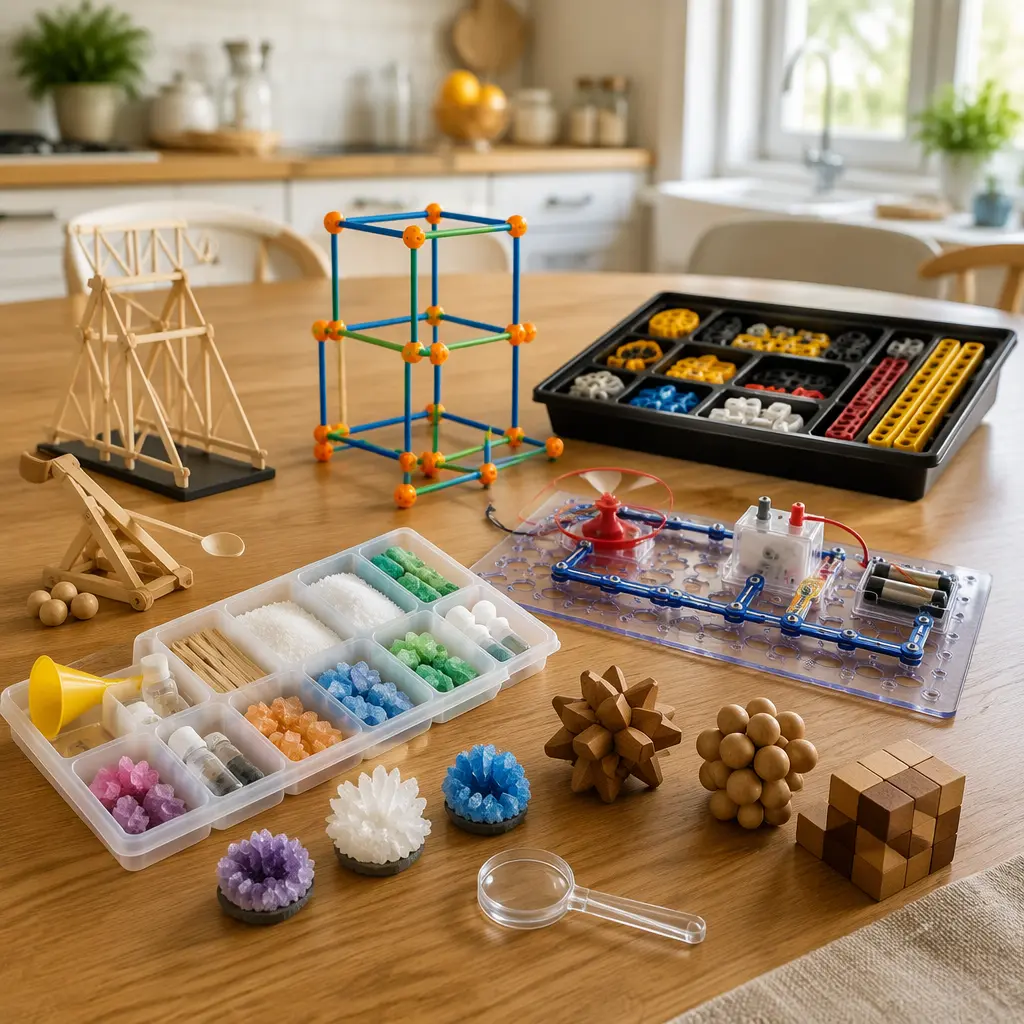
Screen-free STEM kits can work well for ages 9–12 when they balance hands-on learning with manageable cleanup and realistic supervision needs. For many families, the kitchen table becomes the default project space, so the best kits for home use are usually compact, easy to pause midway through, and unlikely to leave permanent stains, strong odors or tiny hard-to-find parts scattered across the floor. At this age, children often want projects that feel more advanced than preschool craft sets but still provide clear instructions and visible results. Engineering builds, logic challenges, beginner electronics and contained chemistry activities are often the most practical choices for shared family spaces.
What to look for
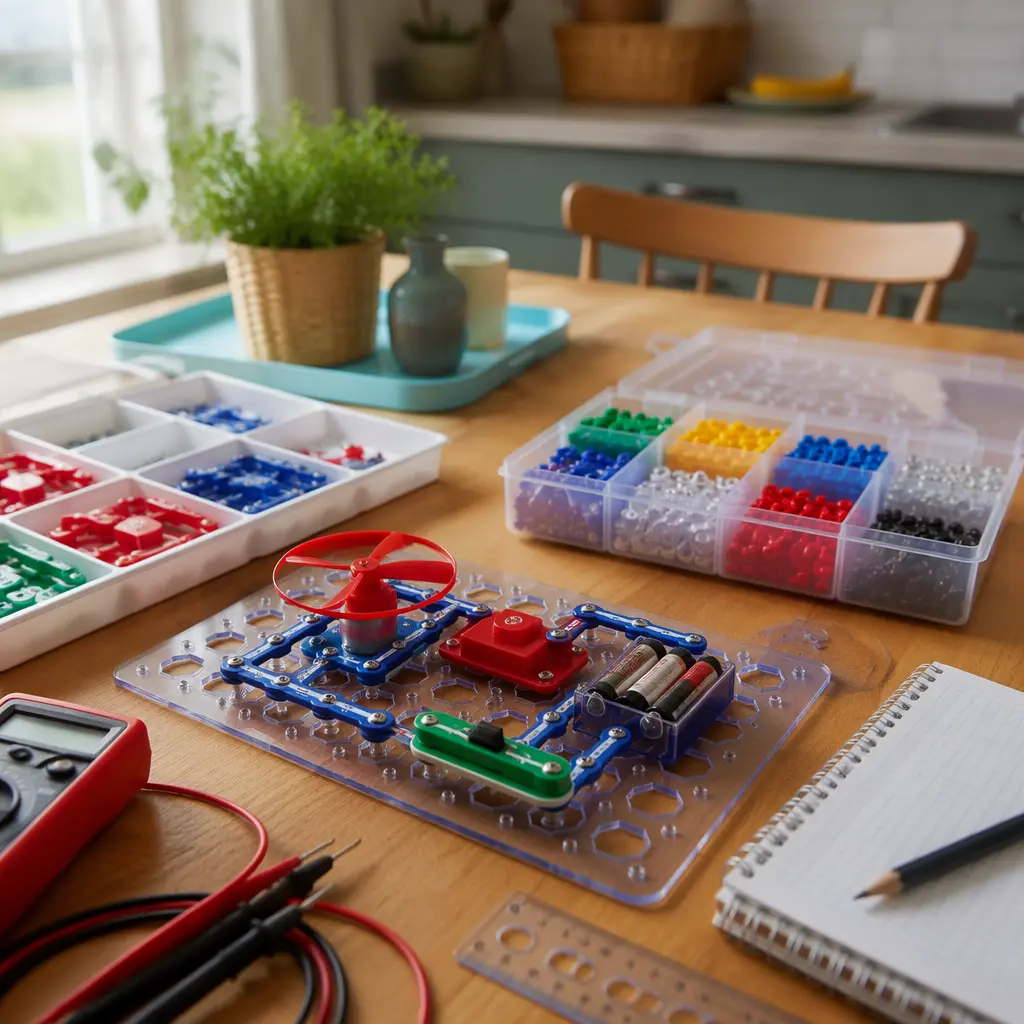
The most kitchen-table-friendly STEM kits usually focus on contained activities with repeatable play value. Parents often underestimate how much setup and cleanup affect whether a kit gets reused after the first project. Kits with pre-sorted components, reusable storage trays or clear visual instructions tend to work better for busy households than open-ended sets with dozens of loose consumables. Noise level also matters. Mechanical building kits and puzzle systems are usually quieter than buzzing electronics or motor-heavy projects, which can become distracting during homework time or shared family meals.
- Choose kits with reusable components instead of mostly single-use materials.
- Look for projects that can pause midway without drying out, hardening or losing progress.
- Check whether small parts need long-term storage between sessions.
- Contained chemistry or crystal-growing sets are usually less messy than slime-focused kits.
- Snap-together electronics are often easier for independent play than soldering projects.
- Printed instructions with diagrams are helpful for children who prefer less adult assistance.
- Compact kits fit more easily into shared spaces and apartment living.
Age suitability
Ages 9–12 can be a wide range for STEM interests and independence. Some children are ready for multi-step engineering projects with careful measuring and patience, while others prefer shorter experiments with immediate results. Kits aimed at younger children may feel repetitive or overly guided for older tweens, especially if the educational concepts are too simple. On the other hand, advanced robotics or chemistry sets designed for teenagers can become frustrating without regular adult support. Many families find the best balance in kits that encourage experimentation while still offering structured instructions for the first few builds or activities.
Options compared
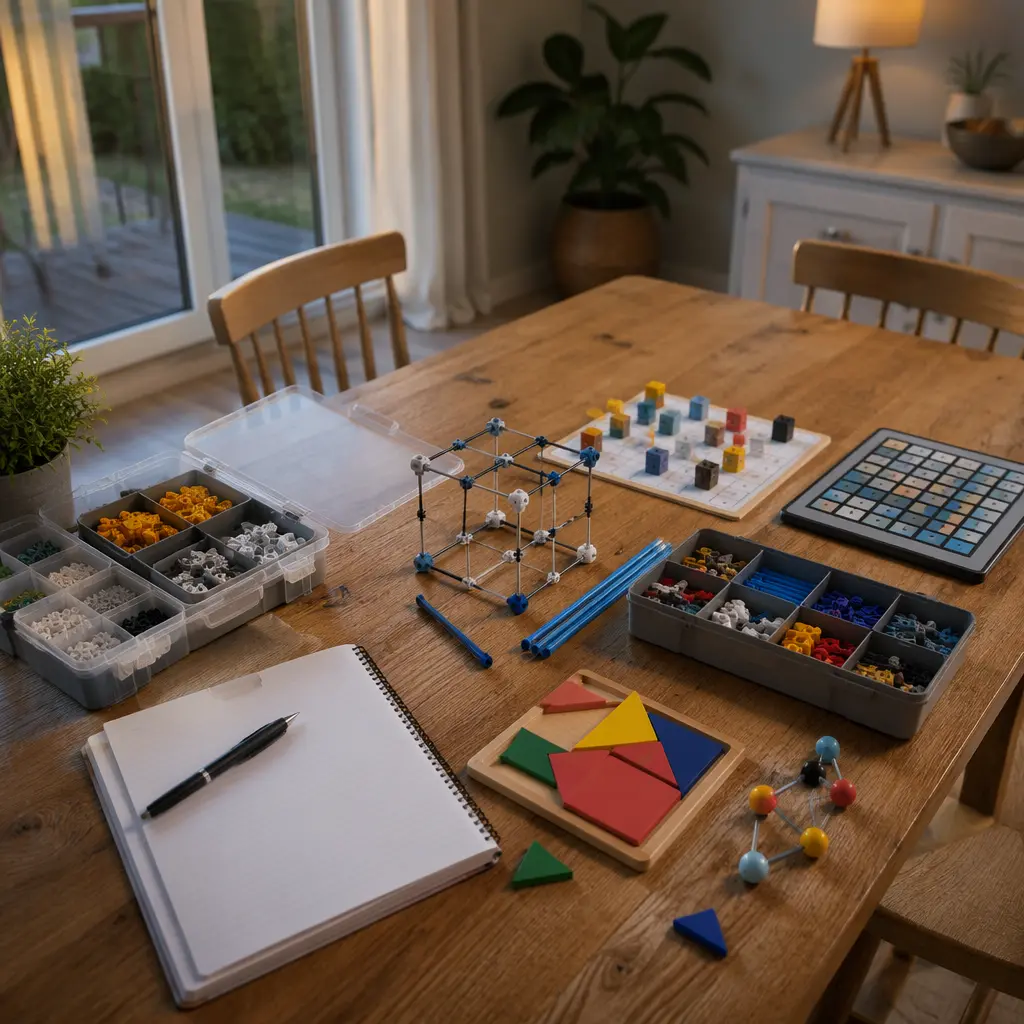
Engineering and construction kits are often the easiest category for kitchen-table use because they create minimal mess and usually store well between sessions. Marble runs, mechanical building systems and structural design sets encourage problem-solving without requiring screens or chemicals. These kits suit children who enjoy tinkering, rebuilding and improving designs over time. They are less ideal for children who want quick results or strongly story-based play.
Snap-circuit electronics kits are another practical option for this age group. The parts are typically reusable and projects can be completed in shorter sessions, making them easier to fit around school nights. The trade-off is that electronic sounds and flashing lights may become repetitive in quieter homes. Logic puzzle kits and coding-without-screens games work well for children who enjoy independent thinking and lower-noise activities, though they may feel less exciting for highly hands-on builders.
- Engineering builds: low mess, reusable, good for patient builders, usually require storage space.
- Snap-circuit electronics: structured and beginner-friendly, moderate noise, easy setup.
- Crystal-growing and contained chemistry kits: visually rewarding but may need supervision and drying time.
- Logic and coding puzzle kits: compact and quiet, best for independent problem-solvers.
- Nature science kits: encourage outdoor learning but may bring dirt, water or collected materials indoors.
- Craft-heavy STEM hybrids: creative but often generate more cleanup and consumable waste.
Frequently asked questions
Are STEM kits for ages 9–12 usually independent activities?
Many children in this age range can handle structured STEM kits independently once the project begins, especially engineering or puzzle-based sets. Adult help is still commonly needed for organizing materials, interpreting instructions or handling batteries, chemicals or tools.
Which STEM kits create the least mess?
Mechanical building systems, logic games and snap-together electronics are generally the cleanest choices. Chemistry kits, slime projects and paint-heavy activities usually require more surface protection and cleanup time.
Do screen-free STEM kits still teach coding concepts?
Some do. Logic sequencing games, coding card systems and programmable robot kits with offline controls can introduce computational thinking without requiring tablets or computers. These tend to focus on sequencing, patterns and problem-solving rather than full programming languages.
How important is storage?
Storage matters more than many parents expect. Kits with dozens of tiny pieces are far more likely to be abandoned if sorting and cleanup become frustrating. Reusable containers, labeled trays and compact cases help projects stay accessible over time.
Are reusable kits better value than single-project kits?
Reusable kits often provide longer-term play because children can rebuild, redesign or repeat experiments. Single-project kits may still appeal to children who enjoy novelty or highly guided experiences, but they usually have less replay value once completed.
For most families using a shared kitchen table, the most practical STEM kits are the ones children can set up quickly, pause easily and revisit without major cleanup. Engineering systems, logic challenges and reusable electronics kits often strike the best balance between educational value and manageable daily use. Choosing a kit that matches a child’s patience level, workspace and interest in independent play usually matters more than choosing the most advanced-looking option.