Snap Circuits vs Brick STEM Kits for Ages 6–8
Choosing a first STEM building kit for ages 6–8? Compare Snap Circuits and brick-based STEM sets by setup time, supervision, frustration level, storage, durability and learning style.
Compare prices and availability
Check current prices and availability for this guide on eBay.
As an eBay Partner, we may be compensated if you make a purchase.
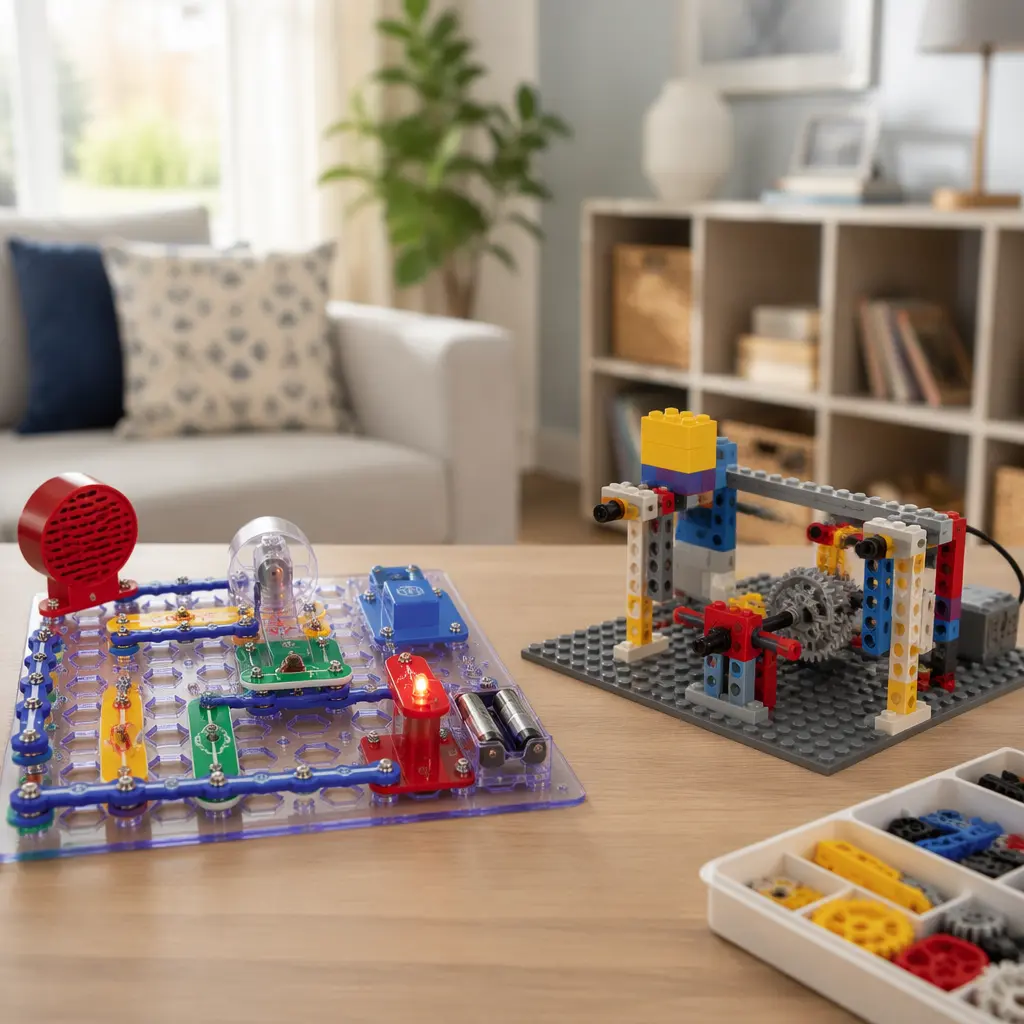
For children aged 6–8, both Snap Circuits-style electronics kits and brick-based STEM building sets can introduce engineering concepts through hands-on play. The better choice usually depends less on academic goals and more on how a child handles instructions, fine-motor tasks, waiting through setup and solving small problems independently. Some children enjoy fast results and clear cause-and-effect experiments, while others prefer open-ended building and repeated redesigns. Parents often notice differences in cleanup time, supervision needs and frustration levels long before they notice differences in educational content.
What to look for
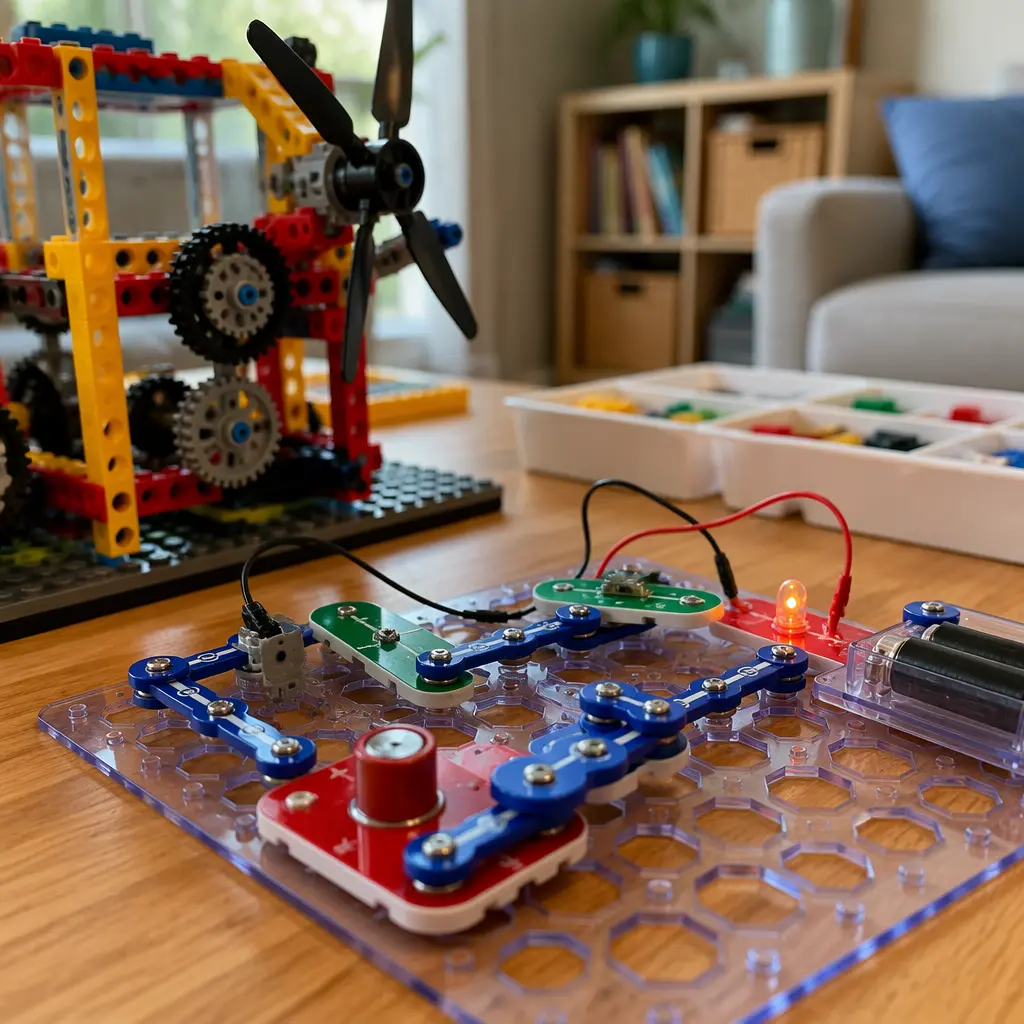
A beginner STEM kit works best when the challenge level matches the child's patience and reading confidence. At ages 6–8, many children still need occasional help interpreting diagrams or finding missing pieces, so the overall building experience matters as much as the final project. Think about how much adult involvement is realistic in your household and whether the toy needs to work well for short play sessions or longer weekend projects.
- Choose kits with clearly separated pieces and visual instructions if the child becomes frustrated by searching for parts.
- Snap-together electronics often provide faster results, which can help children who lose interest during long builds.
- Brick-based STEM sets usually allow more rebuilding and creative variation after the first model is complete.
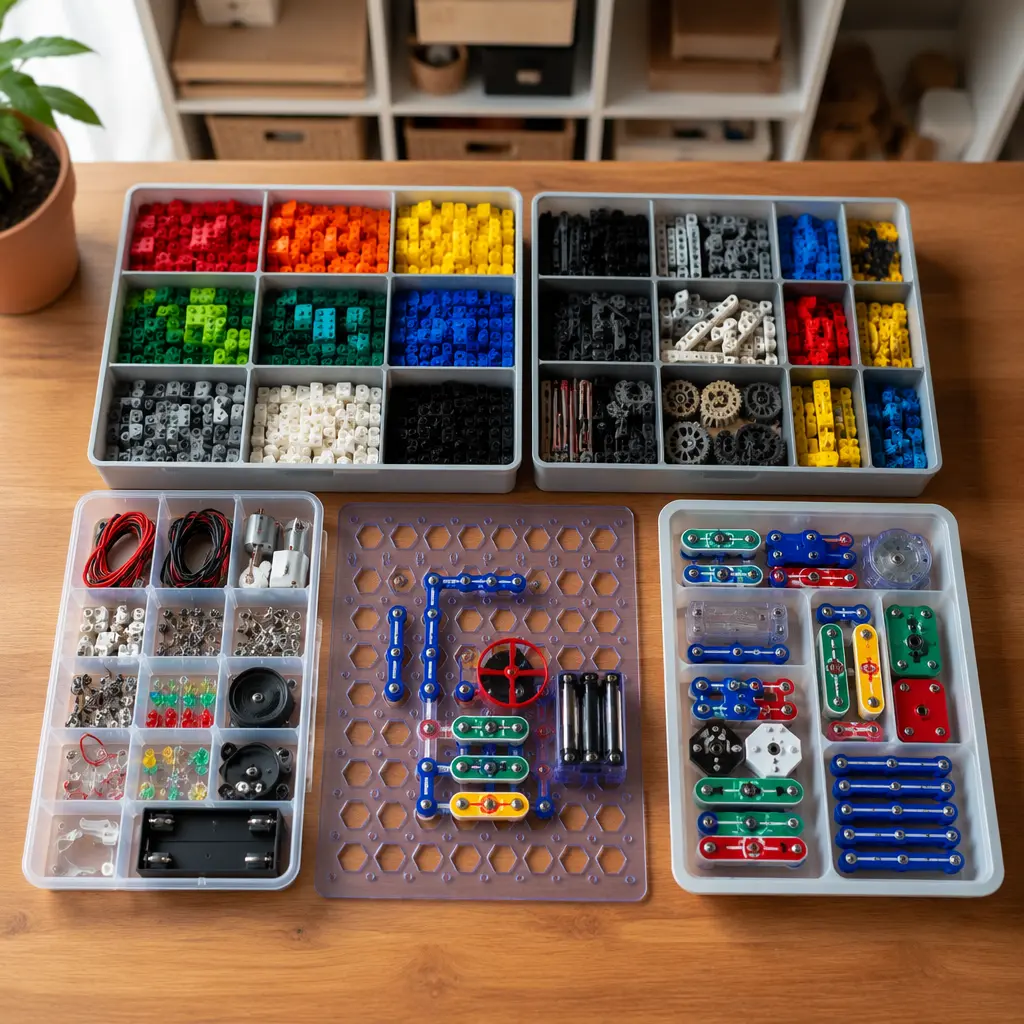
- Consider storage space carefully. Mixed bricks, gears and axles can spread across floors more easily than compartment-based circuit pieces.
- Noise levels vary. Electronic kits may include buzzers or sound modules, while mechanical building kits are usually quieter.
- Check whether replacement pieces are easy to identify and reorganize after cleanup.
- Some children enjoy highly structured projects, while others prefer experimenting without exact instructions.
Age suitability
Most beginner electronics and engineering kits marketed for ages 6–8 assume a child can follow step-by-step picture instructions and handle small pieces safely. Younger children within this range may enjoy Snap Circuits-style systems because the parts connect quickly and the outcome is immediately visible, such as lights, motion or sound. Brick-based STEM kits can suit children who already enjoy construction toys and have patience for multi-step assembly. A child who becomes upset when a build collapses may need simpler mechanical sets before moving to more advanced gear systems or motorized models. Families with younger siblings should also consider whether small connectors and specialty pieces can realistically stay contained during play.
Options compared
Snap Circuits-style kits are usually easier to start immediately. Pieces connect with simple snapping motions, and children can often complete a working project within minutes. That quick success can reduce frustration for first-time builders or children who struggle with long instructions. The structured layout also makes it easier for adults to step in briefly without rebuilding the entire project. Cleanup tends to be simpler because many kits include molded trays with labeled spaces.
The trade-off is that electronic circuit projects can feel repetitive for children who prefer imaginative construction. Once the child understands the basic system, some kits become more about following diagrams than inventing entirely new creations. They also tend to reward careful instruction-following over freeform experimentation, especially at beginner level.
Brick-based STEM kits usually offer more flexibility and longer-term replay value. Children can rebuild vehicles, cranes, creatures or mechanical systems using the same core pieces. These sets often appeal to children who already enjoy traditional construction toys and like modifying designs after completion. They also encourage spatial reasoning and persistence because small adjustments can change how gears, wheels or levers function.
However, brick-based engineering kits generally require more setup time and more patience during the first few sessions. Finding the correct pieces can slow younger builders down, and partial collapses during assembly are common. Some children enjoy this trial-and-error process, while others find it discouraging. Parents should also expect more floor cleanup and more sorting after play, especially with sets containing many small connectors.
- Choose snap-together electronics for children who enjoy immediate feedback, shorter projects and structured instructions.
- Choose brick-based STEM kits for children who already like construction play and enjoy rebuilding repeatedly.
- Avoid complex motorized engineering kits if the child becomes frustrated easily by alignment problems or missing pieces.
- Avoid electronics-focused kits if the child mainly wants imaginative storytelling or open-ended design play.
- For shared sibling play, larger brick systems often support cooperative building more naturally than single-project circuit layouts.
Frequently asked questions
Which type is easier for a first-time builder?
Snap-together circuit kits are usually easier for complete beginners because the pieces connect quickly and mistakes are easier to spot. Children often see immediate results, which helps maintain attention and confidence.
Do brick-based STEM kits require more adult help?
Often yes, especially during the first few builds. Younger children may need help identifying parts, stabilizing structures or correcting gear placement. Many children become more independent after learning the system.
Which option creates less mess?
Electronics kits with compartment trays are generally easier to organize and faster to clean up. Brick-based engineering sets can spread small pieces widely during active building sessions.
Are these toys genuinely educational without screens?
Yes. Both toy categories support hands-on problem solving, sequencing, experimentation and fine-motor development without requiring apps or screens. The learning style is different, but both can encourage persistence and curiosity.
What if a child loses interest quickly?
Children who prefer fast rewards may stay engaged longer with quick electronic experiments. Children who enjoy collecting, modifying and displaying creations may spend more time with brick-based engineering systems.
For many families, the best beginner STEM toy is the one that fits naturally into the child's existing play habits. A child who already enjoys building may appreciate the flexibility of brick-based engineering kits, while a child who wants fast results and simple setup may respond better to snap-together electronics. Considering supervision time, cleanup expectations and frustration tolerance can make the first STEM kit far more enjoyable for both children and parents.