The Big Wheel: How a plastic trike taught kids to fly
Introduced in 1969, the Big Wheel turned a low plastic trike into a rite of passage—teaching generations balance, bravery, and the thrill of speed just inches off the ground.
Compare prices and availability
Check current prices and availability for this guide on eBay.
As an eBay Partner, we may be compensated if you make a purchase.
For many adults, the first real feeling of speed didn’t come from a bike or a skateboard—it came from a Big Wheel. Sitting inches above the pavement, legs pumping a huge front wheel, kids learned how momentum works long before they could explain it. The Big Wheel was simple, loud, and unapologetically plastic, and that was the point: it put control directly under a child’s feet.
Where it came from
The Big Wheel was introduced in 1969 by Louis Marx & Company, a major American toy maker known for affordable mass-market hits. The idea was to create a ride-on toy that younger children could use safely, without the balance demands of a bicycle and without the cost of metal frames and rubber tires.
Its timing mattered. Suburban neighborhoods were expanding, driveways were long and sloped, and parents were open to outdoor toys that felt adventurous but stayed close to the ground. The Big Wheel’s plastic construction kept costs down and made it accessible to families who might not buy a bike for a preschooler.
Why it works
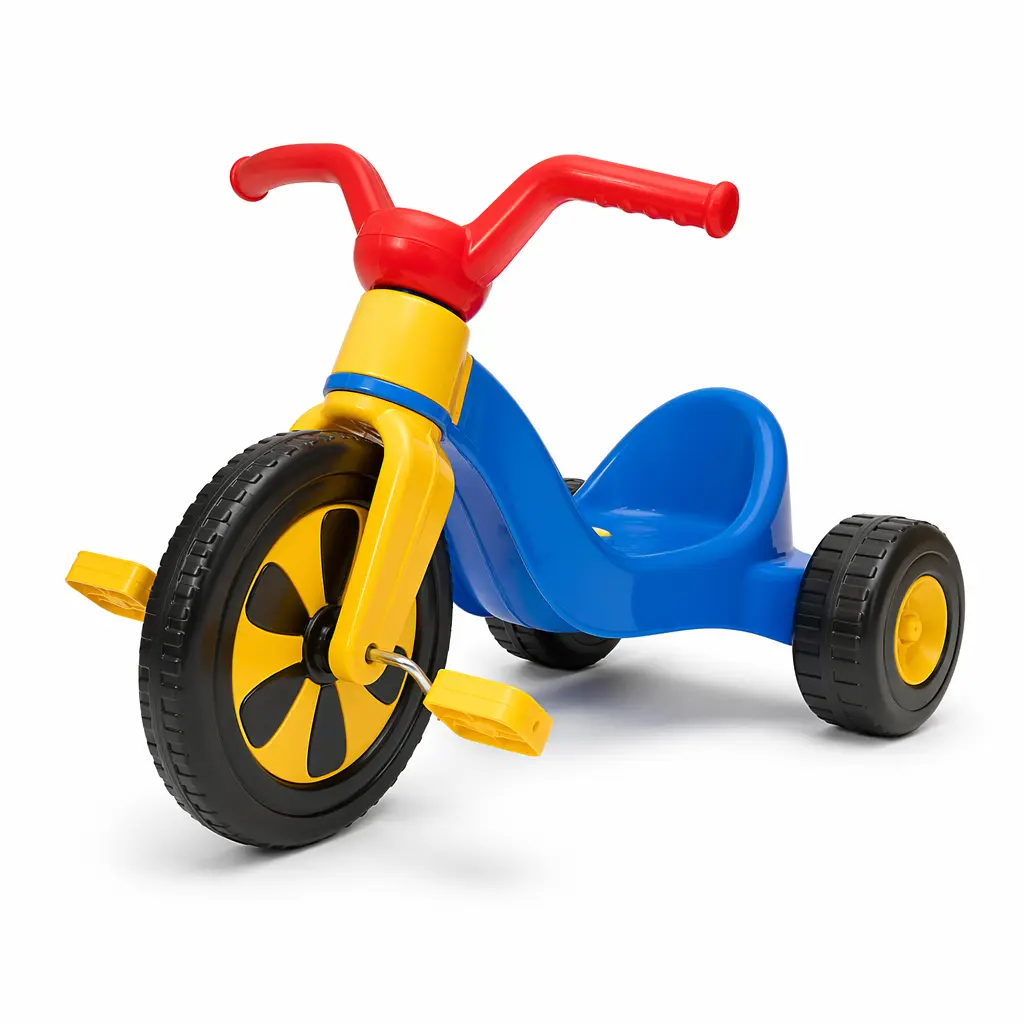
The Big Wheel’s design is deceptively smart. The oversized front wheel does most of the work, translating leg power directly into movement. The small rear wheels keep the rider stable while still allowing skids and spins. Sitting low lowers the center of gravity, which reduces tipping and boosts confidence.
What really sealed its appeal is how it invites experimentation. Kids learn quickly that leaning changes direction, pedaling harder builds speed, and pulling up slightly on the handlebars can start a skid. It’s physics as play, with instant feedback.
- Large front wheel for direct pedal power
- Low seat for stability and confidence
- Wide rear wheels that allow controlled skids
- Durable plastic that handles rough surfaces
Who it’s for
Traditionally aimed at preschool and early primary-school kids, the Big Wheel suits children who are ready to pedal but not yet comfortable balancing on two wheels. There’s also a strong adult nostalgia factor. Many parents see it as a bridge toy—one that builds coordination and courage before the jump to a bicycle.
Variants and what to look for today
Over the decades, the Big Wheel idea has been reissued and reinterpreted many times. Modern versions may adjust seat positions, use thicker plastic, or tweak wheel textures for quieter indoor use. Some lean into nostalgia, while others focus on durability for rough outdoor play.
When shopping today, focus less on branding and more on fit and build. Look for a seat height that matches your child’s leg length, smooth pedal action, and sturdy rear wheels. Avoid ultra-light copies that flex too much—they lose the stable, planted feel that made the original work.
Frequently asked questions
Is a Big Wheel safer than a bicycle?
Its low center of gravity makes it harder to tip over, which many parents find reassuring. Helmets are still a good idea, especially on sloped driveways.
What age is best for a Big Wheel?
Most children enjoy them from around ages 3 to 6, depending on size and coordination.
Can it be used indoors?
Some modern versions are designed for indoor floors, but they’re best enjoyed outdoors where skids and turns have room.
Does it help with learning to ride a bike?
Yes. It builds pedaling strength, steering control, and confidence—skills that transfer well to bicycles.
More than half a century on, the Big Wheel remains a symbol of early independence. It’s not about mastering a skill so much as discovering agency—realizing that with a push of your feet, the world moves. For many kids, that lesson still starts low to the ground, with a grin and the rattle of plastic wheels.