Sit ’n Spin: Why spinning in circles still wears kids out
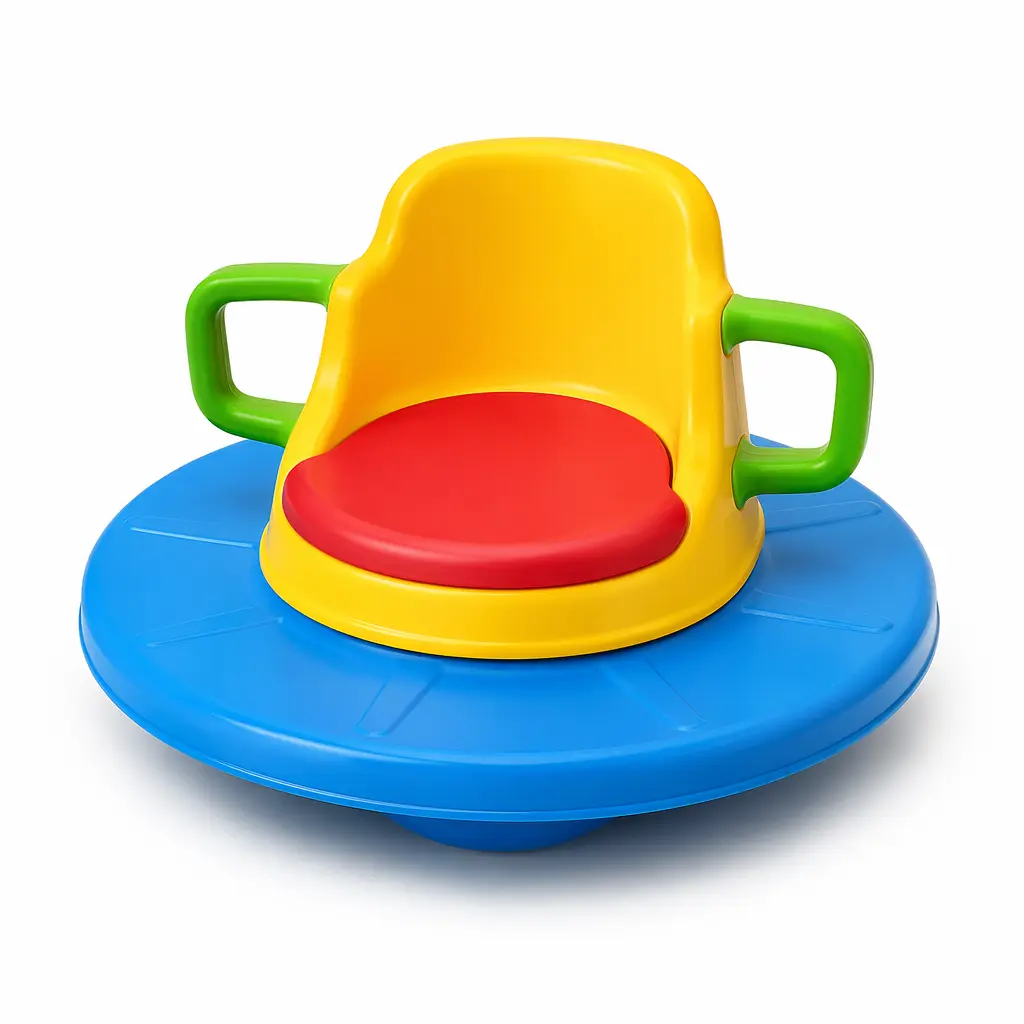
First sold in the 1970s, the Sit ’n Spin turned a simple idea—twisting side handles while seated—into an indoor energy burner kids still love.
Compare prices and availability
Check current prices and availability for this guide on eBay.
As an eBay Partner, we may be compensated if you make a purchase.
Few toys capture the pure, slightly dizzy joy of childhood quite like the Sit ’n Spin. There’s no screen, no storyline, and no complicated setup. A child sits down, grabs two handles, twists back and forth, and suddenly the room becomes a whirl of motion and laughter. For decades, this simple spinning disc has been a go-to answer for one timeless parenting question: how do you burn off kid energy indoors?
Where it came from
The Sit ’n Spin first appeared in 1974, during a period when toy makers were exploring how simple physical actions could translate into big play value. It was introduced as a ride-on toy that didn’t require pedals, batteries, or even much floor space. Instead, it relied on a child’s natural instinct to twist, wiggle, and move.
Its timing mattered. In the 1970s, indoor play was becoming more common, especially in smaller homes and apartments. The Sit ’n Spin offered something new: a way to feel active and slightly wild without running laps through the house. It quickly became a staple in playrooms, schools, and daycares, and its basic form has changed very little since.
Why it works
At heart, the Sit ’n Spin works because it taps into cause and effect in the most direct way possible. Twist the handles, and the world spins. Stop twisting, and it slows down. Kids don’t need instructions; their bodies figure it out within seconds. That immediacy is a big part of its appeal.
It also quietly delivers a workout. The motion engages core muscles, arms, and coordination, all while feeling like play rather than exercise. For children who struggle to sit still, spinning provides strong sensory input that can actually help them regulate their energy.
- Self-powered spinning driven entirely by the child’s movement
- Low seat that feels stable while still allowing fast rotation
- Simple handles that build arm strength and coordination
- Compact footprint suitable for indoor spaces
- Instant feedback that rewards effort with motion
Who it’s for
The Sit ’n Spin is typically aimed at preschool and early elementary-age children, often around ages three to six, depending on size and balance. That said, its appeal isn’t strictly limited by age. Older kids may revisit it for silly challenges or quick bursts of movement, and many adults remember it fondly from their own childhoods. It’s one of those toys that bridges generations through shared memory as much as play.
Variants and what to look for today
While the core idea hasn’t changed, today’s Sit ’n Spin–style toys come in a few variations. Some are slightly taller or wider to accommodate bigger kids, while others tweak the handle shape for easier gripping. You may also see versions designed to spin more smoothly or quietly, reflecting modern expectations for indoor toys.
When shopping today, the biggest things to look for are stability and durability. A wide, sturdy base helps prevent tipping, and solid plastic construction stands up better to enthusiastic spinning. Be cautious of very lightweight versions that feel flimsy; the toy relies on resistance and balance to feel satisfying. As with many classics, simpler is often better.
Frequently asked questions
Is the Sit ’n Spin safe for indoor use?
Yes, when used as intended and with supervision. It’s designed specifically for indoor play, but it should always be used on a level surface and away from obstacles.
Does spinning make kids dizzy?
Some dizziness is part of the fun, but most children naturally stop when they’ve had enough. Short play sessions and breaks help keep it comfortable.
Can more than one child use it?
It’s intended for one rider at a time. Taking turns not only keeps it safe but also helps kids practice patience and sharing.
Is it still relevant in the age of screens?
Arguably more than ever. Its screen-free, movement-based play offers a refreshing contrast to digital entertainment.
More than fifty years on, the Sit ’n Spin remains a reminder that great toys don’t need to be complicated. By turning a basic human motion into joyful play, it earned its place as a classic—and it continues to prove that sometimes, the simplest ideas really do go round and round.