Sophie the Giraffe: How a simple teether became a rite of passage
Born in 1961, Sophie the Giraffe grew from a modest rubber teether into a near-universal baby milestone. Here’s how thoughtful design, timing, and word of mouth turned a small toy into a global icon.
Compare prices and availability
Check current prices and availability for this guide on eBay.
As an eBay Partner, we may be compensated if you make a purchase.
For many parents, Sophie the Giraffe isn’t just a toy—it’s a moment. The first time a baby grips it. The unmistakable squeak. The photos shared with friends who nod knowingly. In a world of high-tech baby gear, this modest rubber giraffe has become a quiet rite of passage for teething infants across generations.
Where it came from
Sophie was born in France in 1961, during a period when many baby toys were still made from hard plastics or metal. Created by a small French toy maker, the giraffe was designed specifically for babies who were starting to teethe—a stage that parents know can be uncomfortable and relentless.
The original idea was practical rather than poetic: make something soft, safe, and easy for small hands to hold and mouths to explore. Using natural rubber, sourced from the sap of rubber trees, set the toy apart at a time when synthetic materials were becoming the norm. Its immediate popularity in France laid the groundwork for what would later become an international phenomenon.
Why it works
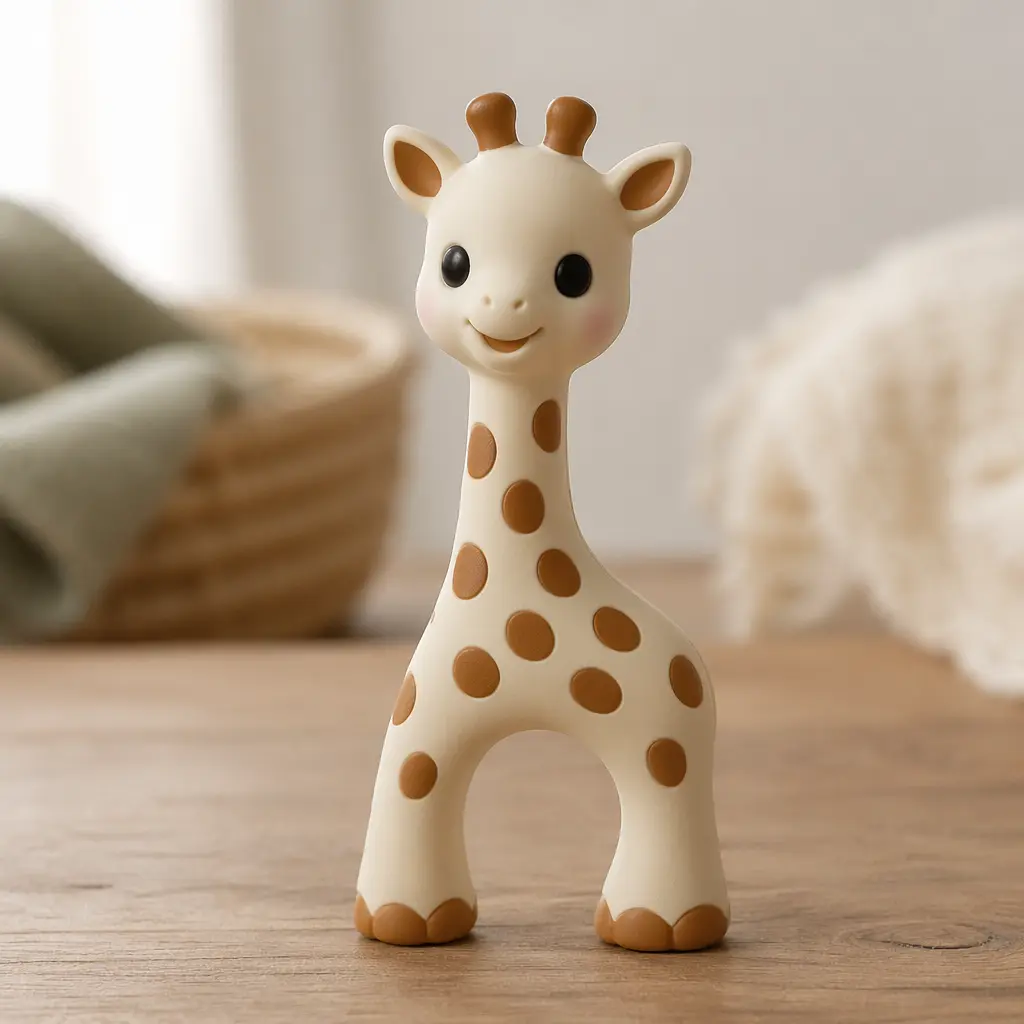
At its core, Sophie works because it respects how babies actually play. Infants don’t follow instructions or explore toys in a linear way—they grab, chew, drop, and repeat. The giraffe’s design accommodates all of that without fuss.
- Soft natural rubber that compresses easily between gums
- Long legs and neck that are easy for small hands to grip
- Lightweight shape that babies can lift and control
- A gentle squeak that rewards squeezing without overstimulation
- High-contrast spots that are easier for young eyes to see
Nothing about the toy is flashy, and that’s the point. There are no lights, screens, or modes to cycle through. Instead, it offers just enough sensory feedback—texture, sound, and visual contrast—to keep a baby engaged during a developmentally intense stage.
Who it’s for
Sophie is primarily aimed at infants from around three months onward, when teething discomfort and grasping skills begin to overlap. That said, its appeal extends beyond babies. New parents often see it as a reassuringly simple first toy, while gift-givers view it as a safe, time-tested choice. There’s also a strong nostalgic pull for adults who remember seeing the same giraffe with younger siblings—or now encounter it again as parents themselves.
Variants and what to look for today
While the original giraffe design remains the most recognisable, today’s market includes variations in size and related teething toys inspired by the same principles. Some are smaller for younger babies, while others are designed to be chilled or paired with soft comforters.
When shopping, parents tend to focus less on novelty and more on materials and safety. Natural rubber or food-grade silicone are common preferences, and it’s worth checking that any paint or colouring is non-toxic. Because the toy’s popularity has inspired countless imitations, buying from reputable retailers helps avoid poorly made copies that may not meet safety standards.
Frequently asked questions
Why is Sophie so popular compared to other teethers?
Its popularity comes from a mix of timing, thoughtful design, and word of mouth. Parents share experiences, and the toy’s simplicity often stands out in a crowded baby market.
Is it safe for newborns?
It’s generally recommended for babies a few months old rather than true newborns, as it’s designed for grasping and teething rather than passive play.
Does it help with teething pain?
While no toy can eliminate teething discomfort entirely, the soft rubber and chewable shape can provide soothing pressure that many babies seem to enjoy.
How long do babies use it?
Usage varies, but many babies return to it throughout their first year, even after the most intense teething phases have passed.
More than six decades after its debut, Sophie the Giraffe remains a reminder that enduring toys don’t need to be complicated. By meeting babies exactly where they are—curious, uncomfortable, and eager to explore—it has secured a place not just in nurseries, but in family stories passed quietly from one generation to the next.