Tangram: The ancient shape puzzle that keeps reinventing itself
Born centuries ago, the tangram is a seven-piece shape puzzle that still captivates kids and adults. Simple parts, endless patterns—and a quiet lesson in spatial thinking.
Compare prices and availability
Check current prices and availability for this guide on eBay.
As an eBay Partner, we may be compensated if you make a purchase.
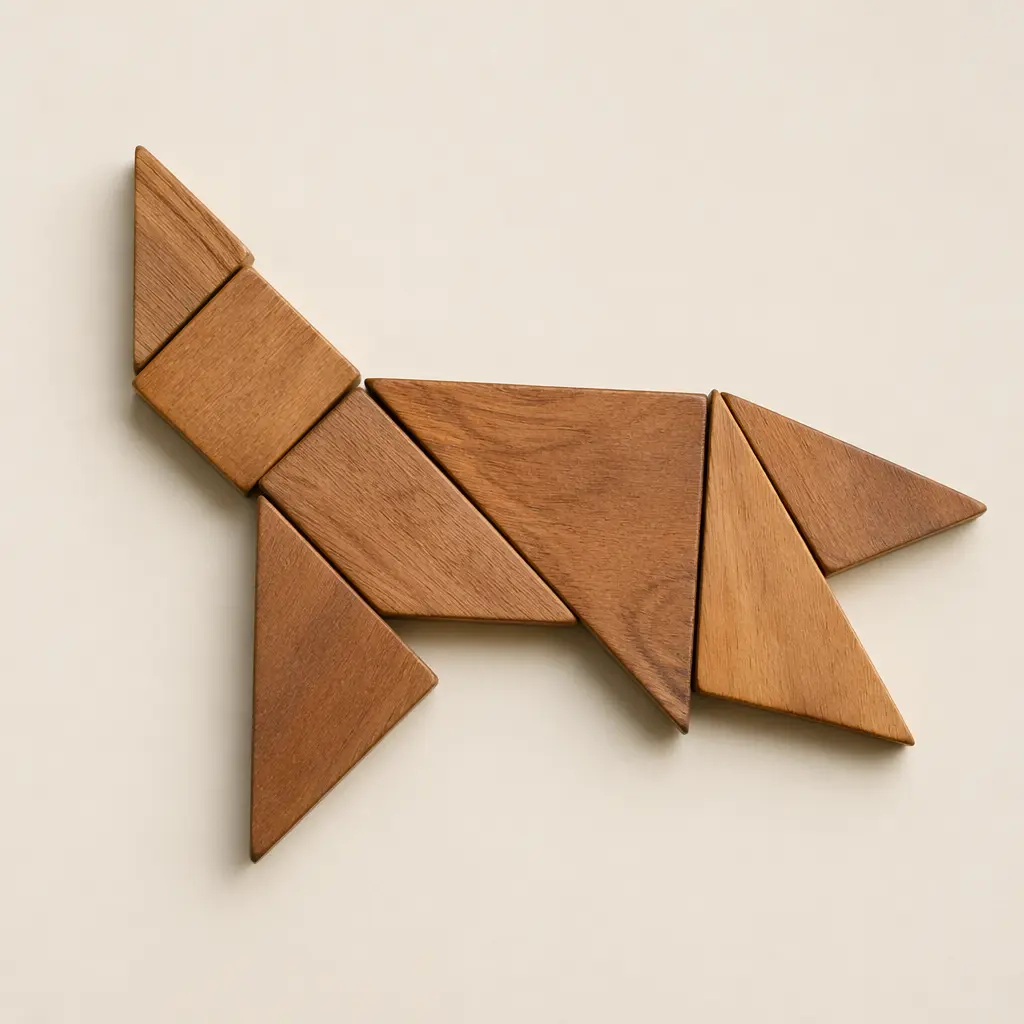
The tangram looks almost too simple to be interesting: seven flat shapes, usually tucked into a square. And yet this quiet little puzzle has kept people busy for centuries. With just those seven pieces, players can make thousands of figures—animals, people, objects, symbols—without bending or overlapping a single piece. It’s a toy that doesn’t shout for attention, but once it’s on the table, it tends to pull you in.
Where it came from
The tangram is widely believed to have originated in China, likely during the Song dynasty (roughly 10th–13th century). While the exact inventor and moment of creation are unknown, the puzzle’s Chinese roots are clear in early written references and illustrations. Originally, the shapes were known as the “seven boards of skill,” a name that hints at their educational and meditative purpose.
The puzzle made its way to Europe and North America in the early 19th century, carried by sailors and traders. It arrived at just the right cultural moment: parlour games were fashionable, and the tangram became a craze among adults. Books of tangram challenges circulated widely, and even prominent figures of the era were said to be fans. From there, it quietly settled into classrooms, toy chests, and coffee tables around the world.
Why it works
At its core, the tangram works because it balances constraint and freedom. You always have the same seven pieces—no more, no less—but what you do with them is up to you. That limitation sparks creativity rather than shutting it down. Each piece has a role, and success depends on seeing how parts relate to the whole.
It also quietly builds skills that matter. Without instructions yelling what to do next, players practice spatial reasoning, pattern recognition, and perseverance. There’s no single “right” path to a solution, which makes the experience feel exploratory rather than test-like.
- Seven simple geometric pieces that form a perfect square
- Rules that encourage problem-solving without pressure
- Instant reset—clear the board and start again
- Equally suited to free play or structured challenges
Who it's for
Tangrams are often introduced to children around ages five or six, when basic shape recognition is in place. For kids, the appeal is building recognizable pictures and feeling clever when a tricky outline finally clicks. For teens and adults, the puzzle becomes more contemplative—a brain warm-up, a creative break, or even a design exercise. Because there’s no reading involved, tangrams are accessible across languages and cultures, which adds to their lasting appeal.
Variants and what to look for today
Today’s tangrams come in many forms, but the classic seven-piece set remains the standard. Traditional versions are made from wood, which gives the pieces a satisfying weight and helps prevent slipping. Plastic and foam versions are common in classrooms, where durability and colour coding are helpful.
You’ll also find magnetic tangrams for travel, oversized floor sets for group play, and book-and-puzzle combinations that offer graded challenges. When choosing one, look for cleanly cut pieces with sharp corners that fit together snugly. Poorly made sets with rounded edges can make precise solutions frustrating, especially for beginners.
Frequently asked questions
Is there only one correct solution to a tangram puzzle?
For specific outline challenges, there is usually one intended solution using all seven pieces. However, many shapes can be created in multiple valid ways, and free play has no wrong answers.
Does a tangram actually help with learning?
Yes. Tangrams are commonly used in math and geometry lessons to support spatial reasoning, fraction concepts, and problem-solving skills, all without feeling like formal instruction.
Are digital tangram apps the same as physical sets?
Apps can replicate the logic of the puzzle, but physical sets offer tactile feedback and a stronger sense of spatial awareness, especially for younger players.
Why hasn’t the tangram changed much over time?
Because the original design is already efficient. The enduring appeal lies in what players bring to the pieces, not in adding more of them.
In a world of flashing lights and constant updates, the tangram endures by staying still. Seven shapes, a flat surface, and a little patience are all it needs. That quiet confidence is why this ancient puzzle continues to find new fans, generation after generation.