Beginner Electronics Kits for Teens Who Love Tinkering
A parent-friendly guide to entry-level electronics kits for teens. Learn what features matter, how age suitability works, and which kit types build real circuit skills beyond screen-based apps.
Compare prices and availability
Check current prices and availability for this guide on eBay.
As an eBay Partner, we may be compensated if you make a purchase.
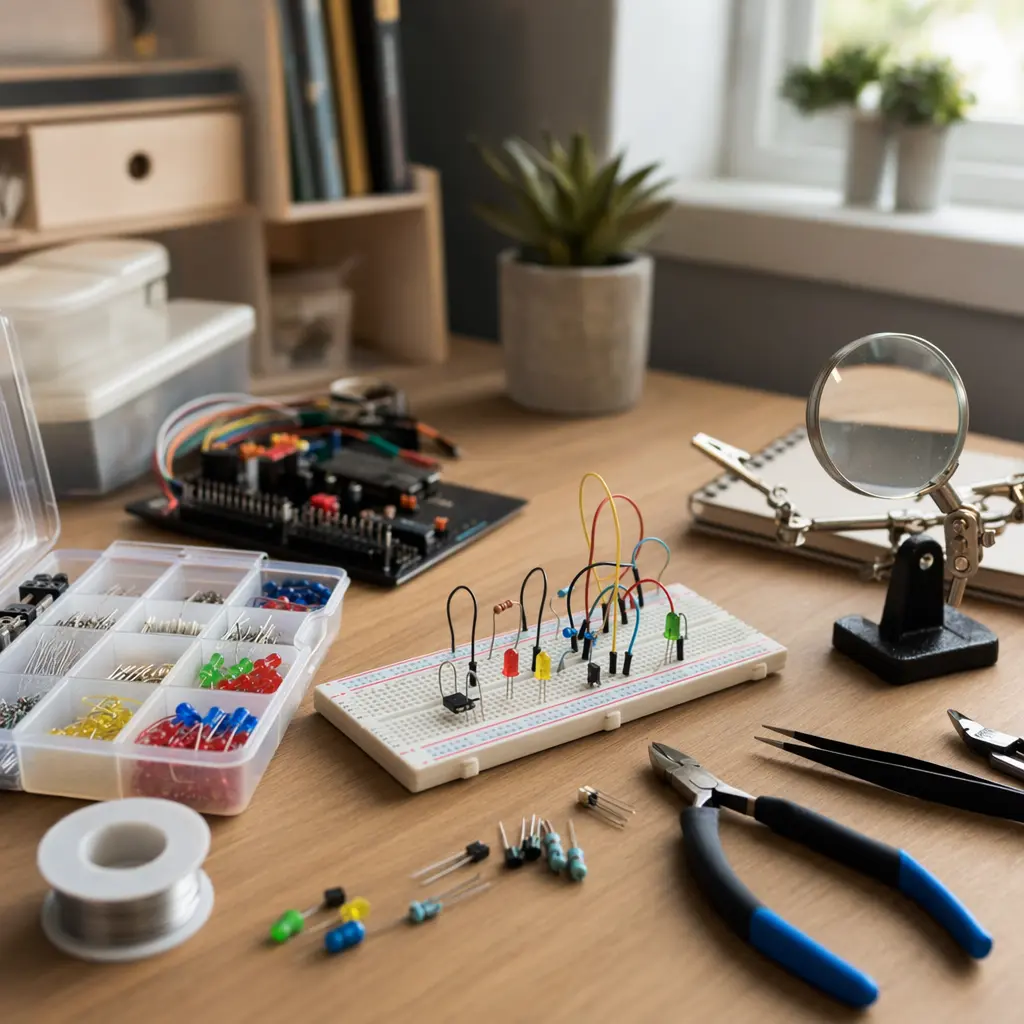
Electronics kits can be a strong fit for teens who like to tinker, take things apart, and understand how devices actually work. Unlike app-based coding toys, these kits focus on real circuits, hands-on problem solving, and skills that transfer to school projects and future technical hobbies. For parents shopping for a first kit, the key is finding something challenging enough to feel grown-up without being so complex that it becomes frustrating.
What to look for
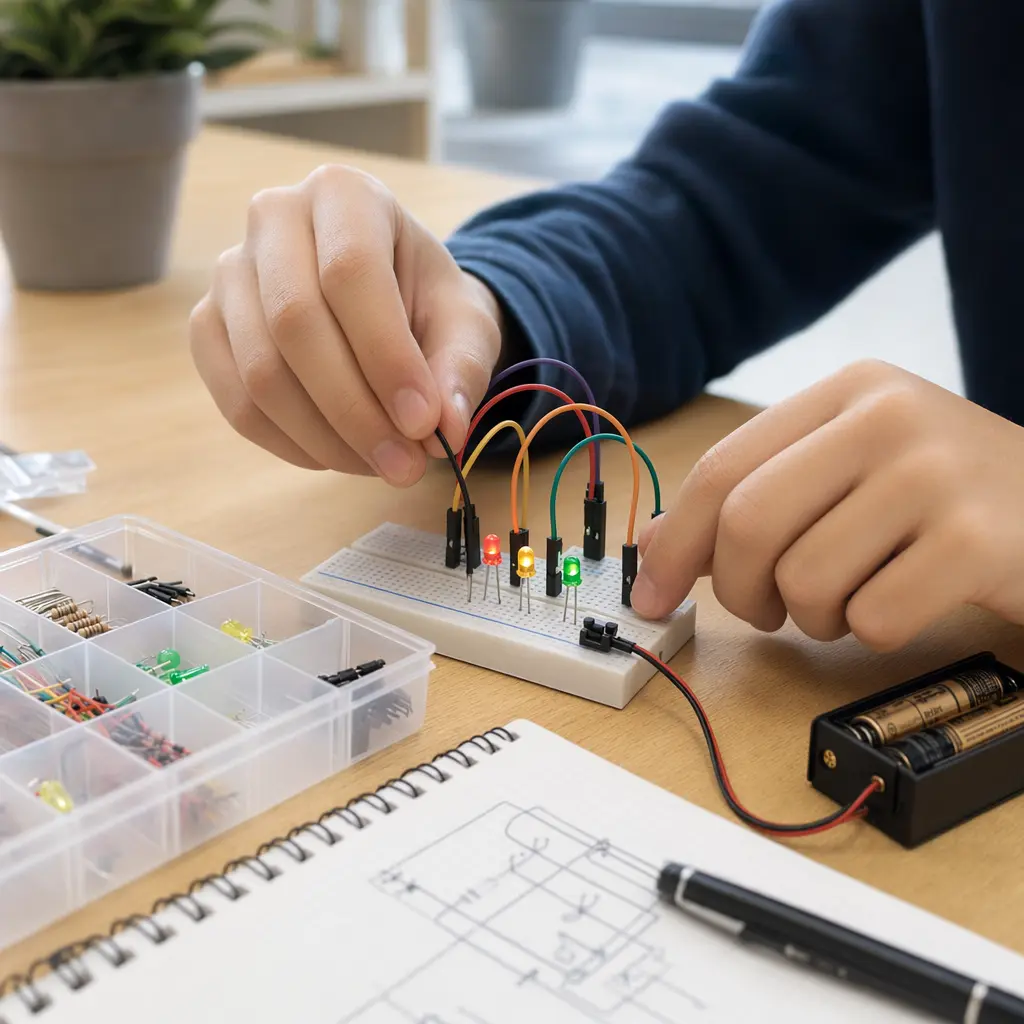
Beginner electronics kits for teens should balance instruction with experimentation. The best sets explain core concepts clearly, then encourage kids to try variations and troubleshoot on their own. Look for kits that grow with the learner instead of locking them into a single build.
- Clear, well-illustrated instructions that explain why circuits work, not just how to copy them
- Reusable components like breadboards, resistors, LEDs, motors, and sensors
- Projects that increase in difficulty, from basic circuits to more open-ended challenges
- Durable parts that can handle repeated plugging, unplugging, and mistakes
- Optional expansion paths, such as add-on components or compatibility with standard electronic parts
Age suitability
Most beginner electronics kits labeled for ages 13 and up assume a basic level of patience, reading ability, and fine motor control. Teens in this age band are usually ready to follow multi-step instructions, understand simple diagrams, and troubleshoot when something does not work right away. Prior experience is helpful but not required, as long as the kit starts with fundamentals like current flow, polarity, and component identification.
Standout categories or types
Electronics kits for teens come in a few main styles, each with a slightly different learning focus. Choosing the right type depends on whether your child prefers structured guidance, creative building, or technical depth.
- Snap-together circuit kits: These use connectors instead of loose wires, making them easier to set up and less intimidating for true beginners
- Breadboard-based learning kits: A common next step that teaches how real circuits are laid out and modified
- Microcontroller starter kits: These combine basic electronics with simple programming, often using beginner-friendly languages
- Sensor and robotics kits: Focused on motion, light, sound, or environmental sensing, often appealing to teens who like interactive results
- Soldering practice kits: Designed to teach permanent connections and tool skills, usually best for older or more patient beginners
Frequently asked questions
Do teens need prior electronics experience?
No prior experience is required for most beginner kits aimed at ages 13 and up. These sets typically start with simple concepts and build gradually, assuming the learner is new to electronics.
Is soldering required?
Many entry-level kits avoid soldering and use breadboards or snap connectors instead. Soldering is usually optional or reserved for specific project-focused kits.
How much adult supervision is needed?
Most teens can work independently once they understand the basics. Adult help may be useful at the start or when introducing tools like soldering irons.
What skills do these kits actually teach?
Beginner electronics kits teach circuit logic, problem solving, reading diagrams, and basic engineering thinking. Many also support math and physics concepts taught in school.
Can these kits be reused?
Yes. Most beginner kits are designed for repeated use, allowing teens to rebuild projects, invent new ones, or combine parts with other electronics later on.
For teens who enjoy figuring out how things work, a beginner electronics kit can be both educational and genuinely fun. By focusing on real components and hands-on learning, these kits offer a meaningful step beyond screen-based activities and help build skills that can grow into lifelong interests.