Pretend Play Sets That Keep Kids Playing Without Adult Setup
A parent-friendly guide to pretend play sets for ages 3–5 that encourage independent play. Learn what features support easy resets, open-ended stories, and low-maintenance fun.
Compare prices and availability
Check current prices and availability for this guide on eBay.
As an eBay Partner, we may be compensated if you make a purchase.
Many parents look for pretend play sets that invite kids to jump in and keep going—without constant adult setup, instructions, or cleanup help. For ages 3–5, the best options are simple to understand, easy to reset, and flexible enough to support many different stories. This guide focuses on features and categories that help children play independently while keeping maintenance low for caregivers.
What to look for
Independent pretend play works best when kids can understand the toy at a glance and manage it on their own. Complicated builds, tiny parts, or strict rules often lead to frustration or constant calls for help. These design traits tend to support longer, smoother play sessions.
- Simple, obvious functions that don’t require reading or step-by-step instructions
- Sturdy pieces that stand up on their own and don’t collapse during play
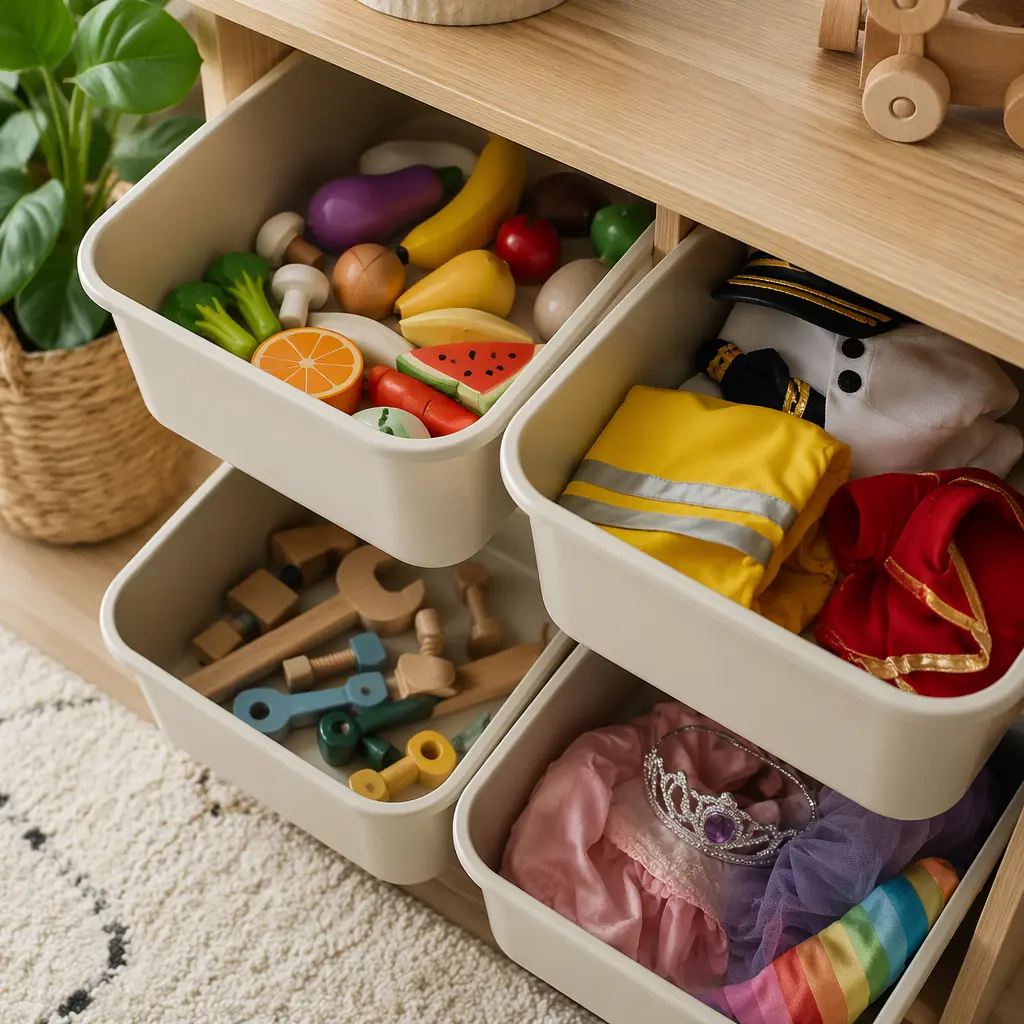
- Built-in or nearby storage that makes cleanup intuitive
- Open-ended parts that can represent many things, not just one script
- Limited number of accessories to reduce overwhelm and lost pieces
Age suitability
For children ages 3–5, pretend play is shifting from simple imitation to more imaginative storytelling. Sets in this age band should balance realism with flexibility. Oversized pieces are easier for small hands, while familiar themes—like home life, community roles, or animals—help kids start playing right away. Avoid sets that rely on advanced fine-motor skills or complex assembly, as those can interrupt independent play.
Standout categories or types
Some pretend play categories are especially friendly to independent play because they mirror everyday routines or allow kids to invent their own rules. These types often require little explanation and are easy to reset when playtime ends.
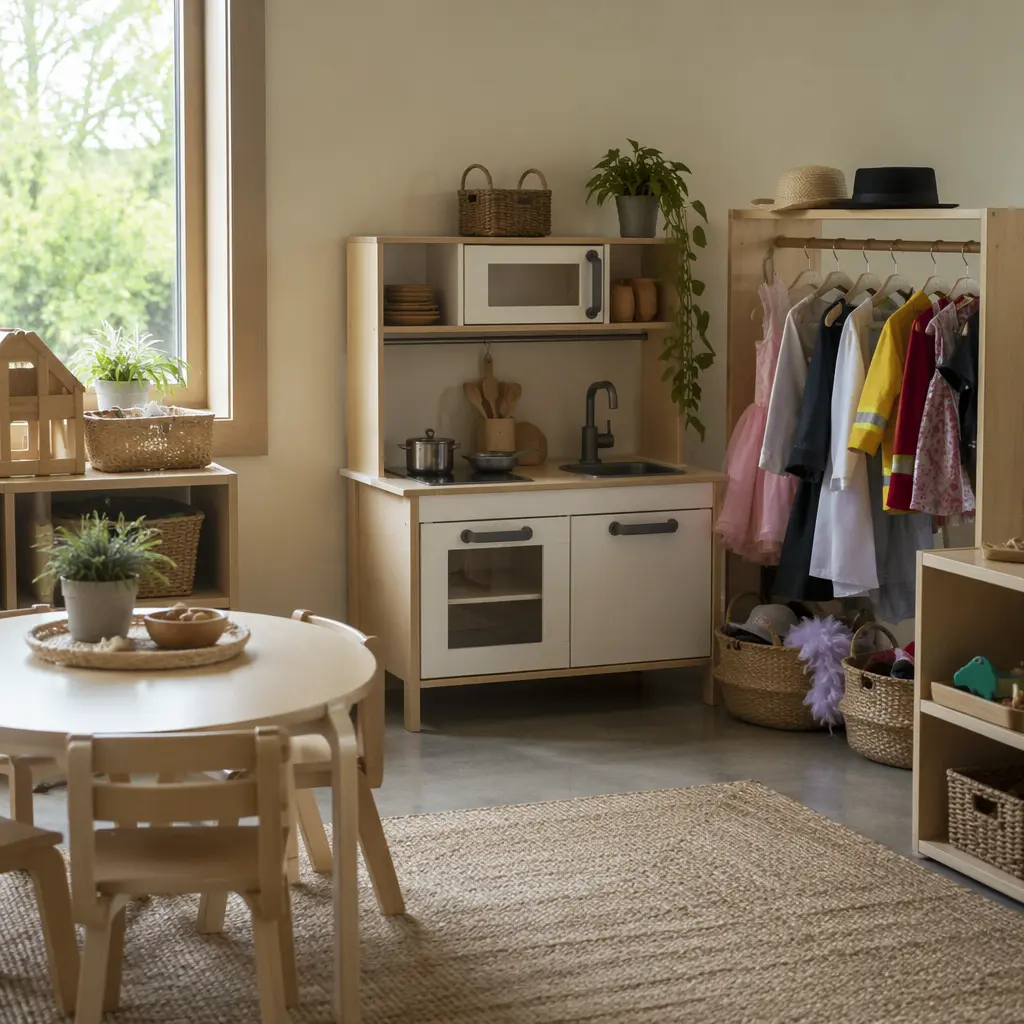
- Role-play stations that stay assembled, such as home or community-themed setups
- Dress-up and costume pieces that can be mixed and matched without fasteners
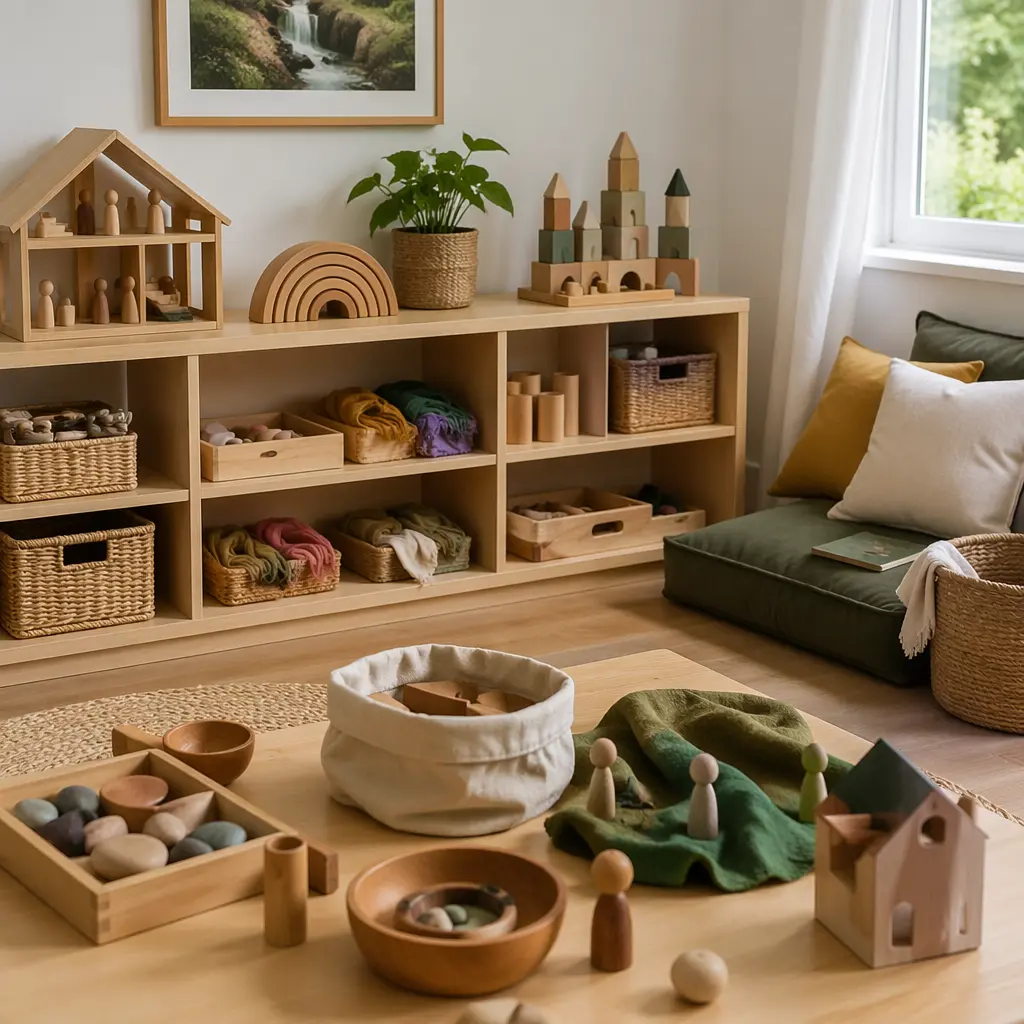
- Small-world play scenes with sturdy figures and simple backdrops
- Pretend food or tool sets that work across many scenarios
- Animal or caretaker-themed sets that encourage nurturing play
Frequently asked questions
What makes a pretend play set easy to reset?
Easy-reset sets usually have a clear “home” for each piece, such as bins, shelves, or hooks. When kids can see where items belong, they’re more likely to put them away independently, which supports repeat play.
Are fewer pieces better for independent play?
Often, yes. A smaller number of versatile pieces can lead to longer play sessions than a large collection of single-purpose accessories. Fewer parts also mean less cleanup and fewer interruptions.
How open-ended should pretend play be for preschoolers?
At ages 3–5, kids benefit from a light structure combined with freedom. Familiar themes help them start, while open-ended pieces let stories evolve without adult direction.
Do independent play sets limit social play?
Not necessarily. Many independence-friendly sets also work well for cooperative play. Clear roles and shared spaces can make it easier for multiple children to join in without adult mediation.
Choosing pretend play sets that support independence can make playtime smoother for both kids and adults. Look for designs that are intuitive, durable, and easy to tidy up. When children can start, continue, and reset play on their own, pretend play becomes a more sustainable part of everyday life.