Pretend Play Toys Kids Can Start Completely Alone
A buyer’s guide to low-setup pretend play toys for ages 3–5 that children can start on their own, supporting independence, imagination, and quiet play.
Compare prices and availability
Check current prices and availability for this guide on eBay.
As an eBay Partner, we may be compensated if you make a purchase.
Many parents look for pretend play toys that don’t require constant setup or adult direction. For children ages 3–5, the ability to start play independently can build confidence, encourage creativity, and give caregivers a short break without relying on screens. The best low-setup pretend play toys are intuitive, familiar, and inviting, allowing kids to jump right into imaginative scenarios on their own.
What to look for
Not all pretend play toys are equally easy for young children to use on their own. Some require assembly, sorting, or explanation before play can even begin. When independence is the goal, focus on toys that are simple, open-ended, and sized for preschoolers.
- Low setup or always-ready design, with pieces that can stay assembled or stored together
- Familiar themes such as home, food, pets, or everyday jobs
- Clear visual cues that show how pieces are used without instructions
- Durable parts that can handle repeated solo play
- Open-ended elements that allow children to make up their own stories
Age suitability
Children between 3 and 5 years old are in a key stage for pretend play. At this age, many can act out real-life routines, use simple storytelling, and stay engaged for longer stretches of time. Toys designed for this age band should avoid small pieces, complicated fasteners, or detailed instructions. Instead, look for sets that match a preschooler’s physical abilities and attention span, making it easy for them to begin play without help.
Standout categories or types
Some types of pretend play toys are especially well suited for independent use. These categories tend to rely on everyday experiences children already understand, which lowers frustration and increases confidence.
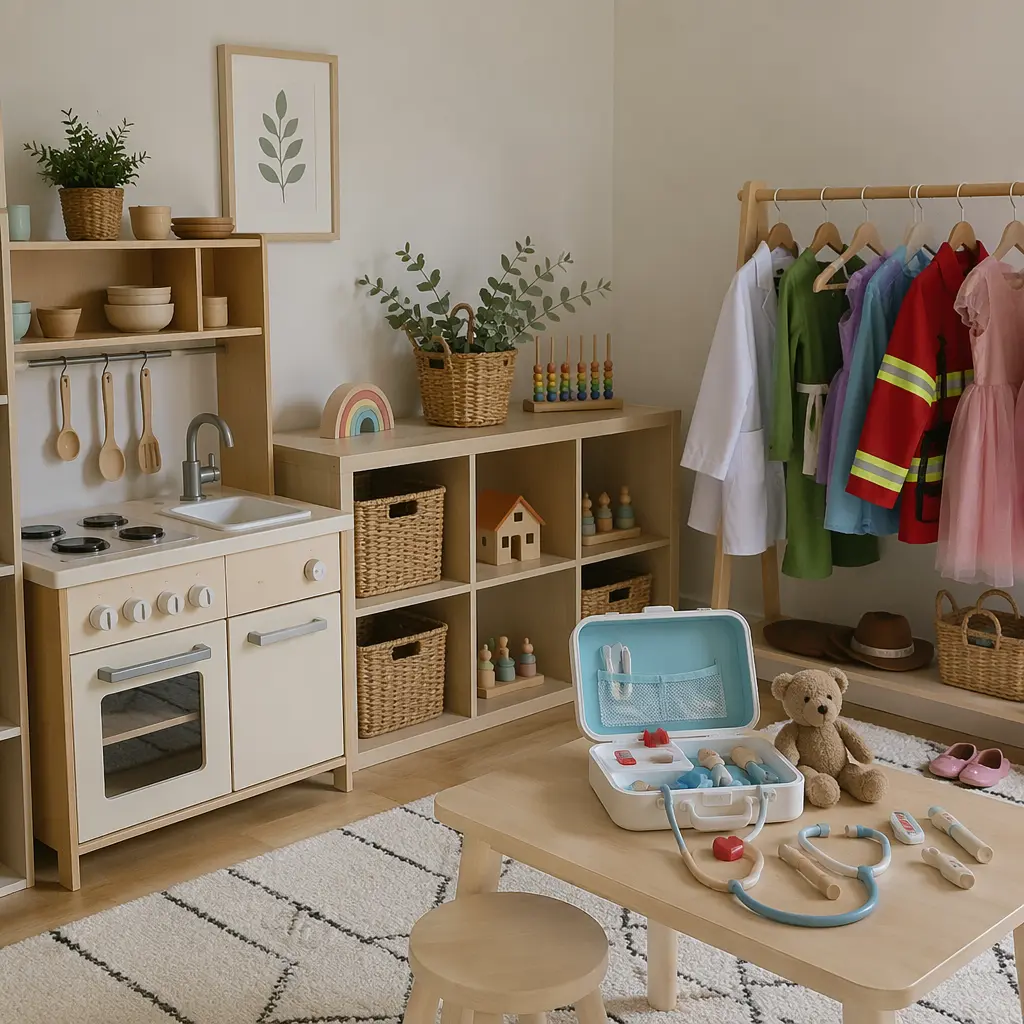
- Pretend kitchens and food sets that stay set up and ready for play
- Doctor, vet, or caregiving kits with a small number of clearly defined tools
- Dollhouses or play homes with sturdy furniture that doesn’t require assembly each time
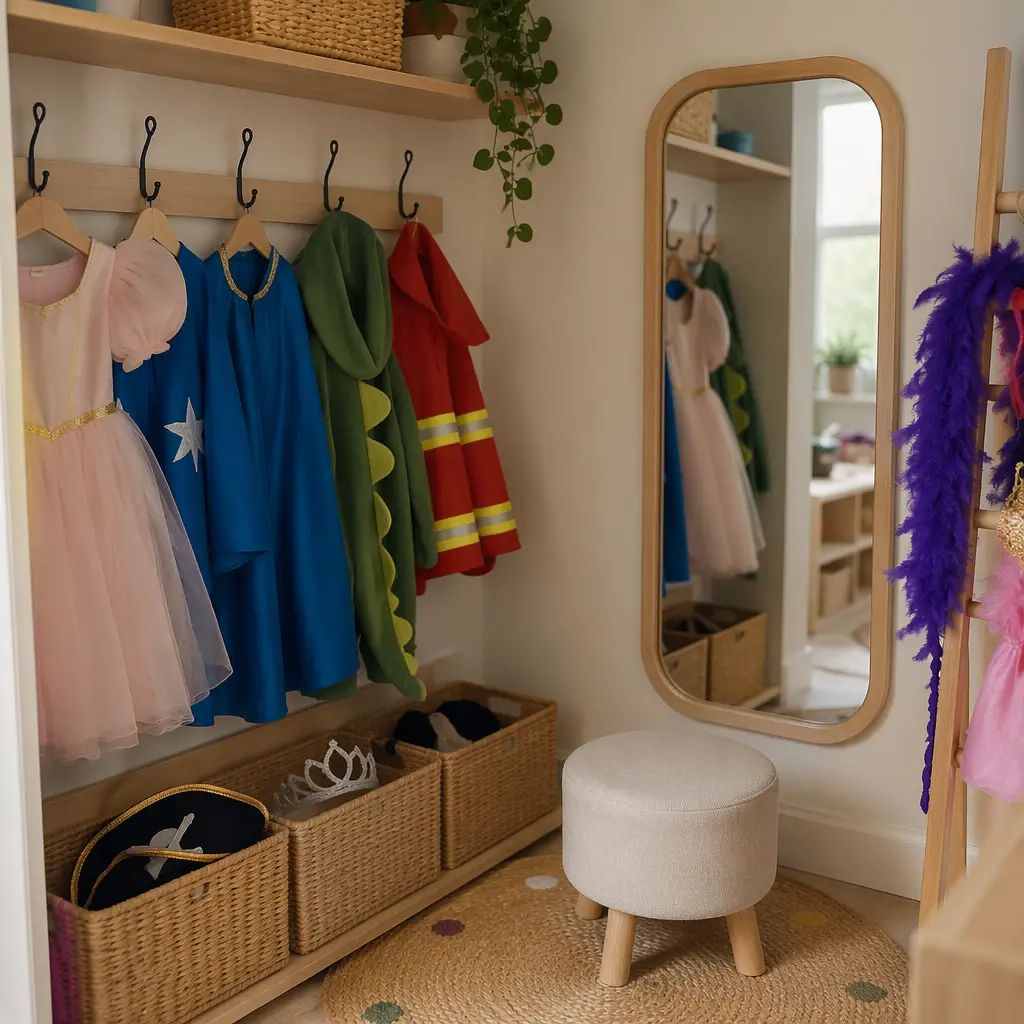
- Dress-up basics like vests, hats, or capes that are easy to put on and take off
- Vehicle play sets with garages or mats that encourage storytelling without rules
Open-ended pretend play toys also grow with children. A simple setup can support short, quiet play sessions at age three and more complex storytelling by age five, all without adding extra pieces or instructions.
Frequently asked questions
Can pretend play really be independent at this age?
Yes, with the right toys and expectations. While young children may still seek adult attention at times, many preschoolers can start and continue pretend play on their own when the setup is simple and familiar.
How much mess should I expect?
Independent pretend play can involve some mess, but choosing toys with built-in storage or limited pieces helps keep cleanup manageable. Teaching simple cleanup routines also supports independence.
Are open-ended toys better than themed sets?
Both can work well. Themed sets offer a clear starting point, while open-ended toys allow more creativity. For independent play, the key factor is whether the child understands how to begin without adult explanation.
How long should independent pretend play last?
At ages 3–5, independent play sessions may range from a few minutes to half an hour or more. Duration varies by child, mood, and environment, and shorter sessions are still valuable.
Pretend play toys that children can start on their own support more than just entertainment. They encourage problem-solving, language development, and self-confidence. By choosing low-setup, age-appropriate options, parents can create a play environment that invites imagination while giving kids the space to explore independently.