Push-Along Toys vs Walkers for New Walkers
Compare push-along toys and baby walkers for toddlers aged 1–2 years, including stability, tipping concerns, floor space, supervision needs and which option suits early walkers best.
Compare prices and availability
Check current prices and availability for this guide on eBay.
As an eBay Partner, we may be compensated if you make a purchase.
Many parents compare push-along toys and walkers when a toddler starts pulling up, cruising along furniture or taking early steps. Although the names sound similar, these toys work very differently. Push-along toys are designed for children who are already standing and beginning to walk while holding onto support. Traditional seated baby walkers place a child inside a frame on wheels and allow movement before independent walking skills are fully developed. For most families focused on building walking confidence, balance and coordination, sturdy push toys are usually the more practical and development-focused choice. The right option depends on a child’s stage, home layout, supervision level and how much stability the toy provides.
What to look for
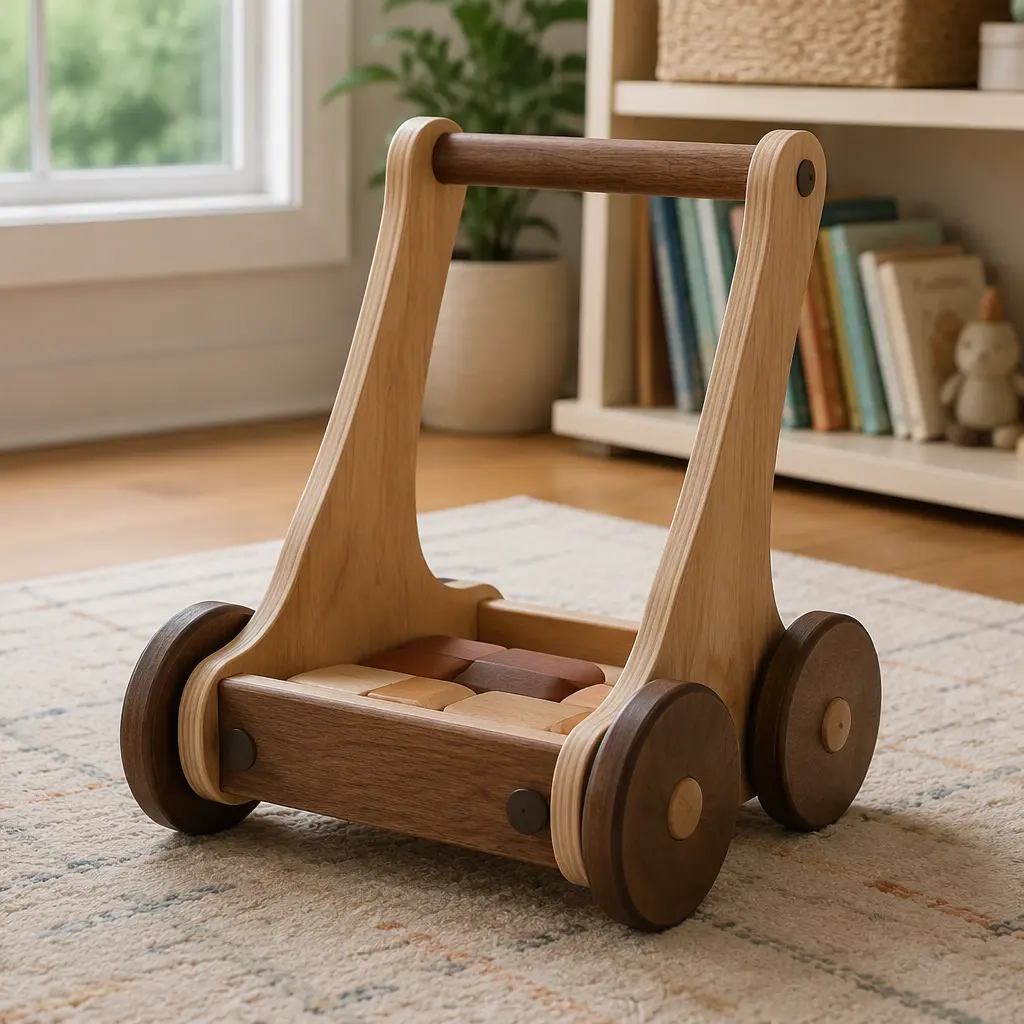
The safest and most useful walking toys for toddlers tend to prioritize stability over speed. A lightweight toy that rolls too quickly can slide away from a new walker, while a bulky option may be difficult to steer indoors. Flooring matters too. Hardwood floors can make wheeled toys move faster than expected, while thick carpet may frustrate children who are still building leg strength. Parents should also think about storage space, noise levels and whether the toy encourages active movement rather than passive sitting.
- Choose a wide base and sturdy construction to reduce tipping risk.
- Look for wheels with some resistance or traction so the toy does not shoot forward.
- Check handle height so a toddler can stand upright rather than leaning heavily.
- Consider weight carefully: light enough to push, heavy enough to stay stable.
- For small homes, folding or compact push toys are easier to store.
- Wooden wheels can be noisier on hard floors than rubber-trimmed wheels.
- Avoid toys with many detachable small parts for younger toddlers.
- Simple push carts, wagons and activity walkers often provide longer-lasting play than seated walkers.
Age suitability
For most children in the 1–2 year age range, push-along toys are better matched to natural walking development. These toys support cruising and early steps without fully carrying the child’s weight. A toddler still needs to balance, shift weight and coordinate movement. Many children begin using push toys once they can pull to stand and move along furniture confidently. Seated baby walkers are often marketed for younger babies, but they can encourage fast movement before a child has developed the balance and awareness needed to control direction and stopping. Some families also find that seated walkers become less useful quickly once independent walking starts. Push toys, by contrast, can continue to work as doll strollers, block carts or pretend-play wagons into the toddler years.
Options compared
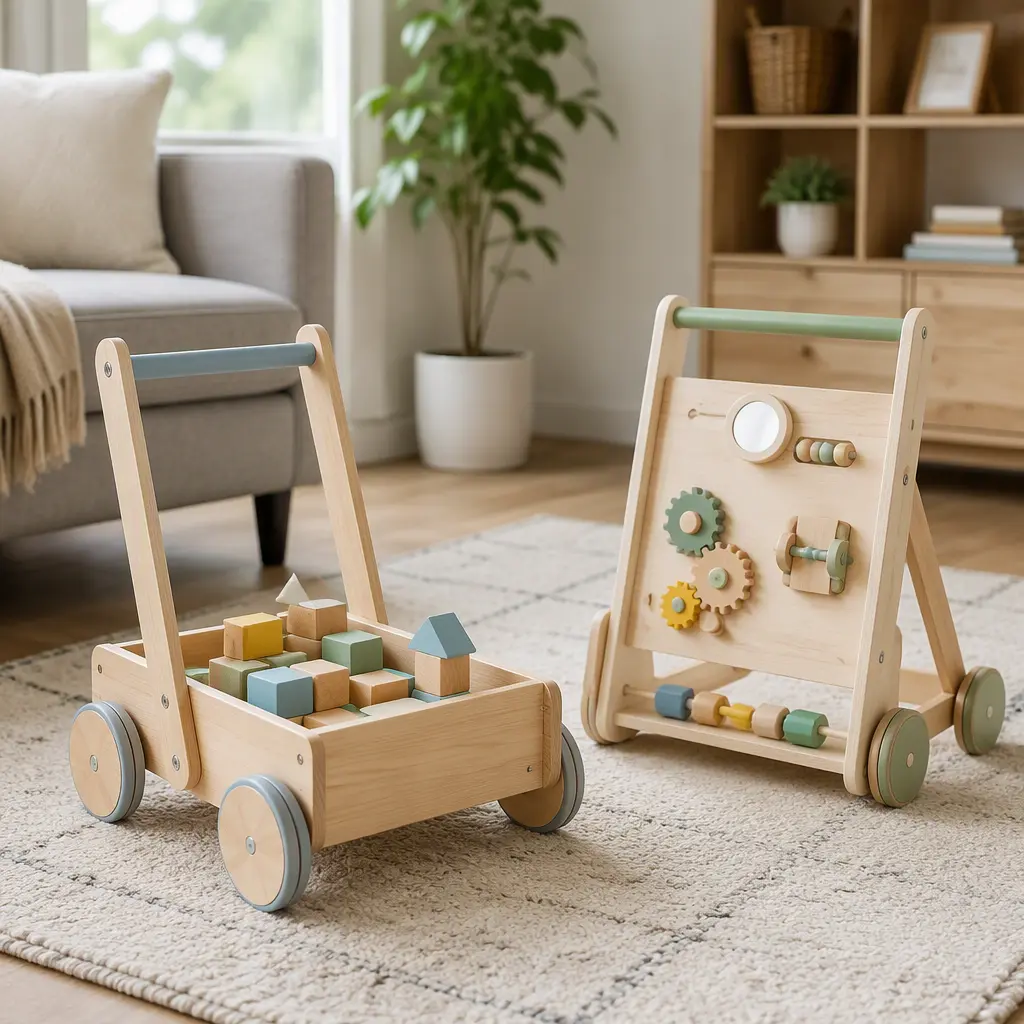
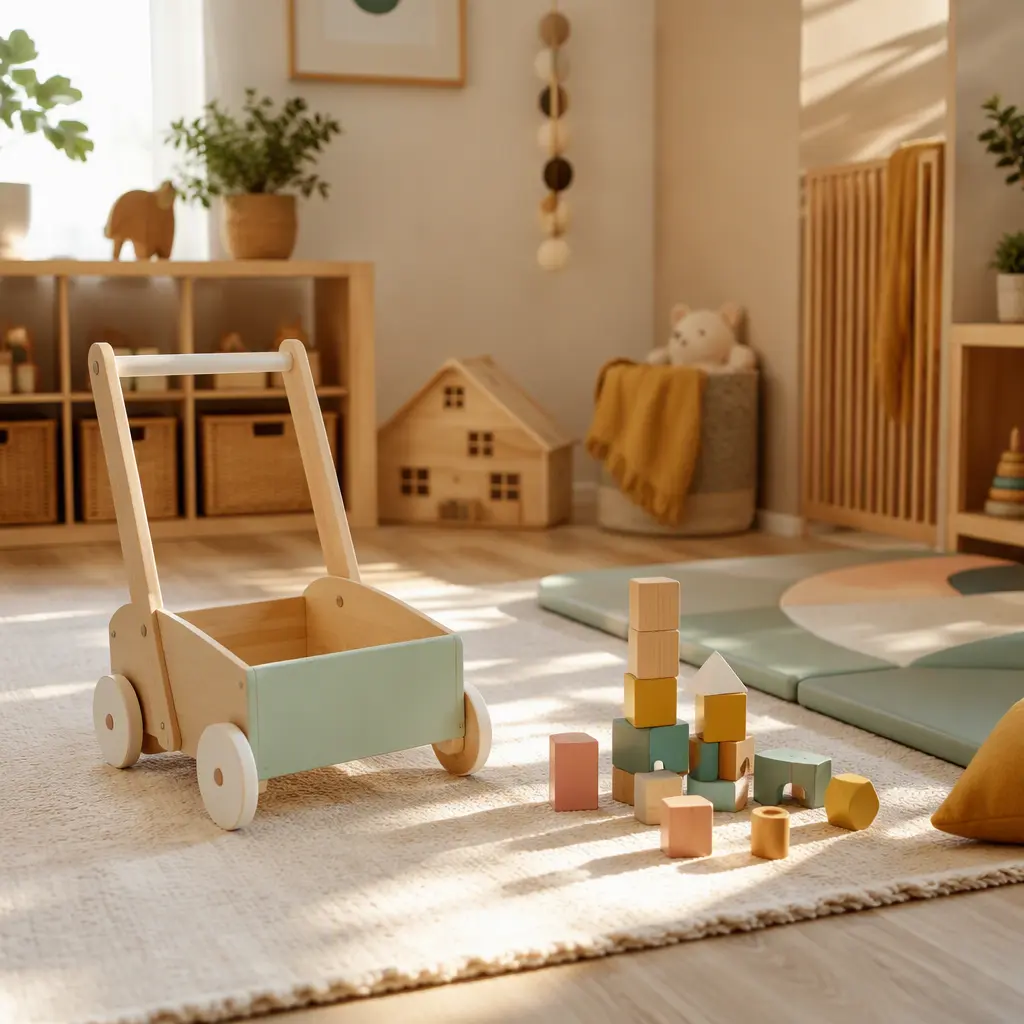
Push-along toys come in several common styles. Activity walkers combine a push bar with built-in sensory features such as bead mazes, gears or shape sorters. These can work well for toddlers who enjoy stopping to play as they move around a room. However, very busy activity panels may distract some children from focusing on walking practice. Simple push carts and wagons usually offer the best stability and longest useful lifespan. Some can also carry stuffed toys or blocks, which adds imaginative play later on.
Toy shopping carts and doll strollers are popular with confident walkers who already move independently. They are usually lighter and more maneuverable, which makes them less suitable for children still relying heavily on support. Ride-on toys that convert into push toys can save space in smaller homes, though combination products sometimes involve compromises in stability or wheel resistance. Traditional seated walkers may appeal because they occupy babies and allow fast movement, but they also require constant supervision and ample open floor space. Families in homes with stairs, narrow hallways or slippery flooring often prefer avoiding them entirely. For parents mainly interested in encouraging natural walking confidence, a stable push toy with controlled wheel movement is generally the simpler and more adaptable option.
- Weighted wooden push walkers: stable and durable, often heavier and noisier.
- Plastic activity walkers: lighter, easier to clean, sometimes less stable on fast floors.
- Push carts and wagons: versatile for storage and pretend play, best for children already pulling to stand.
- Toy strollers and shopping carts: good for confident walkers, may tip if heavily leaned on.
- Convertible ride-on push toys: useful for mixed play but can take up more storage space.
- Seated walkers: allow mobility before walking skills mature, require careful supervision and large safe spaces.
Frequently asked questions
Do push-along toys help toddlers learn to walk?
Push toys can support confidence and balance practice for toddlers who are already standing and attempting steps. They work best as part of normal movement and floor play rather than as a shortcut to walking milestones.
Why do some parents avoid seated baby walkers?
Some families avoid seated walkers because they allow rapid movement before a child fully understands balance, stopping and obstacles. They also need constant supervision and can be difficult to use safely in homes with stairs or uneven surfaces.
What flooring works best for push walkers?
Flat, open surfaces usually work best. Hardwood floors can make lightweight toys roll too quickly, while thick carpet can make pushing harder. Wheels with traction or adjustable resistance can help create steadier movement.
Are wooden push toys better than plastic ones?
Neither material is automatically better. Wooden toys are often heavier and more stable, while plastic toys may be lighter, easier to clean and less noisy on some floors. Stability and wheel control matter more than material alone.
How long do toddlers usually use push toys?
Many toddlers continue using push carts, wagons and toy strollers well after independent walking begins because they become part of pretend play and transporting toys around the house.
For most families with toddlers aged 1–2 years, a stable push-along toy is the more flexible and development-friendly choice for early walking practice. The best option encourages movement without moving too quickly, fits comfortably within the home and remains useful after first steps become more confident. Choosing a simple, sturdy design with good wheel control usually matters more than extra lights, sounds or complex features.