Washable Sensory Toys for Babies Who Spit Up Often
A parent-focused guide to sensory toys that handle frequent washing well, with tips on fabrics, textures, drying time, safety, and age suitability for babies from birth to 12 months.
Compare prices and availability
Check current prices and availability for this guide on eBay.
As an eBay Partner, we may be compensated if you make a purchase.
Babies who spit up often can go through several toy changes in a single day, especially during the first year when mouthing, drooling, and floor play overlap. For many parents, the most useful sensory toys are not the flashiest options but the ones that can handle frequent washing without becoming misshapen, difficult to dry, or unpleasant to use. Washable sensory toys can still support early development through touch, sound, texture, grasping, and cause-and-effect play while fitting more realistically into everyday cleaning routines. Choosing the right materials matters because some toys trap moisture, lose texture after repeated washing, or become difficult to sanitize safely.
What to look for
The easiest washable sensory toys tend to use simple materials with minimal hidden stuffing or electronic parts. Toys designed for babies from birth to 12 months should also match developmental stages carefully, since newborns interact differently from older babies who can sit, crawl, and chew more forcefully. Practical considerations such as drying time, machine-wash safety, and storage become important quickly when a toy needs cleaning several times a week.
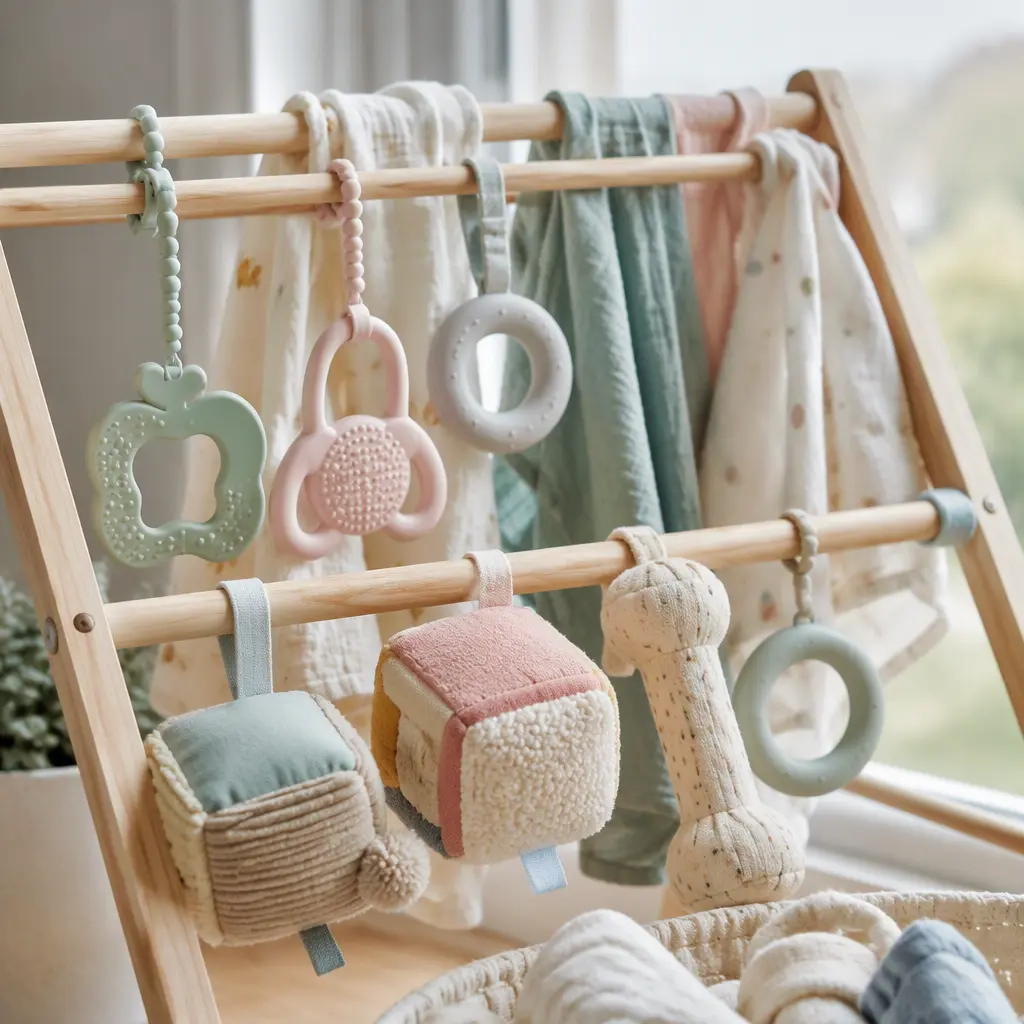
- Silicone teethers and sensory shapes are usually easy to rinse and dry quickly, making them useful for frequent spit-up and drool.
- Machine-washable cloth toys with removable inserts are often easier to keep clean than heavily padded plush toys.
- Crinkle fabrics can provide sound and texture without batteries or electronics that complicate washing.
- High-contrast fabric books suit younger babies and can often be spot-cleaned or machine-washed depending on materials.
- Avoid toys with hard-to-clean seams, glued decorations, beads, or long fur-like fabrics that trap moisture.
- Quick-drying materials help reduce the chance of lingering odors after repeated washing.
- Compact toys are easier to rotate while others are in the wash, especially in small homes or apartments.
- Check care labels carefully because some sensory toys are surface-wash only despite appearing machine-safe.
Age suitability
For babies under around 3 months, lightweight toys with gentle textures and high-contrast visuals are usually most appropriate because grasping strength and coordination are still developing. Soft sensory scarves, cloth books, and simple rattles can encourage visual tracking and early hand movement without overwhelming stimulation. Between roughly 3 and 6 months, many babies begin reaching, chewing, and exploring textures more actively, making silicone teethers, textured rings, and crinkle toys more practical. Older babies approaching 9 to 12 months often prefer toys they can shake, bang, stack, squeeze, or transfer between hands. At this stage, durability becomes more important because toys are likely to hit floors frequently and spend more time in mouths. Oversized sensory toys may look appealing, but smaller washable options are often easier to rotate through laundry cycles and easier to pack for travel or daycare.
Options compared
Silicone sensory toys are among the lowest-maintenance choices for babies who spit up often. They are typically simple to rinse, dry quickly, and hold up well to repeated cleaning. These toys suit families who want minimal laundry and easy portability for diaper bags or travel. The trade-off is that silicone toys can offer less sensory variety than fabric-based options, especially for babies who enjoy softer textures or crinkling sounds.
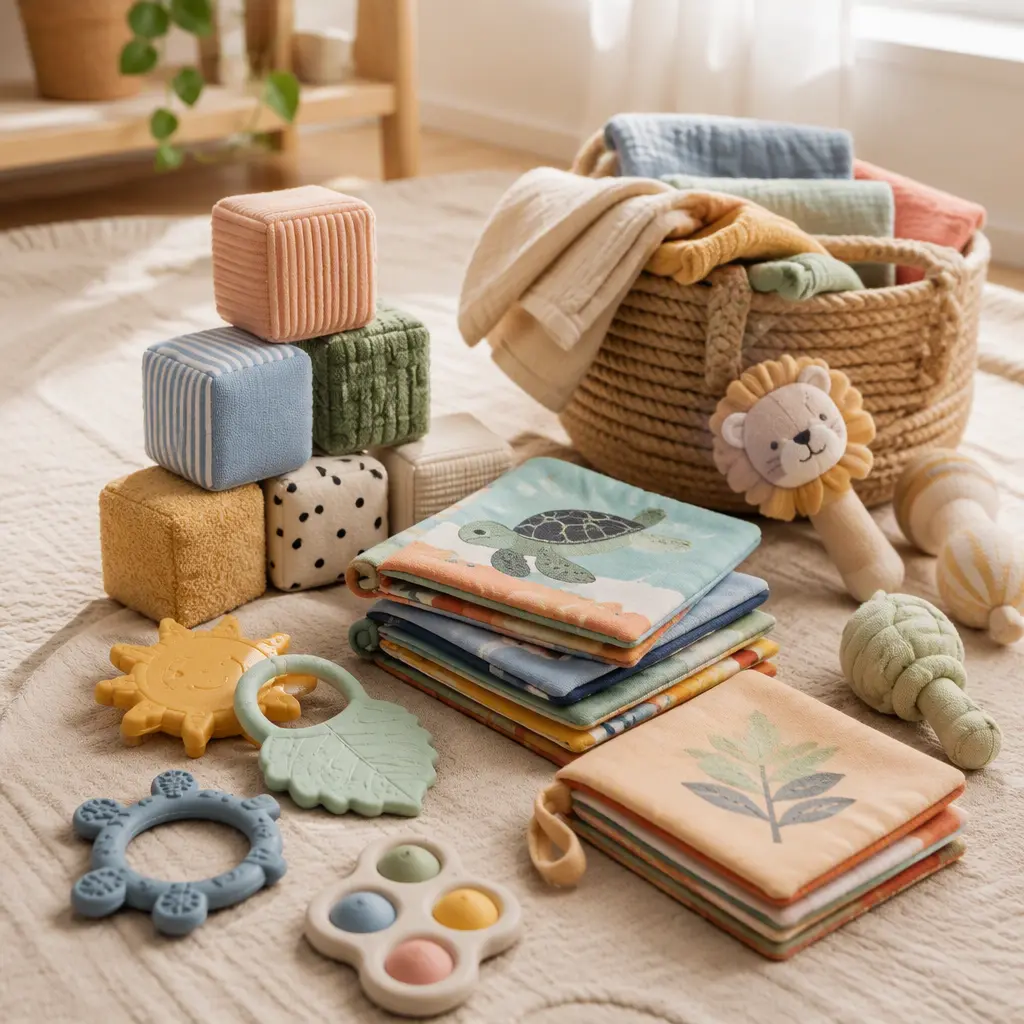
Fabric sensory toys provide a wider range of textures and tactile experiences. Crinkle cloth books, soft cubes, textured tags, and plush rattles can encourage grabbing and exploration while remaining fully screen-free. However, fabric toys vary significantly in washability. Thick plush toys with heavy stuffing may take longer to dry and can retain odors if washed frequently. Parents with limited drying space may prefer thinner cloth toys or toys designed specifically for machine washing. Some families also choose to keep a small rotation of washable sensory toys so one set can air dry while another remains available.
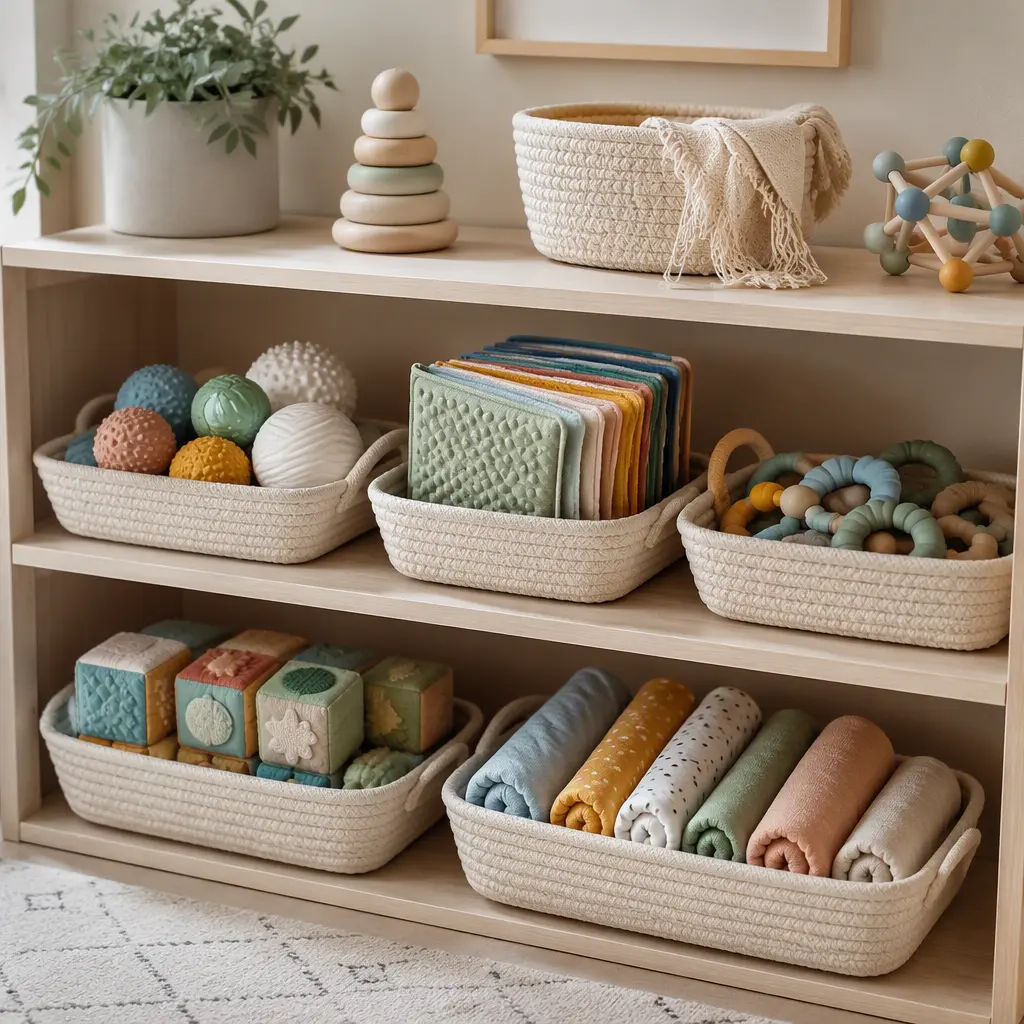
- Silicone teethers: best for frequent cleaning, travel, and strong chewers; less variety in texture and sound.
- Crinkle cloth toys: good for lightweight sensory play and tummy time; may wear faster with heavy washing.
- Soft rattles: useful for grasping and early cause-and-effect play; choose washable versions without electronic sound units.
- Fabric sensory books: support visual and tactile exploration; check whether pages dry quickly after washing.
- Textured sensory balls: suitable for older babies learning to grasp and roll objects; some styles are easier to sanitize than plush toys.
- Water-filled or gel-filled sensory toys: can feel soothing but should be inspected carefully for leaks or damage over time.
Frequently asked questions
How many washable sensory toys does a baby need?
Most families can manage with a small rotation of a few reliable toys rather than a large collection. Having duplicates of favorite teethers or cloth toys can be helpful when items are being washed or dried.
Are wooden sensory toys a good choice for babies who spit up often?
Wooden toys can work for older infants when cleaned correctly, but they are usually less convenient for repeated washing than silicone or machine-washable fabric toys. Some wooden finishes also require more careful maintenance.
What fabrics dry fastest after washing?
Lightweight cotton blends and thin sensory fabrics generally dry faster than thick plush materials. Toys with minimal stuffing are often easier to clean and reuse quickly.
Should sensory toys be sanitized after every spit-up?
Routine cleaning depends on the material and how heavily soiled the toy becomes. Toys that go directly into a baby’s mouth usually benefit from more frequent cleaning than toys mainly used for visual play or tummy time.
Do electronic sensory toys make sense for this age?
For babies under 12 months, simple screen-free sensory toys are often easier to clean and easier to use flexibly throughout the day. Electronic toys can be harder to wash safely and may include parts that trap moisture or limit machine washing.
The most practical washable sensory toys balance developmental usefulness with realistic cleaning demands. Babies in the first year benefit most from safe textures, simple sensory feedback, and opportunities for hands-on exploration rather than complicated features. Parents dealing with frequent spit-up often find that easy-drying materials, compact storage, and straightforward cleaning instructions matter just as much as the sensory experience itself. Choosing a small set of durable, washable toys can make daily routines simpler while still supporting early play and exploration.